The flydubai co-pilot Australia probe puts Hamam al-Hammami's 2015–2017 stay in Victoria under the microscope while UAE prosecutors and Israel's security establishment run parallel inquiries.
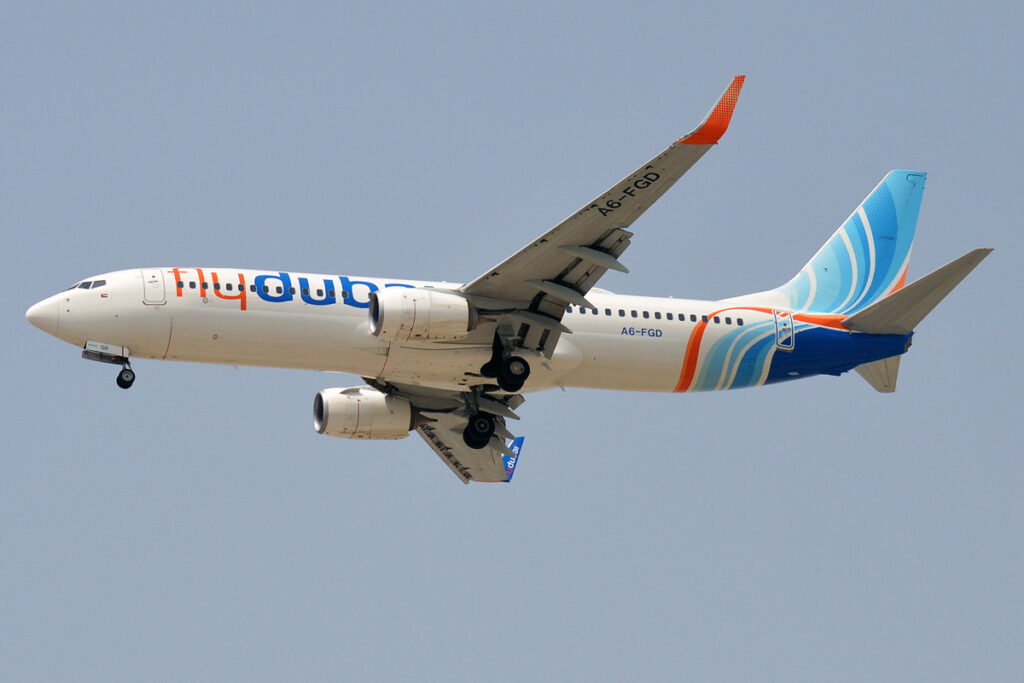
CANBERRA — The flydubai co-pilot Australia probe is now official. Australia's Federal Police has confirmed to the BBC that a Victorian Joint Counter Terrorism Team — drawing together the AFP, Victoria Police and the domestic intelligence service ASIO — is investigating "the man's links to Australia," formally pulling the September 30 attack on Flydubai Flight FZ1073 into a third country's counter-terrorism machinery.
The announcement, reported by the BBC, ABC News Australia, The Guardian and others, marks a sharp widening of an inquiry that began in a cockpit over the Red Sea and has since sprawled across the United Arab Emirates, Israel, Oman and now Australia. UAE prosecutors are examining the incident and possible motives; Israeli officials have described it as an apparent attempt to crash the aircraft. Australia's entry adds a decade-old student visa — and a hard question about what, if anything, two years in Victoria have to do with what happened on board.
Why this matters
Analysis: This is the moment the FZ1073 story stopped being a single-country prosecution and became a transnational counter-terrorism case. That distinction matters more than it sounds. A prosecution asks what one man did in a cockpit on September 30. A transnational terror inquiry asks how he got there — which borders he crossed, which systems cleared him, and where, along a decade-long trail, anyone might have seen something.
Analysis: The aviation dimension is the one that should concentrate minds. A radicalised passenger is a screening problem; a radicalised pilot is an insider problem, and insiders defeat every layer of security built since 2001. Cockpit doors were hardened precisely to keep attackers out — on FZ1073, the alleged attacker started inside. If investigators establish that extremist ideology put him there, the policy consequences will not stop at one airline: crew vetting, continuous monitoring of flight crew, and cross-border sharing of adverse findings between regulators will all be back on the table. Our earlier reporting on the FZ1073 screening loophole — how a pilot reportedly barred in Oman was hired to fly — already showed how an adverse finding in one country failed to follow the co-pilot into the UAE system. The Australia probe asks whether there were earlier signals still.
Analysis: And then there is the political clock in Canberra. A counter-terrorism investigation touching the student-visa system lands in the middle of one of Australia's most sensitive debates — migration, vetting, and the vast international-education industry. How carefully officials handle the coming months will determine whether this becomes a forensic inquiry or a political football.
What the AFP confirmed — and what it didn't
The confirmed facts are narrow, and worth stating precisely. In a statement to the BBC, the Australian Federal Police said a Victorian Joint Counter Terrorism Team is investigating the man's links to Australia. The JCTT model — federal police, state police and ASIO under one roof — is the unit Australia stands up when a case may involve terrorism with international threads.
What Australia has not done is name him. Australian officials have not officially identified the co-pilot. He has been named in reporting by the Associated Press, Reuters, CNN and The New York Times as Hamam al-Hammami, and Prime Minister Benjamin Netanyahu has described him as an Omani national. CNN has reported that a LinkedIn profile under that name showed remote coursework through Buckinghamshire New University in the UK. This article names him as reported by those outlets, with the caveat that Australian authorities have not confirmed the identification.
The biographical outline comes from ABC News Australia: an Australian student visa was issued in 2014; he studied in Australia between 2015 and 2017, then left; the visa was cancelled in 2019 for non-enrolment — an administrative cancellation, not a security action. Counter-terrorism officials will examine whether he was radicalised during his time in Australia, the ABC reported. That single conditional — whether — is doing a great deal of work, and everything that follows should be read with it in mind.
The Hamam al-Hammami student visa Australia timeline, in numbers
Put the dates in a row and the first thing you notice is the distance:
- 2014 — Australian student visa issued.
- 2015–2017 — approximately two years studying in Australia.
- 2017 — leaves Australia, on the ABC's account.
- 2019 — visa cancelled for non-enrolment, two years after departure. This is routine immigration housekeeping: a student visa tied to enrolment lapses when the holder is no longer enrolled. It is not, on its own, a red flag of any kind.
- September 30, 2026 — the FZ1073 attack, roughly nine years after he left Australia.
Analysis: Nine years is the number that should discipline every hot take. If radicalisation occurred — and that remains an open investigative question, not a finding — the window for it spans nearly a decade across at least Oman and the UAE, countries where he lived and worked long after his Australian student years. The Victorian chapter is a starting point for investigators, not a conclusion.
Analysis: The base rate matters too. Australia's international-education sector enrols hundreds of thousands of students; cases in which a former student-visa holder is later investigated in connection with terrorism are vanishingly rare. A JCTT opening a file is what the system is supposed to do when a name surfaces with an Australian footprint — it is not a verdict on the student-visa system, and treating it as one would be precisely the category error the next section warns against.
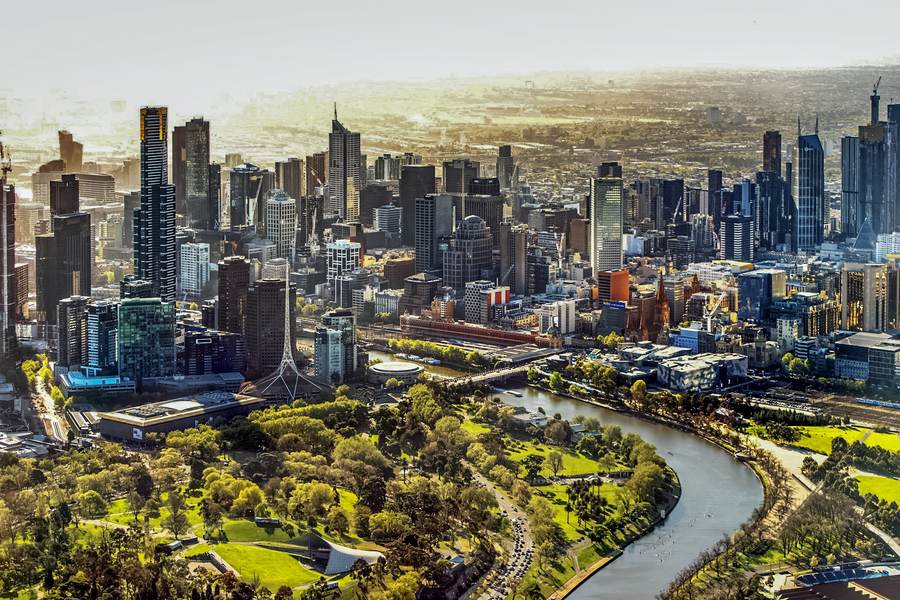
From the cockpit to Canberra: how the FZ1073 investigation widened
For readers joining the story here: on September 30, Flydubai Flight FZ1073, a scheduled Dubai–Tel Aviv service carrying more than 170 passengers and crew, turned violent mid-flight when the co-pilot assaulted Captain Smit Machchhar in the cockpit with a crash axe. The aircraft plunged more than 16,000 feet in about 30 seconds before the injured captain managed to unlock the flight-deck door; passengers and crew subdued the attacker, and two off-duty pilots on board helped stabilise the aircraft for an emergency landing at Tabuk in northwestern Saudi Arabia. Our initial report on the pilots' fight and the Tabuk diversion captured the first hours of confusion, including the hijack transponder codes that scrambled Israeli jets.
In the days since, the inquiry has widened at speed. UAE prosecutors appointed a special team to examine the incident and possible motives; Israeli officials described an apparent attempt to crash the aircraft, and Netanyahu said the attacker had undergone "Islamist radicalization" and intended to kill everyone aboard, crediting passengers with preventing "a disaster on the scale of 9/11." The Wall Street Journal reported the co-pilot had been barred from flying by Oman over radical views before joining flydubai, and flydubai suspended its Tel Aviv services — the full terror-probe account, including the passengers and crew named as heroes. The political aftershocks, including Donald Trump's "very hard" warning to Iran over the affair, showed how quickly the incident escaped the aviation pages.
Australia is the newest thread — and potentially the most consequential for aviation security policy, because it reaches furthest back into the attacker's history.
Four ways to read the Australia probe
Canberra's migration and security vetting debate
Analysis: Every counter-terrorism case with a visa attached becomes, in Canberra, a migration debate. Expect two questions to dominate: what did student-visa vetting look like in 2014, and could anything in the system have flagged him? The honest answer to the second is that vetting in 2014 could not have predicted 2026 — no screening regime on earth adjudicates what a student in his twenties might believe a decade later. The sharper question is whether Australia's agencies kept, and can now retrieve, a complete picture of those two years: enrolment records, addresses, associates. That is an investigative-capability question, not a vetting-failure question, and conflating the two would be a mistake. The political losers if the probe drags: the Home Affairs portfolio, which will wear every "what did you know" headline. The winners: anyone selling tougher screening as the lesson — a lesson the timeline does not obviously support.
Flydubai and the Emirates Group's reputational stakes
Analysis: For flydubai, the Australia probe is a second crew-vetting shock in a week, arriving on top of the reported Omani flying ban. The airline's hiring pipeline — what it knew, what it asked, what other regulators told it — is now being examined across three countries' inquiries. The commercial stakes are concrete: the Tel Aviv suspension already severed one of the Abraham Accords' most visible passenger links, and every new revelation extends the reputational half-life. Watch for whether the UAE's General Civil Aviation Authority orders an industry-wide crew-record audit; that would signal the investigation is moving from one pilot to the system.
Israel's security questions
Analysis: Israel's interest is narrower and more urgent: the nationality-screening arrangements meant to keep pilots from non-recognition states off inbound flights, and whether an Omani national's years in a third country complicate that screen. The reported 2024 comptroller findings on foreign-airline security gaps give Jerusalem a domestic framework for demanding answers — and potentially crew-roster pre-clearance — before flights resume.
The civil-liberties caution
Analysis: The counterweight to all of this: a student visa from 2015 is not evidence of anything. Australia's Muslim and international-student communities have lived through cycles in which an investigation's existence is treated as a finding, and the AFP's own restraint — confirming a probe into "links," naming no one, charging nothing — is the standard to hold. The difference between "investigating whether radicalisation occurred in Australia" and "he was radicalised in Australia" is the entire story, and collapsing it would be both inaccurate and unjust.
What happens next
The VIC JCTT flydubai investigation playbook
Joint Counter Terrorism Teams move in phases: records first, people second. Expect immigration and education-provider records, travel movements, and any Australian associates to be mapped before any public findings emerge. These inquiries typically run for months, and the AFP will say little in the meantime — the BBC statement is likely the last official word for some time. The key near-term signal is not a press conference but liaison traffic: if Australian officials begin formally sharing records with UAE prosecutors, the probe has moved from preliminary to substantive.
The cooperation and extradition question
The suspect is in UAE custody facing a UAE prosecution. Australia has announced no charges and is unlikely to seek extradition; the realistic channel is mutual legal assistance — Canberra sharing what its records show, the UAE sharing what its investigation yields. Israel, which hopes to question the suspect, adds a third claimant on cooperation. How smoothly those channels run will be a quiet test of the Abraham Accords-era security relationships — and of whether three countries' inquiries end up reinforcing or tripping over one another.
Aviation's insider-threat reckoning
Analysis: The through-line from the reported Oman ban to the Australian student years is information that existed in one country's files and not in another's. If the FZ1073 inquiries converge on that gap, expect pressure for a standing cross-border mechanism for adverse crew findings — the kind of regulator-to-regulator sharing that already exists for aircraft safety, extended to the people in the cockpit. That would be the most durable legacy of this case: not a verdict on one pilot's past, but a system that finally treats a pilot's history as a shared international record.
Sources: BBC; ABC News Australia; The Guardian; The Times of Israel; Reuters; CNN; statements of the UAE prosecutor general; remarks of Prime Minister Benjamin Netanyahu. Identity of the co-pilot as reported by AP, Reuters, CNN and The New York Times; not officially confirmed by Australian authorities.