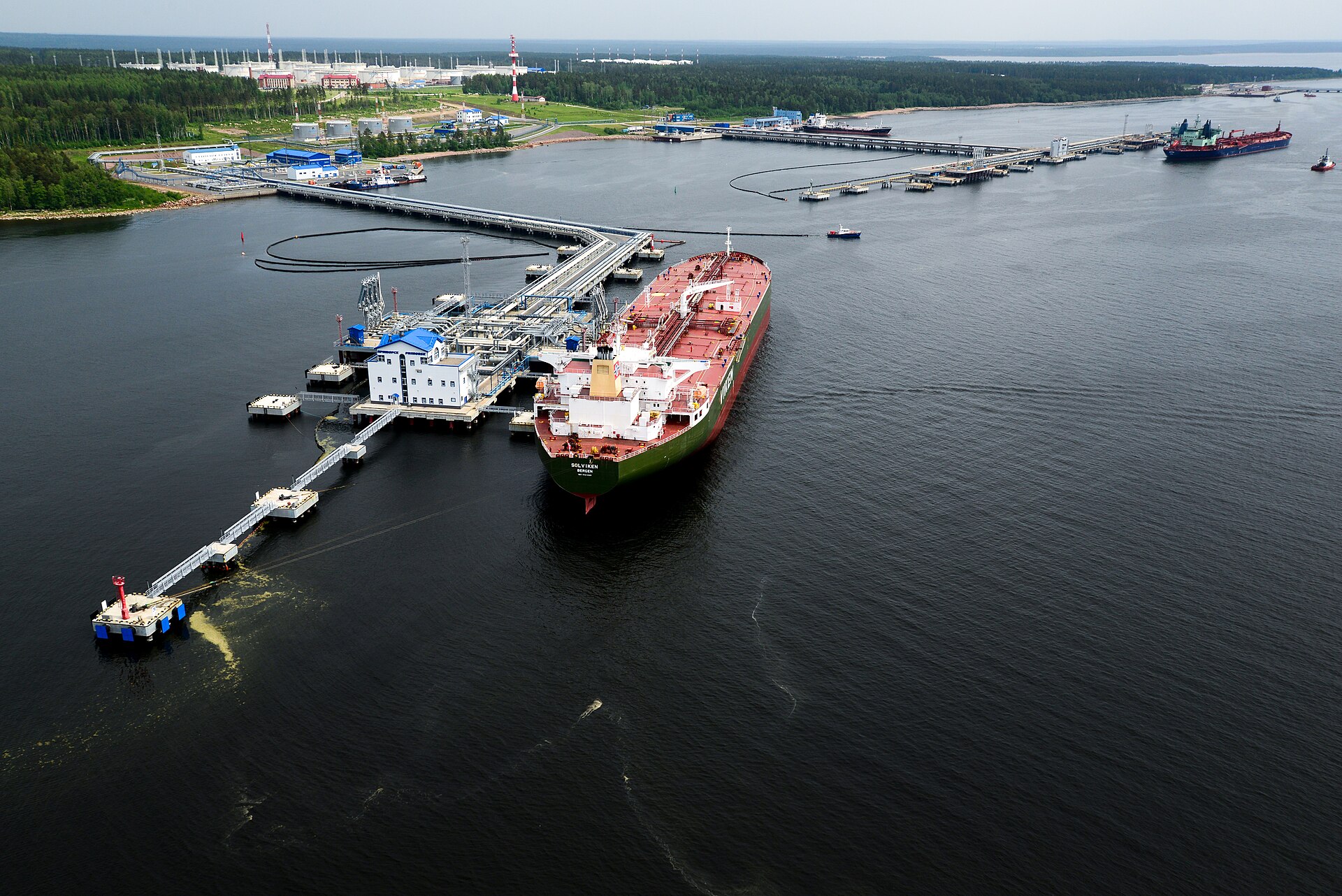
Energy / Markets — The first Russian diesel shipment bound for the United States since the 2022 import ban is at sea. The tanker loaded at Primorsk on the Baltic, is signalling New York, and is due on November 7 — four days after the midterm elections the deal was announced to influence, carrying roughly two hours of American diesel demand.
Track it live: oil prices and the diesel market on the Signal Post News live tracker · the war behind the sanctions on the live wars tracker.
PRIMORSK, Russia — The first Russian diesel shipment to the United States since 2022 is on the water. Ship-tracking data reported by Reuters on Friday, October 23, shows the Malta-flagged tanker Agioi Fanendes loaded with about 40,000 metric tons of ultra-low-sulphur diesel at Russia’s Baltic port of Primorsk and under way for New York, where it is expected to arrive on November 7. The cargo — roughly 300,000 barrels — is the first physical delivery under the surprise agreement President Donald Trump announced with Russian President Vladimir Putin on October 9, in which Washington temporarily eased its ban on Russian fuel imports in an effort to pull down diesel prices that have reached $6.30 a gallon ahead of the November 3 midterm elections.
The sailing converts a two-week-old political announcement into a physical fact, and it does so on a timeline that undercuts the announcement’s stated purpose. November 7 is four days after Americans vote. Whatever the Agioi Fanendes does for diesel supply, it cannot do it before the election it was meant to affect — a detail now confirmed not by the deal’s critics but by the ship’s own transponder.
What the ship-tracking data shows
The vessel’s movements are corroborated by two independent tracking services. LSEG shipping data cited by Reuters puts the loading at Primorsk on Thursday, October 22, at 40,000 metric tons of ultra-low-sulphur diesel. Kpler, a separate maritime intelligence firm, put the cargo at nearly 300,000 barrels and located the tanker off Helsinki on Friday, signalling “New York” as its destination on its AIS transponder. Bloomberg’s compiled tracking data, which measured the cargo at just under 320,000 barrels and about 43,000 metric tons, gave the same November 7 arrival estimate. The identity of the buyer and the seller was not immediately known, Reuters reported.
Moscow confirmed the sailing in its own words. Kremlin spokesman Dmitry Peskov told reporters on a daily conference call on Friday that, as far as he was aware, the Energy Ministry had reported that “the first tanker has, in fact, set sail for its recipients, its buyers,” and that “further shipments will continue at a steady pace from here on” — without specifying whether that first ship was the US-bound one. Earlier in the week, Russian Deputy Prime Minister Alexander Novak, who oversees energy policy, had said the first shipment of Russian diesel bound for the United States would depart the following day and that additional shipments would follow as Russian and US companies worked out contracts. A Maltese shipping report added registry detail: the Agioi Fanendes (IMO 9798375) is managed by the Greek company Eastern Mediterranean Maritime and registered to Maltatankers Shipping Ltd.
Reuters also noted that other diesel cargoes loaded at Primorsk last week, but their final destinations were not clear, and separate vessel-tracking data showed at least two tankers carrying Russian diesel signalling destinations in Turkey and Brazil in recent days — the two countries that became the biggest buyers of Russian diesel after the European Union banned Russian oil product imports in early 2023.
Why this matters
The sailing matters less for the fuel it carries than for what it reverses. When former President Joe Biden banned US imports of Russian oil and petroleum products in March 2022, days after Russia’s full-scale invasion of Ukraine, the ban was the economic centrepiece of the Western response: Russian energy revenue was treated as the war’s fuel line, and cutting it off was the point. The Agioi Fanendes is the first tanker to sail through that wall in more than four years — not through a negotiated peace, not after a ceasefire, but through a unilateral American decision taken while the war it was meant to punish continues, and while Russian missiles were still striking Ukraine’s energy grid this week.
That sequence is what gives a single medium-sized tanker an outsized significance. A sanctions regime depends on the belief that it will hold; every cargo that moves under an exception reprices every other sanction in the system. Allies who built their own, costlier bans — the EU’s product embargo has held since February 2023 — now watch the country that designed the architecture sail a cargo through it for domestic price relief. Ukraine’s government, whose president spent Thursday telling CNN that lifting sanctions “will make him stronger,” reads the same ship as evidence that pressure on Moscow is negotiable. Both readings travel further than the diesel.
The math problem: 300,000 barrels against a 3.8-million-barrel day
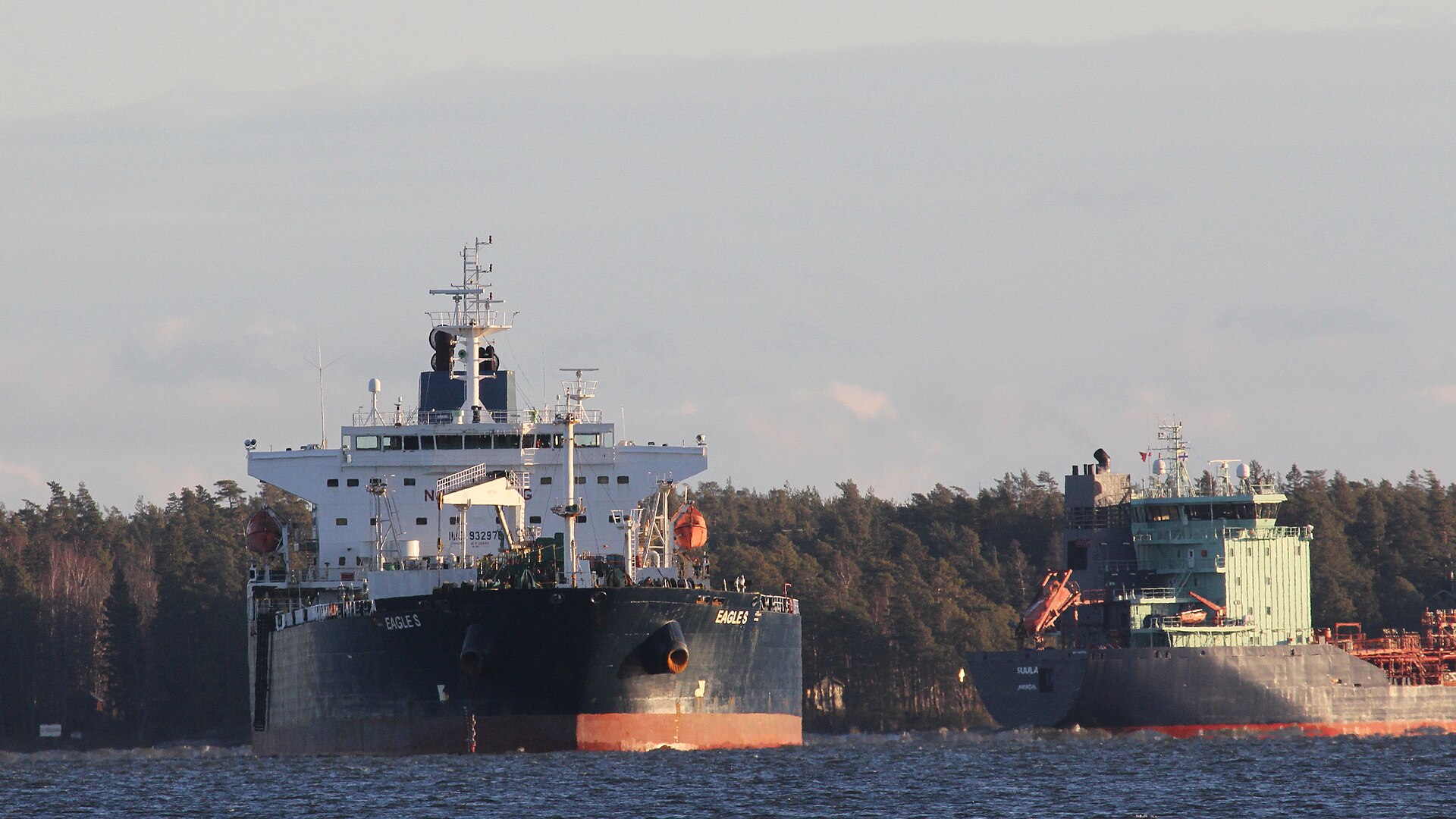
The numbers explain why analysts have been blunt. The United States consumes roughly 3.8 million barrels of diesel a day. The Agioi Fanendes carries about 300,000 barrels — on the New York Post’s calculation, about 7.8 percent of a single day’s national demand, or under two hours of it. The full announced programme is larger but still small against the market: Trump said on October 9 that Russia would immediately export 300,000 metric tons (2.25 million barrels) to the US and global markets, followed by 500,000 tons in November and 1 million tons “immediately thereafter.” Even if every announced ton went to American buyers, the whole programme equals roughly three days of US distillate demand spread over months.
The price context shows why the White House reached for it anyway. The average US diesel price stood at $6.3172 a gallon on October 23, according to OilPrice’s daily tally — up from $6.3090 the day before and far above the $3.6315 recorded on the same day last year. Diesel is the economy’s working fuel: it moves freight, harvests food and heats homes, so a near-doubling in a year feeds directly into the price of almost everything voters buy. The political arithmetic is equally stark. Fuel prices are among the most visible numbers in American life eleven days before a midterm, and the administration has paired the Russian deal with pressure on Europe — Trump has threatened a US diesel export ban unless European countries release more fuel from emergency reserves, and waived parts of a new US sanctions law against Russia to make the imports possible.
How we got here: from the 2022 ban to the October 9 deal
The 2022 ban was near-total and bipartisan in effect: before the invasion, Russian petroleum products were a small but real share of US imports, and after March 2022 they were zero. The architecture then widened — the EU’s embargo on Russian refined products from February 2023 pushed Russian diesel toward Turkey, Brazil and North Africa at discounted prices, while a G7 price cap tried to keep the barrels flowing without funding the Kremlin at full price. Through 2025 and into 2026, Ukrainian drone strikes on Russian refineries tightened the global diesel market further, and the war in the Gulf sent crude and product prices climbing again this autumn.
The turn came on October 9, when Trump announced the agreement with Putin to release Russian diesel into American and global markets, with Treasury issuing the licence to allow it. Russia lifted its own self-imposed diesel export ban the next day, effective October 10 — Kommersant reported the first stage allowed 500,000 tons onto the world market, citing the Trump–Putin agreement. Since then the story has been one of mechanics catching up with announcement: Putin envoy Kirill Dmitriev, who also heads Russia’s sovereign wealth fund, said last week that the US Treasury had asked the fund to help sort out payment issues relating to the agreement — a reminder that four years of sanctions had dismantled the ordinary plumbing for paying Russia for fuel, and that the plumbing has to be rebuilt cargo by cargo.

The backlash: Kyiv, Europe and the president’s own party
The White House case is price relief, stated plainly: diesel at $6.30 a gallon is a tax on every delivered good in the country, and Russian supply is the fastest available lever. The counter-arguments have come from three directions at once. In Kyiv, President Volodymyr Zelenskyy told CNN on Thursday that the dispute was “not about personalities” but about consequences: “My attitude to Putin is very clear. I think that if we lift sanctions, we will make him stronger. It’s not something personal between me and President Trump, and of course I’m against any lifting of sanctions.” He argued Ukraine had supported ceasefire and freeze proposals while Russia continued daily attacks, including ballistic missiles with cluster warheads.
In Washington, six Republican senators led by Mitch McConnell wrote to the president demanding the deal be rescinded, calling it, in the letter’s words, “a gift to our adversary and a betrayal of our allies,” and questioning its legality. In Europe, the deal drew criticism from leaders including Italian Prime Minister Giorgia Meloni, whose country sits inside the EU embargo the American exception now undercuts. Moscow, for its part, presents the sailings as routine commerce resuming: Peskov’s Friday confirmation framed the first tanker as simply the start of a steady pace of shipments, and Novak has cast the follow-on cargoes as a matter of companies signing contracts.
Both things can be true at once, and the data supports each side’s narrow claim. The cargo is real, and it is too small to move the national price by itself — which means the deal’s real effects are the ones each camp is actually arguing about: the precedent for sanctions, the revenue signal to Moscow, and whether voters credit the attempt before November 3 or judge it when the ship arrives on November 7.
What happens next
The next fixed point is the arrival itself. If the Agioi Fanendes berths in New York on or about November 7 and discharges without legal or logistical challenge, the exception becomes a trade route: watch for the announced 500,000-ton November tranche, for whether the buyer’s identity surfaces in customs data, and for whether payment channels described by Dmitriev become a standing mechanism rather than a one-off fix. The price test is just as concrete — diesel was still rising the day the ship sailed, at $6.3172 a gallon, so any claim that the programme is working will be visible, or not, in the daily average through November.
The political test runs on a shorter clock. The midterms are November 3; the ship arrives November 7. If prices stay near $6.30 through Election Day, the deal will have delivered its controversy before its fuel, and the argument will shift to the follow-on cargoes and whether Congress — where a rescission letter is already circulating in the president’s own party — moves to close the exception. If follow-on loadings at Primorsk multiply, the question changes again, from whether one tanker matters to whether the 2022 ban is being dismantled in practice while it remains on the books. Either way, the Agioi Fanendes has already made its point: for the first time since 2022, Russian diesel is coming to America on purpose, in the open, with both governments confirming it.
Related coverage: the diesel deal and the Zelenskyy backlash · Europe’s strategic diesel reserves and the G7 release fight.
Sources: Reuters (Oct 23, first Russian diesel from Putin–Trump deal heading for US, LSEG shipping data; Peskov and Novak statements) via Energy News Today and DevDiscourse; OilPrice (Oct 23, US diesel at $6.30 a gallon as first Russian cargo sets sail; Kpler data); Bloomberg Law (Oct 23, ship with Russian diesel signals US port); New York Post (Oct 23, first shipment will not arrive before midterms); CNN (Oct 22, Zelenskyy interview); Maltese Herald (Oct 23, vessel registry and management details).