Sport · Football · FIFA Women’s World Cup
The Women’s World Cup 2035 UK hosts are confirmed: England, Northern Ireland, Scotland and Wales will stage the biggest edition of the tournament ever held, while a United States-led bid — with Mexico, Costa Rica and Jamaica — takes 2031, the first Women’s World Cup with 48 teams and 104 matches. FIFA’s Extraordinary Congress settled both tournaments on Monday, by acclamation, without a contest.
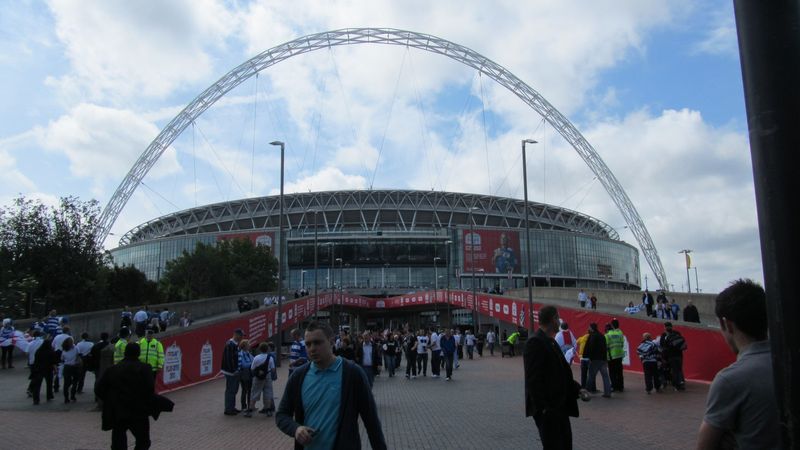
ZURICH, November 23, 2026 — FIFA’s Extraordinary Congress, meeting virtually from Zurich on Monday, appointed the hosts of the 2031 and 2035 Women’s World Cups by acclamation, Reuters reported, handing the women’s game its next decade in a single session. The 2031 tournament goes to the United States, Mexico, Costa Rica and Jamaica — the first Women’s World Cup to be played by 48 teams across 104 matches. The 2035 tournament goes to England, Northern Ireland, Scotland and Wales: the first Women’s World Cup staged in the United Kingdom, and the first World Cup of any kind on UK soil since the men’s tournament of 1966. Neither award was contested. Both bids were the sole valid bids for their editions, declared as such in April 2025, and Monday’s congress formalised what FIFA’s rotation rules had already made close to inevitable.
The decisions lock in the tournament’s geography for the next three editions. Brazil hosts in 2027 with 32 teams, the last of the smaller format. North America follows in 2031, at the new expanded scale. The United Kingdom closes the sequence in 2035, with proposed dates of June 21 to July 29 — a 39-day tournament, according to the bid details reported by The Times. FA chair Debbie Hewitt, addressing the congress, said: “Thank you for your trust and confidence in awarding us the FIFA Women’s World Cup 2035.” FIFA president Gianni Infantino promised commercially successful tournaments whose money would be reinvested in the women’s game. What follows is what was actually decided, what the numbers say, and what remains genuinely undecided beneath a day of unopposed celebration.
Two tournaments, awarded in one afternoon
2031 Women’s World Cup hosts USA: a four-nation North American bid
The 2031 Women’s World Cup hosts USA headline a four-nation bid completed by Mexico, Costa Rica and Jamaica. It will be the first edition of the tournament played with 48 teams and 104 matches — the same expanded architecture the men’s World Cup adopts in 2026 — and the third Women’s World Cup hosted by the United States, after 1999 and 2003. The bid put forward 20 candidate cities: 14 in the United States, four in Mexico, plus San José in Costa Rica and Kingston in Jamaica. Final host cities, stadiums and training sites are to be confirmed by FIFA in due course, so the 20 names are a longlist, not a schedule. Even so, the shape is clear: this is the United States’ commercial machine — its stadium inventory, broadcast market and sponsorship depth — extended across CONCACAF, with Mexico a World Cup host in its own right and Costa Rica and Jamaica giving the bid a Caribbean and Central American footprint no previous women’s tournament has had.
England Scotland Wales Northern Ireland 2035: the home nations’ turn
The England Scotland Wales Northern Ireland 2035 bid is, structurally, the mirror image: four associations, one sovereign state, and a tournament distributed across the whole of the United Kingdom rather than concentrated in one country. It is the first Women’s World Cup the UK has hosted, and it returns the World Cup — men’s or women’s — to the UK for the first time since 1966. The bid proposes 48 teams, 104 matches and 39 days of football, with proposed dates of June 21 to July 29, 2035, as reported by The Times. UK Sport, the government agency that backed the bid, describes the tournament as the largest single-sport event ever staged in the UK. That is a claim about scale, and the arithmetic supports the ambition: the 32-team tournament played in 2023 and repeated in 2027 contains 64 matches; the UK edition would stage 104, spread across four nations at once.
Why there was no vote to win
Both outcomes were produced by FIFA’s rotation system before any campaigning began. Eligibility for 2031 was limited to confederations in Africa and CONCACAF; eligibility for 2035 was limited to Africa and Europe. Within those gates, each winning bid emerged as the only valid bid, a status FIFA declared in April 2025. Monday’s appointments by acclamation were therefore confirmations, not contests. That context matters for how the day should be read: the congress did not weigh the UK against a rival vision of 2035, because no rival vision was permitted to reach the ballot. The scrutiny the bids received came earlier, in FIFA’s technical evaluation — and on that measure, as the numbers section below sets out, the UK bid scored unusually well.
Why this matters
A decade of the women’s game, mapped in one day
Hosting decisions are the skeleton on which a sport’s economics hang. By fixing 2031 in North America and 2035 in the UK, FIFA has given broadcasters, sponsors and federations a twelve-year planning horizon for the women’s game — and placed its two biggest tournaments in the two richest media markets in world football. The analysis here is straightforward: the women’s World Cup is being repositioned from a fast-growing property into a anchor property, scheduled and scaled like the men’s tournament it now matches in format. The 48-team expansion is the tell. FIFA does not expand a tournament it expects to shrink commercially; it expands one whose match inventory it intends to sell.
The reinvestment promise is the claim to test
Infantino’s commitment — commercially successful tournaments, with money reinvested in women’s football — is the sentence from Monday that will be quoted back at FIFA for a decade. It is also, as stated, unquantified: no figure, no percentage, no mechanism was attached to it in the congress reporting. The honest reading is that the promise is real as an intention and unproven as a policy. What would prove it is visible in advance: the prize-money trajectory from Brazil 2027 through 2031 and 2035, the share of tournament revenue routed to participating associations and grassroots programmes, and whether the host nations’ own legacy funds survive contact with staging costs. This article flags the promise now so that it can be measured later, edition by edition.
The venue question: 22 stadiums, 19 stadiums, and one final
FIFA Women’s World Cup 2035 stadiums: two lists, both attributed
The FIFA Women’s World Cup 2035 stadiums picture is the one part of Monday’s announcement where the sources do not agree, and this article keeps the disagreement visible rather than averaging it away. UK Sport says the bid proposed 22 stadiums — 16 in England, three in Wales, two in Scotland and one in Northern Ireland — across 16 host cities. The Times lists 19 proposed venues: 14 in England, two in Scotland, two in Wales and Windsor Park in Northern Ireland. The gap between 22 and 19 is not trivial, because each number carries a different distribution among the four nations — on the UK Sport count, Wales has three stadiums; on The Times count, two. Both figures describe a bid document, not a final allocation: FIFA will confirm the host cities, stadiums and training sites in due course, and until it does, every venue list is provisional. Readers should treat the two numbers as what they are — the bid’s own presentation, via UK Sport, and a newspaper’s reading of the bid book — and expect the confirmed list to settle the argument.
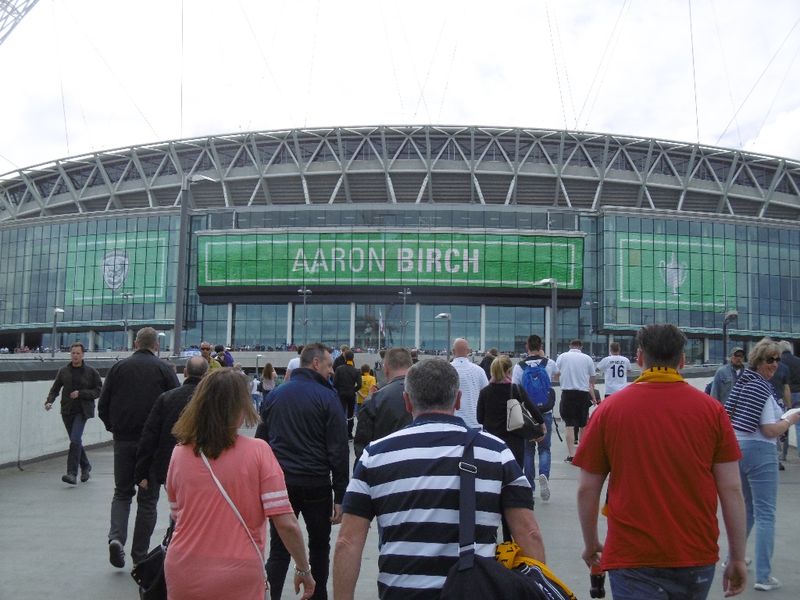
Wembley and the final; Windsor Park and the renovation bill
Two stadiums frame the venue debate. At the top end, Wembley is the presumptive final venue for the simplest of reasons: according to The Times, it is the only stadium in the bid that currently meets FIFA’s technical requirements for a World Cup final. If that reporting holds, the final’s location is close to a formality, and the real competition among English cities is for the semi-finals and the opening match. At the other end sits Windsor Park in Belfast, Northern Ireland’s national stadium and the bid’s single Northern Irish venue on both counts of the list. Windsor Park’s inclusion is symbolically essential — a four-nation tournament that played nothing in Northern Ireland would not be a four-nation tournament — but its capacity and facilities have long been discussed as needing renovation to meet tournament requirements. The cost and the timetable of that work, and who pays for it, is one of the first concrete tests of the bid’s promises. The same logic applies, at lesser intensity, to the Welsh and Scottish venues on the longer UK Sport list that do not appear on The Times list: their presence in the final allocation is exactly the kind of detail FIFA’s confirmation process exists to resolve.
Context: from 12 teams to 48
UK first World Cup since 1966: the long way back
The UK first World Cup since 1966 framing is unavoidable, and for once the nostalgia is also the news. England’s men won the World Cup at the old Wembley in 1966, and no World Cup — men’s or women’s — has been staged in the United Kingdom in the six decades since, a drought that outlasted repeated English bids for the men’s tournament and the entire history of the women’s. The 2035 tournament closes that gap with a neat symmetry: the women’s game brings the World Cup home, to a Wembley rebuilt since 1966 and to three other nations that have never hosted a World Cup match of any kind. Scotland, Wales and Northern Ireland are not garnish on an English bid; on both venue counts they hold stadiums, and their matches will be the first World Cup fixtures ever played on their soil.
The tournament that outgrew its first map
The scale of what was awarded on Monday is easiest to see against the tournament’s beginnings. The inaugural Women’s World Cup, in China in 1991, had 12 teams. The field grew by steps — 16, then 24, then 32 at the 2023 tournament in Australia and New Zealand, the format Brazil repeats in 2027 — and now jumps to 48 for 2031 and 2035, mirroring the expansion the men’s tournament makes in 2026. Each step changed what hosting means. A 12-team tournament is a fortnight in a handful of stadiums; a 48-team, 104-match tournament is a national infrastructure project that runs for 39 days and touches transport, training bases and accommodation across four countries. The UK bid’s 4.3-out-of-5 technical score, examined below, was awarded for a plan of exactly that weight.
The Lionesses era: a bid that arrives after the boom
The UK bid does not land in a vacuum; it lands on top of the strongest decade the women’s game has had in Britain. England’s Lionesses won the European Championship in 2022 and again in 2025, turning a national team into a mainstream commercial property and filling the same stadiums the 2035 bid now proposes to use. Domestic attendances and broadcast audiences in the Women’s Super League era have reset what a women’s tournament in the UK can expect at the gate. That is the demand side of the bid’s confidence — and, read coldly, it is also a risk the bid has priced in: a tournament awarded in 2026 for 2035 is a bet that the current growth curve holds for another decade, through form cycles, star generations and the economics of the club game. The beneficiaries of the bet being right are obvious. The exposure if it is wrong sits with the public money behind the bid.
The numbers behind the expansion
Women’s World Cup 48 teams 104 matches: what the format demands
The Women’s World Cup 48 teams 104 matches format is the men’s 2026 blueprint applied to the women’s game, and its demands are arithmetic before they are anything else. One hundred and four matches in 39 days is an average of more than two and a half matches a day, every day, for five and a half weeks — a schedule that needs not just stadiums but staggered rest days, training bases within reach of each venue, and a travel plan that does not exhaust the players the audience is paying to watch. The UK’s geography is its quiet advantage here: its 16 proposed host cities sit within a compact island landmass, a fraction of the distances the 2031 tournament will ask teams to cover between the United States, Mexico, Costa Rica and Jamaica. Compactness does not appear in a headline number, but it is the kind of operational fact bid evaluators score.
The 4.3 out of 5: the strongest technical score of the modern era
FIFA’s bid evaluation scored the UK bid 4.3 out of 5 — reported by The Times and the FA as higher than the technical score given to any of the past five Women’s World Cup bids. Treat that figure carefully. It is a score for the plan as submitted: stadiums, transport, accommodation, commercial projections and organisational readiness, assessed against FIFA’s requirements. It is not a guarantee of delivery, and the gap between a bid book and a tournament is where hosting projects usually lose their shine — in venue finalisation, in cost control, in the politics of four governments and four football associations sharing one event. But as a measure of how the bid read to the people who will now supervise it, 4.3 out of 5 is a strong hand, and it explains the confidence of Monday’s presentation. The number to watch next is not a score but a list: the confirmed venues, which convert the bid’s promises into named, checkable commitments.
Who benefits — and what could go wrong
The beneficiaries: four nations, one commercial giant
The immediate beneficiaries are the four UK associations, which gain a home tournament’s revenue, legacy programmes and a decade of relevance, and the 2031 hosts, above all the United States, whose federation and club game get the largest commercial stage the women’s sport has ever built. Players benefit in a specific way: home World Cups are the tournaments that define careers and recruitment pipelines, and a generation of girls in Kingston, San José, Cardiff and Belfast now has a dated, local target. FIFA benefits most quietly of all: two unopposed, high-scoring bids in wealthy markets is the lowest-risk outcome its congress could have produced, at a moment when the organisation’s wider politics are anything but quiet — see our report on Philippe Diallo’s challenge to Gianni Infantino for the FIFA presidency.
The risks: venues, prices and a frosty relationship
Against that, the risk list is concrete. Venue uncertainty comes first: until FIFA confirms the final list, the 22-versus-19 discrepancy hangs over every host-city claim, and Windsor Park’s renovation is unfunded business as of Monday. Ticket pricing comes second: a 104-match inventory tempts organisers toward dynamic pricing that fills premium seats while pricing out the grassroots audience the tournament is supposed to inspire — the tension between Infantino’s commercial-success promise and his reinvestment promise will be fought, in public, over the price of a group-stage ticket in 2034. Third, politics: The Times reports that relations between FIFA and the UK football authorities have been frosty, and a decade of shared delivery is a long time to sustain a frost. None of these risks is hypothetical in kind; each is the standard failure mode of a mega-event, named here so that Monday’s celebration does not get to pretend otherwise. The security dimension that now shadows every FIFA event was visible this month in a different age group — see our report on the United States’ withdrawal from the U-17 World Cup in Qatar — and planners for 2031 and 2035 will build their guarantees around it.
What happens next
2035 Women’s World Cup dates and the runway: Brazil 2027, USA 2031, UK 2035
The 2035 Women’s World Cup dates proposed by the bid — June 21 to July 29, 2035 — are the far end of a three-tournament runway that now structures the women’s game. Brazil 2027 comes first, the last 32-team edition and the format’s farewell. The 2031 tournament in North America then debuts the 48-team scale, and everything it learns about scheduling, travel and ticket demand becomes the planning baseline for the UK four years later. Before any of that, the near-term milestones are administrative but decisive: FIFA’s confirmation of final host cities, stadiums and training sites for both editions; the qualification format for a 48-team field, which will redraw the competitive map of every confederation; and the first published legacy and grassroots funding commitments from the host associations, against which Infantino’s reinvestment promise can start to be audited. Monday’s congress answered the question of where. The answers to how — which stadiums, at what prices, with what legacy — are the story of the next nine years.
Read next: Philippe Diallo Challenges Infantino for the FIFA Presidency With Macron’s Backing · U.S. Pulls Out of the U-17 World Cup in Qatar as War Fears Reach Youth Football · Australia Rugby League World Cup Final: Kangaroos Beat New Zealand 32-12 for 13th Title
Sources
Reuters, “US, Mexico, Costa Rica, Jamaica awarded 2031 Women’s World Cup, UK to host 2035 edition” (November 23, 2026) — the Extraordinary Congress appointments by acclamation, the 2031 four-nation award and 48-team format, the UK’s 2035 award and first World Cup in the UK since 1966, and the candidate-city breakdown: reuters.com. FIFA, “2031 and 2035 Women’s World Cup hosts announced” (November 23, 2026) — the official announcement of both appointments: fifa.com. UK Sport, “UK awarded hosting rights for FIFA Women’s World Cup 2035” (November 23, 2026) — the bid’s proposed 22 stadiums (16 England, three Wales, two Scotland, one Northern Ireland) across 16 host cities, and the description of the tournament as the largest single-sport event ever staged in the UK: uksport.gov.uk. The Times’ reporting is attributed in the text where it is used: the 19-venue list, Wembley’s status as the only proposed venue meeting FIFA’s technical requirements for the final, the proposed June 21–July 29, 2035 dates, the 4.3-out-of-5 bid evaluation score, and the characterisation of FIFA–UK relations. FA chair Debbie Hewitt’s remark is quoted from her address to the congress as reported by Reuters and FIFA. Facts are attributed to their sources throughout; assessments of what the decisions mean are this newsroom’s analysis and are labelled as such.