Sport · Soccer
He never planned to run. On Tuesday, Philippe Diallo stood in Paris as UEFA's unanimously ratified candidate, with the French president behind him and an appeal out to Japan's Kozo Tashima — and only hours left before the filing deadline for the first serious challenge of the Infantino era.
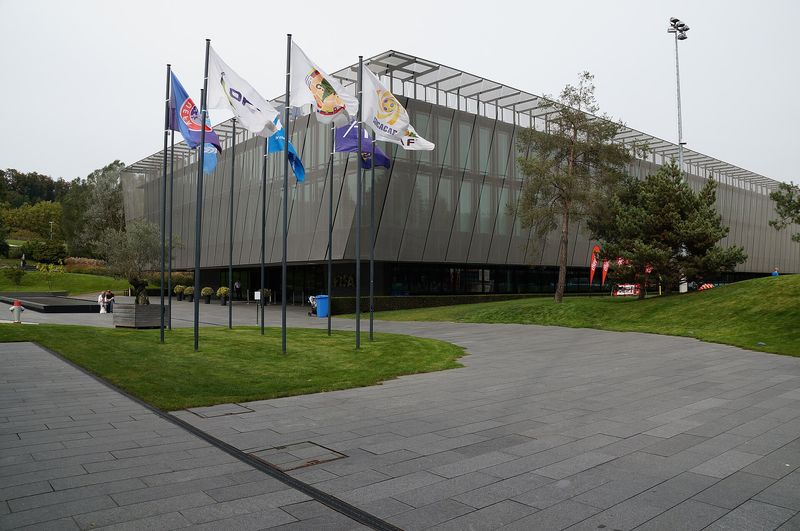
PARIS — Philippe Diallo, the president of the French Football Federation, formally entered the race for the FIFA presidency on Tuesday, ratified unanimously by his federation hours after UEFA's executive committee asked him to stand as its candidate against Gianni Infantino.
Diallo, 63, who has led the FFF since 2023, was candid about the path that brought him to a Paris press conference: "I wasn't initially a candidate." He never planned to run. What changed, he said, was a series of decisions taken over "several months, perhaps a year" — and the backing of French President Emmanuel Macron, who supports the candidacy after Arsène Wenger, FIFA's chief of global football development, declined to run, according to Reuters, citing multiple people familiar with the discussions. Candidates must file by midnight Swiss time on Wednesday, with eligibility and integrity checks to clear by February 18.
The grievance list
Diallo's case against the incumbent is a catalogue. He cited the inaugural FIFA Peace Prize presented to US President Donald Trump; the split of World Cup revenue in the United States; the lifting of American striker Folarin Balogun's red-card suspension — FIFA lifted the suspension in July, and people close to the matter said it followed a phone call from Trump to Infantino, according to Reuters, which reported that link as sourced accounts, not established fact; the length of the halftime break in the World Cup final; and the plan to bring private investors into a new FIFA commercial company. "All these decisions, often taken alone, have shocked the football world very broadly: supporters, clubs, partners, federations," Diallo said. "The trust placed in our organisation, FIFA, and in its president, has been broken." Critics have said some of the decisions showed FIFA bowing to Washington, Reuters noted.
The trigger: the privatisation plan
Behind the catalogue sits one episode that did more than any other to break the confederations' patience: FIFA Forward Enterprise, Infantino's plan — advanced shortly after the World Cup final without full consultation — to sell a 20 percent stake, in a $4.2 billion plan, in a new FIFA commercial subsidiary holding rights linked to competitions including the World Cup. It drew letters of protest from UEFA, Concacaf and the AFC, fierce criticism over governance and transparency, and legal action to obtain documents. Infantino abandoned the plan in July, apologised for its handling at the October FIFA Council meeting in Zurich, and promised some of the reforms confederation leaders demanded. France's break came in September, when the FFF withdrew its support for Infantino's re-election, Diallo saying then that "the trust placed in the FIFA president has been broken" — and warning, in words that now read as the campaign's first principle: "The project cannot be a purely European one."
The challenger
Diallo's route to this moment runs through French football's institutions rather than its dugouts: nearly two decades leading the organisation that represents all French professional clubs, a seat on the French professional league's board, work inside FIFA's dispute-resolution structures, the FFF presidency since 2023 and a UEFA executive committee seat the same year. It is an administrator's résumé, assembled for a contest that will be decided by administrators — the presidents and delegates of 211 national associations.
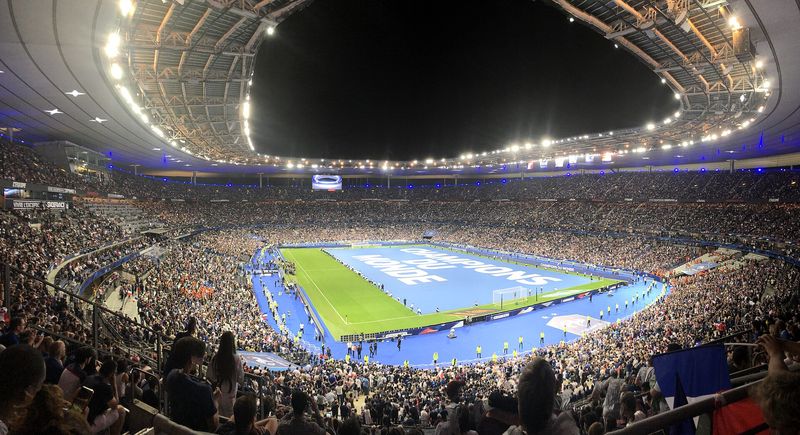
The Tashima appeal — and a third candidate
Diallo said he will reach out to Japan's Kozo Tashima, a FIFA Council member and honorary president of the Japan Football Association, who declared his own candidacy on November 5. "If we want to win, I believe we must unite our forces," he said, adding that contact had been made and that he would speak to Tashima about how they can unite. He gave no detail on what unity would mean in practice, or which of them would stand aside — the central unanswered question of the opposition's campaign. A third declared candidate, Ramon Vega, the former Tottenham Hotspur and Switzerland defender, faces a threshold question: candidates need the backing of at least five member associations, and USA Today noted it was not clear Vega has it.
The maths, honestly
FIFA's presidency is decided by its 211 member associations, one vote each, regardless of size: 106 votes wins. UEFA holds 55 — just over a quarter of the electorate — so no European candidate can win from Europe alone. And Diallo does not yet have all 55: UEFA's Monday statement, from a meeting chaired by UEFA President Aleksander Čeferin, said the national associations represented on UEFA's executive committee and the FIFA Council "invited" Diallo to stand and "unanimously pledged their full support" — language that stops short of claiming the whole confederation, and Reuters' sources say the full 55 are not yet his.
The incumbent's reported position is far stronger. Infantino, 56, in charge since 2016 and seeking a fourth term, has had the support of the Confederation of African Football and South America's CONMEBOL, Reuters reported on Tuesday; Le Monde reported the AFC gave him its backing on October 23. USA Today reported CAF's 54 members and Asia's 46 as backing him — with Jordan's Ali bin Al Hussein suggesting he would not follow suit — along with the Caribbean Football Union's 25 members, Mexico, and the majority of South America's 10; before the World Cup final, The Guardian reported more than 200 members ready to back Infantino for another term. Every one of those numbers is a reported pledge, not a vote: the ballot in Rabat is secret, and pledges made in November have four months in which to soften.
The incumbent's case
Balance requires the other record. Infantino's supporters credit him with increasing FIFA's revenue and channelling more money to smaller associations through increased development funding and a bigger competition calendar, built on a decade of ties with federations, particularly outside Europe. His critics accuse him of concentrating power and eroding the checks on his presidency. Both accounts are now, formally, a campaign.
The Washington test
Winning Rabat may not be the hardest contest Infantino faces. Reuters' November 16 analysis noted that even a comfortable ballot victory could be followed by a tougher test in Washington, where Democrats are set to take control of the House of Representatives in January. Democratic lawmakers have already sought information about Infantino's relationship with the Trump administration; a House majority would give them the power to investigate and compel testimony, and people familiar with the matter expect that scrutiny to intensify.
What happens next
The filing deadline falls at midnight Swiss time on Wednesday. Eligibility and integrity checks must clear by February 18. Then comes four months of coalition-building — for Diallo, a Tashima decision and a Francophone-African path through CAF's electorate are the only visible routes to 106 — before the 77th FIFA Congress elects the president in Rabat on March 18. Signal Post News will follow the campaign as the pledges are tested.
Sources
Reuters, November 17 — reuters.com/sports/soccer. Reuters analysis, November 16 — reuters.com/sports/soccer. USA Today, November 16 — usatoday.com/sports. Le Monde, November 17 — lemonde.fr.