Sport · Formula 1 · Media
The FIA bans journalist Leclerc criticism case is now the biggest media row in Formula 1 in years: the sport’s governing body has stripped the Daily Mail’s veteran correspondent Jonathan McEvoy of his accreditation for the rest of the 2026 season because of one phrase in one opinion column, and the Mail has responded by walking away from the final three races altogether. What began as a five-second penalty in Mexico City has become a test of who controls what may be said about the sport — the people who run it, or the people who cover it.
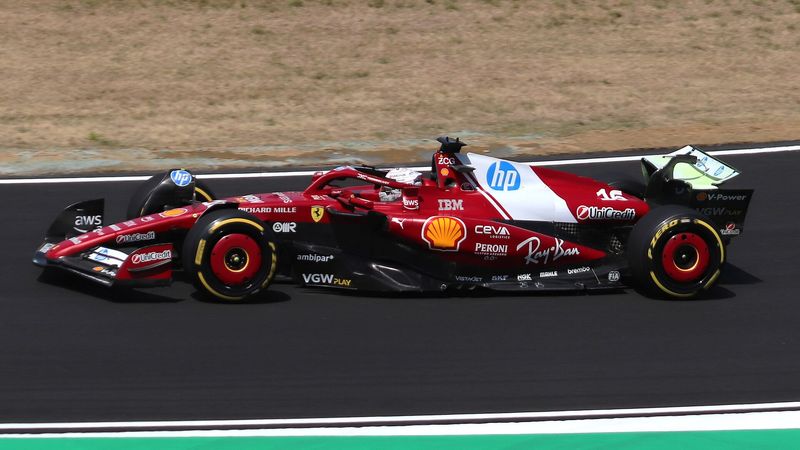
LONDON, November 15, 2026 — The FIA bans journalist Leclerc criticism story broke into the open this weekend with a punishment that has few precedents in modern sport. The Fédération Internationale de l’Automobile, Formula 1’s governing body, has revoked the media accreditation of Jonathan McEvoy, the Daily Mail’s Formula 1 correspondent, for the remainder of the 2026 season. McEvoy will not be admitted to the paddock for the final three races of the year — Las Vegas, Qatar and Abu Dhabi — because of an opinion column he published on November 4 about Ferrari driver Charles Leclerc. The Daily Mail has answered by announcing a boycott: it will not report the final three races or their news conferences for the rest of 2026. Britain’s Society of Editors has condemned the ban as an attack on press freedom. A single insult in a newspaper column has become an argument about whether a governing body may police not what journalists do at its events, but what they write about them.
The facts that are not in dispute are narrow, and they matter. McEvoy, who has covered Formula 1 for more than twenty years, was told on Thursday that his accreditation had been withdrawn. The FIA’s position, set out in a statement first reported by Front Office Sports and carried by Reuters, is that his article “fell short of the standards of professionalism expected” of accredited media. The federation pointed out that accreditation is granted at its sole discretion and can be revoked without notice. It also stressed the limits of its own decision: the ban applies to McEvoy personally, and the Daily Mail remains free to nominate another reporter in his place. Everything beyond those points — why the FIA acted when it did, what McEvoy says he was told about next season, and who he says complained — is contested, and this article attributes each claim to the person making it.
The column: five seconds in Mexico City, one phrase in print
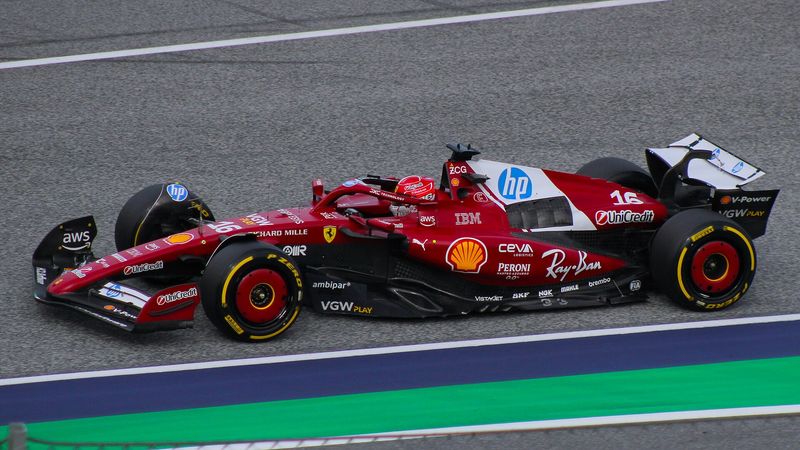
The column at the centre of the row was about a racing incident, not about the FIA. At the Mexico City Grand Prix, Leclerc became involved in an opening-lap fight with his own Ferrari teammate, Lewis Hamilton. Leclerc ran off the track and, in the stewards’ judgement, gained an advantage by doing so; he was given a five-second time penalty. It was the kind of incident Formula 1 produces several times a season, and it would ordinarily have been forgotten by the following weekend.
McEvoy’s November 4 column was not forgotten, because of the language he chose for it. Writing about Leclerc’s part in the incident, he called the Ferrari driver a “sneaky little bastard.” The phrase was a judgement on a piece of driving — an accusation, in the vernacular of the British sports pages, that Leclerc had taken a shortcut and got away with more than he should have. It was also, unmistakably, a personal insult aimed at a named driver, printed in one of Britain’s largest newspapers. That combination — opinion column, personal epithet, superstar driver — turned a routine piece of paddock criticism into a governing-body disciplinary case. The stewards had already dealt with the driving, in Mexico, with a five-second penalty. The FIA’s media department then dealt with the writing, ten days later, with a ban.
What the FIA decided — and what it did not
The federation’s statement is short, and its wording deserves to be read carefully, because the whole dispute turns on it. The FIA said the article “fell short of the standards of professionalism expected.” It did not say the column was inaccurate. It did not identify a factual error, a breach of paddock rules, or any misconduct by McEvoy at a circuit. The failing it named was one of professionalism — of tone and standards — in something he wrote and his newspaper published. The sanction followed from the accreditation system itself: passes are issued at the FIA’s sole discretion, and what is granted at discretion can be withdrawn at discretion, without notice. On the federation’s account, no hearing was required; this was a landlord revoking a key, not a court handing down a verdict.
Two limits in the decision are significant. It is time-limited: the revocation runs for the remainder of the 2026 season, in practice three races. And it is person-limited: the Daily Mail itself has not been banned, and the FIA has said the paper may nominate a replacement. Those limits will feature in the FIA’s defence of its proportionality. Its critics will answer that the limits are what make the decision look like what it is — a punishment aimed at one writer for one column, calibrated to hurt for exactly as long as the season lasts, and structured so it can be described as routine accreditation management rather than censorship. Both descriptions fit the same facts. Which prevails depends on whether the paddock, and the wider media industry, treat this as an administrative matter or a press-freedom one. So far, the industry is treating it as the second.
The boycott: the Mail walks away from three races
The Daily Mail’s response was to refuse the FIA’s offered compromise. Rather than nominate a substitute and carry on, the paper announced that it would boycott the final three races of the season in protest: no reporting of the races themselves, and no reporting of their news conferences, for the remainder of 2026. The Mail’s head of sport, Chris Dean, condemned the FIA’s decision and asked for McEvoy to be reinstated. The boycott is a deliberately costly signal. A newspaper that covers Formula 1 as a core sport does not lightly surrender three race weekends, and the surrender is the point: the Mail is telling the FIA, and every other governing body watching, that accepting the replacement-reporter offer would have meant accepting the principle that a federation can remove a named journalist for his opinions and expect his employer to quietly staff around the removal.
McEvoy’s defence — and the claims only he is making
McEvoy’s own account, as reported by Reuters, Crash.net, the New York Post and others, rests on intent. He has described the phrase as light-hearted — a piece of joshing, in the knockabout register of British sports writing, rather than a considered attack on Leclerc’s character. Readers will judge that defence for themselves; what matters for the record is that it is his characterisation, offered after the fact, and the FIA’s statement does not engage with intent at all. On the federation’s stated test, it does not matter whether the insult was meant warmly. It fell short of expected professionalism, and that was enough.
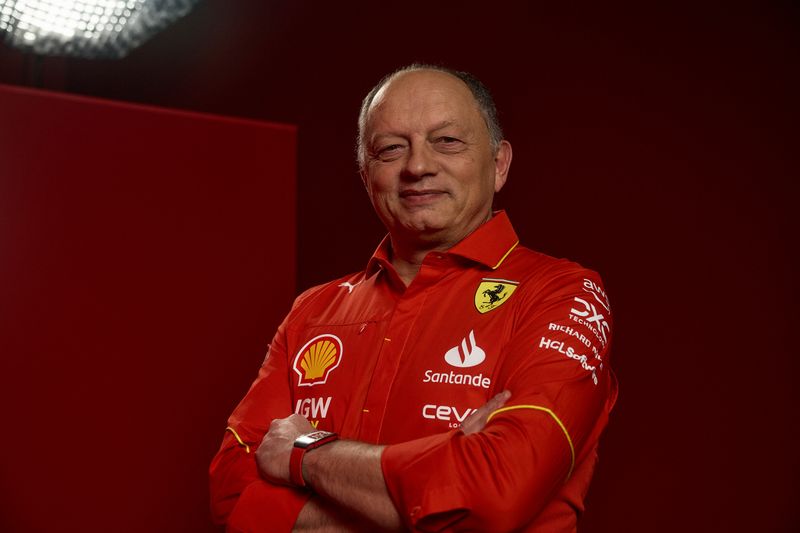
Two further claims come from McEvoy and should be read as his, not as established fact. He says he was told his accreditation will return next season. The FIA has not publicly confirmed that, and until it does, the length of his exile is formally unknown. He has also alleged that Ferrari’s team principal, Fred Vasseur, complained to the FIA about the column. That allegation is the most combustible element of the affair, because it would convert an FIA standards decision into something closer to a governing body acting on a competitor’s complaint about coverage of that competitor. It remains an allegation: neither its truth nor its weight in the FIA’s thinking has been independently established. But even as an allegation, it explains why this story has travelled beyond the sports pages — a ban that looks, to its critics, less like standards enforcement and more like a favour.
The press-freedom backlash
The Society of Editors, which represents senior editors across the British media, condemned the FIA’s decision and framed it explicitly as a press-freedom issue. That framing matters because of who is doing it: not the Daily Mail defending its own man, but the industry’s collective body saying a precedent is being set that reaches every newsroom. The logic is straightforward. Accreditation is not a courtesy in modern sport; it is the working infrastructure of journalism — access to the paddock, the press conferences and the principals. A governing body that can withdraw that infrastructure, without notice and at its sole discretion, in response to published journalism holds a lever over every journalist who depends on it. The lever does not need to be pulled often. It needs only to exist, and to have been seen to be pulled once, for every correspondent in the paddock to know the price of a phrase.
The FIA’s implicit answer is the one every accrediting body gives. A press pass is a privilege, not a right; it is issued under conditions, and one of them, on the federation’s account, is professional conduct. No one has stopped the Daily Mail publishing whatever it wishes — McEvoy can write the same column tomorrow, and the Mail can print it. What has been withdrawn is access, and access has always been conditional. The weakness in that answer is the one the Society of Editors identified: conditioning access on the acceptability of coverage collapses the distinction between regulating behaviour at an event and regulating opinion about it. McEvoy is not accused of anything he did in a paddock. He is being punished for something he wrote in a newspaper, in London, about a race that had already been run and judged.
Why this matters: a governing body policing opinion
Strip the personalities away and the case poses a question no major sport has answered cleanly: where does a federation’s legitimate interest in how it is covered end? Governing bodies routinely and reasonably regulate conduct — they can exclude a journalist who abuses staff, breaches embargoes, or misuses access. Opinion is different. A columnist’s job is judgement, and judgement in sport is frequently rude; British sports writing in particular runs on a register of mockery that treats drivers, players and managers as fair game. If a single coarse phrase in an opinion column can cost a correspondent his season, the operative rule in every paddock is not a published standard but a guess: how much criticism, in what tone, about whom, will the federation tolerate this month? Rules that must be guessed at do not merely punish the person they fall on. They edit everyone else in advance.
The precedent also travels. Formula 1 is not the only sport whose media operation runs on discretionary accreditation, and federations watch each other. A ban absorbed quietly in F1 becomes a tool available in football, tennis, golf and the Olympics the next time a columnist offends a star or a sponsor. That is why the Society of Editors intervened, and why the Mail chose the expensive response over the cheap one: both are fighting the second case, not the first. Conversely, the FIA will know that retreating has a precedent value of its own. If reinstatement follows a boycott, every newsroom learns that collective pressure works, and the accreditation lever loses its force. The federation has built itself a dilemma in which firmness looks like censorship and flexibility looks like surrender.
Who gains, who loses
In the short term, almost everyone loses something. McEvoy loses the end of a season, and ends the year as the story rather than its teller. The Daily Mail loses three weekends of coverage its readers want, and takes the commercial hit of a boycott on principle. The FIA loses control of its own narrative: the final races of 2026 will now be covered, everywhere except the Mail, in the shadow of a free-press row, and Leclerc — the one person who never asked for any of this — will be asked about a newspaper column in every press conference he attends. The penalty in Mexico was the sport’s answer to his driving: proportionate, final, and with nothing in the record suggesting the driver sought a second, heavier punishment for the man who wrote about it.
The gainers are harder to see, which is itself diagnostic. The FIA gains, at most, a demonstration that its professionalism standard has teeth — a demonstration whose deterrent value depends entirely on other journalists deciding to soften their coverage, which is precisely the effect its critics call chilling. The Mail gains standing as a defender of its correspondent, at real cost. And the wider press gains a test case: a clear, recent, well-documented instance of accreditation used as an editorial sanction, around which the industry can organise the argument it has been having in the abstract for years.
What happens next
The calendar offers no pause. Las Vegas comes first, staged with the Daily Mail absent by choice and its correspondent absent by order — a distinction the FIA will be at pains to maintain and the Mail equally at pains to blur. The Mail’s request for reinstatement is on the table; the FIA has given no public sign of reconsidering, and its statement’s emphasis on sole discretion reads like a body that has considered the optics and chosen them anyway. Watch three things. First, whether other outlets and journalists’ associations beyond Britain join the Society of Editors — a lone national protest is containable, an international one is not. Second, whether the paddock’s real verdict appears in how freely McEvoy’s colleagues now write about Leclerc, Ferrari and the FIA itself. Third, the 2027 question: McEvoy says he was told his pass returns next season, the FIA has not confirmed it, and the first accreditation list of the new year will be a document with unusual significance. If his name is on it, the federation will call the matter closed and proportionate. If it is not, a three-race ban will have become something else entirely.
There is a final irony the participants will not miss. The Mexico City incident was settled, correctly and completely, by the smallest tool the sport owns: five seconds, added to a race time, for a lap-one shortcut. The writing about it has been settled, so far, by the largest tool the federation owns: exclusion. Between those two punishments sits the whole dispute — about proportion, about who judges the judges of the sport, and about whether the people who run Formula 1 understand that a press free enough to call a driver a sneaky little bastard is the same press whose coverage built the audience the federation now sells. The season ends in Abu Dhabi. This argument will not.
Sources
Reuters, reporting of November 14, 2026 (the revocation for the remainder of the 2026 season; the FIA statement; the boycott; McEvoy’s account). Front Office Sports, November 13, 2026 (original reporting of the FIA statement: accreditation at the FIA’s sole discretion, revocable without notice; the decision applies to McEvoy only and the Daily Mail may nominate another reporter). Crash.net and the New York Post, November 2026 (McEvoy told on Thursday; more than twenty years covering Formula 1; the “light-hearted” defence; the next-season claim, which the FIA has not publicly confirmed; the Vasseur allegation, attributed to McEvoy). The Athletic, via EssentiallySports and Bleacher Report, November 2026. Daily Mail (boycott announcement; Chris Dean’s condemnation and reinstatement request). Society of Editors (condemnation on press-freedom grounds). Photographs: Liauzh (CC BY-SA 4.0), Lukas Raich (CC BY-SA 4.0), Race Service for Ferrari SpA (CC BY-SA 4.0) and Nascar9919 (CC BY 4.0), all via Wikimedia Commons; all are file photos.