Track it live: Live markets tracker
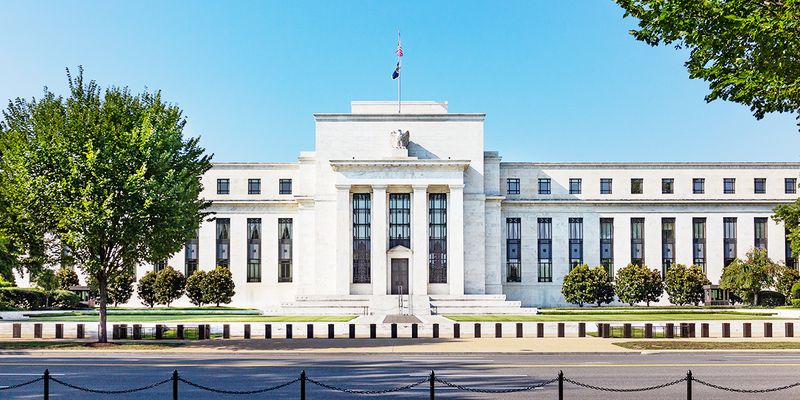
WASHINGTON — Read the Fed minutes October 2026 the way traders read them on Wednesday afternoon, and the headline is not the decision the committee took three weeks ago. It is the direction the committee described for the decision still to come. The Federal Open Market Committee voted 10-2 at its October 27–28 meeting to hold the target range for the federal funds rate at 3.75%–4.00%, a pause Signal Post News covered at the time in our report on the Fed’s 10-2 hold, when Cook and Hammack pushed for a hike. The minutes of that meeting, published on Wednesday, reveal a committee whose centre of gravity sits well to the hawkish side of the decision it actually took — one that had already, in October, largely talked itself into raising rates again.
What the minutes actually say
The minutes’ central passage is unambiguous about the direction, and careful about the conditions. According to the minutes, “almost all” participants judged that, under their baseline outlooks, further action to raise the target range would likely be appropriate “in order to ensure a timely return of inflation to the 2 percent objective” — a stance the minutes describe as broadly consistent with the September Summary of Economic Projections. That is about as close to a committee-wide steer as the Fed’s deliberately anonymised minutes ever give: not a promise, and not a decision about December, but a recorded judgement, shared by nearly everyone in the room, that the next move in the fed funds rate is more likely up than flat.
The dissents frame the same point from the other side. Governor Lisa Cook and Cleveland Fed President Beth Hammack voted against the October hold because each preferred a quarter-point increase there and then. A committee in which the only dissents are demands for faster tightening is a committee whose argument is about pace, not direction — and the minutes show that argument running through the majority as well. “A few” of the participants who supported holding in October described their own decision as a “close call,” the minutes record, and urged the Fed to make clear that the hold did not reflect any weakening of the committee’s commitment to the 2 percent target. A few others went further in the other direction of caution: they warned that inflation could prove more persistent than expected and require, in the minutes’ phrase, “a shift to a more restrictive policy stance.”
Precision matters here, because the minutes are already being read in markets as a December decision. They are not one. The hikes the minutes describe are “likely appropriate” under baseline outlooks — conditional language, tied to the data arriving as expected. What the FOMC minutes October 27-28 2026 establish is the starting position for the December argument, not its conclusion: a committee that believes, almost unanimously, that policy needs to go higher, arguing about how fast and how far.
The numbers: PCE inflation at 3.6 percent against a 2 percent target
The data recorded in the minutes explain why the committee sounds the way it does. Fed staff estimated that total PCE inflation — the price measure the Fed targets — rose to 3.6% in the 12 months to September, with core PCE inflation, which strips out food and energy, at 3.1%. Both figures sit well above the 2 percent objective: headline inflation is running at nearly twice the target, and even the core measure, the one officials watch for the underlying trend, is more than a full percentage point too high. PCE inflation 3.6 percent is not a near-miss that patience alone closes; on the staff’s own estimates, the gap the committee has to close is the widest fact in the document.
The rest of the staff picture cuts in two directions, which is why the argument is about pace. Unemployment edged up to 4.2% in September and hiring was slow — the softest corner of the economy, and the strongest card held by anyone counselling gradualism. But the October statement had upgraded the committee’s assessment of growth from “solid” to “strong,” and an economy growing strongly, with inflation at 3.6%, is not an economy that interest rates are obviously restraining. Set the two halves together and the minutes’ tone follows: a labour market cooling gently enough to permit tightening, and an inflation problem persistent enough to require it.
Will the Fed raise rates in December 2026?
Markets have already answered that question for themselves, and their answer is close to a certainty. Interest-rate futures expect a quarter-point increase at the December 8–9 meeting and another in January, with a further increase priced by April — a path that would take the fed funds rate to 3.75 to 4 percent’s ceiling and beyond in a matter of months. The CME FedWatch December hike odds put the probability of a quarter-point December hike at about 94.7%. Numbers like that describe a market that has read the same minutes summarised above and drawn the obvious conclusion, reinforced by the tone of October’s decision itself, when, as Signal Post News reported, the S&P 500 rose on the day the Fed held and pointed toward December.
Two cautions belong beside those odds, and both are matters of record rather than interpretation. First, futures pricing is a market’s expectation, not a Federal Reserve promise: the committee has not committed to December, January or April, and the minutes’ own language keeps every step conditional on the outlook holding. Second, the December meeting is three weeks and several data releases away. A 94.7% probability is a statement about what traders believe on November 18 — and the entire premise of the minutes, with their emphasis on incoming data, is that what happens between now and December 8 is precisely what will decide it.
The half-point debate
The genuinely new element in this cycle is not the quarter point. It is the size above it. Buried in the minutes’ careful quantifiers is the sentence that moved the December argument: “a couple” of participants noted that an increase of more than 25 basis points could warrant consideration at the next meeting, if incoming inflation data were unfavourable. Every word of that is a condition. It was a couple of officials, not a majority or anything near one. It was a suggestion that a larger move could warrant consideration, not a recommendation. And it was explicitly tied to the data disappointing. A half point rate hike December scenario exists in the official record — but it exists as a contingency, held by a minority, waiting on evidence.
Christopher Waller and the 50 basis points case
Since the minutes were published, that minority view has acquired a public champion. Fed Governor Christopher Waller argued on Wednesday, November 18, in remarks reported from his CNBC appearance, for a larger December hike — a 50 basis points move rather than the standard quarter point. The Christopher Waller 50 basis points argument takes the minutes’ conditional and starts filling in the condition: if inflation is not coming down, and the committee already believes rates need to rise, then moving in larger steps reaches the necessary stance sooner and demonstrates the commitment to the 2 percent objective that the “close call” bloc in October was anxious to protect. Waller’s intervention matters beyond its arithmetic because of who is making it: a sitting governor, speaking on the day the minutes landed, converting an anonymised “couple” into a named, argued position that other participants now have to answer.
John Williams pushes back on an aggressive path
The answer began arriving before the minutes did. New York Fed President John Williams said on November 17 that the Fed will likely need to raise rates again — endorsing the direction the minutes describe — while pushing back against an aggressive path. That combination, direction yes and drama no, is the closest thing to a centre position the public debate currently has: the quarter point in December that futures price, delivered as the first of a measured sequence rather than as the opening of an accelerated campaign. Between Waller’s half point and Williams’ gradualism sits the bloc the minutes themselves revealed — the “few” for whom even October’s hold was a close call, and the few more who warned of a shift to a more restrictive stance if inflation persists. December’s vote will be assembled from those pieces, and its size will say which piece carried the room.
What it means for mortgages and housing
For households, the transmission from an anonymised sentence in the FOMC minutes to a monthly payment runs through the bond market, and it is already running. Mortgage rates after Fed minutes like these do not wait for the December decision: lenders price off expectations, and expectations now include a quarter point in December, another in January and more by April. Anyone whose borrowing costs reset with the policy path — homebuyers with offers pending, households on adjustable rates, borrowers hoping to refinance out of expensive debt — should read Wednesday’s document as a statement that relief is not coming this winter. Our explainer on what a Federal Reserve rate increase means for borrowers sets out the mechanics of how a higher fed funds rate reaches credit cards, auto loans and mortgages.

Housing is where the tightening already shows. Existing-home sales fell last month to a 16-year low — a market in which high prices and high borrowing costs have frozen owners in place and shut buyers out. Further increases in the policy rate press on exactly that blockage: each quarter point that markets believe is coming holds mortgage rates up, keeps the gap between owners’ locked-in rates and today’s rates wide, and delays the turnover on which any recovery in sales depends. The Fed does not set mortgage rates, and a December hike would not mechanically raise them — but a committee committed, almost unanimously, to raising its own rate until inflation returns to 2 percent is telling the housing market not to expect the cost of money to fall. For the weakest corner of the economy, Wednesday’s minutes were the opposite of help.
The AI warning buried in the minutes
The minutes also contain a second, quieter warning, and it is not about inflation. In the staff’s financial-stability discussion, officials noted that off-balance-sheet leasing arrangements and circular financing among artificial intelligence firms could amplify losses if the sector turns — structures in which the same money and the same assets appear, on paper, to support more activity than they would in a stress. The concern was not the staff’s alone: almost all participants commented on the risks of an AI-related asset price revaluation, the minutes record — a disorderly repricing of the technology assets whose rise has carried equity markets through the year.
The juxtaposition is worth noticing. The same meeting that concluded policy must tighten against inflation also recorded, nearly unanimously, a worry that a large part of the market’s valuation rests on financing structures that have not been tested by tighter money. Rate increases are the classic instrument for deflating exactly such structures, and the classic cause of their deflating all at once. The committee is not forecasting a break — the minutes describe vulnerabilities, not predictions — but the document places the AI financing web on the official list of things that could turn a deliberate tightening cycle into something less controlled, and it does so in the Fed’s own words.
Why this matters
Start with the cycle. September’s quarter-point increase was the Federal Reserve’s first rate rise in three years — the moment a long easing era formally ended and a hiking cycle resumed. October’s hold could have been read, in isolation, as hesitation at the threshold. Wednesday’s minutes retire that reading. A committee that raises rates for the first time in three years, pauses once, and records that almost all of its members expect to raise them again is not hesitating; it is pacing itself. The Fed minutes December rate hike question, on the documentary evidence, is the second step of a cycle the committee believes it has begun, and cycles, once begun, have their own momentum: each meeting starts from the presumption the last one recorded.
Then notice the calendar, because it makes the December debate more hawkish than the minutes alone suggest. The minutes describe a meeting held on October 27–28. They predate the October consumer price index, which has since shown prices rising 0.4% overall and 0.3% on the core measure — both a tenth of a point above forecasts. In other words, the first major inflation report to arrive after the committee recorded its hawkish consensus came in hotter than expected. The conditional in the minutes — a larger move, if incoming inflation data were unfavourable — was written before the data it describes existed. The December argument therefore starts not from the minutes’ baseline but from its warning case, and every participant who was in the “close call” bloc in October now deliberates with the October CPI on the table in front of them.
The gains and losses from that starting point are unevenly spread. Savers and lenders keep the arrangement that high-for-longer delivers: deposit and money-market yields anchored near the top of the fed funds rate 3.75 to 4 percent range, and a yield curve that rewards holding cash. Borrowers pay, in the order the economy feels it: homebuyers first, in a housing market already at a 16-year low for existing sales; then rate-sensitive businesses whose financing resets; then, through the AI financing structures the minutes themselves flagged, the investors whose valuations assume money stays cheaper than the committee now intends it to be. The administration, for its part, has argued that the elevated inflation is temporary — a claim the minutes’ data, PCE at 3.6% with the core at 3.1%, do not endorse — and the political tension that produced is now structural rather than episodic: a White House arguing prices will cool on their own, and a central bank recording, almost unanimously, that they will not be left to.
That tension runs through the question of who leads the institution. Chair Kevin Warsh, at the October press conference, said officials had “made clear our readiness to act as circumstances require” — a formulation that claims the decision for the data and the committee, and concedes nothing to political pressure in either direction. The minutes are what that readiness looks like on paper: anonymous, quantified, and pointed one way. Historically, half-point increases have been the instrument of a Fed that believes it is behind the curve and needs to prove otherwise; quarter-point sequences are the instrument of a Fed that believes it has time. The December choice between Waller’s urgency and Williams’ pacing is therefore also a choice about which of those two institutions this committee thinks it currently is — and the minutes, with their close calls, their persistence warnings and their 3.6% inflation estimate, read like the preliminary draft of the more alarmed answer.
What happens next
The committee meets on December 8–9, and the scenarios, in descending order of probability on current evidence, are cleanly drawn. The base case is a quarter-point increase: it is what futures price at roughly 94.7%, what Williams’ formulation supports, and what the minutes’ “almost all” consensus most naturally produces — a move to a 4.00%–4.25% target range, with January’s meeting left to continue the sequence. The second scenario is the half point: it requires the incoming inflation data to stay unfavourable, which October’s CPI has already begun to do, and it requires Waller’s argument to recruit the close-call bloc whose existence the minutes documented. It is a minority path, but it is a real one, and it did not exist in the official record before Wednesday. The third scenario, a second consecutive hold, now requires the opposite of what has been arriving: a clear break in the inflation data, strong enough to dissolve a near-unanimous recorded judgement. Nothing in the minutes, and nothing published since, supplies it.
Between now and December 8, the releases that matter are the ones the minutes’ conditions point at: the next inflation prints, above all, read against the staff’s September estimates of 3.6% headline and 3.1% core PCE. Each hot number moves the argument from the base case toward Waller’s; each cool one restores the gradual path. But the floor of the debate has moved, and that is Wednesday’s durable news. The question the Fed will answer in December is no longer whether it raises rates. On its own record, it almost certainly does. The question is whether a quarter point still looks like enough.
Precision notes: the minutes do not decide the December meeting — further increases are recorded as “likely appropriate” under baseline outlooks. Market pricing, including the CME FedWatch odds, reflects trader expectations and is not a commitment by the Federal Reserve. The possibility of an increase larger than 25 basis points was raised by “a couple” of participants, conditional on unfavourable incoming inflation data; it is not a majority position. The minutes predate the October CPI release. Figures are attributed to their sources throughout.
Sources
Sources: Minutes of the Federal Open Market Committee, October 27–28, 2026 — Federal Reserve (released November 18, 2026); Reuters, Howard Schneider, November 18, 2026, “Fed policymakers focused on inflation risks in October, with some seeing need for bigger rate hike”; TT News, November 18, 2026, “Most Fed officials back further rate hikes”; CME FedWatch pricing ahead of the December 8–9 FOMC meeting; October CPI figures as reported after the meeting.