Germany blocks COSCO Zippel deal
The Cabinet prohibited an 80% takeover of a 150-year-old logistics operator after German ministries and security officials warned that control of the port-to-hinterland network could expose supply-chain data and create leverage in a European crisis.
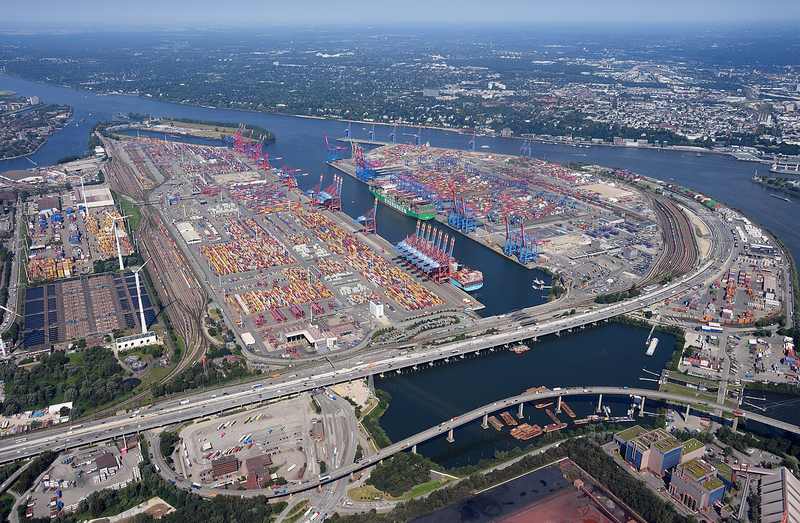
Germany has blocked COSCO from buying a controlling stake in Konrad Zippel Spediteur, a Hamburg logistics company that most travelers will never see but that sits directly behind two of Europe's busiest port gateways. The decision, announced after a Federal Cabinet session Wednesday, bars the Chinese state-owned shipping group from acquiring 80% of Zippel under Germany's foreign-trade and investment-screening powers.
The economics ministry said the transaction would have deepened dependencies and threatened the resilience of German and European Union supply chains. Zippel's managing partner, Axel Plass, had planned to retain 20% and continue running the business. He said the company would have preferred a different result and still regarded its commercial decision as the right one, while stressing that everyday operations would continue. COSCO did not immediately answer requests for comment, according to Reuters.
Why a mid-size trucking firm matters
Zippel is not a port terminal, a railway or a global shipping line. It is the connective tissue among them. Founded in Hamburg in 1876, the company organizes container movements by rail, inland waterway and road between Hamburg, Bremerhaven and inland destinations. It has about €75 million in annual revenue, roughly 350 employees and around 200 trucks. In 2024 it handled about 205,000 twenty-foot-equivalent units, or TEU.
Those numbers are modest beside COSCO's ocean fleet. Strategically, however, the company occupies a chokepoint: the moment a container leaves the quay but has not yet reached a factory, warehouse or military customer. The terminal controls where cargo lands. The hinterland operator helps determine where it goes, when it moves and which rail slots, trucks and depots are available. In a disruption, control over that flow can matter as much as control over a crane.
That distinction explains why Berlin treated the proposed purchase as more than an ordinary merger. A logistics operator's software can reveal shipment patterns, customers, bottlenecks and spare capacity across several transport modes. The government's case is that such visibility could become strategic intelligence during a confrontation. The commercial counter-case is equally straightforward: Zippel sought a well-capitalized owner connected to global cargo volumes, and Germany's competition authority found no antitrust obstacle.
What happened: from January filing to October prohibition
January and February: the commercial review
COSCO applied in January 2026 to acquire 80% of Zippel. The Federal Cartel Office cleared the plan in February. That decision answered a competition question: whether the combination would improperly reduce competition. It did not resolve national-security concerns, which sit outside the antitrust agency's remit.
June: software and sensitive data move to the center
Security authorities objected, and the economics ministry opened a separate investment-screening review. In June, Plass said officials were examining the company's software systems and whether they handled sensitive information. That detail shifted the debate from trucks and warehouses to data: who can map supply chains, see customers and understand the capacity of critical routes.
September and October: the warning becomes policy
In September, a government memo reported by Handelsblatt said the strategic dependency could be used as leverage during political upheaval. WorldCargoNews described the emerging opposition, while Ports Europe and DredgeWire tracked Berlin's move toward prohibition. On October 7, the Cabinet decision made that outcome final at the executive level.
The security case: routes, software and leverage in a crisis
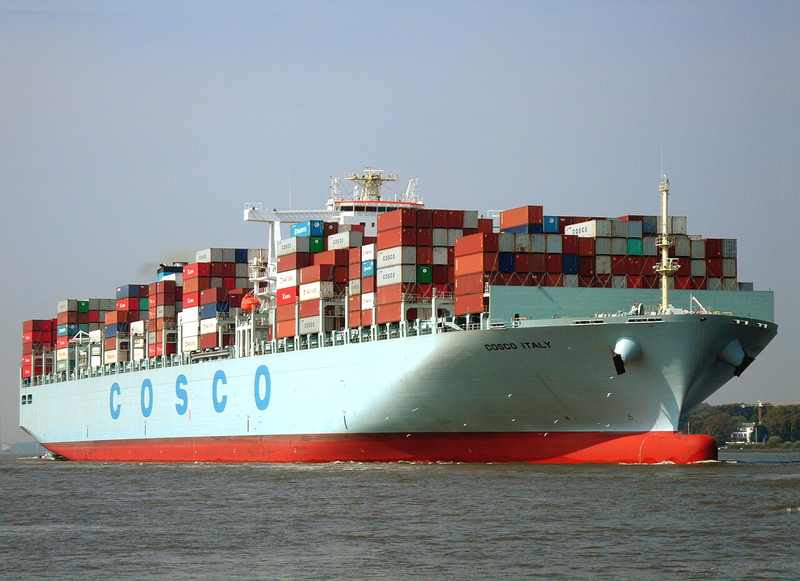
The Economics, Defense, Interior and Foreign Affairs ministries opposed the acquisition, as did the Federal Office for the Protection of the Constitution. Their shared concern was not that COSCO would immediately halt cargo or misuse information. It was that a Chinese state-owned company inside a logistics-and-data hub could gain options Germany might regret having granted if relations deteriorated.
Security authorities focused particularly on rail and port logistics used by the Bundeswehr and NATO. Military mobility depends on civilian networks: trains, trucks, depots, terminals, schedules and digital systems. A company need not own a railway to understand its capacity or friction points. It can learn from bookings, routing choices, delays and customer patterns. That is the logic behind the Bundeswehr and NATO logistics security objection.
Berlin's theory is therefore about resilience, not sabotage. A dependency can become leverage if replacing a supplier or operator during a crisis is costly, slow or technically difficult. The government memo's political-upheaval scenario reflects a wider European concern that commercial integration can carry strategic consequences when state-owned buyers are involved.
The counterargument deserves weight. COSCO operates in many European ports under regulatory supervision. Zippel's managers believed the deal served the company's interests, and the Cartel Office saw no competition problem. Investment screening necessarily asks governments to judge uncertain future risks, and the same discretion that protects infrastructure can also deter capital or be seen as politicizing routine commerce. Osna.FM reported the company's disappointment alongside the government's security rationale.
The 2023 contrast: 24.99% at Tollerort, 80% at Zippel
COSCO already owns a minority interest in Hamburg's Tollerort container terminal. The previous German government approved that investment in 2023 after a bitter coalition dispute, but capped the holding at 24.99% to prevent strategic influence. That compromise allowed commercial participation without granting control.
The Zippel proposal crossed a much brighter line. An 80% stake is a controlling majority. It would have placed COSCO above management and strategy while leaving Plass with 20% and an operating role. The difference between 24.99% and 80% is not cosmetic: one is a minority investment constrained by other shareholders; the other normally decides the board, budget and long-term direction.
What changed in Berlin is also broader than arithmetic. Germany's China policy has moved from encouraging interdependence toward de-risking—maintaining trade while reducing vulnerabilities in critical sectors. The debate over China's expanding overseas strategic footprint and the continuing argument over trade concessions and technology dialogue show how commercial and security policy now overlap.

Who benefits, who loses
Zippel and COSCO
Zippel loses the owner it selected and the growth logic attached to a global shipping group. COSCO loses a direct route from ocean freight into inland delivery—vertical integration from ship to terminal to rail, barge and truck. Such integration can reduce handoffs and stabilize volumes. It can also concentrate information and bargaining power, which is precisely what alarmed Berlin.
Germany, the EU and Hamburg
German and EU policymakers gain a visible demonstration that investment screening can stop a deal after competition clearance. They also accept a cost: Hamburg is deeply exposed to China trade, and too blunt a screening regime could make the port less attractive to investors or complicate relationships with major shipping customers.
Supply-chain resilience may improve if the prohibition prevents a hard-to-reverse dependency. It will not improve automatically. Zippel still needs capital, customers and technology, while Germany must prove that domestic or allied alternatives can finance growth without sacrificing efficiency. De-risking works only if it creates substitutes; blocking a transaction is the first move, not the entire strategy.
What happens next
COSCO could explore a legal challenge, though any action would confront the government's broad foreign-investment powers and its documented security process. The company could also return with a smaller, non-controlling structure modeled more closely on Tollerort, if Berlin were willing to consider one. Neither path has been announced.
The immediate business question is Zippel's ownership plan. Plass says operations continue, but the company must decide whether to seek another investor, remain independent or reshape the transaction. Its 350 employees, 200-truck fleet and 205,000-TEU workload make it a functioning enterprise, not a stranded asset.
The wider consequence will be felt in other reviews. European governments are increasingly examining logistics, transport and data-rich infrastructure as a single security system. An acquisition that once might have been assessed mainly through market share can now be tested for data access, military mobility and crisis leverage. France's push to balance national fiscal choices with wider European stability, examined in our analysis of the Le Pen deficit plan and euro-area recovery, reflects the same larger tension between national discretion and continental resilience.
For Hamburg, the decision draws a boundary rather than closing a door. Chinese trade and COSCO ships will remain central to the port. The new message is that Berlin distinguishes sharply between doing business with a state-owned carrier and allowing that carrier to control the inland systems that reveal how Germany moves goods—and, in a crisis, how Europe moves resources.
Sources
- Reuters: Germany blocks sale of logistics company to China's COSCO (Oct. 7, 2026)
- Osna.FM: German Cabinet decision and company response
- Ports Europe: Germany moves to block COSCO's Zippel takeover
- WorldCargoNews: Germany's planned block and September review
- DredgeWire: Security objections to the proposed buyout