Health / For more than 240 million people worldwide, chronic hepatitis B has meant the same bargain for decades: a daily pill, probably for life, that holds the virus down but almost never clears it. On Tuesday, October 20, the FDA approved Hibsago (bepirovirsen), a GSK medicine given as a weekly injection for six months, after which about one in five carefully selected patients in two large trials stayed free of detectable virus for at least 24 weeks with no treatment at all. It is not a complete cure, and it is not for everyone — but it is the first drug approved whose goal is to finish hepatitis B treatment rather than extend it forever.
The search for a hepatitis B functional cure drug has run for decades, and on October 20, 2026 it produced its first FDA approval. Hibsago, the brand name for bepirovirsen, is a weekly under-the-skin injection taken for 24 weeks alongside the antiviral pills patients already use. In the twin B-Well trials, 19 percent of treated patients — 233 of 1,220 — met the strict definition of functional cure: hepatitis B virus DNA and the surface antigen HBsAg both undetectable for at least 24 weeks after every treatment, including the old pills, had been stopped. On placebo, the figure was zero of 614. GSK's chief scientific officer, Tony Wood, put the claim plainly: "For the first time, with Hibsago, US patients have the potential to achieve functional cure after a six-month treatment course."
Track it live: Live Global Trackers — disease outbreaks, for the wider picture of the viruses public-health agencies are watching now.
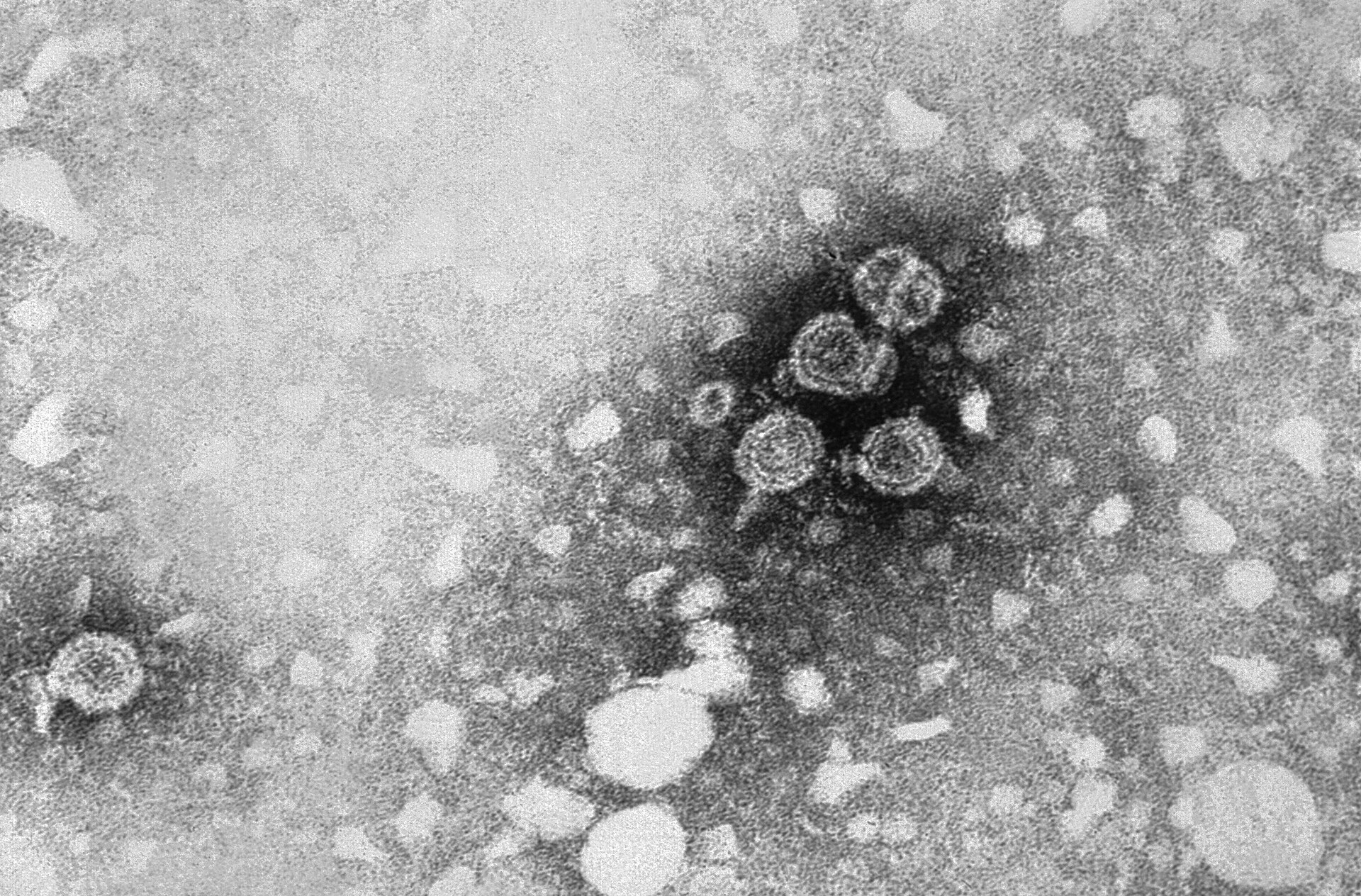
What was approved, and for whom
The approval is deliberately narrow, and understanding its limits is essential to understanding the result. Hibsago is approved for adults with chronic hepatitis B who do not have cirrhosis — advanced liver scarring — and who are already on a nucleos(t)ide analogue (NrtI) antiviral, the standard daily pills such as entecavir or tenofovir, for at least six months. Their virus must already be suppressed, with HBV DNA undetectable, and their HBsAg level must be 3,000 IU/mL or lower, measured with an FDA-authorised test. The treatment itself is a 300 mg injection under the skin once a week for 24 weeks — six months — given in combination with the existing pill, with the option for patients to inject themselves after the first dose. It was approved under the FDA's Priority Review pathway and had earlier received Breakthrough Therapy designation, the agency's signal that early evidence suggested a substantial improvement over existing options. Hibsago is already approved in Japan, according to Reuters, and remains under review in China and Europe.
One companion detail matters for clinics: according to Pharmacy Times, the FDA also authorised Roche's Elecsys HBsAg II quant II RxDx assay, the test measuring the HBsAg level that decides eligibility. This is a drug-plus-test package aimed at a defined slice of patients — not a drug doctors can hand to anyone with hepatitis B.
How it works: an antisense drug that goes after the virus's instructions
Bepirovirsen is the first FDA-approved antisense oligonucleotide (ASO) for chronic hepatitis B. Antisense drugs are short, laboratory-built strands of genetic material designed to match one specific RNA message inside a cell. Hibsago's strand recognises hepatitis B RNA and marks it for destruction. Because the virus uses that RNA both to copy itself and to manufacture its proteins — above all HBsAg, the surface antigen that floods the blood of chronic patients in quantities far beyond what the virus needs to reproduce — destroying the RNA does two things at once: it cuts viral protein production, and by draining away the HBsAg flood that exhausts and blinds the immune system, it may allow that system to wake up and regain durable control of the infection.
That second effect is the difference between suppression and a functional cure. Today's pills block one viral enzyme brilliantly, but they barely touch HBsAg production, which is driven from viral DNA lodged in liver cells. An immune system swimming in antigen learns to tolerate the virus rather than fight it; lower the antigen far enough, the theory runs, and tolerance can crack. The B-Well results suggest that in a substantial minority of patients, that reset really does happen. The drug's lineage matters too: GSK licensed bepirovirsen from Ionis Pharmaceuticals in 2019, and Ionis — the California pioneer of antisense medicines — remains eligible for milestones and tiered royalties of 10 to 12 percent of net sales, per the companies' Business Wire announcement.
The B-Well trials: what 19 percent actually means
The approval rests on B-Well 1 and B-Well 2, twin global trials run in 29 countries, randomised, double-blind and placebo-controlled — the strongest design in medicine. Between them, 1,220 patients received bepirovirsen and 614 received placebo injections, all on top of their standard pills. Both trials met their primary endpoint. The headline result: functional cure in 19 percent of the bepirovirsen group (233 of 1,220) against 0 percent on placebo (0 of 614). Per-trial, PharmExec reported functional cure rates of 20 percent in B-Well 1 and 19 percent in B-Well 2 — reassuringly consistent, not a single lucky study.
The results sharpen by starting HBsAg level. In the subgroup beginning at or below 1,000 IU/mL — roughly 45 percent of diagnosed patients globally, the companies estimate — functional cure was 26 percent (200 of 768) against zero on placebo (0 of 393). An exploratory analysis hints at a broader benefit beneath the strict endpoint: at week 72, 49 percent of all treated patients (598 of 1,220) had HBsAg at or below 100 IU/mL, rising to 62 percent (476 of 768) in the low-baseline subgroup — not a cure, but the direction every specialist wants to see.
Why this matters
Start with the arithmetic of the status quo. GSK puts the number of people living with chronic hepatitis B at roughly 1.7 million in the United States and more than 240 million worldwide, with about 1.1 million deaths a year, citing the WHO Global Hepatitis Report 2026; hepatitis B is the leading cause of liver cancer globally, and Chari Cohen, president of the Hepatitis B Foundation, said in the GSK release that chronic hepatitis B accounts for about 56 percent of all liver cancer cases worldwide. Against that burden, the existing standard of care is a holding action. The daily pills are safe, cheap in generic form and excellent at preventing liver damage while you take them — but GSK notes that functional cure on current standard treatment is typically below 1 percent after a year, and Reuters, citing the broader literature, puts sustained clearance on standard treatments at roughly 1 to 4 percent. Either way, the practical message patients hear today is: this is forever.
Hibsago changes the conversation in three ways. Clinically, it converts "functional cure" from a rare accident of long treatment into a deliberate, time-limited goal — 24 injections over six months, then a monitored stop. Scientifically, it validates the antigen-lowering strategy a generation of researchers bet on: drain HBsAg, and the immune system can sometimes finish the job itself. And a finish line changes behaviour: patients who drift away from lifelong medication may engage very differently with a six-month course offering a genuine chance of being done. As Norah Terrault of the Keck School of Medicine at USC put it: "This is the start of a new era in treating people living with CHB." Wendy Carter, acting director of the FDA's Office of Infectious Diseases, framed the agency's view in the statement reported by HCPLive: "Hibsago provides a new treatment approach that gives some patients the possibility of maintaining control of the virus after all chronic HBV treatment has ended."
How we got here: a virus identified by its antigen, treated by suppression
Hepatitis B has always been a disease defined by its surface antigen. In the 1960s, Baruch Blumberg identified what was first called the "Australia antigen" — work that won a Nobel Prize — and it became HBsAg, the marker by which the infection is still diagnosed and, now, by which eligibility for its first functional-cure drug is measured. A vaccine followed, one of medicine's great preventive successes, but for people already chronically infected — most acquiring the virus at birth or in early childhood in high-prevalence regions — it came too late.
The treatment era, from the 1990s onward, was built on suppression: interferon with harsh side effects and modest success, then oral antivirals — entecavir, tenofovir — that reliably drove viral DNA to undetectable levels and slashed rates of cirrhosis and liver cancer. What they could not do was finish. Stop the pills and, in most patients, the virus rebounds from the reservoir of viral DNA parked in liver-cell nuclei. A complete, sterilising cure would require eliminating every trace of that reservoir — something no current therapy achieves and Hibsago does not claim. A functional cure is the realistic summit: traces of the virus remain in liver cells, but the blood stays clear, treatment stays stopped, and the risk of progression falls toward that of someone who cleared the infection naturally. Precision about that distinction determines what patients should expect — and what they must keep monitoring even after success.
The numbers in context
Nineteen percent needs honest framing in both directions. Against zero percent on placebo, and against the under-1-to-4-percent landscape of existing therapy, it is a step change — roughly one in five eligible patients freed from all treatment, in a field accustomed to rounding its cure rate down to nothing. Against the whole population living with hepatitis B, though, the eligible group is a subset of a subset: adults, without cirrhosis, already suppressed on pills for at least six months, with HBsAg at or under 3,000 IU/mL. The 19 percent applies to them — not to everyone with chronic hepatitis B, and emphatically not to the undiagnosed, the untreated, or those with advanced liver disease, who arguably need progress most and are excluded from this label.
The durability question is equally concrete. Functional cure in B-Well meant staying clear for at least 24 weeks after stopping everything — a meaningful regulatory bar, but hepatitis B is a decades-long disease, and whether the 233 responders stay clear for five or ten years is simply not knowable yet. The week-72 antigen data is encouraging circumstantial evidence, not proof of permanence. Hepatitis C's antivirals, which cure more than 95 percent of patients outright, reset expectations for what "cure" should mean; by that standard 19 percent looks modest. By hepatitis B's own history — no new mechanism of this kind in decades — it is the largest crack in the wall anyone has made.
Who benefits, who does not, and who is competing
The clearest winners are eligible patients — particularly the low-HBsAg group, where the cure rate reached 26 percent — and the clinics that can finally offer a plan with an end date. GSK gains a flagship product: according to Reuters, it expects peak annual sales above £2 billion (about $2.68 billion), and Hibsago is central to its ambition of more than £40 billion in revenue by 2031 under chief executive Luke Miels. Ionis gains validation and its royalty stream. The relative losers are the untreated majority worldwide, for whom a test-gated, specialist therapy in wealthy markets changes nothing immediately. The race also continues, which matters for the 81 percent: Reuters notes Aligos Therapeutics' pevifoscorvir sodium in mid-stage development, and Pharmaceutical Technology, via PharmExec, points to Gilead's selgantolimod in late-stage work. Combination regimens are the obvious next iteration, and Hibsago's approval hands every follower a proven regulatory template.
The limits, stated plainly: what critics and the label itself say
Four of five treated patients — 81 percent — did not achieve functional cure in B-Well, after six months of weekly injections on top of their pills. The label excludes patients with cirrhosis outright. Safety needs the same unvarnished treatment. GSK's release describes an acceptable profile, with the most common adverse events being injection-site redness, local pain and a temporary rise in liver enzymes. But Pharmacy Times, reporting the US prescribing information, describes a boxed warning for hepatic flares — sudden worsenings of liver inflammation that can occur when hepatitis B treatment changes or stops — and thrombocytopenia (low platelets), with the drug contraindicated in cirrhosis, acute hepatic impairment and in patients with platelet counts below 100 × 10⁹/L. Those details, attributed here to the prescribing information as reported, are exactly why "stop all treatment" is something that must happen inside careful medical follow-up, with liver blood tests watched closely, and never as a DIY experiment.
Then there is the price. GSK has not disclosed it, BioPharma Dive noted, and until it does, nobody can say what access looks like for uninsured US patients, let alone for the health systems of the high-burden countries where most of the 240 million live. An approval is a beginning of access, not access itself. Durability beyond the 24-week off-treatment window also remains unproven, and the trials' strict entry criteria leave real-world performance an open question.
What patients should — and should not — do now
If you live with chronic hepatitis B, the most important sentence in this story is this: do not stop your antivirals. Nothing about this approval makes it safe to discontinue entecavir or tenofovir on your own — uncontrolled rebound can cause a hepatic flare and serious liver injury, the very risk the boxed warning describes. What the approval does justify is a conversation: ask your liver specialist what your HBsAg level is, whether you meet the label's conditions, and what monitoring a finite course would involve. If you do not know your status, hepatitis B testing is inexpensive and widely available. Our wider coverage of how infections drive long-term disease is in our report on the infections that cause cancer; see also the mRNA cancer vaccine programme in late-stage trials and Nigeria's first Ebola case.
What happens next: three scenarios
Scenario one — the beachhead expands. Longer follow-up shows the cures holding at two and three years, China and Europe approve, and combination trials pairing bepirovirsen with immune-modulating drugs push response rates toward 40 or 50 percent; functional cure becomes the standard goal of hepatitis B drug development. Scenario two — a valuable niche, honestly held. The drug performs roughly as it did in trials, but price and the narrow label cap its footprint; it becomes an important option for a minority while pills remain the backbone for most. Scenario three — durability disappoints. A meaningful share of the 19 percent relapse in years two and three, payers balk at the price for a one-in-five chance, and Hibsago is remembered as a proof of concept that followers completed. Even then, the field keeps the map: the endpoint is validated, the mechanism is proven in humans, and the next drugs start from 19 percent rather than zero. Whichever scenario unfolds, October 20, 2026 is the date hepatitis B treatment stopped being defined entirely by the word "lifelong."
Sources
GSK — "Hibsago (bepirovirsen) approved by US FDA for chronic hepatitis B" press release, October 20, 2026 (approval, indication, B-Well results, burden figures, quotes from Tony Wood, Norah Terrault and Chari Cohen). Reuters — report of the FDA approval, October 20, 2026 (Japan approval, China/Europe reviews, peak sales expectation above £2 billion, standard-treatment clearance rates of 1–4 percent, Aligos rival). GSK/Ionis Business Wire announcement, October 20, 2026 (B-Well numbers, 2019 licensing origin, Ionis milestones and 10–12 percent tiered royalties). HCPLive — coverage of the approval, October 20, 2026, including the FDA statement attributed to Wendy Carter, acting director of the FDA Office of Infectious Diseases. Pharmacy Times — coverage, October 21, 2026 (US prescribing information as reported: boxed warning for hepatic flares and thrombocytopenia, contraindications, and FDA authorisation of Roche's Elecsys HBsAg II quant II RxDx assay). PharmExec — B-Well 1 and B-Well 2 per-trial functional cure rates (20 percent and 19 percent) and competitor context. BioPharma Dive — October 21, 2026 (price not disclosed).