The formation laps that broke Formula 1
SEPANG, Malaysia — The 2026 Bahrain Grand Prix was supposed to be a celebration: Formula 1's return to the Sepang International Circuit after a nine-year absence. Instead, Sunday delivered the most disorderly start procedure in recent memory. A tropical downpour laced with lightning struck just as the field formed on the grid for the scheduled 3 p.m. local start, and with the medical car reporting standing water, the FIA held the start for around 40 minutes while sweepers worked the 5.543 km circuit.
When the field finally rolled at 3:40 p.m., race control ordered two laps behind the safety car on intermediate tyres, with a standing start to follow. It never came to that. This was Formula 1's first-ever wet running under the brand-new 2026 power-unit regulations — and the cars were not ready for it.
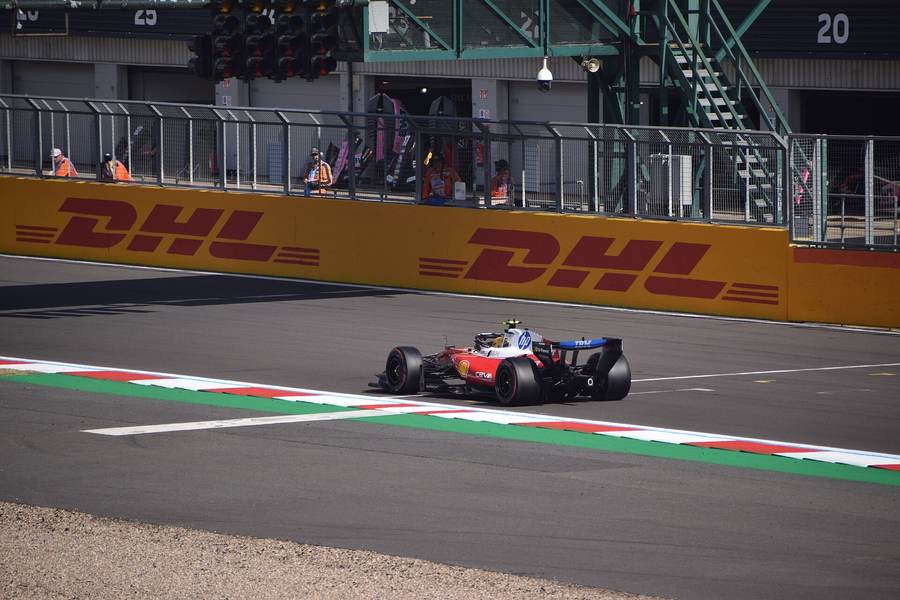
Pole-sitter Max Verstappen reported a loss of acceleration from his Red Bull almost immediately, though the Dutchman got going again. Then came the image that will define this race: Lewis Hamilton, starting second in the Ferrari, crawling through the first formation lap as the entire field streamed past him before his car ground to a halt on the back straight. "I'm pressing the throttle and nothing happens," the seven-time champion told his pit wall. The reply from his engineer was the most damning sentence heard on team radio all season: "It's a software problem we're trying to resolve."
Hamilton's Ferrari was rebooted on track and got moving again a lap later — but he was far from alone. Isack Hadjar aquaplaned his Red Bull into the gravel at Turn 3, Lando Norris narrowly avoided a similar excursion, Esteban Ocon's Haas and Valtteri Bottas's Cadillac — both Ferrari-powered — stalled on circuit, Gabriel Bortoleto's Audi and Liam Lawson's Racing Bulls suffered similar power-delivery episodes, and reports indicated Charles Leclerc's sister Ferrari was affected too. With the grid scattered and cars streaming into the pit lane in no discernible order, race control had no choice: it suspended the start procedure, threw the red flag, and ordered everyone back to the pits. As ex-Formula E driver Sam Bird put it on BBC Radio 5 Live: "I've never seen anything like this before."
Race control eventually announced a 16:33 local restart — roughly a 50-minute delay on the day — with the original starting grid restored, the race trimmed to 55 laps, and the opening laps run behind the safety car to set up a standing start. Pierre Gasly spun his Alpine in the treacherous early going. At the time of writing the restarted race was underway, with early live reports putting championship leader Kimi Antonelli at the front and Hamilton tumbling down the order after his formation-lap ordeal.
Why this matters: the new rules failed their first wet exam
Strip away the slapstick and this was a genuinely significant afternoon for the sport. The 2026 regulations brought the most radical power-unit reset in a generation, with cars far more dependent on electrical energy harvesting and deployment — and therefore on software — than anything that came before. Until Sunday, the entire field had completed a season with no wet-weather racing at all; teams had only limited filming-day and tyre-test mileage in the rain to learn from.
What Sepang exposed is that nobody truly understood how these new systems behave at formation-lap speeds in standing water. Low speed, low temperature, aquaplaning wheels, harvesting systems confused by wheelspin — the exact cocktail that froze Hamilton's Ferrari and sapped Verstappen's Red Bull. In the dry, the 2026 cars have been broadly reliable. In the wet, the software revealed itself as the grid's shared single point of failure.
That should worry everyone. Half the remaining flyaway races carry monsoon-season risk, and reliability — not raw pace — now looks like the variable that could decide the championship. A title fight is only as credible as the machinery contesting it, and on Sunday the machinery embarrassed itself before the contest even began.
Ferrari's afternoon of humiliation
No team will rewatch Sunday with more discomfort than Ferrari. Hamilton, 41, joined Maranello to chase an eighth world title; instead his car died on live television while his engineer diagnosed it, on an open channel, as a software problem. For a team that has spent two decades being accused of operational fragility, there is no crueler optic than a full trackside reboot.
The pattern was what stung most. The failures clustered around Ferrari power: Hamilton's works car, the sister car of Leclerc, and the Ferrari-supplied customer machines of Haas (Ocon) and Cadillac (Bottas) all suffered. That points beyond bad luck toward a systemic issue in Ferrari's energy-management software in wet, low-grip conditions — the kind of flaw that cannot be fixed with a wing adjustment and will now consume Maranello's engineering weeks.
It was not exclusively a Ferrari problem, which is the sport's wider headache. Verstappen's Red Bull (Red Bull Ford power) lost acceleration, Bortoleto's Audi faltered, and Lawson's Racing Bulls crawled away from its grid slot. If multiple manufacturers hit the same wall in the same conditions, the 2026 regulations themselves have a wet-weather blind spot — and the FIA will face questions about why a full season passed without the field ever stress-testing these cars in the rain.
Verstappen's pole, and the championship arithmetic
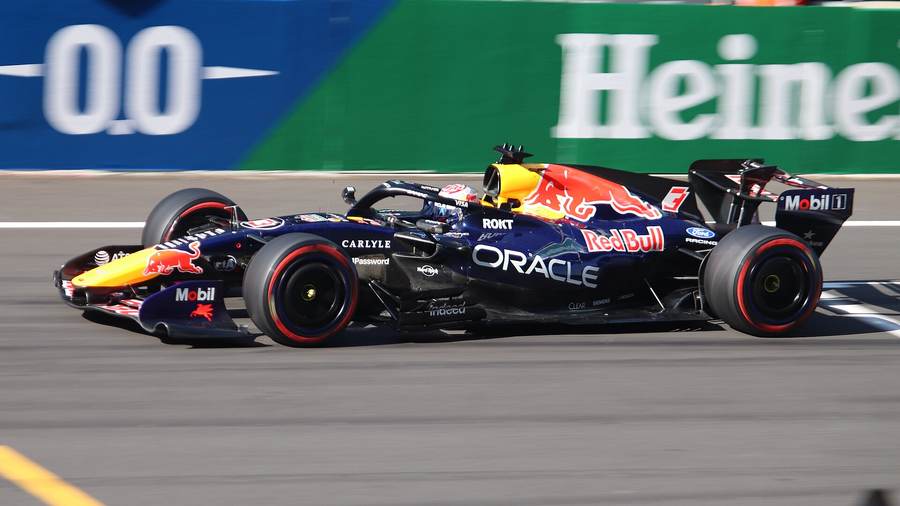
Lost in the chaos is that Saturday produced the feel-good story of the season. Verstappen's 1:35.130 was Red Bull's first pole of 2026 — his first since the 2025 Abu Dhabi finale — and it put him 0.298 seconds clear of Hamilton in a front row the two old rivals had not shared since the 2023 Hungarian Grand Prix. Hadjar qualified a superb third before a five-place engine penalty dropped him to eighth, promoting Antonelli to third, Leclerc to fourth, and the McLarens of Norris and Piastri to fifth and sixth.
The arithmetic matters more than the nostalgia. Antonelli arrived at Sepang leading the championship, his advantage cut to 66 points by Mercedes team-mate George Russell after Russell's victory in Baku. But Mercedes endured a miserable Saturday — Russell qualified only eighth (seventh after penalties) and admitted the team's much-vaunted upgrade package was a "big question mark" on Sepang's abrasive, low-grip tarmac. Verstappen, sixth in the standings and winless since last December, suddenly looked like the fastest man at the track.
Sunday's mayhem scrambled all of that. The restored original grid handed Antonelli — who had noted over the radio that "the track is drying crazily quick" — a front-row-adjacent launchpad, while Hamilton's software failure likely torpedoed the victory challenge his front-row start had promised. In a season this tight, championships are not only won on pace; they are lost on afternoons when the car will not move.
Why the Bahrain Grand Prix is being held in Malaysia at all
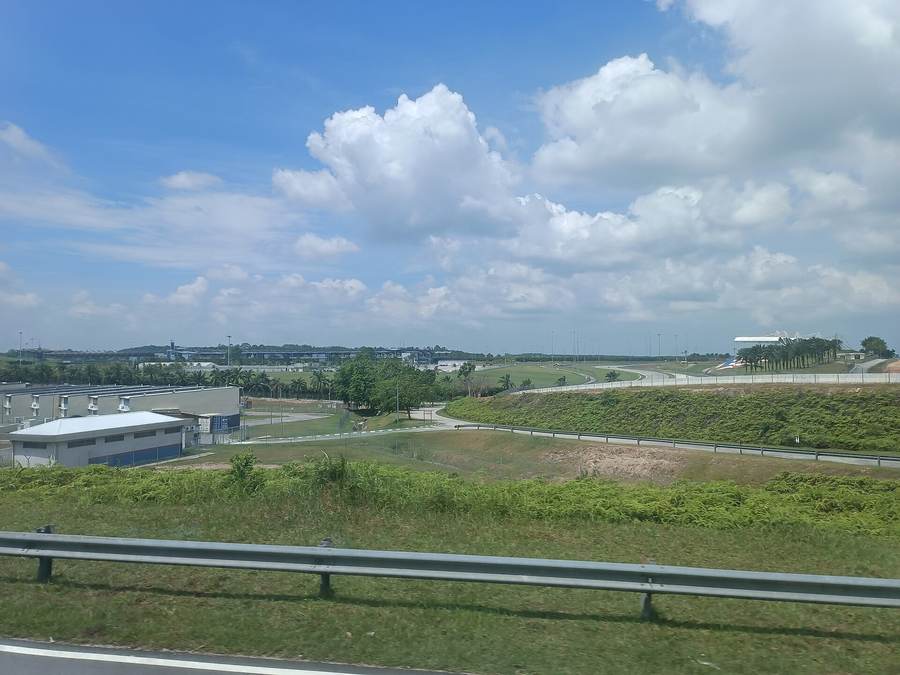
For the confused: yes, this is officially the Bahrain Grand Prix, run 6,000 kilometres from Bahrain. The original April date at Sakhir was cancelled — along with the Saudi Arabian Grand Prix — after the outbreak of the Iran war in February. To preserve the calendar, Formula 1 and the FIA struck a deal with the governments of Bahrain and Malaysia to stage the race at Sepang, with Bahrain retaining the event's identity, ticket pricing, and proceeds; some 500 Bahraini marshals were flown in, and much of the circuit branding mirrors Sakhir.
It is a strange arrangement, but Sepang earned its encore. This circuit has a long history of humbling the sport's certainties: Hamilton's engine failure here in 2016 effectively cost him that year's title to Nico Rosberg, and the 1999 bargeboard disqualification saga briefly made Mika Häkkinen champion. Sunday's software farce belongs in that lineage — Sepang does not do quiet weekends.
Declared a heat hazard, delivered a deluge
The weekend's other villain was the climate. The event was formally declared a heat hazard, with air temperatures of 32–33°C and humidity pushing the heat index toward 40–43°C on one of the most physically demanding layouts on the calendar. Then the sky did what Sepang skies do: a tropical cell parked over the circuit at the worst possible moment. The medical car's report of standing water was the correct call for the initial delay — but nothing in the rulebook prepared race control for cars that could not complete a formation lap once the rain eased.
What the data tells us
The numbers frame the scale of the failure. Roughly 90 minutes elapsed between the scheduled 3 p.m. start and the 16:33 restart. At least seven cars across four power-unit manufacturers suffered power-delivery episodes in two formation laps — a failure rate with no modern precedent. Verstappen's pole margin of 0.298 seconds, earned in the dry, counted for nothing the moment the software took over. And with Antonelli's championship lead at 66 points and eight rounds remaining after this weekend, every point lost to a frozen throttle pedal carries title-race weight.
What happens next
Expect three aftershocks. First, the FIA will want answers: a red-flagged start procedure caused by cars that cannot idle around a wet circuit is a sporting-integrity problem, and the governing body cannot let the season's remaining rain-threatened races — starting with Singapore in just a few days — become software lotteries. Second, Ferrari faces a forensic fortnight. A wet-weather energy-management flaw in its power unit affects not only the works team but its customers at Haas and Cadillac, and Maranello's response will be judged as harshly as the failure. Third, the paddock's pecking order is suddenly fluid: if the 2026 cars have a collective wet-weather weakness, the teams that patch it fastest — not the ones with the most downforce — will bank the points when the skies open.
Sunday will be remembered as the day Formula 1's brave new technical era met its first rainstorm and short-circuited. The championship battle resumes in Singapore, but the question hanging over it is new: when the rain comes, will the cars even make it to the grid? For the full qualifying picture, see our report on Russell's Baku win that tightened the title race; for more Sports Desk coverage, read the UFC 335 Oliveira-Lopes fight announcement.
Sources
- Reuters via Devdiscourse — Bahrain Grand Prix gets underway at Sepang after long rain delay
- Autosport — F1 Bahrain GP in Malaysia descends into chaos as car trouble prompts red flag
- race-trace.news — Chaos in Sepang: why Formula 1 cars stalled during the formation lap
- The Sun — F1 Bahrain Grand Prix live results and updates
- The Race — Verstappen takes first Red Bull F1 pole of 2026