Business · Trade · Europe · Indonesia
The EU Indonesia trade deal — a comprehensive economic partnership nine years in the negotiating — cleared its last internal European hurdle on Wednesday, when the Council of the European Union authorised the signature and provisional application of the CEPA and a companion investment agreement with Southeast Asia’s largest economy. Both sides remove duties on more than 90% of products, Indonesian tariffs on European cars of up to 50% disappear within five years, and businesses are estimated to save around €600 million a year — a pact Reuters and Al Jazeera describe as aimed at offsetting the impact of US President Donald Trump’s tariffs.
BRUSSELS, November 18, 2026 — The EU Indonesia trade deal is no longer a negotiation. On Wednesday, the Council of the European Union authorised the signature and provisional application of the EU–Indonesia Comprehensive Economic Partnership Agreement (CEPA) and the Investment Protection Agreement (IPA), the last internal EU hurdle before the two texts can be signed. The decision, set out in a Council press release, converts a deal concluded by negotiators in September 2025 into an instrument governments have now formally approved for signature — and, unusually, for application before the ratification process has run its course. Helen McEntee, Ireland’s Minister for Foreign Affairs and Trade, speaking for the rotating Council presidency that Ireland currently holds, summarised the prize in the Council release: the agreements “remove tariffs on almost all goods traded between the EU and Indonesia, and save businesses an estimated €600 million annually in customs duties.”
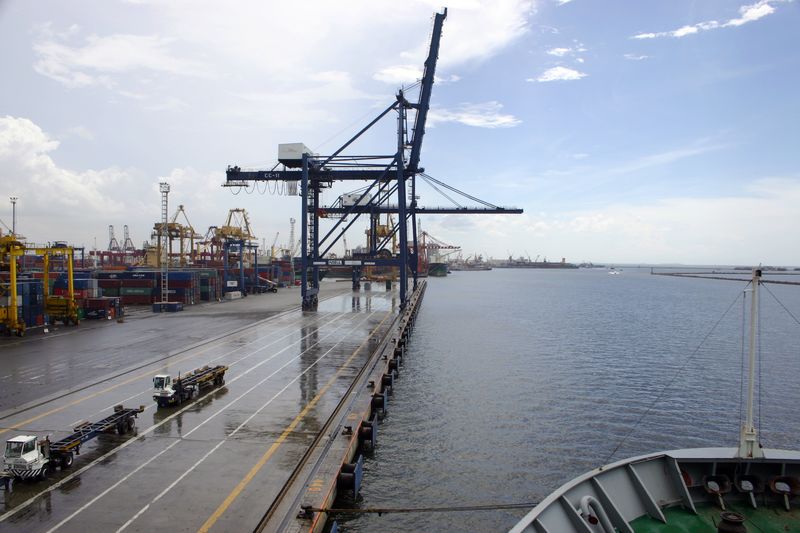
What the Council did on Wednesday needs to be distinguished from what it did not do. It did not bring the agreements into force: that requires the consent of the European Parliament, after which the Council can formally conclude them. What it did is authorise the two acts that make the deal real in the meantime — signature, and provisional application once both sides have notified each other that their internal procedures are complete. In EU trade practice, provisional application is where a deal stops being paper and starts changing invoices: tariff lines begin to fall, customs codes change, and exporters price contracts against the new schedule while the parliamentary process continues in parallel. The EU Indonesia trade agreement signing itself is now the next public step. Reporting by Agence Europe and Indonesian ministerial reporting points to a signing on 21 November 2026; the Council’s own release says only that the agreements will now be signed, and readers should hold the specific date at that attribution until the ceremony happens.
What disappears: Indonesia EU tariffs removed on more than 90% of products
The core of the EU Indonesia CEPA is a tariff demolition carried out on a timetable. Once the agreement is fully implemented, up to 98.5% of tariff lines will be liberalised. Both sides remove duties on more than 90% of products. And the Indonesian side of the schedule moves fast by the standards of trade agreements: 96% of Indonesian tariffs disappear within five years. That five-year figure is the one exporters will plan against, because it converts a diplomatic text into a dated commercial fact — a product that is dutiable in Jakarta today is, for most tariff lines, duty-free within one business-planning cycle.
EU car tariffs in Indonesia: 50 percent duties eliminated within five years
No single line in the agreement illustrates the scale of the change better than cars. Indonesian duties on EU automotive exports currently run up to 50% — the EU car tariffs Indonesia 50 percent barrier that has long priced European vehicles as luxury exotics in a market of more than 280 million people — and those duties are eliminated within five years. For European carmakers, Indonesia has been the conspicuous gap in Southeast Asia: the region’s largest economy, a growing middle class, and a protective wall that kept European models at the margins while regional and Japanese producers built inside or around it. A five-year glide path to zero does not hand that market to Europe — distribution networks, local production decisions and price competition will decide who actually sells cars — but it removes the structural excuse. The same logic applies across European machinery, chemicals and consumer goods: the deal’s value is not any single tariff line but the breadth of a schedule in which more than nine products in ten cross the border duty-free.
The EU Indonesia 600 million savings figure attached to all this — around €600 million a year in customs duties, on the Council’s estimate, quoted by McEntee — deserves its context. It is a static estimate of duties no longer paid on trade at roughly current volumes, not a forecast of new trade created. Its real significance is directional: €600 million a year is the recurring toll the old schedule charged both economies for trading with each other, and its removal compounds. Every year the deal applies, that sum stays in the supply chains of exporters and importers on both sides instead of being collected at the border. Readers following the market reaction can track the sectors most exposed to the schedule on the Signal Post News markets tracker, where the tariff story now runs alongside the US duties it is designed, in part, to answer.
Food and farm goods: duties fall, 221 names protected, three products left out
Agriculture is where trade deals are usually lost, and the EU Indonesia free trade agreement handles it with a mixture of ambition and deliberate omission. EU agri-food exports to Indonesia are worth about €1 billion a year, and duties will be removed on most of them — a direct gain for European producers selling into a market whose food imports grow with its incomes. Alongside the tariff cuts sits the deal’s most European feature: 221 EU geographical indications are protected in Indonesia, meaning that names tied to specific places and methods of production gain legal protection against imitation in the Indonesian market. For the producers behind those 221 names, the protection is often worth more than the tariff line, because it defends the premium itself rather than merely the margin on shipping it.
The omissions are equally instructive, and they are written into the agreement rather than left ambiguous. Rice, sugar and ethanol are excluded — three products where Indonesian sensitivities, food-security politics and domestic producer interests made liberalisation a price Jakarta would not pay. Other sensitive products are handled through limited tariff-rate quotas, the standard compromise in which a defined quantity enters at a reduced duty and the wall stays up beyond it. Critics of such carve-outs, in Europe and Indonesia alike, will read the exclusions as the deal’s unfinished business. Defenders will answer that an agreement covering more than 90% of products, with its exclusions named and bounded, is what a concluded negotiation looks like: the alternative on offer after nine years of talks was not a perfect text but no text, with a hard deadline approaching that this article returns to below.
The investment half: the EU Indonesia investment protection agreement
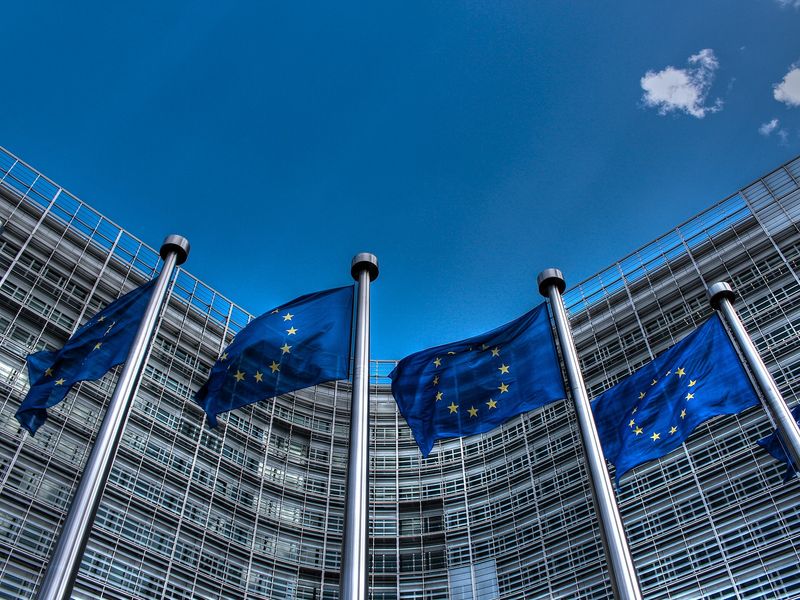
Trade deals move goods; the companion text signed off on Wednesday is about the money that stays. The EU Indonesia investment protection agreement protects investors against unlawful expropriation and guarantees fair treatment, non-discrimination between investors, and the free transfer of investment-related payments. Those four guarantees are the standard architecture of European investment policy, and their function is practical: an Indonesian factory, port stake or distribution network built with European capital is a decades-long bet, and the IPA is designed to lower the risk premium on making it — and, symmetrically, on Indonesian capital invested in Europe.
Two design choices in the IPA will matter to its critics, and both cut against the caricature of investment treaties as corporate courts. First, the agreement explicitly preserves both sides’ right to regulate for legitimate public purposes — health, environment and climate are named — so the protections are framed as a floor against arbitrary treatment, not a ceiling on democratic regulation. Second, its dispute machinery is state-to-state, supplemented by voluntary mediation: there is no investor-state court of the kind that made earlier generations of investment treaties politically toxic in Europe. Disputes are channelled between governments, which must decide that a case is worth a diplomatic confrontation before it can proceed. Supporters call that a filter against speculative claims; critics who wanted stronger direct recourse for investors will call it a gap. Both readings start from the same text, and the text is the one the Council approved.
Sustainability, Paris — and the palm-oil fault line
The agreement carries a trade-and-sustainable-development chapter in which the Paris Agreement is designated an essential element — language that, in EU treaty practice, gives the climate commitment structural weight rather than decorative status — alongside cooperation on energy, critical raw materials and digital trade. Each of those three cooperation fields maps onto a live strategic interest. Energy and critical raw materials connect the deal to Europe’s supply-security agenda, in an archipelago rich in the minerals the energy transition consumes. Digital trade connects it to the services economy where much of the future growth in the relationship sits. And the sustainability chapter is the deal’s answer, in advance, to the objection that has shadowed this negotiation longer than any other: palm oil.
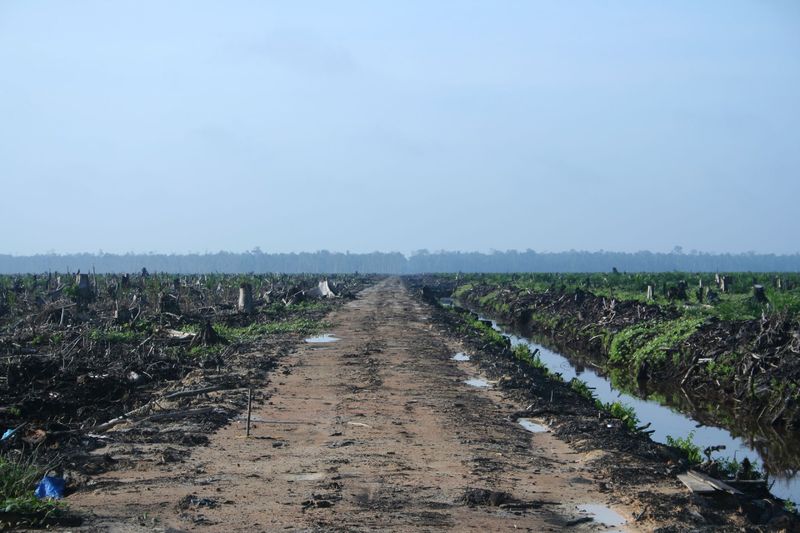
The Indonesia palm oil EU trade dispute predates the final phase of these negotiations and will outlast Wednesday’s decision. The EU’s phase-out of palm oil in transport fuels, and the anti-dumping and countervailing duties applied to Indonesian biodiesel, have strained relations for years: Jakarta has treated the measures as green protectionism aimed at one of its signature exports, Brussels has defended them as environmental policy applied to a commodity linked to deforestation, and neither side has conceded the argument. The CEPA does not resolve that fight, and this article does not pretend otherwise. What the deal changes is the setting in which the fight continues: a concluded agreement, with a sustainability chapter both sides have signed and institutional channels for raising disputes, gives the palm-oil argument a forum inside a growing relationship rather than leaving it as the relationship’s defining grievance. Whether the Paris-as-essential-element language ever acquires operational teeth — in either direction, as a lever on deforestation or as a source of new friction over market access — is one of the genuine open questions the agreement leaves behind.
How we got here: nine years, one deadline, and trade the Council calls below potential
The relationship this deal formalises is larger than its current numbers and smaller than its obvious potential — which is, in the Council’s own assessment, precisely the problem. Indonesia is Southeast Asia’s largest economy, with a population of more than 280 million. Trade in goods between the EU and Indonesia was worth €28.9 billion in 2025, and trade in services €9.3 billion in 2024 — figures the Council itself describes as below potential for two economies of this size. Negotiations were launched in July 2016 and were successfully concluded on 23 September 2025, a nine-year span that carried the talks through changes of government, a pandemic, and the long palm-oil quarrel. The pattern is familiar from this newsroom’s coverage of the EU–China trade talks in Beijing: European trade diplomacy moves slowly for years, and then, when the strategic weather changes, moves all at once.
The deadline that finally concentrated minds is dated 1 January 2027. On that day, Indonesia graduates from the EU’s generalised scheme of preferences (GSP) — the unilateral scheme under which its exports have enjoyed preferential tariffs in the European market. Graduation is, in one sense, a compliment: it reflects an economy that has outgrown the developing-country preferences the scheme exists to provide. But its mechanical consequence is a cliff edge. The Indonesia GSP graduation January 2027 date means Indonesian exporters would lose their preferential access just as the world trading system is being rearranged by US tariffs — unless the CEPA, a reciprocal and permanent arrangement, is applying in its place. That is why the Council’s decision authorises not just signature but provisional application, and why both sides speak of bringing the agreements into application as swiftly as possible: the GSP calendar does not negotiate.
Why this matters
Analysis: start with the framing both wire services reached for, because it is the framing the principals chose. Reuters and Al Jazeera describe the deal as aimed at offsetting the impact of US President Donald Trump’s tariffs — an EU trade deal offset Trump tariffs strategy, in which Brussels and Jakarta bind themselves closer partly because Washington has made the old trading map more expensive to use. That is a statement of intent, offered by governments and reported as such; it is not a measured outcome, and no honest account should upgrade it into one. Whether the CEPA actually diverts a single container from a US-bound route will be visible only in trade data over years. What can be said today is narrower and still significant: when the world’s largest trading bloc and Southeast Asia’s largest economy spend political capital to sign a deal in November 2026, and both explain the timing by reference to American tariffs and a January deadline, the intent itself is a fact about how the trading system is reorganising.
The second significance is the EU’s method. The Indonesia agreement is one panel in a wider European diversification effort — concluding long-running negotiations, market by market, to reduce dependence on any single partner and to offer the EU’s regulatory and market weight as an alternative pole. The same instinct produced the tariff diplomacy this newsroom covered in the Canada–China tariff deal extended in Shenzhen, struck by two governments also describing their move as a step taken in Washington’s shadow. Deals of this kind do not replace the US market, for Europe or for Indonesia, and nobody signing them claims they do. Their function is insurance: preferential access locked in treaty form, which cannot be withdrawn by a single announcement, in a system where announcements have become the main source of risk.
The third significance runs in the opposite direction, toward Jakarta. For Indonesia, the CEPA converts a expiring unilateral preference into a negotiated right, upgrades its access for the products where duties actually bind, and does so with the world’s largest single market at the moment its exporters face new barriers elsewhere. It also locks Indonesia into a sustainability framework whose palm-oil politics it has resisted for years — the price of the ticket, accepted with the argument unresolved. How that bargain ages depends on implementation: on whether the tariff schedules fall as written, whether the geographical-indication protections are enforced in Indonesian courts and markets, and whether the cooperation chapters on energy and critical raw materials produce projects or only communiqués. Wednesday’s decision makes all of those questions live ones. It answers none of them.
The numbers, in context
Set the agreement’s figures side by side and its shape is clear. Up to 98.5% of tariff lines liberalised at full implementation; more than 90% of products duty-free on both sides; 96% of Indonesian tariffs gone within five years; car duties of up to 50% eliminated on the same horizon; around €600 million a year in duties saved. Against that, the baselines: €28.9 billion in goods trade in 2025 and €9.3 billion in services in 2024, €1 billion a year of EU agri-food exports within it, and 221 protected geographical indications. The honest reading of those numbers is that the deal’s first-order effect is modest against the size of either economy — €600 million is a rounding error in EU trade as a whole — and its second-order effect is the point: it reprices the next decade of decisions about where to build, source and sell, between two economies whose current trade the Council itself calls below potential. Trade agreements are options on future commerce more than they are transfers in the present, and this one has just been exercised.
Winners, losers and critics
The clearest winners are the exporters on both sides whose products sat behind the highest walls: European carmakers and the machinery, chemical and agri-food producers whose Indonesian duties now have an expiry date, and Indonesian exporters whose European preferences survive the GSP cliff in permanent treaty form. European consumers and Indonesian importers of European capital goods gain quietly, through prices. The Indonesian state gains something less tangible but real: a concluded negotiation with the EU that treats it as a peer economy, nine years after the talks began.
The losers are concentrated where the agreement’s protections were designed to bite. Producers on both sides who competed behind tariff walls now face the five-year countdown. The excluded and quota-limited sectors — rice, sugar and ethanol above all — keep their protection but also their ceiling: exclusion cuts both ways, preserving the home market while forgoing the export opportunity. And the palm-oil sector, the deal’s most politically exposed constituency in Indonesia, gains a framework without gaining the concession it most wanted, on the fuel phase-out and biodiesel duties that remain in place and contested.
The critics divide predictably, and their arguments deserve stating at full strength. Sustainability critics will test the deal against its own chapter: an agreement that names Paris an essential element while leaving the palm-oil regime untouched invites the charge that the language is ornamental, and the honest test — deforestation data, enforcement practice, the use or non-use of the chapter’s mechanisms — lies ahead. Sovereignty critics in Indonesia will note that investment protection and regulatory disciplines, however carefully the right to regulate is preserved, are constraints accepted in exchange for access, and that the state-to-state design means their own government, not affected communities, holds the keys to any dispute. European farm and industry lobbies that lost the internal argument will watch the tariff-rate quotas for leakage. None of these criticisms is answered by Wednesday’s decision; the decision simply moves them from the negotiation, where they were arguments for delay, into the implementation, where they become arguments about evidence.
What happens next
The sequence from here is procedural, and each step has a date or a condition attached. First, signature: expected on 21 November 2026 on Agence Europe and Indonesian ministerial reporting, with the Council committing only to the fact that the agreements will now be signed. Second, provisional application, which begins once both sides notify completion of their internal procedures — the step that starts the tariff clocks, including the five-year countdowns on Indonesian tariffs generally and on car duties specifically. Third, the European Parliament’s consent, without which the Council cannot formally conclude the agreements and bring them fully into force; the Parliament’s trade committee politics, and the sustainability debate rehearsed above, will decide how smooth that passage is. Running underneath all three steps is the 1 January 2027 GSP graduation, the fixed point that gives the timetable its urgency: every month of slippage is a month in which Indonesian exporters face the cliff the CEPA was concluded to replace.
For Indonesia itself, the domestic story continues in parallel — this newsroom’s coverage of Indonesia’s presidency and its politics in Jakarta follows the government that will implement Jakarta’s side of the bargain. The scenarios from here are not exotic. In the first, signature and provisional application proceed on schedule, the Parliament consents without a crisis, and the deal becomes what its authors intend: background infrastructure for a growing relationship, noticed mainly by the firms whose invoices change. In the second, the Parliament or the sustainability fight reopens questions the negotiators considered closed, and application slips toward the GSP deadline with the cliff edge back in view. In the third, the agreement applies but the contested files — palm oil first among them — migrate into its own dispute channels and test whether the framework can hold an argument it was built, in part, to contain. Which of those futures arrives will be decided less in communiqués than in the unglamorous sequence of notifications, consent votes and customs schedules that Wednesday’s decision has now set running.
Related coverage
Indonesia’s President Sacks His Own Chief of Staff in Wiretap Scandal as Troops Deploy to Jakarta
More business coverage: Signal Post News — Business
Sources
Sources: Council of the European Union press release, “EU-Indonesia: Council greenlights signature of landmark trade and investment agreements,” 18 November 2026 — consilium.europa.eu — reporting the Council’s authorisation of the signature and provisional application of the CEPA and the IPA; that up to 98.5% of tariff lines will be liberalised at full implementation, 96% of Indonesian tariffs will disappear within five years, both sides will remove duties on more than 90% of products, and Indonesian duties on EU automotive exports of up to 50% will be eliminated within five years; estimated savings of around €600 million a year in customs duties; EU agri-food exports to Indonesia of about €1 billion a year with duties removed on most products, 221 EU geographical indications protected, rice, sugar and ethanol excluded and other sensitive products subject to limited tariff-rate quotas; the IPA’s protections against unlawful expropriation and its guarantees of fair treatment, non-discrimination and free transfer of investment payments, its preservation of the right to regulate for health, environment and climate, and its state-to-state dispute mechanisms and voluntary mediation; the trade-and-sustainable-development chapter with the Paris Agreement as an essential element and cooperation on energy, critical raw materials and digital trade; goods trade of €28.9 billion in 2025 and services trade of €9.3 billion in 2024, described by the Council as below potential; negotiations launched in July 2016 and concluded on 23 September 2025; Indonesia’s graduation from the generalised scheme of preferences on 1 January 2027; the requirement of European Parliament consent before conclusion; provisional application following notification by both sides; and the statement by Helen McEntee, Ireland’s Minister for Foreign Affairs and Trade, quoted in this article. Reuters, “EU governments authorise signature of trade deal agreement with Indonesia,” 18 November 2026, and Al Jazeera, EU governments approve Indonesia trade deal reporting, 18 November 2026 — both framing the agreement as aimed at offsetting the impact of US President Donald Trump’s tariffs, a framing this article reports as stated intent. Agence Europe and Indonesian ministerial reporting, November 2026, for the expected signing date of 21 November 2026; the Council release states only that the agreements will now be signed. Photographs: Niels Johannes, Thijs ter Haar, Gunawan Kartapranata and Hayden, all via Wikimedia Commons and credited in the captions.