World · Asia-Pacific · Indonesia
The Prabowo wiretapping scandal reached the top of the presidential palace on Wednesday: the president sacks his chief of staff, three police generals are suspects in an alleged plot to wiretap the president’s own phone, and the military is moving more than 20,000 personnel into the capital.
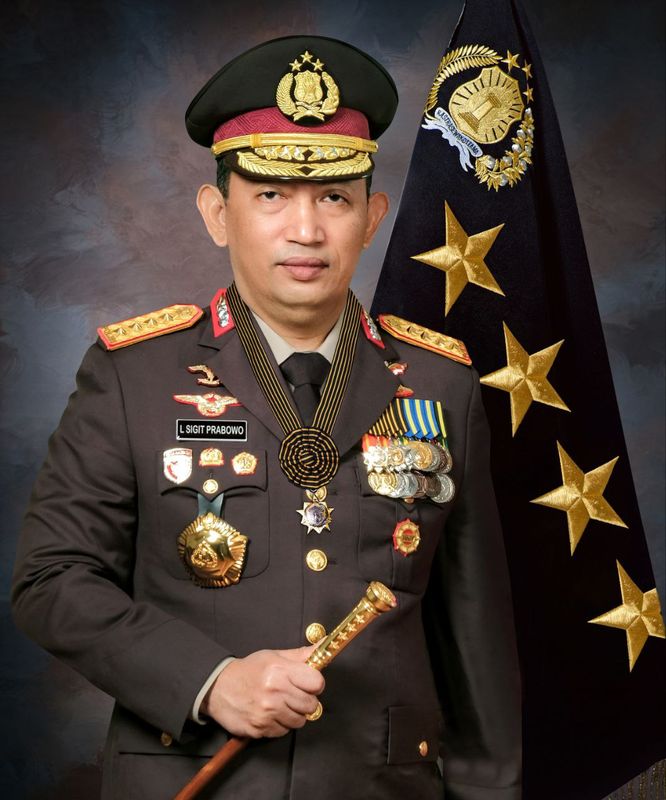
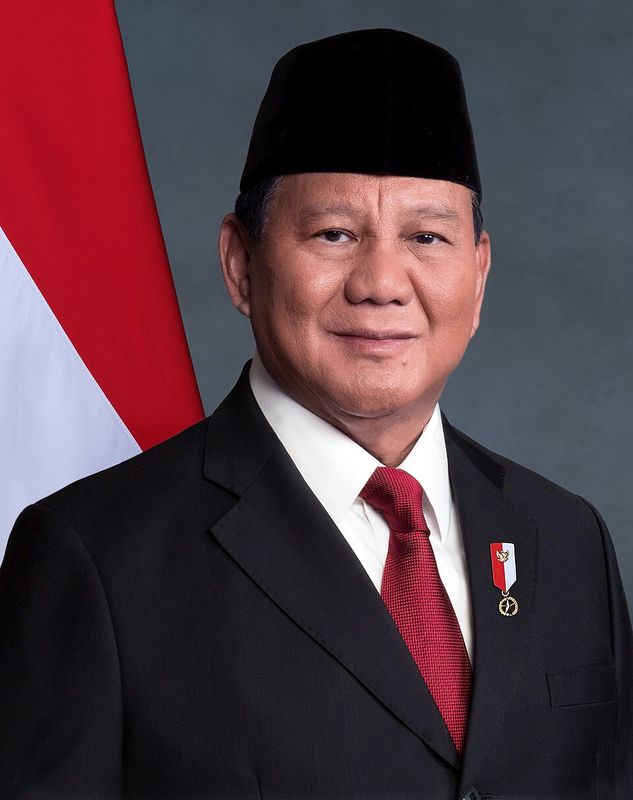
JAKARTA — President Prabowo Subianto sacked his presidential chief of staff, Listyo Sigit Prabowo, by presidential decree signed on Wednesday morning, November 4, 2026, a day after police named Listyo a suspect in the Prabowo wiretapping scandal — an alleged illegal interception operation that investigators say targeted the phone numbers of the president himself, state officials, political figures, media figures, community and NGO leaders and businesspeople. Listyo, who is not a relative of the president despite sharing his surname, had held one of the most sensitive jobs in the palace for barely five weeks. He is one of three police generals named as suspects, and his dismissal came as the Indonesian military deployed 20,980 personnel to Jakarta, with a further 13,140 on standby.
The sequence moved fast. Police announced the suspects — by initials only, LSP, ASN and EH — at a televised press conference late on Tuesday, November 3, led by Asep Safrudin, head of the police Criminal Investigation Agency. By Wednesday morning, the presidential decree removing Listyo was signed. Lieutenant General Ariyo Windutomo, formerly head of the Presidential Secretariat, was named acting chief of staff. The three suspects have been charged, but not convicted; they are suspects in an active investigation, and Reuters reported it could not contact them or their lawyers for comment. They have made no public response.
What police allege: the LIMS wiretaps
Listyo Sigit Prabowo arrested as a suspect, with two fellow generals
Alongside Listyo, police named two other suspects: Inspector General Ahrie Sonta Nasution, head of the National Police legal division, and Inspector General Eko Hadi Santoso, a senior instructor at the National Police education institution. A fourth person, identified by the initials SU, is being questioned as a witness. Police said they had questioned 10 witnesses and 3 expert witnesses, and seized 11 mobile phones, an iPad or tablet and 4 USB flash drives.
Indonesia wiretap president phone: numbers entered without a case
The allegation at the centre of the Indonesia LIMS wiretapping case is procedural as much as political. Investigators say that from 2025 into October 2026, phone numbers were fed into the police Lawful Interception Management System — LIMS, the platform through which lawful intercepts are administered — without verification and without any underlying police case to justify them. In plain terms, the system built to run court-ordered, case-based surveillance was allegedly used as a general listening tool against people who were not suspects in anything. In October 2026, investigators say, the suspects ordered the deletion of intercepted data from LIMS — the step that, if proven, turns an unauthorised tap into an attempted cover-up.
The case came to light on October 30, when officers who had learned of the taps reported them. That origin matters: this was not an opposition leak or a foreign intelligence disclosure. It surfaced from inside the police institution itself, and it is the police Criminal Investigation Agency that is now running the case against the man who led the force until five weeks ago.
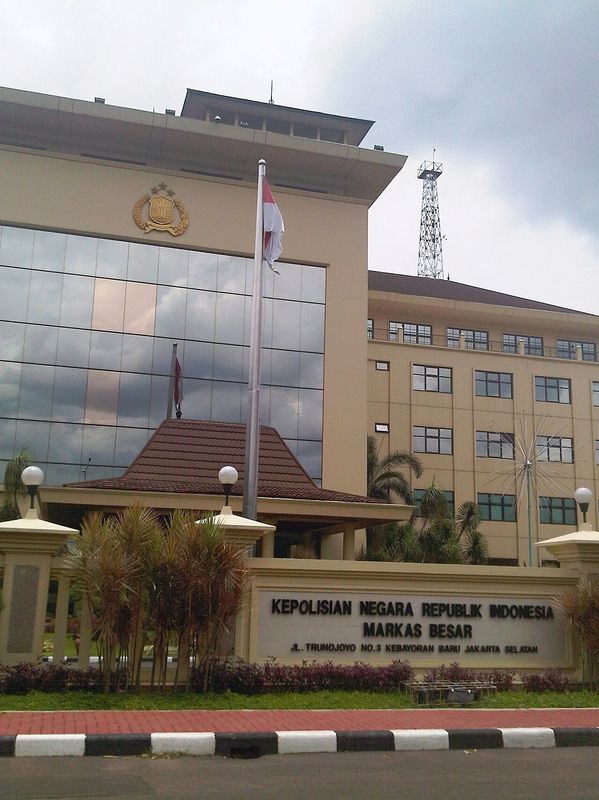
The charges, as set out by officials, run on two tracks. Under the criminal code, the suspects face allegations of unlawful practices threatening security. Under the electronic information and transactions law, they face illegal interception, which coordinating minister for legal affairs Yusril Ihza Mahendra said carries up to 10 years in prison, and unauthorised deletion of electronic data, which carries up to six years. Those are maximums attached to the statutes cited, not sentences; no court has heard the case, and every element — the taps, the orders, the deletion — remains an allegation the prosecution will have to prove.
Two voices in government: “rogue individuals” and the treason question
The government has not spoken with one voice about what this case is, and the difference is worth stating precisely, because the two lines point in different directions. Presidential spokesperson Prasetyo Hadi described the alleged acts as the work of “rogue individuals” and said they may already fall into a category tending toward treason, endangering state interests and the safety of the head of state. That is the palace framing: a small group acting outside the system, against the president, in conduct the spokesperson himself linked to the language of treason.
Yusril Ihza Mahendra, the senior coordinating minister for legal affairs, said something materially different. The motive, he said, has not been determined, and investigators have found no indication of treason. That is the legal framing: an interception and data-deletion case whose purpose is unknown and unproven. Both statements come from the same government on the same days. Readers should hold them apart, exactly as officials delivered them: the Prabowo chief of staff dismissed treason framing is the spokesperson’s characterisation, offered as acts that may tend toward treason; it is not a charge, it is not a finding, and the minister responsible for legal affairs says the evidence gathered so far does not support it. Whether the charge sheet changes is one of the live questions of this case, and it is addressed below.
Troops deployed to Jakarta: the numbers, and what officials say they mean
Jakarta troop deployment 20980: phased, naval-led, and officially unconnected
Running alongside the dismissals is a military deployment on a scale Jakarta does not see every week. The armed forces are deploying 20,980 personnel to the capital, with a further 13,140 on standby — a combined posture of more than 34,000 troops assigned to or held for the capital. Phase one began on Monday, November 2, with 2,100 personnel already in Jakarta. Reinforcements were arriving from Wednesday from marine and navy units, training centres and naval bases in Java and Lampung, according to Vice Admiral Yayan Sofiyan, the navy’s operations assistant.
What officials say the deployment is for is narrower than what it looks like. Navy spokesperson Tunggul said the troops were deployed to “safeguard and protect the stability of Indonesia’s security,” and linked it partly to upcoming training. Armed forces spokesperson Major General Muhammad Nas called it standard procedure for national security. And on the question everyone in Jakarta is asking, the record is explicit: authorities have not confirmed any link between the troops deployed Jakarta November 2026 movement and the wiretap investigation. That absence of confirmation should be reported as plainly as the numbers themselves. The deployment and the probe overlap in time; no official has said they are connected in cause.
Analysts are filling that gap with attributed interpretation, not fact. Sana Jaffrey of the Australian National University said the deployment could signal concern about tension between the military and police elements loyal to Listyo, and that it could strengthen the government’s reliance on the military. Both readings are plausible; neither has been confirmed by any authority, and the police and military have issued no statement suggesting friction between them.
Why this matters
Strip away the palace intrigue and the core fact is stark: the man accused of running an illegal tap on the president was, until October 1, the head of the institution that owns the tapping system, and until Wednesday morning he was the president’s chief of staff. Surveillance powers exist in every state, and Indonesia’s LIMS is, on paper, a safeguard as well as a tool — a management system meant to ensure interceptions happen lawfully, against verified numbers, inside real cases. The allegation here is that the safeguard was the vulnerability: numbers entered without verification, no underlying case on file, and the records then ordered deleted. If that is proven, the lesson is not that Indonesia has interception capability; it is that the checkpoint designed to discipline that capability could be walked around by the people at the top of the chain that was supposed to police it.
That is why the case reaches beyond three careers. Civilian control of security forces rests on a chain of trust: the president trusts the police chief, the police chief trusts the system, the public trusts that the system is only ever aimed at lawful targets. The Prabowo wiretapping scandal tests every link at once, because the alleged target list — the president, officials, politicians, journalists, NGO and community leaders, businesspeople — reads like a cross-section of everyone a state might want to watch and no lawful case would ever cover. Amnesty International Indonesia has urged authorities to reveal who was wiretapped, arguing the public has a right to know, and warning the scandal could pave the way for a secret police apparatus turned against the opposition. The government’s supporters answer that the system worked: officers reported the taps, investigators investigated, and the president dismissed his own chief of staff within a day of the suspect naming. Both claims can be argued from the same record, which is precisely why the investigation’s next disclosures matter more than either side’s opening framing.
The timing compounds the stakes. Prabowo, a retired army general and former special forces commander elected in 2024 with a big majority, is in the second year of his presidency with a sliding approval rating, public unease over food prices, and flagship programmes — free meals and village cooperatives — under scrutiny. Investors are watching the $1.5 trillion G20 economy just as closely after ratings outlook cuts and record stock-market routs that followed MSCI’s warnings of a possible equities-market downgrade, a sell-off we tracked when Indonesian stocks plunged on the MSCI standalone-downgrade warning. A scandal that pits the palace against the police leadership, and plays out under a 34,000-strong troop posture in the capital, is the kind of instability story markets price quickly and forgive slowly.
Background: from Widodo’s police chief to Prabowo’s chief of staff
A career built under one president, ended under another
Listyo’s rise ran through the previous presidency. Appointed national police chief under President Joko Widodo, he took the post on January 27, 2021 and held it for more than five years, becoming known as a Widodo loyalist in a force whose chiefs serve at presidential pleasure. He left the police job on October 1, 2026, when General Suyudi Ario Seto succeeded him as national police chief, and moved the same day into the palace as Prabowo’s presidential chief of staff — an appointment recorded in the Cabinet Secretariat’s account of the October 1 inauguration. Five weeks later, on November 4, he was dismissed from that job by decree.
The political geometry underneath is delicate. Reuters has reported a growing rift between Prabowo and Widodo, the predecessor whose coalition helped carry him into office — and whose son, Gibran Rakabuming Raka, sits beside Prabowo as vice president. A Widodo-era police chief, promoted into the palace and then removed as a wiretap suspect within five weeks, lands directly on that fault line. Nothing in the police announcement alleged any involvement by Widodo or the vice president, and no evidence made public connects either man to the taps; the rift is context, reported by Reuters, not an allegation in the case. But context shapes consequences: Sugiono, secretary-general of Prabowo’s Gerindra party, called the alleged conduct “insubordination” and said the party would talk with other parties — coalition management, in other words, starting immediately. Former president Susilo Bambang Yudhoyono, a elder statesman whose interventions are rarely accidental, posted on X appealing to Prabowo to “restore civility to our politics.” And Nicky Fahrizal of the CSIS think tank in Jakarta warned the scandal could weaken the ruling coalition, with political instability liable to escalate.
The street dimension is recent memory, too. Prabowo’s second year has already seen large demonstrations met with heavy deployments, including the protests we covered when 9,500 police were readied around the two-year mark of his presidency, and a presidency projecting firm control abroad as well, as in his warning over energy exports and national disrespect. A wiretap scandal at the summit of the state is a different category of pressure: not crowds outside the palace, but trust inside it.
What happens next
Ariyo Windutomo acting chief of staff — and the questions still open
Four threads will decide how large this story becomes. First, the investigation itself: whether the suspect list stops at three generals and one witness, what the seized phones, tablet and flash drives contain, and whether the deleted LIMS data can be recovered — recovery would tell investigators, and eventually the public, exactly whose numbers were listened to. Second, disclosure: Amnesty’s demand that the target list be published will not go away, and every name confirmed adds a constituency — a newsroom, a party, an NGO — with its own lawyers and its own megaphone. Third, the palace: Ariyo Windutomo acting chief of staff is an interim answer, and who is confirmed permanently in one of the most powerful unelected jobs in the country will signal whether Prabowo reaches for a loyalist, a soldier or a civilian steady hand. Fourth, the charges: whether prosecutors keep the case at interception and deletion — up to 10 years and up to six years respectively — or move toward the graver territory the presidential spokesperson gestured at and the legal affairs minister pointedly declined to endorse. On the evidence officials have described so far, the second outcome is not supported; if the evidence changes, the charge sheet is where it will show.
The troop deployment has its own clock. If the 20,980 personnel rotate through training and the 13,140 on standby stand down quietly, the official account — stability, training, standard procedure — will have been borne out by events. If the posture grows or hardens, the questions analysts are already asking will get louder, and officials will face more pressure to explain a deployment they have so far declined to connect to the scandal that dominates the same week. Either way, Indonesia police generals wiretapping their own head of state is no longer a rumour category in Jakarta; it is a court file, a dismissed chief of staff, and a capital watching soldiers arrive. What the investigation publishes next will decide whether it is remembered as the week the safeguards failed — or the week they held.
Related reading: Protests at Prabowo’s two-year mark: 9,500 police deployed · Indonesian stocks plunge 11% on MSCI downgrade warning · Prabowo’s energy-exports disrespect warning
Sources
Reuters, reporting by Ananda Teresia and Stanley Widianto (November 4, 2026) — the dismissal by presidential decree, the three suspects and their roles, the LIMS allegations and deletion order, the October 30 disclosure, the seizures, the charges and penalties as described by Yusril Ihza Mahendra, both government statements on treason, the troop figures and spokespeople, and the Amnesty, Gerindra, Yudhoyono, Jaffrey and Fahrizal reactions — reuters.com; Associated Press (November 4, 2026) — corroborating coverage of the dismissal, the suspect namings and the Jakarta deployment — apnews.com; Al Jazeera (November 4, 2026) — coverage of the wiretap allegations and the political fallout — aljazeera.com; Channel NewsAsia (November 4, 2026) — regional coverage of the scandal and the troop deployment — channelnewsasia.com; Indonesian police press conference of November 3, 2026, led by Criminal Investigation Agency head Asep Safrudin, as reported by detikNews — the suspect initials LSP, ASN and EH and the witness and seizure counts; Cabinet Secretariat of the Republic of Indonesia — the October 1, 2026 inauguration record for the chief of staff appointment — setkab.go.id.