Emmys move to Prime Video

LOS ANGELES — The Emmys move to Prime Video in September 2027 under a six-year agreement announced October 6 by the Television Academy and Amazon. The service becomes the awards' exclusive global home, but the telecast will remain free: viewers will not need a Prime Video subscription. That combination — one commercial platform, more than 240 countries and territories, and no paywall — ends a broadcast arrangement that carried the ceremony every year from 1955 through 2026.
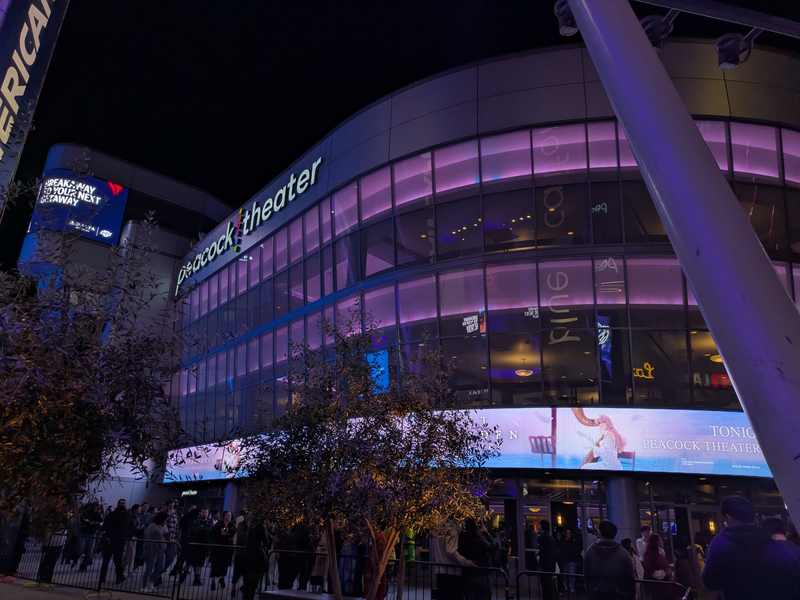
The first test is the 79th Primetime Emmy Awards. The last ceremony under the old system, the 78th Emmys hosted by Mariska Hargitay, aired September 14, 2026, on NBC and streamed on Peacock. Starting next year, the familiar question of where to watch Emmys 2027 has a single answer worldwide: Prime Video, live and free.
Why this matters
Awards shows were among the final pillars of appointment network viewing. Their value came from concentration: stars, advertisers and millions of viewers assembled at the same hour. The irony is hard to miss. Television's top honor no longer believes traditional television distribution offers the best route to the television audience.
The Academy's free-access condition reveals the more important currency in the Television Academy Amazon deal. Rights revenue matters, but the institution chose reach. A major U.S. broadcast network can enter roughly 120 million American television homes. Prime Video can put one feed in more than 240 countries and territories. Those are not directly comparable measures — households are not countries — but the contrast shows the strategic change. The Emmys are being rebuilt as a global media event rather than primarily an American network program.
That framing also explains the unusual promise behind “Emmys free no subscription.” Streaming normally fragments audiences behind paid memberships. Here, the platform is being asked to function more like an old broadcast signal: broadly available, advertising-supported and open to people who do not otherwise buy the service. Whether that openness remains durable across six years will be one of the deal's defining tests.
How we got here
The Emmys were first held in 1949. Their statuette — a winged woman holding an atom, designed by Louis McManus — was meant to join art and science in a single symbol. Beginning with NBC's national telecast in 1955, the awards became part of broadcast television's annual calendar. For roughly three decades, ABC, CBS, Fox and NBC shared the telecast through the “Wheel Deal,” rotating the show among them.
That rotation increasingly looked like a remnant of another media economy. Streaming services came to dominate many prestige categories honored onstage while younger viewers moved away from scheduled network viewing. The broader Emmy Awards ratings decline was not caused by a single platform or ceremony; it reflects a decade in which live awards audiences fragmented along with the television business itself.
The precedent arrived before Amazon's deal. In December 2025, the Academy of Motion Picture Arts and Sciences said the Oscars would leave ABC for YouTube beginning in 2029 and continue there through at least 2033, likewise emphasizing global, free access. The shorthand “Oscars YouTube 2029, Emmys Prime Video” now captures a larger migration: the two most recognizable U.S. screen awards have chosen technology platforms over the networks that built their mass audiences.
Amazon, for its part, has been accumulating high-profile live entertainment. The Emmys add prestige to that portfolio and give Prime Video a global showcase for the platform itself. The agreement goes beyond one annual ceremony, covering the Television Academy's Hall of Fame and Honors programs and planned year-round experiences.
Who wins, who loses — and what the critics say
Prime Video gains prestige, a worldwide live audience and a three-hour window in which the product is both the venue and part of the story. The Academy gains predictable funding, one partner instead of an annual network handoff, and room to adjust the format over several years. International viewers gain a single global home rather than a patchwork of local arrangements. Younger viewers, at least in theory, meet the show in the environment where they already watch entertainment.
The four broadcast networks lose a tentpole and a valuable opportunity to promote their fall schedules. Traditional television also loses one more claim on the limited set of cultural moments still watched live. That does not make the agreement inherently good or bad; it means its benefits and costs are distributed differently across the industry.
Critics have three reasonable questions. First, can a streamer fairly celebrate rival services such as Netflix, HBO and Apple TV+ when it competes with them for subscribers and trophies? Editorial independence and transparent rules will matter as much as production polish. Second, will free access survive future changes in Amazon's strategy? The Academy says it was a precondition of the talks, and the announced deal explicitly promises no subscription requirement, but a six-year technology partnership will still face changing products and business incentives.
Third, can promised reinvention attract new viewers without alienating the core audience that still values the ritual? Prime Video and Amazon MGM Studios head Mike Hopkins has spoken of greater room to “innovate” and make the Emmys more relevant, especially to younger viewers. Innovation can mean more global access and better pacing; it can also become novelty that dates quickly. The 2027 show will have to distinguish the two.
What the numbers actually imply
Six years is the essential number. Under a rotating network arrangement, each broadcaster inherited a format, promoted one year's show and handed it on. Academy chairman Cris Abrego told the Associated Press that the goal was reach and access, adding that one partner over six years lets the organizations learn and build from year to year. Continuity does not guarantee improvement, but it gives experimentation time to compound.
The next number is 240-plus countries and territories, compared with the limited reach of earlier country-by-country television arrangements. The 70 years from 1955 to the end of the broadcast run explain why the shift feels larger than a routine rights sale: the Emmys Wheel Deal ends, and with it a symbolic bond between the awards and the networks.
The money is less clear. Financial terms were not disclosed. Deadline estimated $20 million to $25 million annually, or more than $120 million across the agreement; Variety, citing sources, put the figure near $15 million a year. Those are competing estimates, not confirmed prices. Either level is modest beside major sports-rights packages. That supports — but does not prove — an analytical reading that the Academy prioritized distribution and relevance over extracting the highest possible fee.
There are only about 11 months between the October 2026 announcement and the September 2027 debut. In that window, the partners must design a global live production, explain free access in dozens of markets and make the product reliable at broadcast scale. A planned merger of the Television Academy with the National Academy of Television Arts and Sciences could arrive as early as mid-2027, putting a potential institutional overhaul immediately before the first stream.
What happens next
September 2027 will be a stress test of whether a streamer can stage a broadcast-scale global live event while preserving the ease and ceremony viewers expect. The technical challenge is real, but so is the editorial one: the 79th Primetime Emmy Awards 2027 must make an old institution feel newly accessible without turning the show into a commercial for its distributor.
The possible Academy merger would create one Emmy organization for an era in which distinctions between broadcast, cable, daytime and streaming are increasingly porous. It also raises a domino question for the Grammys, Tonys and other awards that still depend on broadcast partners: if global free distribution proves more valuable than a network slot, how many ceremonies will follow?
By the early 2030s, both the Oscars and Emmys are scheduled to live on technology platforms — free, global and distributed through recommendation systems rather than channel lineups. That outcome would not end television. It would show that “television” now describes the work more reliably than the wire, tower or app that delivers it.
Sources and reporting notes
- Television Academy, October 6, 2026 — terms, start date, global reach, free access and covered Academy programming.
- Amazon newsroom, October 6, 2026 — Prime Video's announcement and distribution details.
- Reuters, October 6, 2026 — six-year exclusive agreement and the end of the network rotation.
- Associated Press via LA Post, October 2026 — Cris Abrego and Mike Hopkins comments on access, continuity and innovation.
- USA Today, October 7, 2026 — free access, the 2026 ceremony and the 2027 transition.
- Gazettely, October 2026 — differing Deadline and Variety fee estimates and the planned Academy merger.
Financial terms remain undisclosed. The $15 million and $20 million–$25 million annual figures are attributed trade-press estimates, not confirmed deal values. Analysis in this article is labeled as such and does not alter the announced terms.