A nurse has been killed and a second health worker severely injured in an attack on Ebola responders in Bafwasende, a town in Congo's Tshopo province, while they were answering an alert about a possible Ebola case on Saturday. The World Health Organization's director-general, Tedros Adhanom Ghebreyesus, disclosed the attack in a post on X on Sunday, and UN News reported on Monday that the nurse was killed by protesters. The injured worker remains in hospital. It is the latest in a series of attacks that responders say are hampering the fight against the deadliest Ebola outbreak Congo has ever recorded — an outbreak caused by the Bundibugyo virus, for which there is still no approved vaccine.
Track it live: Follow case counts and new outbreak alerts on our live disease outbreak tracker.
The United Nations' senior Ebola response coordinator, Julien Harneis, condemned the killing on Monday and demanded an investigation. "I strongly condemn this attack and call for a thorough investigation," he said. "I urge communities to protect health workers and allow them to carry out their work safely." Neither victim has been named, and the Associated Press reported that local authorities had not yet commented on the attack or on any suspects.
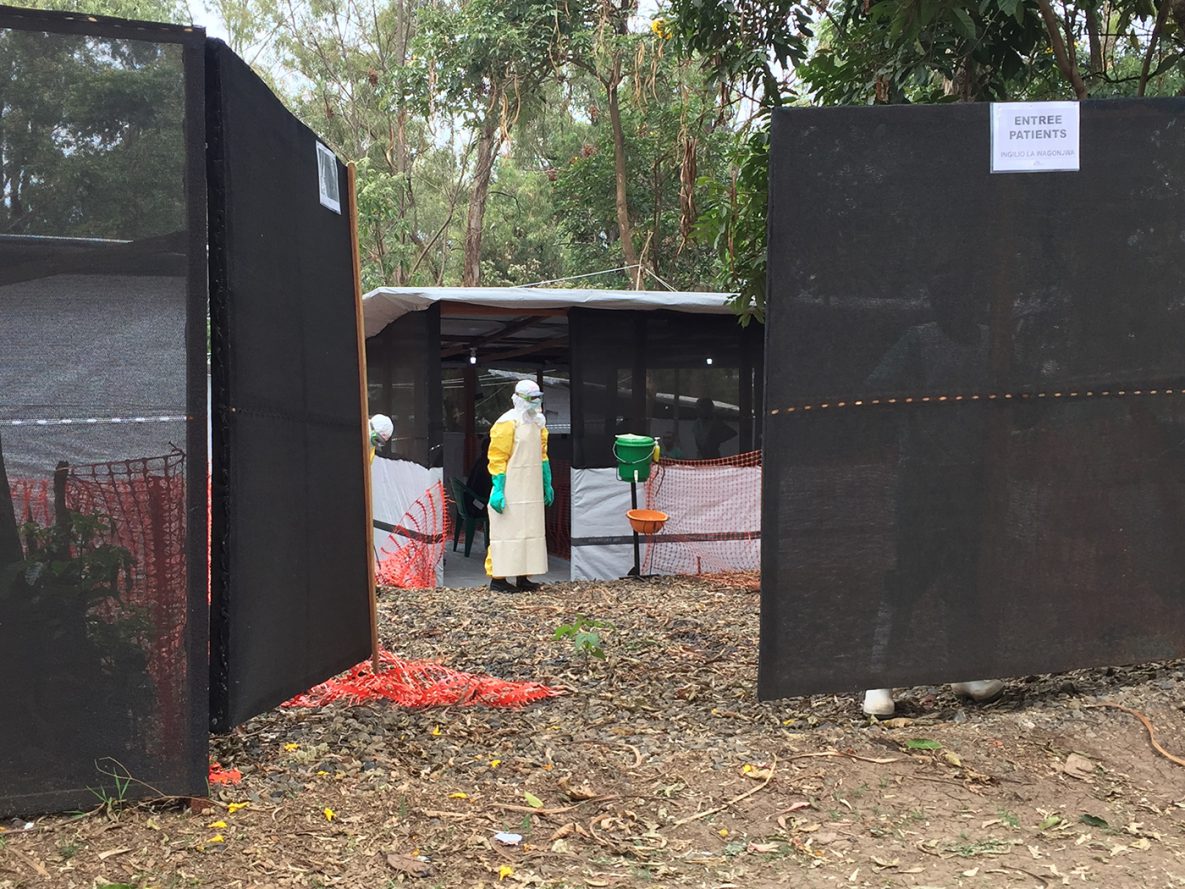
What happened in Bafwasende — and what is still not known
The basic facts, as confirmed by the WHO and reported independently by the Associated Press and UN News, are narrow. Two health workers were responding to an Ebola alert in Bafwasende on Saturday, October 24, when they were attacked. One, a nurse, was killed. The other was severely injured and, according to UN News, remains in hospital. Tedros announced the attack on X on Sunday. Beyond that, almost everything that would normally anchor a story like this is missing: no names, no description of how the attack unfolded, no identified suspects, and no stated motive.
That absence matters, and it is worth being precise about it. UN News described the nurse as "killed by protesters," while the AP account speaks only of an attack and notes that local authorities had not commented. WHO's regional director for Africa, Dr. Mohamed Yakub Janabi, condemned the attack on X with the words "Misinformation and fear must never fuel violence" — a general statement about the climate responders are working in, not a confirmed account of why these two workers were attacked. Until Congolese authorities or investigators say more, the motive for the Bafwasende attack is unestablished, and any account that fills that gap is speculation.
The condemnation, in the officials' own words
"Everyone working to protect communities from this deadly disease must be able to work in dignity and safety," Tedros wrote. "Healthcare must always be protected." Harneis extended condolences to the nurse's family and colleagues and urged communities to let health workers do their work. The statements follow a now-familiar script — which is itself part of the story. Condemnations after attacks on Ebola responders have been issued again and again during this outbreak and the ones before it, and the attacks have continued anyway.
The outbreak in numbers: the deadliest in Congo's history
The attack landed in the middle of an outbreak that has already rewritten Congo's records. According to WHO figures reported by UN News on Monday, more than 9,760 cases and 4,727 deaths have been recorded in the Democratic Republic of the Congo since the outbreak was declared on May 15 — a crude fatality ratio of roughly 48 percent. Congo's health ministry, cited by the AP, puts the toll slightly higher, at more than 9,800 cases and more than 4,700 deaths since May. The two tallies are counted at different moments by different bodies; both agree on the conclusion that matters: this is the deadliest Ebola outbreak in Congo's history, and the AP describes it as the fastest-growing Ebola outbreak in the world.
The outbreak, caused by the Bundibugyo species of Ebola virus, was first reported in Congo's volatile east and has now reached eight provinces: Bas-Uélé, Haut-Uélé, Ituri, North Kivu, South Kivu, Sud-Ubangi, Tshopo and Nord-Ubangi. Signal Post News reported earlier this month as the death toll passed 4,000; on WHO's Monday figures it has since climbed past 4,700, with no plateau yet announced. Cases have also been reported beyond Congo's borders — in France, Kenya and Nigeria, according to UN News — which is why an attack on an alert team in a Tshopo town is not only a Congolese story. Our coverage of Kenya's first case, a traveller from Congo who died in Nairobi, shows the route by which this outbreak travels: by road and by air, through the region's transport hubs, faster than paper-based screening can reliably catch it.
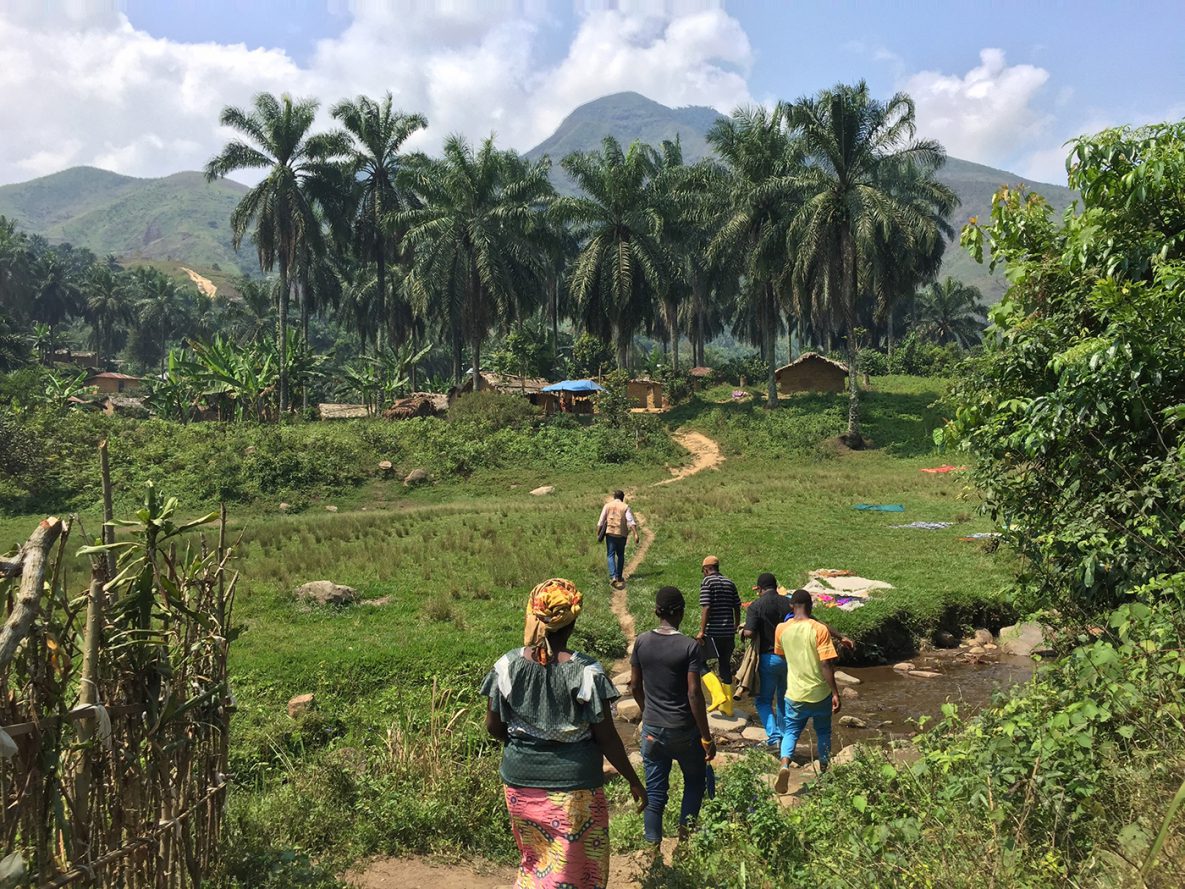
Why this matters: an alert team is the outbreak's early-warning system
To understand why one attack on two workers matters beyond the human loss, you have to understand what an Ebola "alert" is. Ebola control does not begin in a treatment centre. It begins when someone in a village reports a sick person or an unexplained death, and a small team goes out — often on foot, often far from any paved road — to check. If the alert is real, that visit triggers isolation, testing, contact tracing and, where needed, a safe burial. Every chain of transmission that gets stopped early is stopped at exactly that moment, by exactly those people.
So an attack on an alert team is not only violence against two individuals. It is violence against the surveillance system itself. Teams that fear attack go out less, later, or not at all. Alerts go unchecked. Cases that would have been found on day one are found on day six, after a funeral, after a family has nursed a patient at home — the settings in which Ebola spreads fastest. In an outbreak growing this quickly, with shortages of medical supplies and health workers already reported in remote areas and emerging hot spots, the response cannot afford blind spots. Bafwasende is precisely the kind of place — a rural town in Tshopo, one of the eight affected provinces — where the outbreak will be won or lost on whether local teams can move safely.
A pattern, not an isolated incident
Saturday's attack is the latest entry in a ledger that runs through the whole outbreak. In May, at the very start, two tents at health centres were set alight in two separate attacks within a single week, according to the AP. Response team members in some health zones have been held captive; teams carrying out safe and dignified burials have been threatened. Last month, a Congolese politician was beaten to death in North Kivu after publicly defending the government's Ebola response on a radio programme, urging listeners to follow measures such as social distancing and handwashing.
Congo has been here before. During the 2018–20 Kivu Ebola outbreak, hundreds of attacks on health workers and facilities were recorded — the historical record puts the figure at nearly 400 — and responders were killed then, too. The lesson the response community drew from Kivu was that security and community trust are not support functions bolted onto a medical operation; they are the operation. A vaccine or a treatment centre cannot help a patient the response cannot reach. Five months into the Bundibugyo outbreak, that lesson is being relearned in the hardest way, province by province.
The trust deficit underneath the violence
Why do communities attack the people trying to stop a disease that is killing their neighbours? The reporting points to a tangle of causes rather than a single one. Authorities in Congo launched a village-centred approach to this outbreak, and it has met resistance from residents who dismiss Ebola as a hoax. Responders describe scepticism about the disease itself, layered over widespread distrust of a government whose handling of past outbreaks — and chronic corruption — has left deep scars, the AP reported. Fear, misinformation and grief do the rest: Ebola protocols ask families to surrender their sick and their dead to strangers in suits that hide their faces, to skip the washing and touching that funeral rites require, and to accept that a loved one may die behind plastic sheeting. Where trust exists, families mostly accept. Where it does not, every visit from an alert team can look like an intrusion rather than a rescue.
There are two honest ways to read that. Critics of the response argue that it has too often arrived as an outside operation — international agencies, national officials, armed escorts — and asked for compliance before it earned confidence. Defenders answer that responders have repeatedly adapted, working through local leaders and community health workers, and that no level of engagement justifies killing a nurse. Both can be true at once. What is not in dispute is the arithmetic: the outbreak has passed 9,700 cases while this argument continues, and health workers keep absorbing the cost of it. Kenya's experience underlines the human exposure involved — as we reported, health workers were among Kenya's early Ebola cases as the virus crossed borders with travellers.
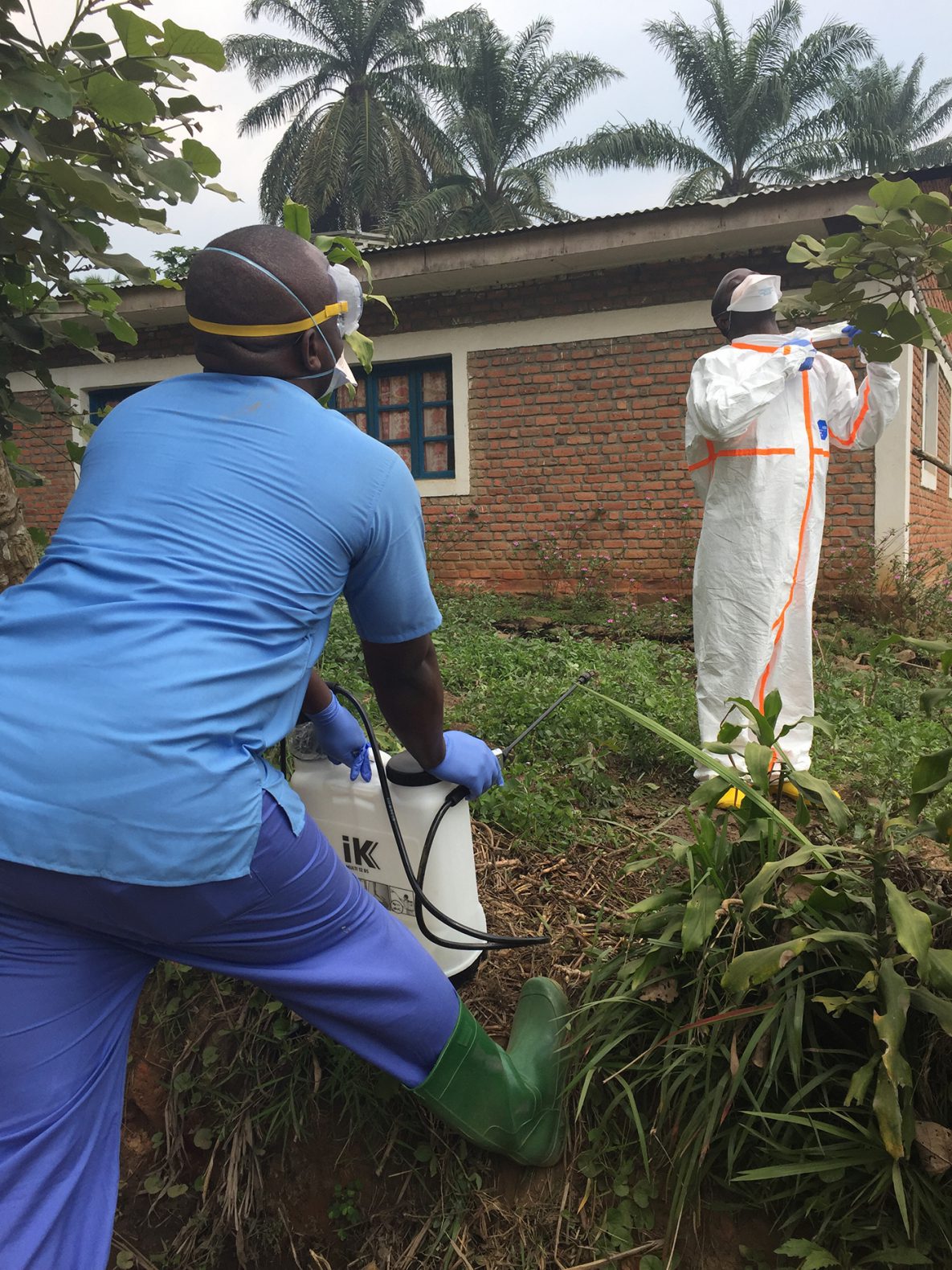
The region tightens its defences the same weekend
While Congo's responders were burying a colleague, its neighbours were raising their walls. On Sunday, Uganda's health minister, Chris Baryomunsi, announced that Ugandan citizens returning home with a history of travel to Congo will be quarantined for 21 days — the outer limit of Ebola's incubation period — as Uganda tightened Ebola precautions, Reuters reported. Uganda says it is Ebola-free, but two people who recently passed through the country later tested positive in Kenya and Nigeria, and Kampala is investigating the Nigerian case. Screening has been intensified at Entebbe International Airport and all land border crossings, and every traveller entering Uganda by air, land or water must now complete a passenger locator form, Baryomunsi said.
The details from Kampala carry a quiet note of encouragement buried in them. All 60 contacts linked to the Kenyan case in Uganda have completed their 21-day monitoring and been discharged, the minister said — contact tracing working exactly as designed, on the Ugandan side of the border. Ugandan officials also reviewed airport CCTV and found that the Kenyan and Nigerian cases, who passed through Entebbe on the same day, had no physical interaction; genomic analysis shows Nigeria's case was closely related to the strain in Kenya's index case, though Nigerian authorities say there is no evidence the Kenyan patient travelled to Nigeria.
Nigeria's single case, meanwhile, has reached an unusual resolution. The patient — a woman who had travelled from Uganda — and her husband, a contact, were medically evacuated to Switzerland on Monday morning, WHO said; both are Swiss citizens and the patient is clinically stable. Nigeria's disease control agency had traced 53 contacts, and WHO's Dr. Janabi said Nigeria would continue monitoring 52 contacts even though the country currently has no Ebola cases, with Switzerland assuming responsibility for the patient's care. He called the Nigerian team's management of the case through its acute phase "a remarkable achievement" — a reminder that the same regional system under strain in Tshopo is, in other places, performing very well.
What happens next
The immediate questions are investigative and operational. Harneis has called for a thorough investigation; whether Congolese authorities identify suspects, and whether they say anything publicly at all, will set the tone for whether response teams judge Bafwasende an aberration or a warning. Watch, too, for whether alert and contact-tracing work in the Bafwasende health zone is continuing, paused, or proceeding only with escorts — each choice trades safety against surveillance in a different way, and a pause of even a few days in an active zone can let transmission chains go dark.
The larger question is whether the response changes how it protects its own. After the Kivu outbreak, the standard toolkit — community engagement before deployment, local hires over flown-in teams, negotiated access rather than armed convoys wherever possible — was well understood. The Bundibugyo outbreak's scale, its eight-province sprawl and its lack of an approved vaccine all make that toolkit harder to apply, not less necessary. If the coming days bring arrests, a visible investigation and a public commitment from Tshopo authorities, the response may hold its ground in the province. If they bring silence, expect teams to pull back from the most hostile areas — and expect the case curve, which has given no sign of bending yet, to reflect that withdrawal within weeks.
Sources
Associated Press, "Attackers kill nurse, severely injure health worker responding to Ebola case in eastern Congo" (October 25, 2026) — kcau9.com. UN News, "Ebola: UN officials condemn killing of nurse in DR Congo" (October 26, 2026) — news.un.org. Reuters, "Uganda imposes 21-day quarantine on citizens returning from Congo" (October 25, 2026), reporting by Elias Biryabarema in Kampala — tbsnews.net. Statements by WHO Director-General Tedros Adhanom Ghebreyesus and WHO Regional Director for Africa Dr. Mohamed Yakub Janabi on X, and by UN Senior Ebola Response Coordinator Julien Harneis, as reported above. File photographs: U.S. Centers for Disease Control and Prevention, "Photos from the Field: The Ebola Response in the Democratic Republic of the Congo" — archive.cdc.gov.