Uganda has drawn the hardest border line yet drawn by any of Congo's neighbours in this year's Ebola emergency. Ugandan citizens returning home with a history of travel to the Democratic Republic of Congo will be quarantined for 21 days, Health Minister Chris Baryomunsi said on Sunday, as Kampala tightened precautions while insisting the country remains Ebola-free. Under the measures reported by the BBC, returning Ugandans will undergo the 21 days of quarantine at their own cost, travellers who have been to Congo will not be allowed to transit through Uganda at all, and only essential travellers from Congo will be admitted, under what Baryomunsi called intense public health measures. The Uganda Ebola quarantine 21 days rule takes the maximum incubation period of the virus and turns it into the price of coming home.
Track it live: Follow case counts and new outbreak alerts on our live disease outbreak tracker.
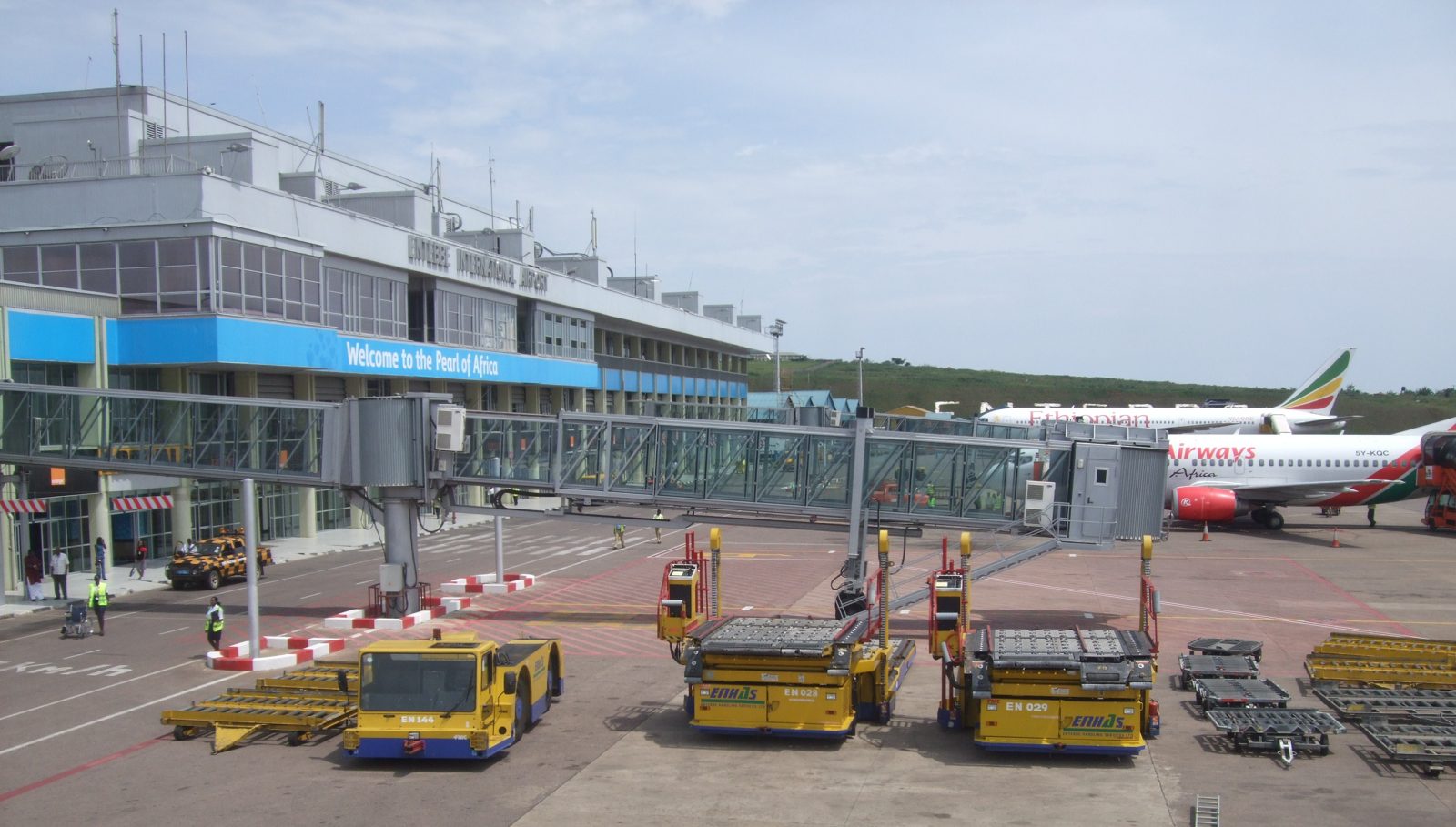
The announcement, made at a Sunday press conference in Kampala and defended by Baryomunsi on the BBC's Newsday programme, also brought one piece of genuinely good news: all 60 contacts linked to a Kenyan Ebola case — people traced across points of entry and exit, hotels and transport operators along the patient's route through Uganda — have completed their 21-day monitoring period and been discharged, Reuters reported. But the quarantine order exists because of what those contacts represented: two travellers who passed through Entebbe International Airport on the same day in early October later tested positive in two different countries, and nobody yet knows exactly where either of them was infected.
What Uganda has ordered
The package has four moving parts. First, the quarantine itself: Ugandan citizens arriving with Congo travel history face 21 days in quarantine — the outer limit of Ebola's incubation period, and the same window Uganda has just finished applying to the Kenyan case's 60 contacts — and, per the health ministry statement reported by the BBC, they will pay for it themselves. Second, a transit ban: travellers who have visited Congo may not pass through Uganda, closing the connecting-passenger route through Entebbe that both of this month's exported cases used. Third, an essential-travel filter: Baryomunsi told the BBC that only essential travellers from Congo would be allowed in, and then only subject to intense public health measures. Fourth, screening everywhere: the ministry has intensified traveller screening at Entebbe International Airport and all land border crossings, backed by screening at designated road checkpoints, Reuters and the BBC both reported, and every traveller entering Uganda by air, land or water must complete a passenger locator form so contacts can be traced if a case surfaces later.
Regional reporting of the same press conference added harder edges that travellers should not miss. Kenya's Eastleigh Voice, covering Baryomunsi's remarks, reported that the minister said there would be no exemptions from screening — including for diplomats and United Nations personnel — that people listed as contacts of an active case will be placed on a no-fly list until they complete 21 days of follow-up, that contacts will undergo institutional quarantine from their last exposure, and that non-essential Congolese nationals entering Uganda will be returned to Congo at their own cost, while essential travellers such as humanitarian workers and truck drivers face mandatory screening.
The two passengers who forced Kampala's hand
To understand why a country with no confirmed cases is quarantining its own citizens, follow the two journeys that converged on Entebbe on 3 October. Kenya's first Ebola patient had travelled from Congo to Uganda and then flown from Entebbe to Nairobi on 3 October; he died two days later, and Kenya's outbreak has since grown, as Signal Post News reported when the virus first arrived in Kenya. The second traveller, a 42-year-old Ugandan-born woman married to a Swiss diplomat, returned from Uganda through Addis Ababa to Abuja on the same day, 3 October; Nigeria confirmed her infection on 20 October, she is in isolation and improving, and Nigerian authorities have traced 53 contacts, as we reported in the Nigeria case. Diana Atwine, the health ministry's permanent secretary, said a review of Entebbe's CCTV showed the two travellers had no physical interaction with each other.
Where the Nigerian patient was infected is now an open scientific and diplomatic dispute, and it matters far beyond one case. Swiss authorities have said she is believed to have contracted the virus in Uganda. Baryomunsi pushed back hard, saying Switzerland was "speaking prematurely": the woman's relatives from West Nile had visited Congo and then met her in Kansanga, a suburb of Kampala, raising the possibility of exposure through those contacts. "What evidence do they have that she never travelled there?" he asked. "We should speak science, not politics." Genomic analysis has shown Nigeria's virus is closely related to the strain in Kenya's index case, though Nigerian authorities say there is no evidence the Kenya case travelled to Nigeria or had any direct connection to it. Uganda, Nigeria and international partners are jointly reviewing sequencing, travel records and movements — and, as Reuters reported separately on Monday, an Africa CDC-backed team led by Congolese virologist Jean-Jacques Muyembe is to probe the origin of the Nigerian case. Until that work lands, the quarantine is Kampala's answer to an unanswered question: if the exposure route is unknown, control the routes you can.
Why this matters
Uganda's move is the clearest signal yet that the Bundibugyo outbreak — which began in Congo in May, has killed more than 4,800 people there according to the BBC, and which Signal Post News tracked as the Congo death toll passed 4,000 — has entered a new phase: the phase in which the virus's neighbours stop treating it as a Congolese emergency and start treating their own borders, airports and bus routes as the front line. Uganda is not the first to harden. The United States has barred entry to noncitizens who visited Congo, Uganda or South Sudan within 21 days; Uganda itself reinstated traveller locator forms and tightened border controls on 23 October after the Nigerian case surfaced. But a mandatory, self-funded, 21-day quarantine for a country's own returning citizens is a step beyond screening. It is an admission that temperature checks and forms at the border cannot catch a virus that can incubate silently for three weeks — and that the only reliable barrier is time.
Uganda speaks from experience, and from scar tissue. It recorded 20 cases and two deaths earlier in this outbreak before the World Health Organization declared it Ebola-free in August, and it has fought repeated Ebola outbreaks over the past two decades, including a Sudan ebolavirus outbreak in 2022–23. Its response machinery — rapid contact tracing, airport health screening, district surveillance — is among the most practised in Africa, which is precisely why its escalation deserves attention: when the region's most experienced Ebola responder concludes that screening is no longer enough, other capitals will read the memo. At the same time, Uganda's insistence that it remains Ebola-free is not mere pride. An "Ebola-free" label protects tourism, trade and the country's standing as a regional aviation and logistics hub; a single confirmed locally acquired case would rewrite all three. The quarantine is therefore doing double duty — epidemiological defence, and defence of the declaration itself.
Who pays, who is protected, and who is squeezed
The own-cost clause is the measure's sharpest edge, and its most debatable. Twenty-one days of quarantine is three weeks of lodging, food and lost income for the traders, students, patients' relatives and cross-border workers who move constantly between eastern Congo and Uganda — communities Baryomunsi himself acknowledged are bound together by trade, travel and family ties. Public-health history warns both ways. Charging for quarantine deters evasion less than it deters honesty: a traveller who cannot afford three weeks in a facility has an incentive to hide a Congo trip, cross at an informal border point, or bribe past a checkpoint — each of which defeats the surveillance the policy exists to create. Against that, Uganda's treasury is not deep, institutional quarantine at state expense for every returnee from a country of 100 million people is an open-ended liability, and Kampala can argue that the cost falls on the person who chose to travel. What is not in dispute is the arithmetic of the alternative: one missed case seeding transmission in Kampala would cost more — in lives, in response spending, and in the Ebola-free status — than any plausible quarantine bill.
The protected, if the policy works, are Uganda's 46 million people and the travellers of every country that connects through Entebbe. The squeezed are the border communities for whom the frontier is not a line but a livelihood — the same communities whose cooperation contact tracers need most. That tension, between a border hard enough to stop a virus and open enough that people still tell the truth at it, is the central management problem of every Ebola response since 2014, and Uganda has now chosen its side of it more explicitly than any government in this outbreak so far.
What happens next
Three things will test the policy in the coming weeks. First, enforcement at the land border: Uganda's frontier with Congo runs for hundreds of kilometres through forest, farmland and lake shores, and designated checkpoints can only police the formal crossings — the quarantine's real value will be set at the informal ones. Second, the science: the Muyembe-led origin investigation and the Uganda–Nigeria sequencing review could either vindicate Kampala's insistence that the Nigerian case was a Congo exposure — strengthening the case for Congo-focused controls — or surface evidence of transmission routes nobody has mapped, which would force a wider net. Third, imitation: watch Rwanda, Kenya, South Sudan and Tanzania. If Uganda's numbers stay at zero while cases keep surfacing elsewhere in the region, the 21-day model will spread; if returnees simply stop declaring their travel, the region may quietly conclude that free, supported quarantine buys more honesty than the self-funded kind.
For now, the honest summary is that Uganda has chosen certainty over convenience. It cannot prove where two infected passengers caught the virus, it cannot seal a frontier woven into daily life, and it cannot screen for an infection that has not yet declared itself. What it can do is buy 21 days — the virus's own maximum hiding time — and it has decided that travellers, not the state, will pay for them. Whether that price protects Uganda or merely pushes its risk underground is the question the next month of case counts will answer.
Sources
Reuters, "Uganda to impose 21-day quarantine on returning citizens with Congo travel history" (October 25, 2026) — reuters.com. BBC News, "Ebola outbreak: Uganda imposes 21-day quarantine on citizens returning from DR Congo" (October 26, 2026), including Health Minister Chris Baryomunsi's Newsday interview — via BBC reporting syndicated at tob.news. The Business Standard, "Uganda imposes 21-day quarantine on citizens returning from Congo" (October 26, 2026) — tbsnews.net. Capital FM Kenya, "Uganda Orders 21-Day Quarantine for Citizens Returning From DRC Amid Ebola Concerns" (October 26, 2026) — capitalfm.africa. The Eastleigh Voice, "Uganda discharges all 60 contacts of Kenyan Ebola patient after 21-day monitoring" (October 26, 2026) — eastleighvoice.co.ke. File photographs: Katanasov, Mgslee and Flöschen, via Wikimedia Commons.