Kenya Ebola cases rise to seven: Kenya's Ministry of Health confirmed four new cases of Ebola Bundibugyo virus disease on Saturday, October 17, 2026, bringing the country's total to seven, including one death. The four new patients are three health workers — two men aged 29 and 35 and a woman aged 32 — who treated Kenya's first patient on October 3 and 4, and a close male relative of that patient, who died on October 5. All four were already in quarantine when they developed fever, were immediately isolated, and tested positive at both the National Virology Reference Laboratory and the Kenya Medical Research Institute laboratory. The ministry said 128 of 130 listed contacts, or 98.5 percent, have been traced and quarantined, and that there is no evidence of community transmission.
Health / The virus stayed inside quarantine — so far. The health workers are the warning
Track it live: Live outbreak tracker
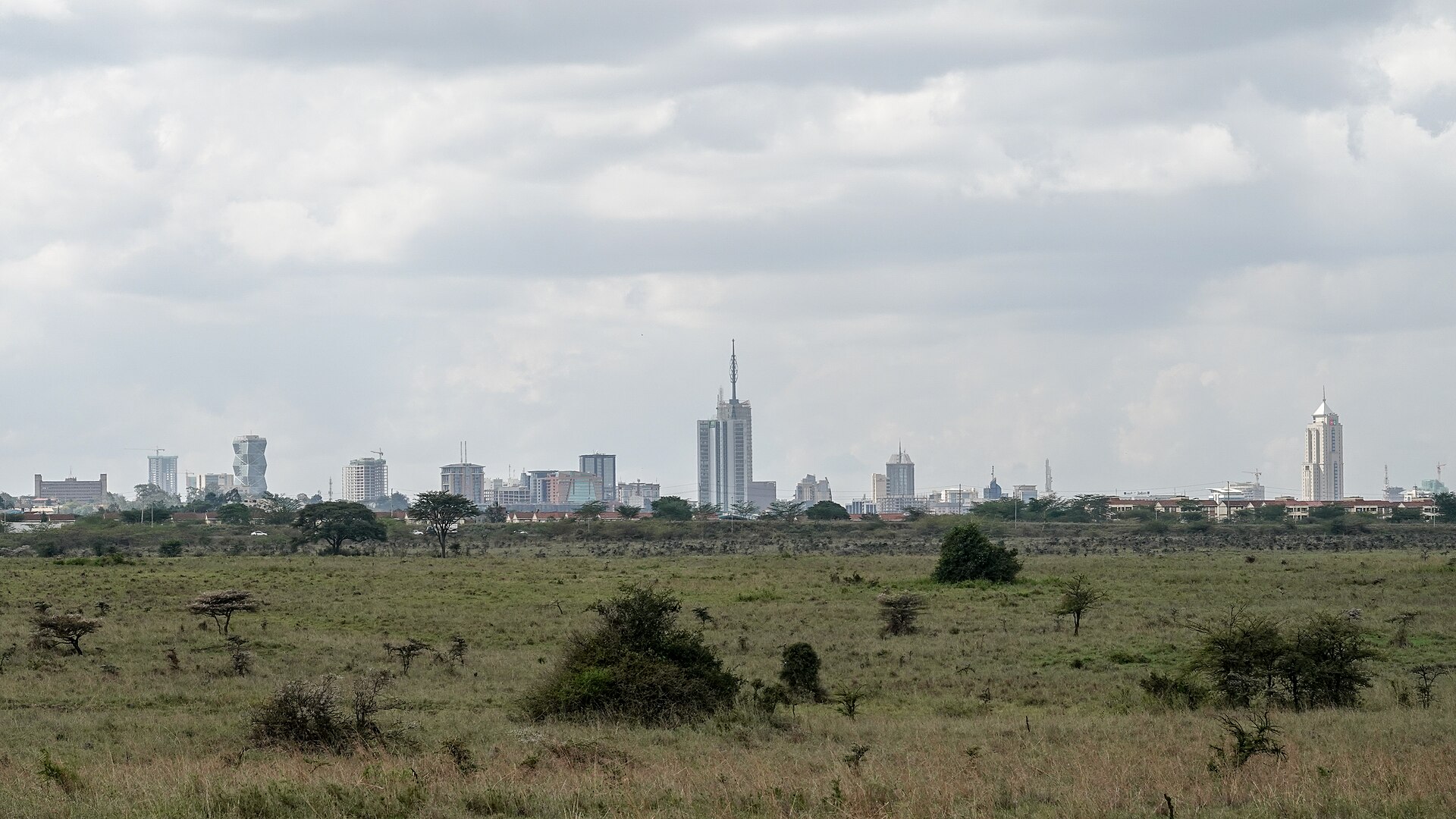
NAIROBI, Kenya — Kenya confirmed four new cases of the Ebola Bundibugyo virus on Saturday, including three health workers who treated the country's first patient, bringing the total number of confirmed cases to seven, the health ministry said, in reporting by Reuters.
The other new case is a male relative of the index patient, who died. The relative had been in quarantine since October 6, the ministry said in a statement. The cases are the first known infections passed on inside Kenya, where the first patient arrived from Congo on October 3. But the ministry says it has traced and quarantined nearly all of his contacts and there is no evidence that the virus is spreading in the community.
Director-General for Health Patrick Amoth, in a statement reported by Xinhua, said all four individuals developed fever as their first symptom and were immediately isolated, with specimens collected for testing. "All four tested positive for Ebola Bundibugyo virus disease at both the National Virology Reference Laboratory and the Kenya Medical Research Institute laboratory," Amoth said. All four are receiving supportive care from trained health personnel.
The three health workers — two men and a woman aged 29, 35 and 32 respectively — managed the index case on October 3 and 4 and had been in quarantine since October 9, Reuters reported. The second and third patients, confirmed earlier in the week, are stable and responding well to supportive treatment, the ministry said.
What Happened: Four Fevers Inside Quarantine
The sequence matters, because in an Ebola response the sequence is the story. Kenya reported its first imported case on October 6: a Kenyan man who had lived in the Democratic Republic of the Congo for seven years, had been ill for about a month, travelled by road through Uganda and flew to Nairobi on October 3, and died on October 5. He was given a safe and dignified burial.
On Wednesday, October 14, Kenya reported its second case — a 39-year-old man, a close relative of the first patient, who was already in quarantine. On Friday it announced a third case, a 65-year-old woman who was a primary contact and a close relative of the first and second patients, according to Xinhua's account of the ministry statements.
Saturday's four cases complete a clear, contained cluster — so far. One relative, quarantined since October 6. Three health workers, quarantined since October 9, whose exposure dates back to the first patient's hospital care on October 3 and 4, before — or just as — the diagnosis was understood. All four developed the same first symptom, fever, while under daily monitoring, and all four were isolated at once. That is not a virus escaping into Nairobi. That is a contact-tracing net catching the cases it was built to catch.
The numbers underline it. Of 130 contacts who may have interacted with the first patient, 128 have been traced and are in quarantine for monitoring through the 21-day incubation period — 98.5 percent, well above the 85 percent global benchmark the ministry cited as needed to break the chain of transmission. Efforts to trace the remaining two contacts were ongoing. People in quarantine are also receiving mental health and psychosocial support, Amoth said. There are no restrictions on travel, trade or public gatherings, and the ministry said the country remained open for business.
Why This Matters
Kenya Ebola cases rise to seven sounds, in isolation, like a small number. In Ebola terms, it is not the number that matters — it is the pattern, and the pattern here cuts in two directions at once.
The reassuring direction is real, and it should not be undersold. Every new case was a known contact. Every new case was already quarantined. There is, on the ministry's account — echoed by the Africa Centres for Disease Control and Prevention — no evidence of community transmission. A virus that spreads in the community, through funerals, markets, buses and households that officials have never mapped, is a different and far more dangerous problem than a virus moving only through a list of 130 named people, 128 of whom are already being watched daily. Kenya's system found these cases because it was looking exactly where they appeared.
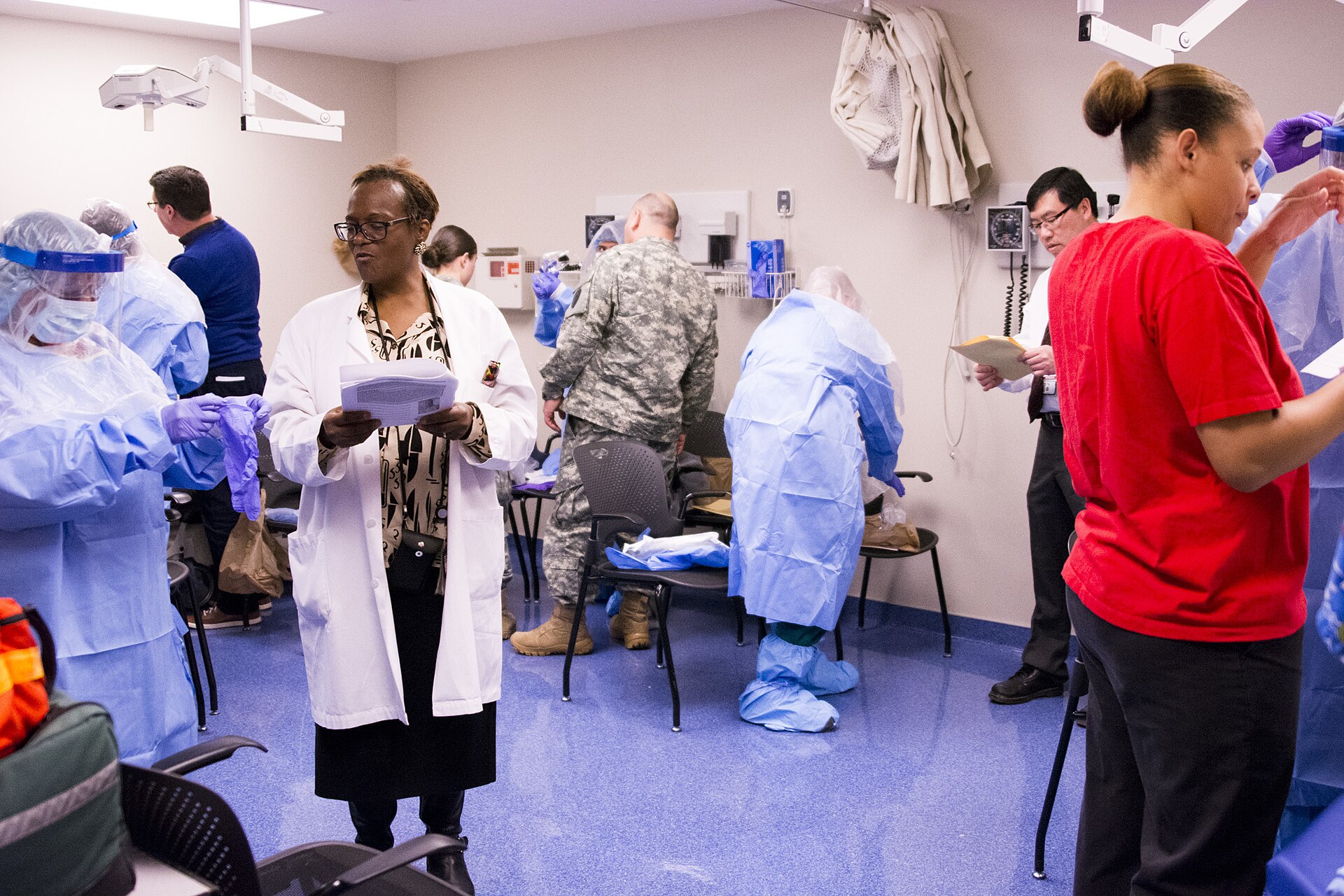
The warning direction is just as real. Three health workers infected while treating a single patient, in the first 48 hours of his hospital care, is the oldest failure mode in Ebola history. In West Africa in 2014–2016 and in Congo repeatedly since, health workers have died in disproportionate numbers not because they were careless, but because the first patient is always the most dangerous one: the diagnosis is not yet confirmed, the protective routines are not yet at wartime footing, and care — starting fluids, cleaning, moving a very sick man — cannot wait for a laboratory. Kenya's index patient was ill for a month before he reached Nairobi Hospital. The workers who treated him on October 3 and 4 were treating a man who had not yet been publicly confirmed as Kenya's first Ebola case. That timing is now the central question for Kenya's hospitals: not whether quarantine works — it plainly did — but whether infection prevention and control at the front door is fast enough for the next unannounced patient.
Africa CDC, in a statement issued in Addis Ababa on October 17, made exactly that point. It reaffirmed support for Kenya's response, said all four patients were receiving supportive care at a designated treatment facility, and emphasised the need for adequate protective equipment, staff training and strict infection prevention and control in healthcare facilities. It also said it is working with the government and partners on surveillance, technical coordination, risk communication and community engagement, and is engaging member states on border surveillance and information sharing.
The Strain With No Vaccine and No Treatment
Underneath Kenya's cluster sits the fact that has shaped this entire regional emergency: this is Bundibugyo virus disease, a separate Ebola species for which there are no approved vaccines or treatments. The tools that transformed Zaire Ebola response — a licensed vaccine for ring vaccination, monoclonal antibody treatments — do not exist for Bundibugyo. What exists is the oldest toolkit in public health, executed well or badly: find contacts, quarantine them for 21 days, isolate at the first fever, test fast in two laboratories, bury the dead safely, and support patients with fluids and care while their bodies fight the virus.
Kenya's cases are linked to the Ebola epidemic in Congo — the second-largest outbreak ever recorded, with more than 9,000 cases and more than 4,000 deaths, according to Reuters. Kenya is the fourth country to record a case linked to that epidemic. Our earlier reporting covered Kenya's first Ebola case, the Congo traveller who died in Nairobi after slipping through airport screening, and the Congo outbreak passing 4,000 deaths. The regional picture has not changed: as long as Congo's epidemic burns, every neighbour's border, airport and hospital admissions desk is part of its perimeter.
Who Gains, Who Is Exposed, and What Critics Will Ask
Does 98.5 percent contact tracing end the story?
No — and health officials know it. A 98.5 percent tracing rate is excellent by any benchmark, but Ebola is a disease where the remaining 1.5 percent is the story. Two contacts had still not been traced on Saturday. If either develops symptoms outside quarantine, Kenya moves — in one announcement — from a contained cluster to community transmission, with a new and larger contact list to build from scratch. The next week of the 21-day monitoring window, counted from the last exposures in early October, is therefore the decisive period. Cases that were going to appear from the index patient's direct contacts should mostly have appeared by the end of that window; silence after it would be the strongest signal yet that the chain is broken.
What about the second and third patients' contacts?
That is the second question a rigorous response has to answer publicly. Saturday's statement was built around the first patient's 130 contacts. But the second patient (confirmed October 14) and third patient (confirmed October 16) each had their own contacts before isolation — family, caregivers, quarantine staff — and the four new patients were themselves cared for by new teams of health workers. Each generation of cases creates a new ring that must be listed, traced and monitored for its own full 21 days. Africa CDC's emphasis on surveillance and community engagement, and the ministry's toll-free guidance line, 719, are aimed at exactly that widening ring: people must report symptoms early and trust the system enough to enter it.
What Happens Next
Three scenarios now compete. In the best case — and, on Saturday's evidence, the most likely one — the remaining quarantined contacts complete their 21 days without further fevers, the two untraced contacts are found well or accounted for, the six surviving patients recover with supportive care, and Kenya's outbreak is remembered as a seven-case importation cluster that its tracing system caught. That outcome would be a genuine public-health success, and a template for neighbours facing the same Congo-linked risk.
In the middle case, one or two more quarantined contacts convert to cases in the coming days — entirely possible, given that the health workers' symptoms appeared roughly two weeks after exposure — the total rises into double figures, but transmission stays inside known rings. That would strain treatment and quarantine capacity without changing the fundamental judgement: contained, at a cost borne mostly by health workers and one family, which has now seen at least three of its members infected and one buried.
In the bad case, a case appears with no link to any contact list — in Nairobi or, more dangerously, along the travel route the index patient took through Uganda in early October. That would mean the lists were incomplete, the perimeter failed somewhere officials have not yet found, and Kenya would face the wider measures it has so far avoided: broader surveillance, possible movement and gathering advice, and a regional alert spanning three countries. Nothing in Saturday's announcement points that way. Everything in Ebola history says officials must plan as if it could.
For now, the ministry's message is calm and specific: the risk to the general public remains low, there is no evidence of community transmission, and there are no restrictions on travel, trade or public gatherings. The honest translation of that message is narrower and more useful than either panic or dismissal allows: in Kenya, today, Ebola is a known list of people being watched very closely — and three of the people who got sick getting on that list were the people trying to save the first man on it. Remembering both halves of that sentence is how a country gets through the next 21 days.
Sources: Reuters, October 17, 2026 (Kenya confirms four new Ebola cases, total seven); Xinhua via People's Daily Online, October 17–18, 2026 (Ministry of Health statement, Director-General Patrick Amoth); Africa CDC statement, October 17, 2026, reported October 18; Kenya Ministry of Health statements on the first (October 6), second (October 14) and third (October 16) cases. Death and case figures are those officially confirmed by the Ministry of Health.