Kenya first Ebola case
A Kenyan man ill for a month crossed two borders and a flight before dying at Nairobi Hospital — exposing the limits of Ebola screening at the region's busiest airport.
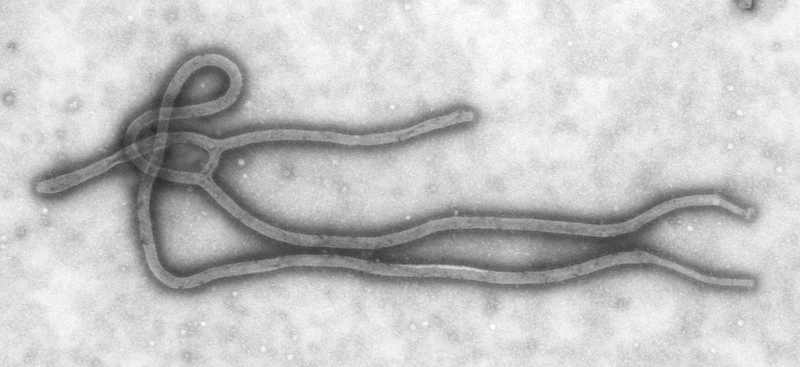
Kenya first Ebola case confirmed: the patient is already dead. Health Cabinet Secretary Aden Duale announced Tuesday that a Kenyan citizen who had lived in the Democratic Republic of Congo for seven years died in Nairobi on Monday night after testing positive for Ebola Bundibugyo virus, the rare strain behind the DRC outbreak for which there is no approved vaccine and no approved treatment. What makes the case alarming is not just the diagnosis but the journey: the man had been ill for roughly a month, was treated at several hospitals while still in Congo, then traveled by road into Uganda's capital Kampala, boarded Jambojet flight 8523, and walked through routine health screening at Jomo Kenyatta International Airport on Saturday afternoon — arriving in the middle of East Africa's busiest aviation hub carrying one of the world's deadliest pathogens.
Why this matters
Ebola does not need to spread far to do enormous damage; it needs only to cross one border into a country that has never seen it. Kenya has now become the fourth country to record a case linked to the DRC epidemic — the second-largest Ebola outbreak ever recorded — and its first imported case lands at a moment when the region's defenses are being tested in real time.
The screening failure at JKIA is the part that should worry every traveler: Kenya says it has screened 652,584 travelers since May and tested 267 samples, yet a symptomatic man who had been ill for a month cleared the checkpoint. Director General for Health Patrick Amoth's explanation — that medication may have temporarily masked his symptoms — is honest, but it is also an admission that temperature-and-questionnaire screening, the front line of every airport in the region, has a failure mode that cannot be fixed with more thermometers.
The case also resets the region's clock: Uganda was declared Ebola-free in August after its own brush with this outbreak; Kenya's 28 quarantined contacts now start the same anxious countdown. And beneath the epidemiology sits a harder truth — the Bundibugyo strain has no approved vaccine or treatment, which means Kenya's response, however “solid” the UN's Ebola coordinator expects it to be, rests entirely on the oldest tools in public health: isolation, contact tracing, and safe burials.
The journey: a month of illness, two borders, one flight
The ministry's timeline reads like a stress test of every barrier between an outbreak zone and a major city. The patient fell ill about a month before he flew, while still living in the DRC, and was treated at several hospitals there — meaning he was inside a health system already battling the outbreak and still moved on. He then traveled by road from Congo to Kampala, crossing an international land border while sick, and boarded Jambojet flight 8523 with 23 other passengers and four crew.
He landed at JKIA at about 1:10pm on Saturday, October 3, underwent what Duale described as “the normal public health scrutiny” at the Port Health facility, cleared immigration, and was picked up by a relative and a friend in a Toyota Fielder who drove him directly to Nairobi Hospital. Staff there quickly isolated him in a separate room in the Accident and Emergency department — the first responders did their job — and he was later moved to the hospital's East Wing isolation facility, built during the COVID-19 pandemic, with intensive care and high-dependency units and more than 145 beds.
He presented with the textbook constellation: fever, chills, intense fatigue, muscle pain, painful swallowing, sore throat, and bleeding under the skin at injection sites. Given his symptoms and travel history, doctors suspected viral hemorrhagic fever, collected samples, and both the National Virology Reference Laboratory and the Kenya Medical Research Institute confirmed Ebola Bundibugyo. He died at 11:30pm on Monday while on supportive treatment, and was buried under Ebola safety protocols on Tuesday.
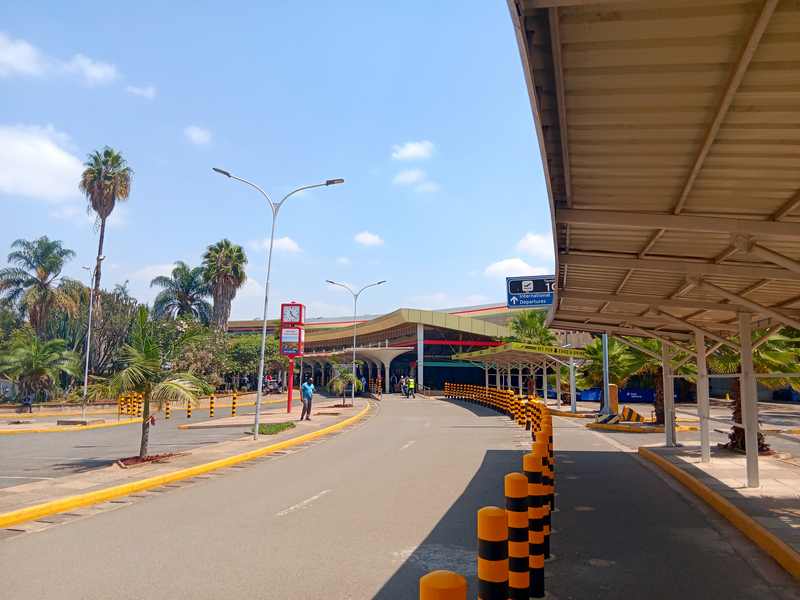
How he slipped through screening at JKIA
The uncomfortable question is how a man sick for a month cleared the checkpoint, and the honest answer is that Ebola is unusually good at defeating the airport playbook. Symptoms fluctuate; fever can be suppressed with common medication; and the screening itself is a brief encounter at a crowded desk, not a clinical examination. Amoth's statement that the man's symptoms “may not have been obvious” because medication could have masked them is the most important sentence in the official account — it concedes that the system worked as designed and still failed.
This is not a uniquely Kenyan problem. Every country in the region screens the same way, and the DRC outbreak has now reached 63 health zones across seven provinces, which means the number of sick people approaching borders keeps growing. The counterargument from public health officials is that screening was never meant to be a wall — it is a net, and the real containment happens after detection, at the hospital and in contact tracing. That is fair, and Nairobi Hospital's rapid isolation of the patient shows the net's second layer working. But the political problem is real: 652,584 travelers screened, one slipped through, and the public will remember the one.
The DRC outbreak behind the case
The Kenya case is a downstream consequence of an epidemic that has resisted containment for months. The Bundibugyo outbreak was declared in mid-May but may have started months earlier, and the DRC has recorded more than 8,000 cases and over 4,000 deaths — the second-largest Ebola epidemic on record. The WHO's figures as of September 23 put it at 7,890 confirmed cases and 3,799 deaths across seven provinces, spread across 63 health zones, with the risk of cross-border transmission explicitly flagged as rising.
The outbreak earlier reached Uganda, which reported 20 cases and two deaths before being declared Ebola-free in August — a template for what containment looks like, and a warning about how long the tail is. A doctor who returned to France from Congo in June tested positive but there was no further spread, showing that strong health systems can absorb a single imported case.
The Bundibugyo species itself is the complication: it is rarer than the Zaire strain behind most famous outbreaks, its case-fatality rate has historically run roughly 25 to 50 percent, and — crucially — the vaccines and antibody treatments developed for the Zaire strain do not apply. There is no approved vaccine and no approved treatment for Bundibugyo, which is why the case has no pharmaceutical backstop and everything depends on the unglamorous work of quarantine and tracing.
What the numbers imply
Start with the funnel: 652,584 travelers screened, 267 samples tested, one positive. That is a system running at enormous volume with a very low hit rate — which is exactly what surveillance is supposed to look like, until the one hit lands. Twenty-eight contacts are now quarantined and monitored: eight family members and 21 health workers, plus the hunt for 23 passengers and four crew on the Jambojet flight. Each of those 55 people is a potential chain, and Ebola's incubation period of up to 21 days means Kenya will not know whether it has contained this until late October.
The historical case-fatality range for Bundibugyo, roughly 25 to 50 percent, puts the expected math in stark terms: if even a handful of the contacts were infected, further deaths are likely. Set against the DRC's 8,000-plus cases, one imported case is a rounding error — but set against Kenya's zero prior cases, it is a first.
The economic numbers matter too: Nairobi is the region's financial and aviation hub, and the last Ebola importations in West Africa showed that fear travels faster than the virus, hitting tourism, conferences, and trade long before case counts do. The upside in the data: Uganda contained 20 cases to two deaths and earned an Ebola-free declaration in August, and France absorbed a case with zero onward spread — single importations are containable when the response is fast.
Who benefits, who loses, what critics say
The immediate losers are the obvious ones: the patient's family, the 28 contacts now in quarantine, and Kenya's reputation as a safe regional hub — every canceled conference booking and diverted flight is a quiet vote of no confidence. The winners, if the word fits, are the region's health institutions if they pass this test: a clean containment would vindicate five months of surveillance investment and roughly 5,000 trained health workers, and Africa CDC's high-level deployment gives Nairobi institutional cover.
Critics will focus on the screening failure — why was a man ill for a month able to board a commercial flight at all, and why did Congolese hospitals treating him not flag the risk earlier? The ministry's defenders will answer that he was one sick traveler among hundreds of thousands, that his symptoms were masked, and that the hospital caught him within hours of arrival. Both are true, which is the point: border screening is necessary and insufficient, and the debate that matters now is not about the airport but about whether Kenya's contact tracing — the actual containment tool — is as fast as its press briefings.
One more angle deserves honesty: the case strengthens the hand of everyone arguing for a Bundibugyo vaccine, and weakens the complacency that Ebola is a “Congo problem.” It is now, by definition, a Kenya problem too.
What happens next — three scenarios
The base case: Officials project a contained importation: the 28 contacts clear their monitoring period with no secondary cases, the flight passengers are found and test negative, and Kenya joins Uganda and France as proof that a single imported Ebola case is manageable. That requires near-perfect tracing, and the 23 passengers plus four crew are the weak link — finding every traveler from a domestic-to-international hop three days after the fact is genuinely hard.
The darker scenario: One or two contacts — most plausibly a family member or a health worker exposed before full isolation — develop symptoms in the next two to three weeks, and Kenya faces a small cluster. That would still be containable, but it would shatter the narrative of clean containment and likely trigger travel advisories from neighboring countries and beyond.
The tail-risk scenario: Sustained transmission takes hold in Nairobi's dense settlements, where contact tracing is hardest. That is unlikely given how fast the patient was isolated, but it is the scenario the Africa CDC deployment is designed to make impossible.
Watch the calendar: 21 days from October 3 puts the end of the primary risk window around October 24. If Kenya reaches that date with no secondary cases, this becomes a success story. Until then, it is a test — of screening, of tracing, and of whether a country that has never had Ebola can keep it that way after it walked through the front door.
Sources
- Reuters — “Kenya confirms first Ebola case imported from Congo, patient has died,” October 6, 2026.
- TalkAfrica — “Kenya Confirms First Imported Ebola Case as Patient Dies,” October 6, 2026.
- Jumuiya News — “Kenya confirms first imported Ebola case after traveller from DRC dies,” October 6, 2026.
- The Informer Media Group — “Kenya confirms first Ebola case, death as health officials launch contact tracing.”
- AfricanQuarters — “1st Ebola case in Kenya confirmed after patient dies in Nairobi.”
- AnewZ — “First Ebola case confirmed in Kenya.”
- MedicalBrief — “Kenya confirms first Ebola case after traveller's death.”