St Vincent Green Hill shooting
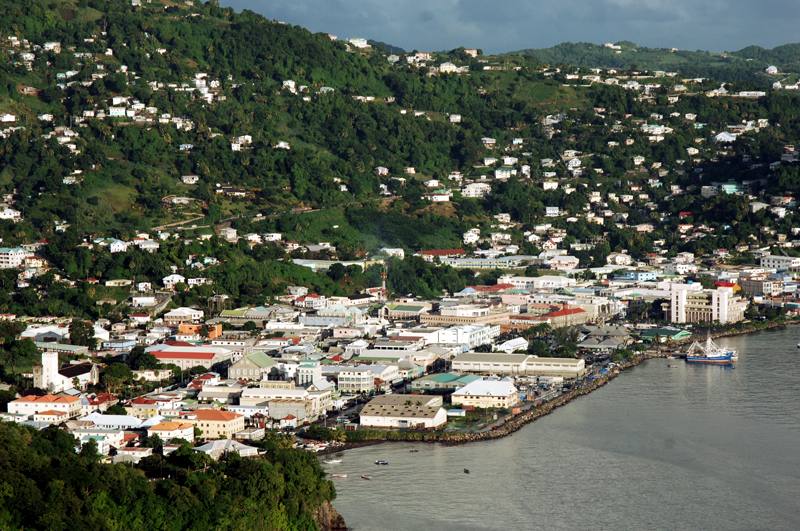
The St Vincent Green Hill shooting erupted shortly before 10:30 p.m. on Friday, September 25, when gunmen arrived in a vehicle and opened fire on a group gathered near a shop in Green Hill, a community on the edge of Kingstown, the capital of St. Vincent and the Grenadines. Four people were killed and four others were wounded. By Saturday night no arrests had been made, police had not confirmed a motive, and the victims' names had not been officially released.
Acting Commissioner of Police Trevor Bailey told a Saturday news conference that officers found two bodies on a public road, a woman dead inside a nearby vehicle, and a fourth victim on an adjacent piece of land — all with gunshot wounds. Four wounded people were taken to Milton Cato Memorial Hospital; two were treated and released and two remained hospitalized, police said, according to the New York Post's account of the police briefing.
What police say happened at Green Hill
Police were alerted at about 10:30 p.m. Friday, Assistant Commissioner of Police Brenton Smith said at the scene. Preliminary reports cited by the St. Vincent Tribune said gunmen arrived in a vehicle and opened fire on people gathered near a shop. Those present scattered, but several were struck. Vincypowa News placed the attack close to the Green Hill hard court.
Police are separately investigating a shooting in Ottley Hall early Saturday and have not determined whether the two incidents are connected. “That determination must be made by investigators based on the evidence and not on rumors or assumptions,” Smith said. No arrests had been announced, and Smith cautioned against speculation while the investigation remained active.
Critical facts remain unknown: police had not confirmed a motive, had not officially named the victims and had not said how many shooters were involved. Those gaps matter. They are the difference between a verified account of a mass shooting and theories about why it happened.
The dead, as reported locally — but not yet confirmed
Police had not officially released the victims' names at the time of the Saturday briefing. Local media, citing multiple sources, identified the dead as Steve King, 22; Antonio Samuel, 30; Shaqueil Peters, 26; and Shevon Chandler, 23. The names were reported by iWitness News and carried by Vincypowa News, but they had not been confirmed by police.
Steve King was reported to be the son of businessman Stephen King, 76, who was himself shot dead while sitting on the patio of his Green Hill home in May 2025. The St. Vincent Tribune dates that attack to May 13, 2025, when masked gunmen entered the elder King's property and shot him multiple times. Two killings, sixteen months apart, in the same family and the same community are an extraordinary coincidence. Police have established no reprisal link, however, and none should be assumed. In a country this small, the overlap will nevertheless dominate conversation in Kingstown this week.
Local reports said the wounded were a 20-year-old Green Hill woman, a 17-year-old male student, a 28-year-old man and a 16-year-old mechanic, all reported stable in hospital. The mix of ages — including teenagers — fits a recurring and especially damaging pattern in the island's gun violence: young people are appearing on both sides of the casualty ledger.
“So unfortunate, so unnecessary”: the acting prime minister responds
Acting Prime Minister and National Security Minister St Clair Leacock — also the parliamentary representative for Central Kingstown, the constituency that includes Green Hill — spoke on NBC Radio less than 24 hours after the attack. He called the shooting “so unfortunate, so unnecessary” and offered condolences on behalf of the prime minister and the government, according to the St. Vincent Tribune.
Leacock said Green Hill had long been regarded as one of the most peaceful communities in his constituency. His core argument was that arrests and prosecutions alone would not end the violence: “the country's crime problem requires a broader response that extends beyond the criminal justice system.” He reaffirmed support for police while warning that the island could not rely on law enforcement alone to address escalating violence among young people.
That is both a genuine admission and a political one. The official condemning the failure is, for now, the official in charge of national security. The burden is therefore not only to describe a broader response, but to show what it contains, who will deliver it and how soon the public should expect results.
Why this matters: the arithmetic of a small island's gun crisis
Police said 37 murders had been recorded this year, according to the New York Post's account of the Saturday briefing; Vincypowa News put the homicide count at 36 including Friday's victims. Either way, in a nation of roughly 100,000 people, that produces a homicide rate in the mid-30s per 100,000 — among the highest in a Caribbean region already struggling with severe violent crime. One bad night moved the national murder count by more than 10 percent.
This was the second-deadliest mass shooting in the country's history, behind only the July 19, 2023 shooting in the Harbour Club area of Kingstown that killed five, according to Vincypowa News. Two mass shootings of this scale in three years would shake a much larger country. In one of 100,000 people, each attack bends the national statistics.
The tourism angle is not incidental. The New York Post framed the story as violence near the capital of a “Caribbean luxury tourism destination,” and the description is economically accurate: Mustique, Palm Island and the Grenadines yachting circuit sell seclusion, scenery and safety. Gunfire near the capital is the kind of headline that can travel farther than a tourism marketing budget can repair.
Small-island states do not have the statistical cushion of large countries. Every shooting becomes a national event, every family touched is likely to know someone in government, and the line between a crime story and a political crisis is exceptionally thin.
Background: how a quiet island got here
Green Hill was, by Leacock's account, one of the peaceful pockets. That detail suggests violence is spreading rather than remaining contained. The five-death Harbour Club shooting in 2023 was supposed to be the wake-up call; three years later, the body count from one night is four.
Caribbean leaders, including those in St. Vincent and the Grenadines, have for years blamed a flow of U.S.-sourced firearms through the region's ports for arming gangs that small police services struggle to outmatch. The weapons move through trade routes the islands cannot fully seal, while many of the policies that could restrict supply are written in Washington rather than Kingstown.
The two killings in the King family — father in May 2025 and son in September 2026 — will inevitably raise questions about retaliation, but police have confirmed no connection. The wider pattern is already grave enough without pretending the evidence says more than it does: personal grievances, accessible firearms and a state with limited capacity to break cycles of violence through policing alone. Leacock's admission that policing alone will not fix the problem is the first honest sentence in this story. What follows it must be policy rather than ceremony.
Who bears the cost
The families of Green Hill bear it first: a community described as peaceful is now burying four of its own. The tourism sector comes next. Hotels, guesthouses, yacht charters and cruise operators sell safety as much as scenery, and “mass shooting near the capital” is the phrase no tourism board can spin.
The government carries a direct political cost. Leacock is acting prime minister and national security minister; every day without arrests gives opponents another reason to ask who is in charge. Young Vincentians carry the heaviest long-term burden. The reported dead were 22, 23, 26 and 30, while teenagers were among the wounded. They are the generation losing friends, opportunities and faith in institutions.
In a country of 100,000, there is no anonymous underclass to blame. The shooters and the shot grow up on the same streets. Nobody wins — not even whoever ordered or carried out the attack, because the pressure that follows a quadruple homicide in a microstate is total.
What happens next
The immediate test is the manhunt. No arrests had been announced, and in a community this small, silence is itself information: either nobody knows, or nobody is talking. Investigators must also determine whether the Ottley Hall shooting is connected. A link would suggest something more organized than a single dispute; no link has yet been established.
Watch what Leacock's “national response” becomes. Youth-employment programs, a gun amnesty, tighter port security and a request for regional help through CARICOM's security apparatus all have precedents in the Caribbean. A slogan is not a strategy; dates, funding and named agencies will show whether this response is real.
Watch tourism numbers and travel advisories. They move more slowly than headlines but can cut deeper. And watch the King family thread: if investigators eventually confirm a connection between the May 2025 killing of Stephen King and his son's death, this stops being a story about a bad night and becomes one about an alleged blood feud — a much harder cycle for any government to police its way out of. For now, that remains only a question for investigators.
The question nobody in Kingstown wants to ask out loud is whether four dead in one night is becoming part of a new normal.
St. Vincent and the Grenadines is the kind of place travel brochures call paradise, and most days it is. But paradise with a homicide rate in the mid-30s per 100,000 is a country arguing with itself about what it has become — and Friday night in Green Hill was the argument at its loudest.
Sources
About the author
News Desk covers breaking world news, public safety and the decisions institutions make after a crisis.