Published October 4, 2026, 5:05 p.m. PDT
David Rivera sentenced 10 years
Topics: David Rivera sentenced 10 years · David Rivera Venezuela lobbying · former congressman sentenced Venezuela · David Rivera Marco Rubio · David Rivera PDVSA 50 million · David Rivera FARA conviction · David Rivera prison sentence · Esther Nuhfer sentenced · David Rivera pardon appeal · ex-congressman Venezuela lobbyist
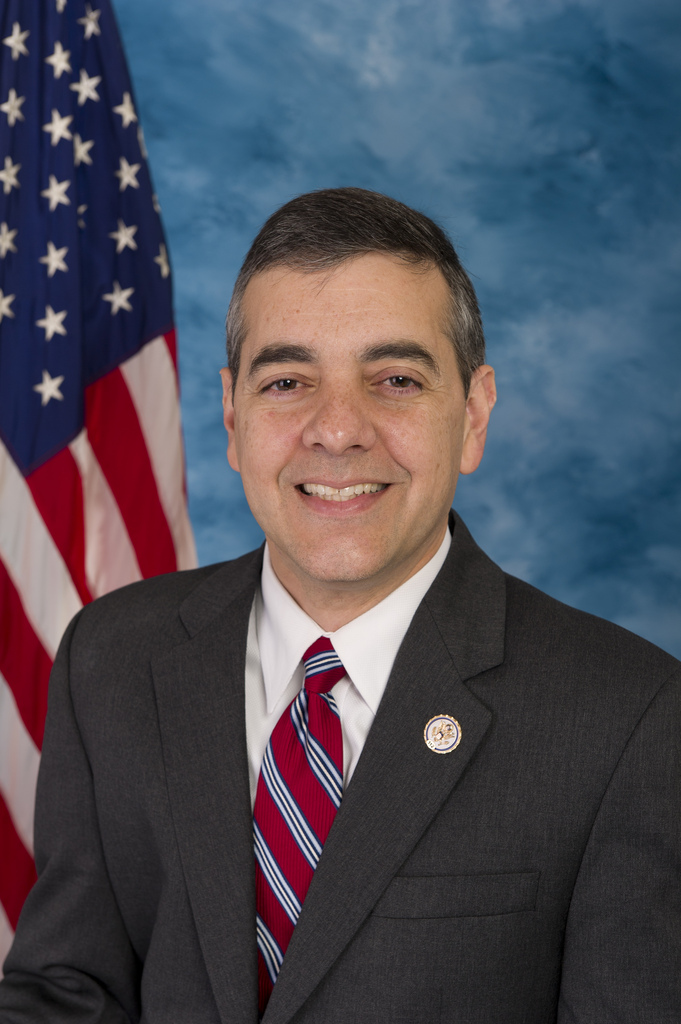
MIAMI — Former U.S. Rep. David Rivera was sentenced to 10 years in federal prison on Friday for secretly acting as an unregistered agent of the Venezuelan government and laundering millions of dollars connected to that work, closing — for now — one of the most brazen foreign-influence schemes ever run out of South Florida.
Rivera, 61, a Republican who represented South Florida in the U.S. House from 2011 to 2013, was convicted in May after a seven-week trial of conspiracy to violate the Foreign Agents Registration Act, violating FARA, conspiracy to commit money laundering, and four counts of engaging in transactions in criminally derived property. U.S. District Judge Melissa Damian imposed the sentence in federal court in Miami.
Why this sentence matters
Criminal FARA convictions of former members of Congress are vanishingly rare, and a 10-year term is at the severe end of the scale. Prosecutors had asked for more than 20 years; the defense pleaded for no more than one. That spread framed the question before the court: was this principally a disclosure offense, or a deliberate, lucrative scheme that corrupted access to American officials? The sentence answers that question plainly, at least at the trial-court level.
The case was charged in 2022 under the Biden administration. Defense lawyers emphasized that the second Trump administration has deemphasized FARA enforcement since January 2025, making a double-digit sentence handed down on President Trump's watch a conspicuous data point rather than a footnote. One verdict does not establish a new enforcement policy, and an appeal could still alter the legal result. It does, however, show that an existing prosecution can still produce a severe penalty even as Washington debates how aggressively the registration law should be used.
Then there is the proximity problem. Rivera is a longtime friend of Secretary of State Marco Rubio, who testified at trial that he had no idea his old ally was working under a Venezuela-linked consulting contract. A convicted unregistered foreign agent one degree from America's top diplomat is the kind of fact that does not wash off with a press release. Rubio was presented as someone Rivera approached, not as a participant in the scheme, but the episode shows why disclosure is the core of FARA: public officials cannot properly evaluate advocacy if they do not know whose interests are paying for it.
The $50 million arrangement
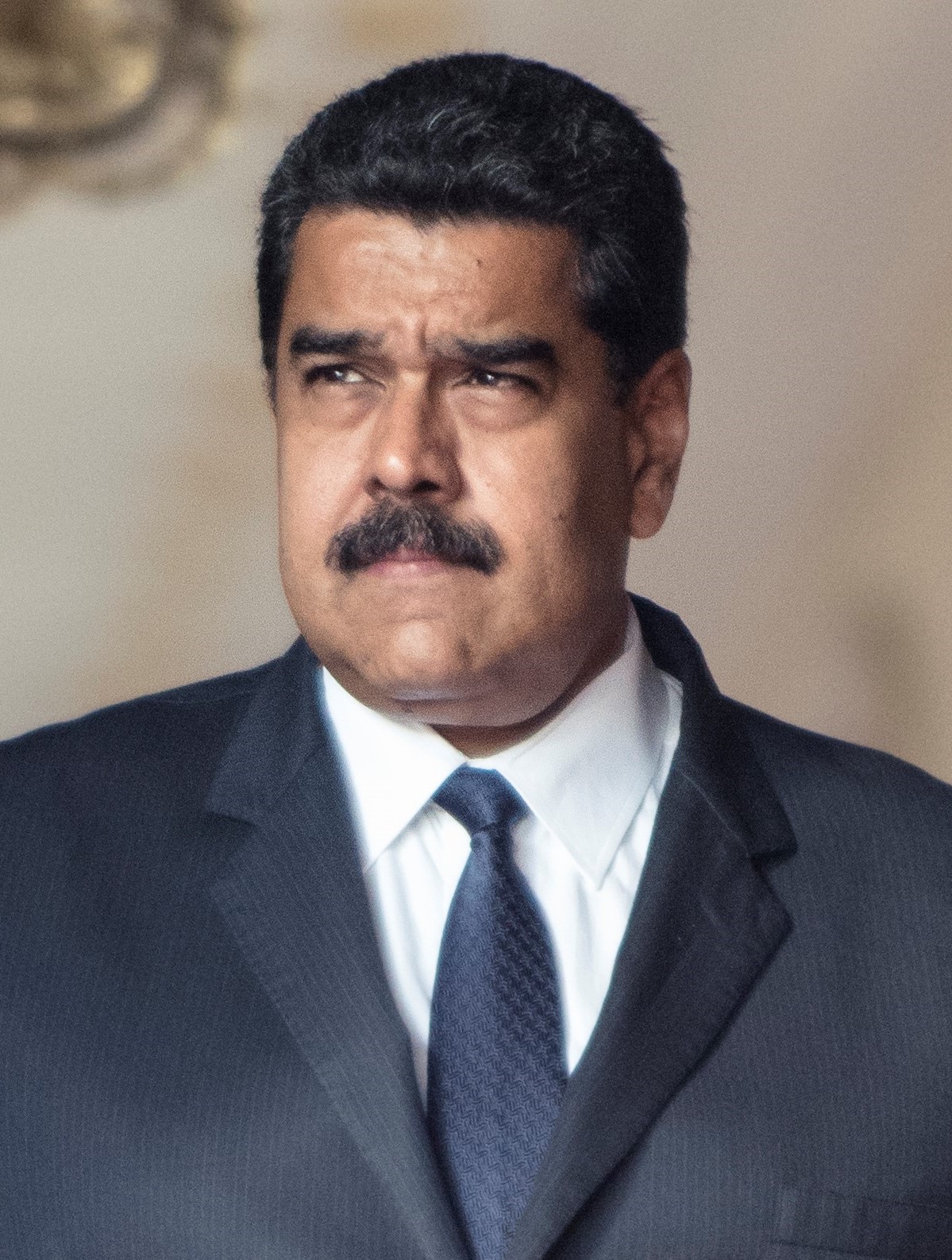
According to the Justice Department, Rivera and political consultant Esther Nuhfer obtained a $50 million contract with a U.S. subsidiary of Venezuela's state oil company PDVSA. Prosecutors said it was structured as five payments of $5 million and one of $25 million. Their assignment, running through 2017 and 2018, was to persuade the first Trump administration to ease pressure on Nicolás Maduro's government.
Without registering as foreign agents, the pair lobbied U.S. officials, including then-Senator Marco Rubio and Rep. Pete Sessions of Texas. They also arranged meetings between American policymakers and senior Venezuelan officials, including Maduro and then-Foreign Minister Delcy Rodríguez — the same official now central to Washington's latest Venezuela diplomacy.
Trial evidence showed coded language in text messages and an encrypted chat group used to communicate with Venezuelan contacts, including media tycoon Raúl Gorrín. After the company terminated the contract, prosecutors say the pair still took in about $20 million. Rivera, the evidence showed, deposited roughly $1.5 million of the proceeds into his Florida state congressional campaign account between March 2017 and August 2018. Nuhfer used about $455,000 to buy a residence in Key Colony Beach.
A trial that embarrassed Washington
The seven-week trial offered a rare public window into how foreign influence campaigns can operate through Miami's political class. Rubio, Sessions and a top Washington lobbyist all testified, and all said they felt betrayed upon learning of Rivera's PDVSA-linked contract. Their testimony supplied the human counterpart to the paperwork: officials understood Rivera as an old colleague or political ally, while the government alleged he was simultaneously serving a foreign principal.
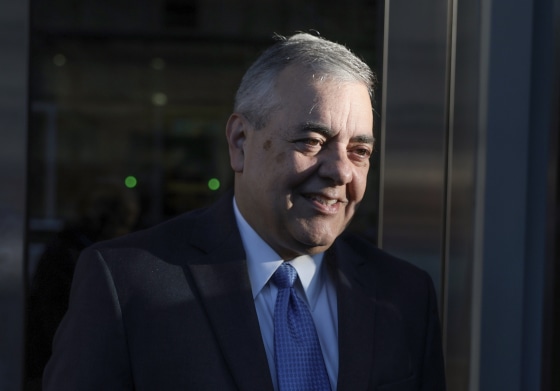
Nuhfer was convicted alongside Rivera and sentenced to five years, or 60 months, in federal prison in August. Rivera pleaded not guilty throughout. His lawyers argued that he was actually working to help Venezuela's opposition remove Maduro, not to advance the regime, and that his work was commercial activity exempt from FARA. The jury rejected that account.
Judge Damian was unsparing at sentencing. “There's no dispute this money came from the Maduro regime,” she said, adding that Rivera would surely have been judged harshly by his many friends had the millions come from the Cuban regime instead of its allies in Caracas. “Nobody would accept that's ok and I don't think this is different.” The comparison was pointed in South Florida, where opposition to Cuba's government has long organized Republican politics and where Maduro's government is viewed by many voters as part of the same authoritarian bloc.
Who wins, who loses
The Justice Department wins a deterrence showcase. U.S. Attorney Jason A. Reding Quiñones declared that “foreign influence in America cannot operate in the shadows,” and FBI Miami chief Brett D. Skiles said the sentence shows “no attempt to conceal unlawful conduct will remain beyond the FBI's reach.” Transparency advocates get a precedent with teeth: registration rules matter only if intentional concealment carries consequences proportionate to the money and access involved.
The losers start with Rivera himself, jailed without bond since the May verdict, and extend to Nuhfer, to whatever remains of PDVSA's American influence operation and, reputationally, to every official Rivera traded on. Being the mark in a foreign-agent scheme is not a crime. It is not a good look either, especially for officials whose value to the operation depended on an assumption of personal trust.
The sharpest unresolved tension is political. Rivera's lawyers applied for a presidential pardon in June. A pardon for a man convicted of secretly lobbying for Maduro, issued while his longtime friend runs the State Department, would detonate across both parties. That consequence may help explain why the request remains undecided, though the administration has not publicly supplied a reason. It also sits against a fast-moving policy backdrop in which Maduro and Venezuela remain active subjects of White House strategy.
What the numbers say
Put the figures in context and the scale of the operation comes into focus. A $50 million foreign contract for one former one-term congressman and one consultant is not normal lobbying money. It is state-level money, the kind of sum that signals how much Caracas valued a back channel into Washington during the sanctions squeeze of 2017.
The $20 million prosecutors say was actually collected dwarfs the $1.5 million Rivera routed to his campaign account. The laundering counts, not the lobbying alone, are what convert influence-peddling into a decade in prison. The alleged movement of funds supplied prosecutors with a tangible financial trail and gave the court a measure of personal benefit that a registration violation by itself might not capture.
The sentencing spread tells its own story: prosecutors wanted more than 20 years, the defense wanted one, and the judge landed on 10. That number says the court viewed the conduct as serious criminality, not a registration paperwork error. Criminal FARA prosecutions remain rare enough that each one recalibrates the risk calculation for the wider influence industry. At the same time, the sentence is specific to Rivera's convictions and conduct; it should not be read as an automatic benchmark for every FARA case.
What happens next
Three tracks now run in parallel. First is the appeal. Rivera's lawyers have signaled that they will challenge the conviction, likely pressing the “commercial activity” exemption argument the trial judge rejected. An appellate court could uphold the verdict, narrow the government's theory or order further proceedings; until that process unfolds, the conviction and sentence remain in force.
Second is the pardon application, which sits with a president whose administration has publicly cooled on FARA cases. Granting it would ignite a political firestorm. Denying it, or simply leaving it unanswered, means a former congressman continues serving ten years. A pardon would not erase the historical record of the trial, but it could eliminate or reduce the federal punishment, depending on its terms.
Third are the additional federal charges Rivera still faces in Washington, D.C., in a related foreign-lobbying case. That means even a successful appeal in Florida would not necessarily free him from legal jeopardy. Beyond Rivera personally, the case will be cited in every future debate over FARA reform: whether the law is enforced too rarely, too selectively or, as this sentence suggests, finally with consequences substantial enough to change behavior.
The enduring issue is less glamorous than the personalities around it. Influence becomes dangerous when the sponsor is hidden, the money is routed through layers and personal relationships substitute for public scrutiny. Rivera's conviction does not resolve how Washington should police every foreign contact or define every commercial exception. It does establish a stark boundary: when a jury finds that a former lawmaker secretly used his access for a foreign government and laundered the proceeds, the cost can be measured in years, not filings.
Sources
- U.S. Department of Justice, Southern District of Florida: Former U.S. congressman sentenced to 10 years for secretly acting as agent of Venezuelan government
- Reuters: Former U.S. congressman sentenced to 10 years for secretly lobbying for Venezuela, October 2, 2026
- CNN: Former GOP congressman and longtime Rubio friend sentenced to 10 years for secret Venezuela lobbying, October 2, 2026
- USA Today: Former congressman gets 10 years for secret Venezuela lobbying, October 3, 2026
Reporting note: The conviction, sentence, contract terms and quoted statements are attributed to the Justice Department and the cited coverage. Rivera maintains that his work was lawful and has signaled an appeal; the pardon request remains unresolved.