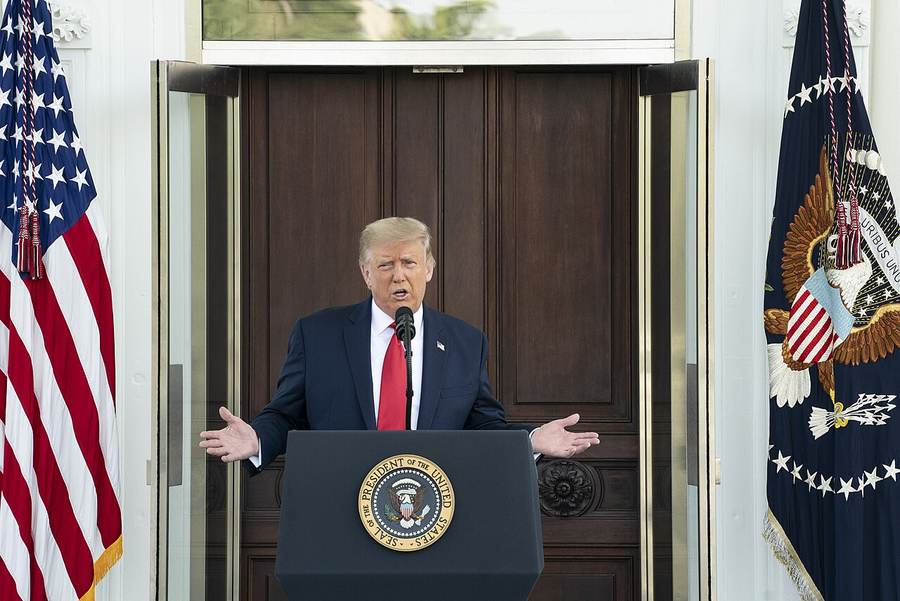
WASHINGTON — TIME reports that Trump consulted Grok Maduro capture planning in a private White House session with Elon Musk, spending hours asking the chatbot about Venezuela before the United States seized President Nicolás Maduro. According to one unnamed official cited by the magazine, Trump specifically asked how Venezuelans would react if Maduro were captured. Grok described Maduro as “a deeply unpopular dictator” and predicted that many Venezuelans would celebrate his downfall.
Weeks later, the United States invaded Venezuela on January 3, 2026, and captured Maduro. Celebrations followed in parts of the Venezuelan diaspora and among government opponents. The same official told TIME that Trump “came away thinking Grok was ingenious.” That sequence makes the report newsworthy, but it does not establish that a chatbot caused the operation, selected targets or replaced formal intelligence. The narrower, supportable claim is that the president reportedly used a commercial chatbot to test the politics of an already escalating confrontation.
Why this matters: an AI answer beside a regime-change decision
A president asking an AI system how a foreign population might respond to regime change is not the same as ordering a strike through a chatbot. It is still a serious boundary crossing. A model's confident prose can compress uncertainty, obscure contested assumptions and make a prediction feel more settled than its evidence. In national-security work, that matters even when the answer is only one input among many.
The central problem is not that Grok had an opinion about Maduro. It is that outsiders cannot inspect what sources the model retrieved, what prompt wording shaped the answer, which safety rules applied, whether contradictory evidence appeared, or how officials weighted the output. Traditional intelligence assessments preserve sourcing, confidence levels and dissenting judgments. A consumer-facing model generally gives users a fluent synthesis, not an auditable chain of reasoning.
That distinction becomes sharper when commercial systems move from political advice toward operational workflows. The Gov Grok Pentagon Iran war disclosure placed a government-adapted version of xAI's model inside the Maven Smart Systems environment. Pentagon officials said it was used to help deploy and strike targets during the Iran war. A June court filing further described Grok's place in the workflow. The public record does not, however, show that Grok autonomously chose a target or authorized force; those are different claims and should not be conflated.
What TIME says happened in December 2025
The reported session came roughly seven months after Musk left his role in the Trump administration's Department of Government Efficiency. TIME's account says Trump and Musk met secretly at the White House in December 2025 and that the president spent hours querying Grok. Among the questions was a blunt test of political sentiment: would Venezuelans welcome Maduro's capture?
The answer attributed to Grok—Maduro was “a deeply unpopular dictator” whose downfall many would celebrate—offered a simple forecast about a country divided by repression, migration, sanctions, economic collapse and organized opposition. Celebration after the raid supplied a visible confirmation, according to the official's telling. Yet visible crowds are not a national survey, and post-operation reaction cannot by itself validate every assumption behind the intervention.
Background: DOGE, boat strikes and the January invasion
The reported meeting did not occur in a policy vacuum. In September 2025, Trump ordered U.S. strikes on Venezuelan boats the administration alleged were carrying drug traffickers. The Atlantic had already reported that people were asking Grok about those strikes and Venezuela's political climate, a sign that the chatbot was becoming part of the information environment around the confrontation before the White House meeting described by TIME.
On January 3, 2026, U.S. forces invaded Venezuela and captured Maduro. The operation transformed a pressure campaign into direct military action. For more on the diplomatic aftermath, see Signal Post News's report on Trump's later meeting with Venezuela's Delcy Rodríguez at the U.N. General Assembly.
The administration has since promoted a voluntary White House AI pact aimed at major developers. Voluntary commitments can establish norms quickly, but they depend on self-reporting and political pressure rather than enforceable inspection. That leaves a gap between the speed of deployment and the public's ability to know when a model entered an intelligence, operational or targeting process.
From adviser to infrastructure: Gov Grok and the kill chain
The Pentagon use is the more concrete institutional story. In June 2026, the department's AI chief said Gov Grok had supported the deployment and striking of targets during the Iran war. The separate court filing put a government-adapted Grok inside the Maven Smart Systems workflow. That makes the issue larger than one reported presidential conversation: commercial models are being integrated into systems that organize battlefield information and support decisions under time pressure.
“In the kill chain” can describe many different roles. A model might summarize intelligence, translate documents, flag patterns, rank objects for human review or help draft an operational plan. Those uses carry different risks. Public debate needs precision about which task occurred, what human approval remained mandatory, how errors were caught and whether model outputs were logged for later investigation.
OpenAI also has a Defense Department agreement. Anthropic has been in a public dispute with the administration over how Claude may be used in military intelligence and modern warfare. Those cases show a market taking shape around access to defense systems, with companies competing not just on model capability but on what restrictions they will accept. Signal Post News has separately examined the FTC's inquiry into OpenAI and Anthropic agents and an Anthropic researcher's warning about advanced-AI risk.
Who benefits—and who bears the risk
Musk and xAI benefit from Grok being seen as useful at both the presidential and Pentagon levels. Institutional adoption can strengthen xAI's position in government procurement, confer prestige and create feedback that improves future products. The reported overlap is unusually direct: earlier this week, the Pentagon announced that Musk and Anduril co-founder Palmer Luckey will co-lead a study of advanced battlefield technology, while Musk-linked companies are already building tools that can feed defense workflows.
Military commanders may benefit if models can reduce information overload and accelerate routine synthesis without diluting human judgment. But speed is not the same as reliability. A fast, plausible answer can become dangerous when decision-makers are under pressure and the system's uncertainty is hidden.
Oversight advocates lose visibility when the decisive record is a private prompt session rather than a documented briefing. Rival model companies also face a strategic choice: loosen restrictions to compete for defense work, or maintain limits and risk exclusion. Anthropic's dispute illustrates how procurement pressure can turn safety boundaries into commercial disadvantages.
Venezuelans and people in conflict zones bear the consequences of errors without access to the model, its evidence or its appeal process. That asymmetry is why critics are demanding disclosure of model roles, human sign-offs, test results, incident logs and contract restrictions—not simply assurances that a person remained “in the loop.”
Calibrated confidence: one source, repeated many times
The evidentiary limit is straightforward. The entire December 2025 meeting account traces to one unnamed official speaking to TIME. TechCrunch, Yahoo, Times Now and other outlets repeated TIME's reporting but did not add independent confirmation of the meeting, the prompts, Grok's exact answer or Trump's “ingenious” reaction.
That means the story should not be read as a multi-source reconstruction merely because it appeared on several sites. Publication count is not source count. Our confidence is therefore limited on the private-session details and higher on the publicly documented surrounding events: Musk's departure from DOGE, the September boat strikes, the January 3 invasion and capture, the Pentagon's Gov Grok disclosures, and the announced Musk–Luckey study.
The distinction also prevents an analytical leap. Even if TIME's account is accurate, it does not show that Grok determined U.S. policy. Presidents test arguments with advisers, television, polling, intelligence and personal contacts. The report matters because a commercial model apparently joined that circle—not because the available evidence proves it controlled the outcome.
What rules could constrain commercial AI military targeting
The Pentagon's next step should be a role-by-role disclosure standard. Agencies can protect classified targets while still stating whether a model summarized intelligence, recommended options, prioritized targets or generated coordinates. They can also disclose what official had authority to accept or reject the output, whether independent red-team testing covered the deployed version and how long audit logs are retained.
A second guardrail is a bright line around lethal authority: no commercial model should make the final decision to select or engage a target. Human review must be meaningful, not a rushed click after opaque ranking. Procurement contracts can require uncertainty estimates, source traceability, adversarial testing and incident reporting, while inspectors general and Congress receive access to the underlying logs.
A third rule is conflict-of-interest transparency. The Musk Luckey Pentagon battlefield AI study is expected to advise the department on advanced battlefield technology. Because Musk's businesses may gain from the policies being studied, the Pentagon should publish recusal rules, outside participants, deliverables and how recommendations will be evaluated. The announcement so far has not disclosed a specific public oversight mechanism for that overlap.
What happens next
Watch the Pentagon study for its charter, membership and publication terms. If it produces only recommendations classified from public view, lawmakers will need a separate mechanism to test whether procurement favors particular vendors or whether safety restrictions are treated as obstacles. If it publishes measurable standards, it could move the debate from personalities toward accountable system design.
The White House's voluntary accord is the second test. Voluntary promises can move faster than legislation, but they need reporting deadlines, common definitions and consequences for silent noncompliance if they are to shape military use. Otherwise, the pact risks governing public messaging while classified deployments advance on a separate track.
Finally, Congress and allied governments will have to decide whether commercial AI in targeting needs law rather than guidance. The crucial questions are no longer hypothetical: what may a model recommend, what evidence must accompany its output, who signs off, and who can reconstruct a failure after lives are lost? TIME's report makes one private conversation the opening scene. The durable story is the governance system that still has to catch up.
Sources and methodology
- TIME — original reporting on the December 2025 Trump–Musk meeting, as summarized by TechCrunch. A direct TIME URL was not available in the reporting materials reviewed for this snapshot.
- TechCrunch — “Musk's AI chatbot Grok reportedly encouraged Trump to capture Venezuela's president” (October 1, 2026).
Reporting basis: This article attributes the private meeting and quoted remarks to TIME throughout. The account rests on one unnamed official and was not independently confirmed by TechCrunch, Yahoo or Times Now. Publicly documented surrounding events are separated from the anonymous-source claims. Analysis of model governance, procurement incentives and oversight is Signal Post News's own. This is a fixed October 2, 2026 reporting snapshot.