Entertainment / Music — The Dallas Cowboys Cheerleaders sue My Chemical Romance storyline moved from a concert surprise to a courtroom on Friday, when Pro Silver Star Ltd., the company that owns the cheerleaders' brand, asked a Dallas court for a temporary restraining order against the band. At issue: dancers in blue-and-white uniforms strikingly similar to the famous DCC uniform who armed themselves with rifles and were depicted being shot during My Chemical Romance's Hollywood Bowl show — and a band schedule that puts them back on that stage on Saturday night.
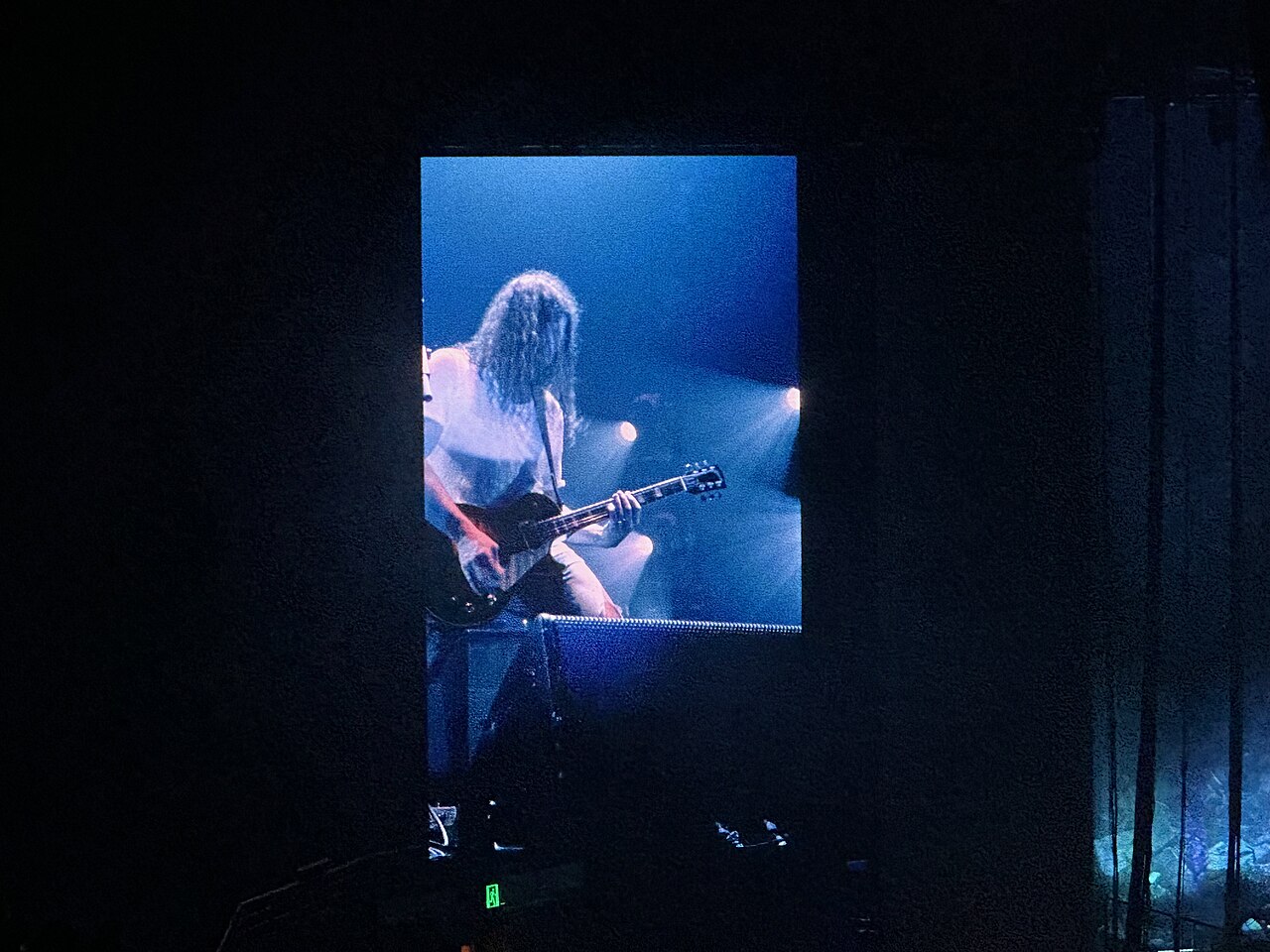
LOS ANGELES, October 23, 2026 — It was designed as a gasp moment. On Wednesday night, during "Teenagers," the defiantly anti-authoritarian anthem from The Black Parade, a troupe of dancers in blue-and-white cheerleader uniforms bounded onto the Hollywood Bowl stage, performed a cheer routine, then picked up semi-automatic rifles to defend the band against the fictional dictatorship's forces — and were theatrically shot, crawling off stage as the song ended. Fans posted clips within minutes, many of them asking the same question: were those the actual Dallas Cowboys Cheerleaders? By Friday, that question had become a legal filing. Pro Silver Star Ltd., which owns the Dallas Cowboys Cheerleaders (DCC) brand, filed for a temporary restraining order and a temporary injunction against My Chemical Romance, accusing the band of degrading one of the most protected uniforms in American entertainment by tying it to a staged gun battle.
What the filing says
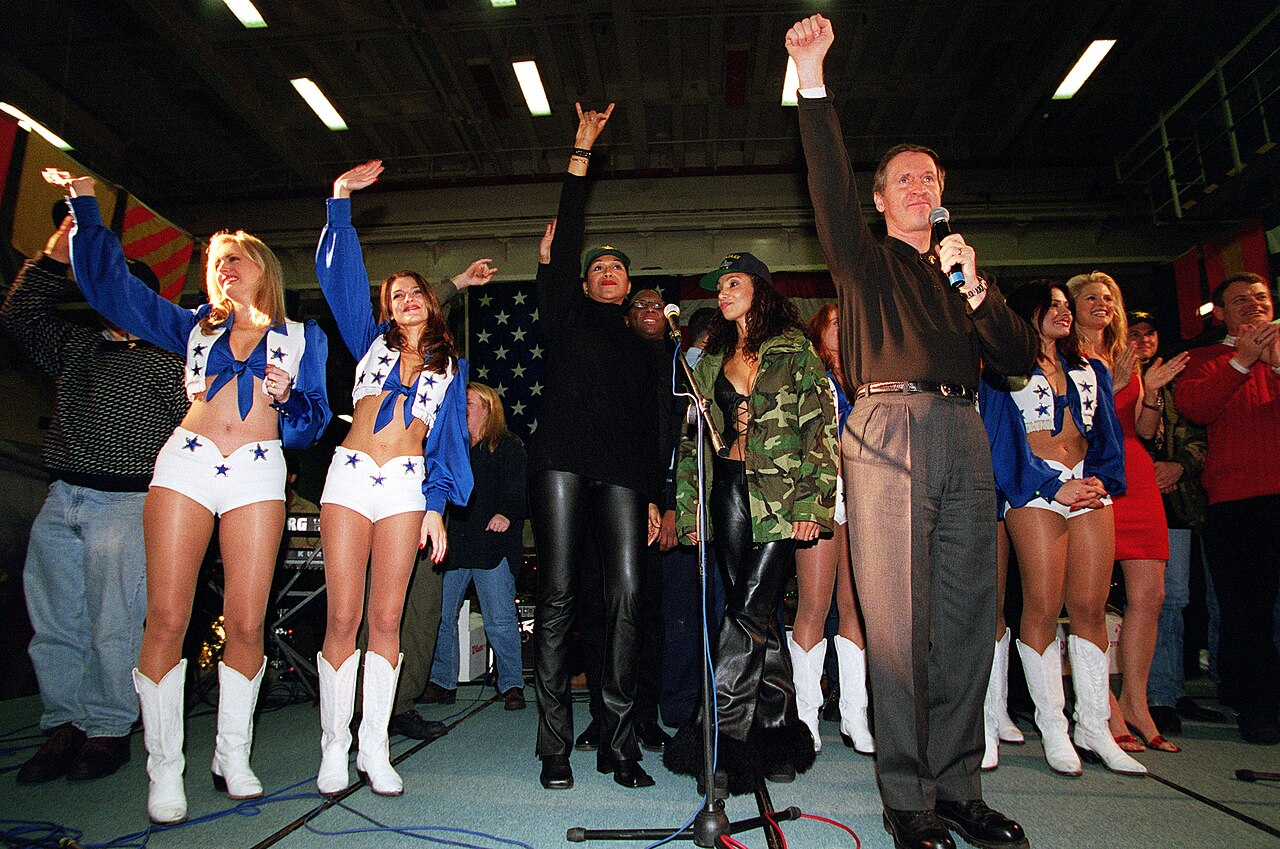
The legal documents, obtained by the California Post and reviewed by TheWrap, argue that the costume at the centre of the show is not a generic cheerleader outfit but the DCC Uniform — the blue blouse, white star-studded vest and belt, white shorts and white boots the squad has worn, with variations, for more than half a century. "For over half a century, the Dallas Cowboys Cheerleaders uniform has been an instantly recognizable symbol of one of the most famous brands in American entertainment," the filing states, calling the uniform protectable trade dress that no one may use without permission. The petition reportedly includes side-by-side comparisons of the concert costumes and the real uniform, along with screenshots of social-media posts from audience members who believed the performers were the genuine squad. "The costumed performers armed themselves with semi-automatic rifles and joined a staged firefight, and were then depicted being shot and crawling off the stage," the documents say, according to the New York Post's account of the filing, brought by attorney Alex Spiro.
Crucially, Silver Star says it tried the quiet route first. TheWrap reports the company asked the band to stop using the uniforms and that My Chemical Romance — Gerard Way, Ray Toro, Mikey Way and Frank Iero — refused "to stop the infringing use of the DCC Uniform"; Particle's summary of the petition dates a cease-and-desist letter to October 22, the day after the first performance. "Silver Star is not litigious, and it takes no issue with MCR's music, its artistic ambitions, or any message Defendants seek to convey," the filing says. "Silver Star does not ask Defendants to change their setlist, narrative, politics, choreography, or even their decision to put gun-toting performers on stage. Silver Star asks only that those performers not wear the DCC Uniform while doing it. The universe of alternative costume designs is effectively unlimited." The company is also seeking unspecified monetary damages, and warns that continued use threatens "ongoing and irreparable harm to the reputation and goodwill Silver Star has cultivated in the DCC brand." A representative for My Chemical Romance did not immediately respond to TheWrap's request for comment on Friday.
A record residency, interrupted by a costume
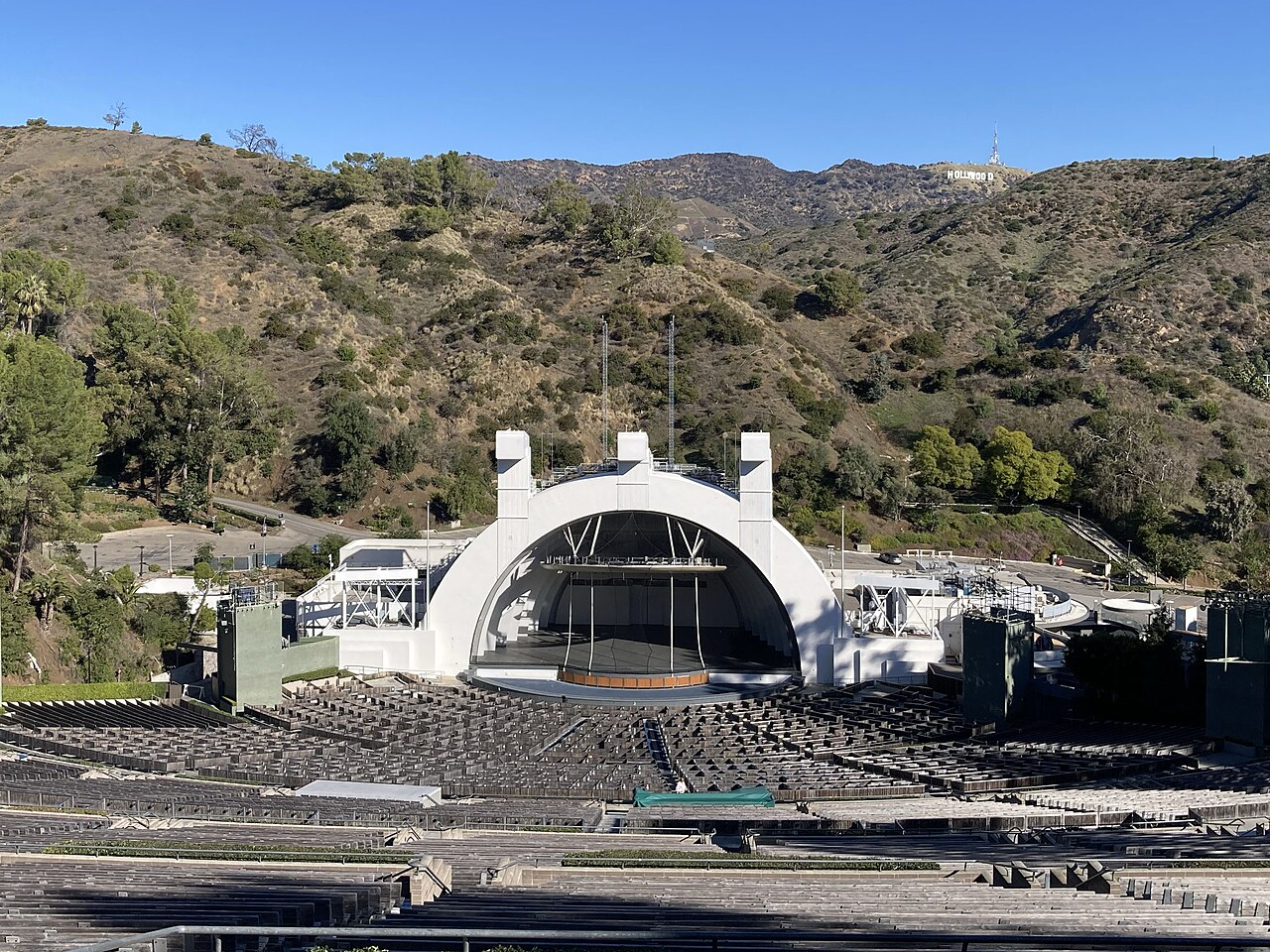
The timing is what turns a trademark dispute into a cliffhanger. The Hollywood Bowl run — October 21, 23, 24, 30 and 31 — closes the band's Black Parade 2026 tour and marks the 20th anniversary of The Black Parade, released on October 23, 2006 and since certified four-times platinum and ranked among Rolling Stone's 500 Greatest Albums of All Time. The five dates make My Chemical Romance the first band to play five shows in a single run at the historic venue, and Friday's show — the second of the run — fell on the album's actual 20th birthday, with an expanded anniversary reissue arriving the same day. The production is an elaborate piece of theatre set in Draag, a fictional dictatorship, complete with pyrotechnics, an authoritarian "Grand Immortal Dictator" character and staged armed conflict woven through the album's story of a dying patient. The cheerleader sequence lands inside "Teenagers," a song whose entire point is adults fearing and demonising the young — which is presumably why costuming the regime's cheer-squad as America's most wholesome sideline brand, then having them shot, read to the band as satire. It read to Silver Star as something else: its registered mark, attached without permission to simulated gun violence, in front of a sold-out crowd and a global social-media audience that could not tell the performers apart from the real squad.
Why this matters
This is not really a fight about a costume. It is a fight about where parody ends and brand appropriation begins when the "parody" is performed live, nightly, for paying customers, by one of the biggest touring acts in the world. Silver Star's strongest card is confusion, and unusually, it does not have to argue the point in the abstract: the filing can point to real posts from real fans who genuinely believed the Dallas Cowboys Cheerleaders had appeared at a rock concert and been mock-executed. In trademark law, that kind of documented, actual confusion is gold. The band's strongest card, if it chooses to play it, is expression: the sequence is a short, clearly theatrical moment inside an avowedly fictional dystopia, no reasonable viewer thinks the Cowboys organisation endorsed it once they think about it at all, and American courts have historically been reluctant to let trademark owners veto artistic works over a costume reference. Both things can be true at once — fans were confused in the moment, and the moment was art — which is exactly why the case is interesting, and why a judge being asked to rule within hours, before Saturday's show, faces a genuinely hard balance rather than a routine takedown.
The ghost in the courtroom: 1979
Silver Star also walks into court carrying a precedent with its own name on it. In Dallas Cowboys Cheerleaders, Inc. v. Pussycat Cinema, Ltd., 604 F.2d 200 (2d Cir. 1979), the organisation sued over the film Debbie Does Dallas, whose lead character wore a near-copy of the uniform. The Second Circuit held that the particular combination — white boots, white shorts, a blue blouse and a white star-studded vest and belt — was an arbitrary, non-functional design that had acquired secondary meaning, and was therefore protectable as a trademark, and that the film's use was likely to confuse viewers about sponsorship and to injure the squad's reputation. That case is still taught in law schools, and its logic maps uncomfortably well onto Friday's filing: an entertainment production, an instantly recognised lookalike uniform, a use the brand owner considers degrading, and a public that mistakes the copy for the real thing. The differences matter too — a concert stage is not a film marketed on the confusion, and 2026 courts apply more speech-protective tests for artistic works than the courts of 1979 did — but any lawyer on the band's side reading the petition will recognise the shape of the argument immediately, because Silver Star's predecessors wrote it into the casebooks nearly five decades ago.
What happens next
The immediate question is brutally practical: what do the dancers wear on Saturday night? A temporary restraining order is emergency relief, decided fast and on a preliminary showing, and Silver Star and Spiro have framed the request narrowly — not "stop the show," not "change the song," just "lose the lookalike uniforms." That narrowness is strategic: it lets a judge protect the mark without being seen to censor a concert, with three Bowl dates (October 24, 30 and 31, the last two billed as Devil's Night with The Used and a Halloween finale with Thrice) still to play. If the order is granted, expect a costume redesign executed in hours and a show that otherwise proceeds unchanged — the filing practically writes that outcome itself. If it is denied, the fuller injunction and damages fight follows on a slower track, and the costumes become a nightly news story the band did not plan. Either way, the episode has already delivered its verdict on one point: a uniform so famous that a few seconds of lookalike choreography in a fictional dictatorship could be mistaken for the real thing is, whatever the court decides, exactly as powerful a brand as Silver Star says it is. Related on Signal Post News: Ella Langley's cancelled Tulsa concert and Kanye West's cancelled Russia concerts.
Sources: TheWrap, "Dallas Cowboys Cheerleaders Sue My Chemical Romance Over Concert Uniforms," Oct. 23-24, 2026 (filing language: trade dress, "universe of alternative costume designs is effectively unlimited," refusal to stop, unspecified damages, band representative did not immediately respond); New York Post / California Post, Oct. 23, 2026 (temporary restraining order and temporary injunction filed Friday, attorney Alex Spiro, District Court of Dallas County petition image, staged firefight description); TMZ, Oct. 23, 2026 (Spiro arguing irreparable harm; request that MCR and Live Nation drop the uniforms for the remaining Hollywood Bowl shows); Particle News summary of the petition, Oct. 24, 2026 (cease-and-desist sent Oct. 22; federally registered mark; side-by-side comparisons and social-media screenshots); NME and Consequence, Oct. 22-23, 2026 (the Oct. 21 "Teenagers" sequence: cheer choreography, fake rifles, performers crawling off stage after being "shot"; five-night residency, first band to play five nights in a single Bowl run; Oct. 30 The Used, Oct. 31 Thrice); Hot Topic / BroadwayWorld and Secret Los Angeles, Oct. 2026 (Bowl dates Oct. 21, 23, 24, 30, 31; The Black Parade released Oct. 23, 2006, RIAA 4x Platinum, Rolling Stone 500 Greatest Albums); Dallas Cowboys Cheerleaders, Inc. v. Pussycat Cinema, Ltd., 604 F.2d 200 (2d Cir. 1979), via Justia (uniform combination held protectable; likelihood of confusion and reputational harm).