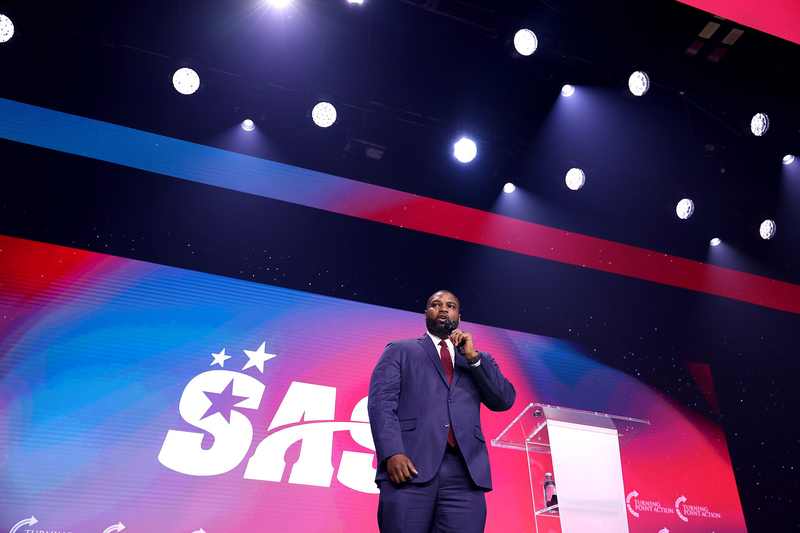
The florida texas governor races 2026 have crossed an important threshold: the nonpartisan Cook Political Report now rates both contests Lean Republican rather than Likely Republican. That does not make Democrats the favorites. It does mean the two biggest prizes on this year's gubernatorial map can no longer be treated as routine Republican holds, even though Donald Trump carried Florida by 13 points and won Texas by double digits in 2024.
The change is a judgment about the political environment as much as either candidate field. Trump's weak standing on the economy and living costs is eroding the midterm firewall Republicans expected in Sun Belt states. In the latest AP-NORC figures cited in the analysis, just 26% approved of his handling of the economy and 17% approved of his handling of living costs. Cook had already moved 15 House races toward Democrats the previous week. The governor ratings extend the warning from congressional districts to statewide contests.
Why this matters
Governors shape abortion policy, education budgets, election administration and the implementation of federal programs. They also redraw the strategic map for 2028. Republicans currently hold a narrow 26-to-24 advantage in governorships. With 36 races scheduled for November 3, 2026, a Democratic breakthrough in Florida or Texas could determine which party controls a majority of governors for the first time since Democrats lost it in 2010.
The shift also changes how money and attention move. A race labeled Likely Republican tells national donors to spend elsewhere. Lean Republican says an upset is plausible enough to fund. That gives Democrats a larger map and more donor energy, while Republicans must defend terrain they assumed would support their campaigns in more competitive states.
There is a revealing backdrop. Texas Republicans pursued a Trump-backed mid-decade congressional map designed to improve the party's House position. Democrats broke quorum and left the state; Gina Hinojosa was among the first wave. The effort ultimately collapsed amid legal fights and threats of retaliatory map changes in blue states. A maneuver intended to reinforce Trump's national majority instead gave Texas Democrats an organizing story about concentrated power and political overreach.
Texas: greg abbott texas governor race faces its first real test
Greg Abbott has won all three of his gubernatorial elections by double digits and has a campaign war chest north of $87 million. Those advantages remain formidable. But the greg abbott texas governor race no longer looks like a fourth-term coronation. An August University of Texas/Texas Politics Project poll put the governor underwater, with 50% disapproving and 40% approving of his job performance.

Democratic nominee Gina Hinojosa is trying to turn education and the cost of living into a statewide argument about whether Republican rule still works for ordinary families. Her “mom who got mad” framing presents activism as a response to policy rather than a career plan. Barack Obama campaigning with Hinojosa and U.S. Senate candidate James Talarico in Austin gives the ticket national visibility without asking it to imitate a Washington campaign.
Talarico's strong Senate run matters below the top line. Competitive statewide candidates can share field organizers, advertising audiences and turnout operations. Cook's analysis also points to a sharp movement among Latino voters away from Trump, a potential warning in the Rio Grande Valley and the fast-growing metropolitan counties where Republican margins have become central to the Texas coalition.
Sabato's Crystal Ball had already moved Texas from Solid to Likely Republican in August, after moving both Texas and Florida out of “Safe Republican” earlier in the summer. The ratings are converging on the same conclusion: Abbott still leads, but the scale of the national environment is testing assumptions built from his previous victories.
Florida: byron donalds florida governor bid meets david jolly
The byron donalds florida governor campaign has Trump's endorsement and the structural advantage of a state that has moved sharply right. But former Republican congressman David Jolly, now the Democratic nominee, offers a profile that complicates a standard partisan attack. His pitch is not ideological reinvention so much as a case that Florida's one-party government has stopped solving practical problems.

Jolly is emphasizing high home-insurance rates and opposition to data centers that impose costs on local communities. Those subjects let him challenge Republicans on governance rather than relitigate every national culture-war dispute. For Donalds, the task is to preserve the Trump coalition while demonstrating an independent command of state problems.
Florida's 13-point Trump margin in 2024 remains a heavy weight against Democrats. Yet an open governor's race behaves differently from a presidential contest, especially when affordability dominates. The key question is whether Jolly can hold Democratic voters, attract independents and win enough Republicans who dislike the state's direction without losing voters who distrust his party switch.
The cook political report governor ratings shift, in numbers
The numerical case is less a single poll than a pattern. There are 36 governor elections on November 3. Republicans begin with 26 governorships to Democrats' 24. Florida and Texas, both carried by Trump by double digits two years ago, are now rated Lean Republican. Abbott has more than $87 million available, yet his approval balance is negative. Nationally, Trump's economic approval is 26%, and only 17% approve of his handling of living costs.
That combination explains why the cook political report governor ratings moved. Candidate resources and partisan history point Republican; public mood points the other way. The same tension appears across governor race polls 2026. A survey can show an incumbent in a close race without proving the challenger has assembled a winning coalition. Ratings synthesize polling, fundraising, candidate quality and the broader environment, but they remain informed forecasts rather than votes.
The House movement reinforces the signal. Cook's decision to shift 15 congressional races toward Democrats a week earlier indicates that the change is not confined to two unusually strong challengers. It reflects a national drag that could matter wherever Republican candidates need Trump's voters without inheriting all of his liabilities.
Who benefits, who loses, and what the strategists say
Democrats benefit first. Hinojosa and Jolly can now tell donors that credible outside analysts see a path, and the party can force Republicans to spend in two expensive media states. Talarico's Texas Senate campaign may lift the Democratic ticket, while Obama's Austin appearance supplies a turnout cue for voters who often skip midterms.
Trump loses strategic flexibility. A campaign that expected Florida and Texas to serve as a secure midterm firewall must now devote presidential time and surrogate energy to protecting both. Abbott also loses the aura of inevitability surrounding an unprecedented fourth term. Even a comfortable win would come after a more expensive and defensive campaign.
The grain of salt is essential: ratings are not polls, and Lean Republican still means Republicans would win if the election were held today. An academic caution cited in coverage puts it well: a close poll “changes the temperature of the governor's race, but not necessarily the favorite.” That distinction guards against reading movement as a completed realignment.
Cook's own language is cautious but unmistakable: “given the grim political environment for the GOP, we can't rule out the possibility of an upset in one or both contests, even in states Trump carried by double digits just two years ago.” The forecast is not that both states will flip. It is that dismissing either possibility is no longer defensible.
What happens next on the road to the midterm elections 2026
Trump has announced a 32-day campaign blitz, and the defensive component was visible in his October 1 swing through Texas, Oklahoma and Florida. Vice President JD Vance appeared with Donalds in Lakeland. The schedule is evidence of urgency: presidential time is the campaign's scarcest resource, and spending it in Florida and Texas means not spending it somewhere else.
The wider 2026 governor elections map is fluid. Republicans remain favored to flip Kansas, while Democrats are on the verge of flipping Iowa. Republican-held seats in Alabama, Georgia, Nevada and Ohio are competitive enough to draw national attention. Florida and Texas now sit inside that strategic conversation rather than outside it.
Three scenarios define the final five weeks. In the first, Republicans hold both states: money, partisan loyalty and the candidates' built-in advantages overpower the national mood. In the second, the races split, giving Democrats a historic prize while Republicans avert a broader collapse. In the third, a double upset creates a Democratic governor majority for the first time since 2010 and turns the 2026 midterms into a repudiation reaching far beyond Congress.
Watch for whether Trump's approval stabilizes, whether Latino movement persists, and whether insurance, education and living costs stay above nationalized partisan fights. The campaigns will generate a flood of surveys, but the most useful measures are consistent trends across polls, donor behavior and where the parties send their leaders. That is how a ratings change becomes either a passing warning or a durable shift.
Sources
- Cook Political Report — Democrats in strong position to regain governor majority
- Political Wire — Florida and Texas governor's races are competitive
- Washington Post (October 1, 2026) — “GOP hold on Florida and Texas governors' races weakens, nonpartisan analyst says”
- Brookings Institution analysis — candidate and race background
Image sources: Photographs were sourced through Wikimedia Commons and are credited under each image.