Health · World
The DR Congo Ebola outbreak has more than doubled in three months to over 11,000 cases and 5,400 deaths — and among children under five who catch the Bundibugyo virus, seven in ten have died.
Track it live: Live disease outbreak tracker — follow the DR Congo Ebola outbreak and other disease emergencies as case counts are updated.
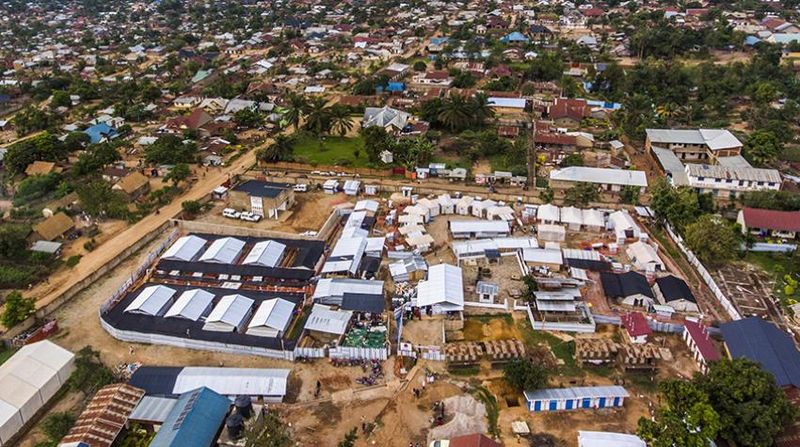
The DR Congo Ebola outbreak has more than doubled in just three months, passing 11,000 cases and 5,400 deaths, the World Health Organization said on Tuesday — and the statistic that should stop every reader cold is not the total. It is the age of the dead. Children account for more than a quarter of all confirmed cases and a third of all deaths, and among children under five who catch this virus, seven in ten have died.
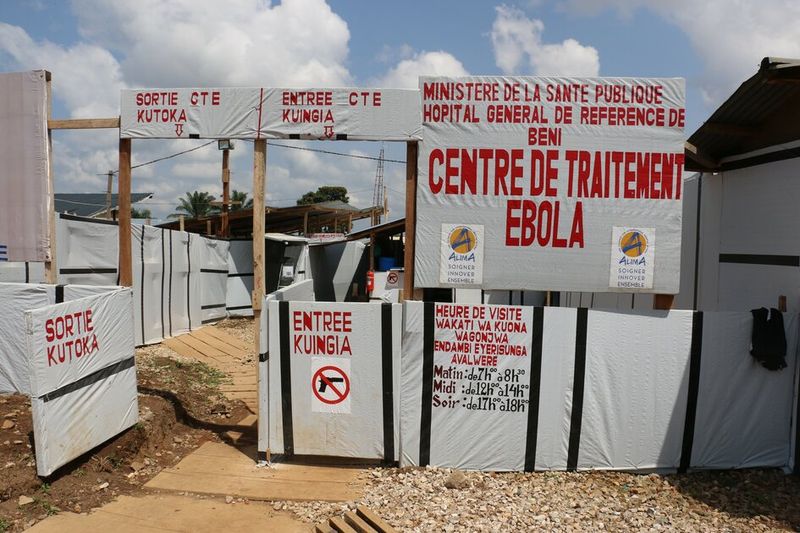
Opening the third meeting of WHO’s Emergency Committee on the Bundibugyo virus epidemic, Director-General Tedros Adhanom Ghebreyesus said children were “paying a terrible price” as the outbreak spread to 67 health zones across eight provinces. Between 400 and 500 new cases are still being reported every week, six months after the outbreak was declared on May 15. Two-thirds of confirmed deaths are happening outside Ebola treatment centres — a sign, Tedros said, that infections are being found too late for treatment to save the patient.
A record that nobody wanted
This is now the second-largest Ebola outbreak ever recorded anywhere in the world, and by far the largest in Congo’s history. The comparison is stark. Congo’s 2018–2020 outbreak in North Kivu and Ituri — at the time considered a landmark emergency that took nearly two years to end — finished with 3,481 cases and 2,299 deaths. The current outbreak passed that total months ago and is now more than three times its size. WHO’s own disease outbreak update put the count at 10,668 confirmed cases and 5,198 deaths as of November 3, a case fatality ratio of about 49 percent; Congolese government figures run slightly higher than WHO’s, a difference officials attribute to reporting dates and continuing reconciliation of the data. Reuters, analysing the trajectory, found the virus is spreading and killing at roughly twice the pace seen in the first six months of West Africa’s 2014–2016 epidemic, still the largest on record.
Why children are dying at such rates
A virus with no vaccine and no cure
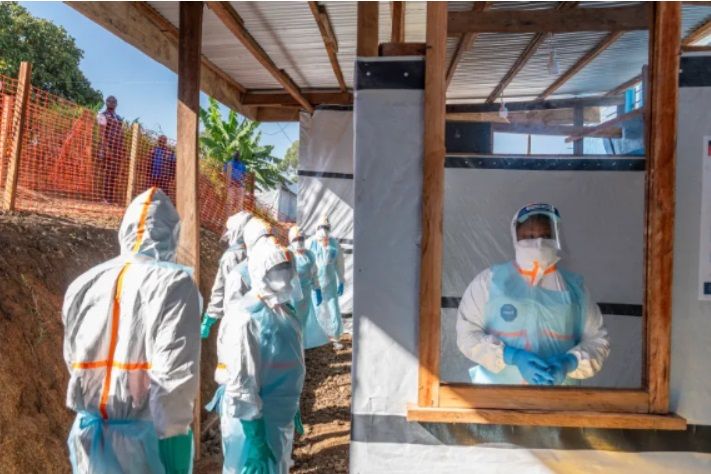
The pathogen is the Bundibugyo species of Ebola — not the Zaire species behind most previous outbreaks. That single biological fact explains much of the catastrophe. The vaccines and antibody treatments developed over the past decade target Zaire ebolavirus. For Bundibugyo, there is still no licensed vaccine and no approved targeted treatment, so care is supportive: fluids, electrolytes, oxygen, and hope. Tedros said two candidate vaccines for Bundibugyo will be added to an ongoing vaccine trial in the coming weeks — real progress, but trials take time, and results are not expected to change the course of this outbreak soon. Young children, whose bodies dehydrate fastest and who are usually cared for — and infected — at home, are the least able to survive a disease whose main defence is reaching a treatment centre early. When two-thirds of the dead never reached one, the under-five fatality rate of 70 percent stops looking like a mystery and starts looking like a map of where the response cannot reach.
Why this matters
An Ebola outbreak that doubles in three months while a fully mobilised international response is already on the ground is telling the world something uncomfortable: the bottleneck is no longer science or money alone, but access. WHO has verified more than 80 attacks on healthcare workers, patients and facilities since May. Modelling by Imperial College London’s Neil Ferguson, reported by Reuters, suggests responders may be detecting only about half of all infections — which would mean the true toll is far above the official count and transmission could continue for another year. There is genuine progress buried in the same briefing: Tedros said rapid transmission has been halted in most of the early epicentres, and laboratory testing capacity has grown from two sites to more than two dozen. The outbreak is not out of control everywhere. It is out of control exactly where armed violence, distance and fear keep sick children at home until it is too late.
The risk beyond Congo’s borders is not theoretical
“The risk beyond the DRC’s borders is not theoretical,” Tedros told the committee. Kenya has reported nine cases linked to an imported case, including two deaths, and Nigeria has reported one imported case. That is why the Emergency Committee — the body that advises WHO on whether an outbreak remains a public health emergency of international concern — is meeting for a third time. Tedros also warned against blanket travel restrictions, which he said hinder the response and discourage countries from reporting cases quickly. The regional stakes are rising at the same moment the United States has lost its measles elimination status after 26 years, a reminder that hard-won disease control can unravel on several fronts at once when vaccination, surveillance and trust weaken together.
What happens next
Three things will decide whether this outbreak bends down or becomes the largest Ebola epidemic in history. First, whether the two Bundibugyo vaccine candidates entering trials produce usable results fast enough to protect health workers and ring-fence new clusters. Second, whether security guarantees can open the health zones where transmission is still accelerating — epidemiologists are blunt that no vaccine outperforms safe access. Third, whether case-finding improves enough to pull that two-thirds figure down: every patient found in the first days of illness is a patient with a fighting chance, and a chain of transmission cut short. For now, at 400 to 500 new cases a week, the arithmetic points the wrong way. The world has contained Ebola before by treating it as an emergency from the first case. Congo’s numbers are what it looks like when the emergency outruns the response — and when the people paying for the gap are, disproportionately, children under five.
Related coverage: Congo Ebola Cases Pass 10,000 in Fastest-Growing Outbreak Ever Recorded, With 4,887 Dead · Congo Ebola Death Toll Passes 5,000 in Country’s Deadliest Outbreak
Sources
- UN News, November 17, 2026 — WHO Director-General Tedros Adhanom Ghebreyesus opens the third Emergency Committee meeting on the Bundibugyo epidemic: more than 11,000 cases and 5,400 deaths, children accounting for over a quarter of cases and a third of deaths, spread to 67 health zones across eight provinces.
- Reuters, November 17, 2026 — reporting on the outbreak’s record pace: spreading and killing at roughly twice the pace of the first six months of West Africa’s 2014–2016 epidemic, with Imperial College London modelling suggesting only about half of infections are being detected.
- WHO Disease Outbreak News, November 6, 2026 — disease outbreak update reporting 10,668 confirmed cases and 5,198 deaths as of November 3, a case fatality ratio of about 49 percent.