CFB Wainwright fire: a serious incident during training at Canadian Forces Base Wainwright in east-central Alberta on Saturday afternoon, October 17, killed and injured Canadian soldiers and started a major fire that high winds pushed beyond the base fence. Defence Minister David McGuinty confirmed fatalities and injuries on Saturday evening but gave no toll and no cause. Global News, citing multiple Canadian Armed Forces sources, reported at least seven people killed and dozens injured, and said a live-fire training exercise struck a gas line or gas well and ignited an explosion — a sequence officials have not confirmed.
Wainwright / A Saturday-afternoon training fire, a code orange in Edmonton — and a death toll Ottawa has not yet given
Track it live: follow military developments worldwide on the Signal Post News Live Global Wars Tracker.
WAINWRIGHT, Alberta — The call for help came at about 4 p.m. local time on Saturday. Wainwright RCMP were called to a fire in a training area inside Canadian Forces Base Wainwright, in east-central Alberta about 210 kilometres (130 miles) southeast of Edmonton, according to CNN and CBC News, which followed the response through the evening. Driven by high winds — gusts reported at up to 100 km/h — the fire spread rapidly, crossed the base fence into the surrounding Municipal District of Wainwright, and drew firefighters from multiple jurisdictions. The municipality said no evacuation orders were issued for the town of Wainwright, home to about 6,600 people just north of the base.
By about 9 p.m., Defence Minister David McGuinty confirmed what officials had been circling for hours. "I'm saddened to share that there have been both fatalities and injuries as a result of an incident" at the base, he told reporters in Ottawa, in remarks carried by Reuters. A major fire was still burning on Saturday evening, he said, adding: "I cannot recall an incident like this in recent memory." He did not say how many people were killed or injured, or what caused what he called a "tragic" situation, describing the response as "very, very active and delicate." The Canadian military and the RCMP are investigating.
What Global News reported — and what officials have not confirmed
The only account of the mechanism and the toll so far comes from Global News, which cited multiple Canadian Armed Forces sources: at least seven people killed and dozens injured — its running tally put injuries at more than 24 — after a live-fire training exercise struck a gas line or gas well, triggering an explosion that ignited the fire. Those figures and that sequence have been repeated by other outlets, but every one of them traces back to the same Global News sourcing, and neither the Department of National Defence nor the RCMP had confirmed a death toll or a cause as of Sunday's early hours. Readers should hold the distinction firmly: deaths and injuries are officially confirmed; the number seven, and the gas-line account, are attributed reporting awaiting official confirmation — the standard sequence in a mass-casualty incident, where tolls are released only after next of kin are notified.
A code orange 210 kilometres away
The scale of the casualty flow became clear in Edmonton. The Wainwright Health Centre was, in the words of Dr. Warren Thirsk, an emergency department physician at Edmonton's Royal Alexandra Hospital, "completely overwhelmed," and patients were diverted to hospitals across the capital. Edmonton declared a code orange — the disaster protocol for an influx of patients — as casualties arrived from the base. "It is more patients than any of us care to count right now. It's a disaster," Thirsk told CBC. "It's a one in every 15 to 25-year disaster." The Shock Trauma Air Rescue Service (STARS) dispatched helicopters from its Edmonton and Saskatoon bases as part of the multi-agency response, and Saskatchewan Premier Scott Moe said his province deployed resources to assist at the base. By about 11 p.m., authorities said the fire was being held and property and critical infrastructure were protected; the Municipal District of Wainwright later said the fire was contained as of 10:48 p.m. MT, with crews continuing to monitor the area. Residents were asked to avoid the incident area, keep roads clear, and stay away from the Wainwright Health Centre except for critical needs.
The country's leaders respond
Prime Minister Mark Carney posted on social media that "a serious incident creating a major fire has occurred at CFB Wainwright, in Alberta," adding: "Our thoughts are with all the brave women and men affected. We are working closely with the Government of Alberta and local authorities." Alberta Premier Danielle Smith described the fire as "significant and tragic" and said it was affecting many military personnel. General Jennie Carignan, the chief of the defence staff, said the Canadian Armed Forces are fully engaged with federal, provincial and local authorities, and that "our priority remains the welfare of our members, their families and their community." Opposition leader Pierre Poilievre said he had spoken with both McGuinty and Carney, thanked emergency responders, and wrote: "Pray for Wainwright, everyone." The grief reached the rink, too: Edmonton Oilers winger Zach Hyman, visibly shaken after a game in Utah, told reporters the whole locker room was thinking of the families in Wainwright.
The base at the centre of it
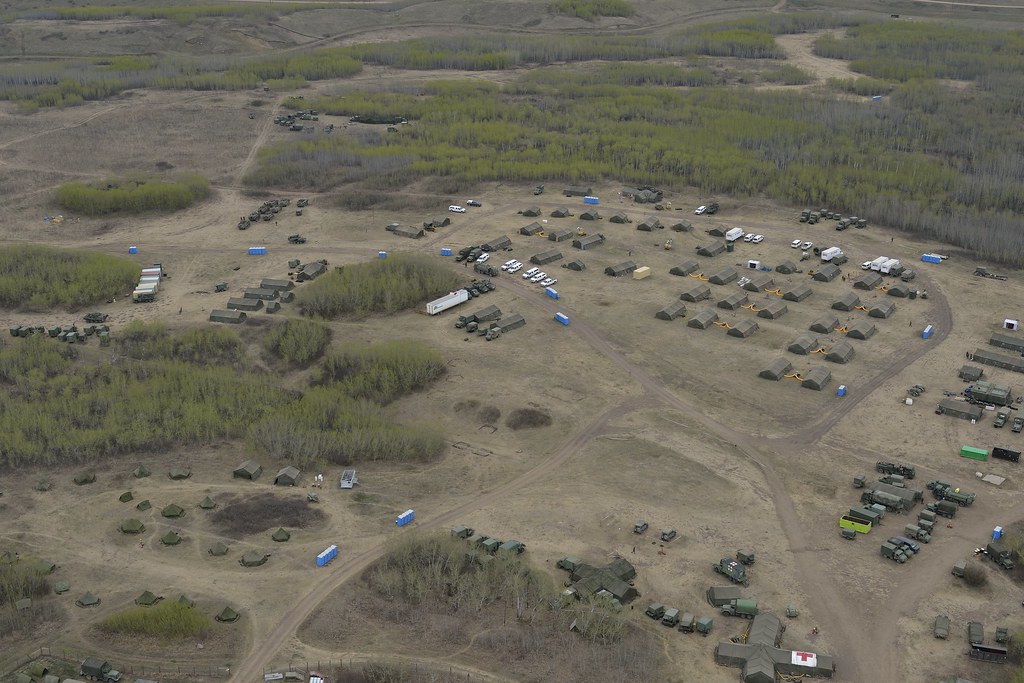
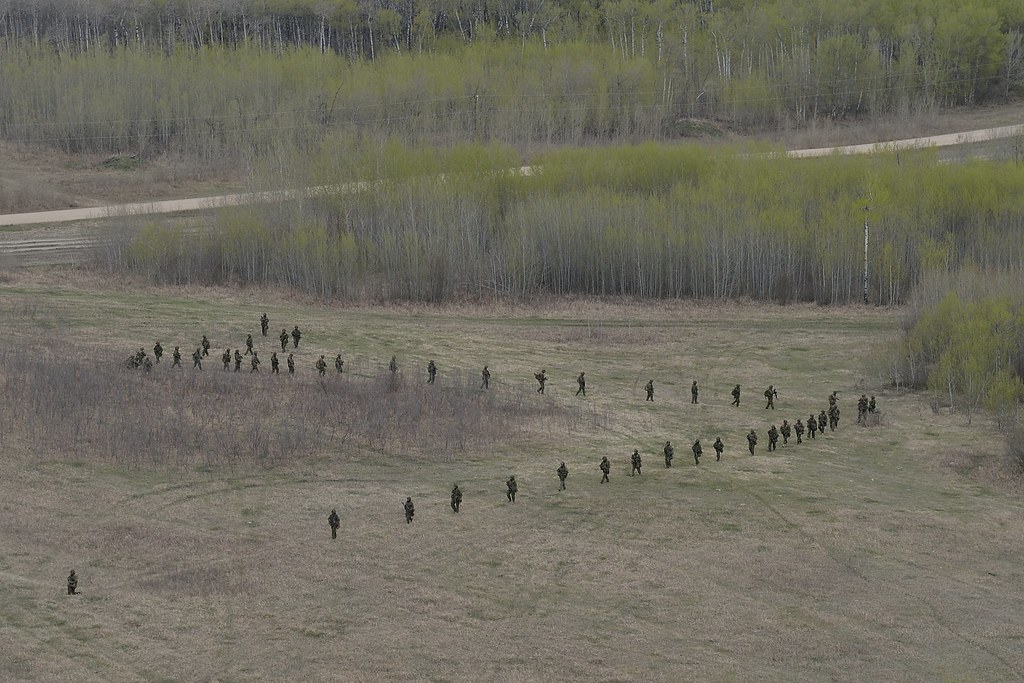
CFB Wainwright, founded in 1940, is one of the Canadian Army's principal training bases. It houses the Canadian Manoeuvre Training Centre, which runs realistic battlefield exercises, and the 3rd Canadian Division Training Centre, and it serves as the training ground for army field-force units based in Edmonton. Its signature event is Exercise Maple Resolve, the annual brigade-level validation exercise that draws thousands of Canadian and allied soldiers to its training area. The base had 1,310 military and civilian personnel stationed there as of the 2021 census. That is what makes Saturday's incident so jarring: this was not a remote outpost or an unfamiliar range, but the army's home classroom — the place where Canadian soldiers are meant to rehearse danger under controlled conditions so that the real thing is survivable.
Why this matters
Training is where a peacetime army accepts risk on purpose. Live-fire exercises exist because simulation has limits: soldiers who will one day work around real explosives, real vehicles and real fuel have to learn their trade around the genuine articles, and every army that trains seriously carries a ledger of training deaths it would rather not read aloud. The question after Wainwright is not whether training should be dangerous — it is whether the specific dangers on that specific range were the ones the exercise was designed to manage. If the Global News account is confirmed, investigators will have to explain how live ordnance and an underground gas line or well came to occupy the same piece of ground at the same moment. Alberta's energy infrastructure is woven through the province's landscape, and Wainwright's training area sits in oil-and-gas country; the intersection of military ranges and civilian energy infrastructure is a known planning problem, and Saturday is what it looks like when it fails.
The second failure, if the evening's reporting holds, was distance. Wainwright's local health centre was overwhelmed within hours, and the casualty chain ran 210 kilometres to Edmonton, by road and by STARS helicopter, into a code orange. Rural bases are deliberately far from cities — that is what makes them good places to train — but the same remoteness turns a mass-casualty event into a logistics operation. Canada is in the middle of expanding and accelerating army training as NATO allies rebuild readiness; the alliance's eastern flank, where Lithuania sent residents to shelters this weekend over an unidentified object, is a reminder of why that tempo is rising. Higher tempo means more live-fire days, more soldiers on more ranges — and it raises the premium on the unglamorous systems, range surveys, infrastructure maps and medical evacuation plans, that keep rehearsal from becoming the casualty event itself. Britain's army chief was making a version of that readiness argument in public just days ago, in remarks covered in our report on General Sir Roly Walker's warning that the public must prepare for war.
There is also a transparency question, and it cuts both ways. Ottawa's refusal to give a toll on Saturday night is defensible and conventional: families learn first, from a knock on the door, not from a news chyron. But the vacuum was filled within hours by a single-source figure — seven dead — that has already hardened into headlines, an encyclopedia entry and a public record that will be difficult to correct if the official count differs. The government's own communications, meanwhile, leaned on the word "incident" for an event its own minister called unlike anything in recent memory. Both habits — the sourced leak and the official euphemism — are now part of the record the investigation will be judged against, much as the alliance's rapid, specific public accounting in the Romanian drone shootdowns this weekend showed how quickly a military can speak when it chooses to.
What happens next
The RCMP and the Canadian Armed Forces are investigating what happened in the training area, and a formal military inquiry into the cause is expected to follow. The official death toll and the identities of the dead are expected to be released once next-of-kin notifications are complete — the announcement that will convert Saturday's attributed figures into confirmed fact, or correct them. Watch three things: whether officials confirm the gas-line account, which would move the story from a training accident to an infrastructure and range-safety failure; whether the code-orange response in Edmonton is stood down as the injured are accounted for; and whether training at Wainwright — and live-fire exercises elsewhere in Canada — are paused while investigators work. For a town of 6,600 that hosts the base, and for the families waiting on names, the weekend's questions are simpler and heavier than any of that. This article will be updated as officials confirm the toll and the cause.
Sources: Reuters (Defence Minister David McGuinty's Ottawa remarks, Oct 17); CNN (fire timeline, code orange in Edmonton, base background); CBC News (live updates, Dr. Warren Thirsk); Global News via multiple Canadian Armed Forces sources (reported toll and live-fire/gas-line account — not yet officially confirmed); Associated Press / AAP (Carney and Smith statements); Municipal District of Wainwright (fire crossed the base fence; containment at 10:48 p.m. MT).