Lithuania drone air alert: residents in central and northern Lithuania were told to go to shelters for about an hour on Sunday morning, October 18, after an unrecognized flying object was tracked across the country — NATO air-policing fighters were summoned, Kaunas airport was closed, neighbouring Latvia raised and then dropped its own warning, and, the same morning, Poland sent a search team into the fields south of Lublin to look for the possible crash site of a second unidentified object.
Šiauliai to Lublin / An hour in shelters in Lithuania, a search team in a Polish field — and still nobody can say what was in the sky
Track it live: follow this conflict and NATO's eastern flank on the Signal Post News Live Global Wars Tracker and the Ukraine war map.
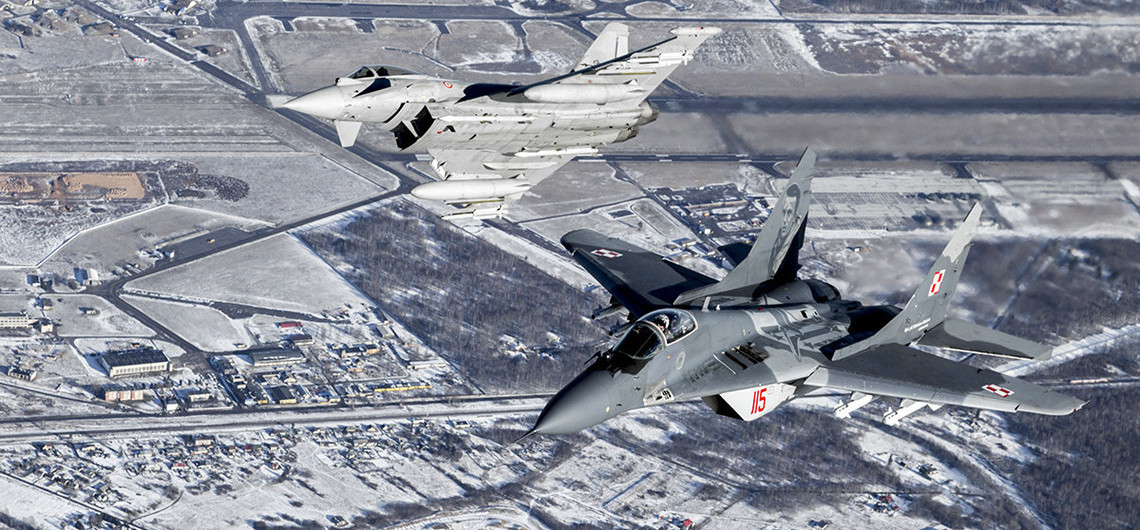
VILNIUS, Lithuania — The warning came on a Sunday morning. Lithuania's army and its National Crisis Management Centre told residents in the central and northern parts of the country to go to shelters after an unrecognized flying object was detected, Reuters reported. A "red" air warning — the highest level — was in effect for about an hour. While it lasted, NATO air-policing fighters were summoned to the area and Kaunas airport, the country's second airport, was closed, the crisis centre said. The alert was declared in Šiauliai and Panevėžys counties, in the country's north. Then, after nearly an hour, the National Crisis Management Centre lifted it. No interception had been announced, no wreckage displayed, and the object itself remained unidentified.
Radar saw it. Nobody could see it.
The fullest official account came from Defence Minister Robertas Kaunas, speaking to the public broadcaster LRT. The object entered Lithuanian airspace and was tracked by both Lithuanian radars and the radars of the summoned fighter jets, he said. But Lithuania is not at war, and in peacetime a target must also be identified visually before a decision can be made to destroy it. Fog and cloud prevented the pilots from seeing the object clearly, Kaunas said, so no shot was attempted. Warnings were issued for the Kaunas, Šiauliai and Biržai districts. The object was last detected near Biržai, close to the Latvian border, and that area will be surveyed, the minister said. It was possible — but unconfirmed — that the object had flown on into Latvia. The military would assess whether it may instead have crashed, and whether anything on the ground poses a danger, and officials may review the procedures for handling similar cases, he added.

Latvia warned, then stood down
Lithuania was not the only country that moved. Latvia, its northern neighbour, issued a "yellow" air warning in regions bordering Lithuania during the same period, citing a "possible threat," Latvia's army said, and then dropped it. The sequence fits the Lithuanian defence minister's account of an object last tracked heading north toward the Latvian border — but neither country has confirmed that the Latvian warning and the Lithuanian object were the same thing, and neither has identified what was tracked. Reuters noted the wider pattern behind the morning's alerts: Ukrainian drones have repeatedly entered NATO airspace in the Baltic region in recent months, and Kyiv has said they were steered off course by Russian signal jamming. That context is reported here as context only. No source reviewed on Sunday attributed this object to Ukraine, to Russia, or to anyone else.
Poland, the same morning: a search for something that may not have fallen
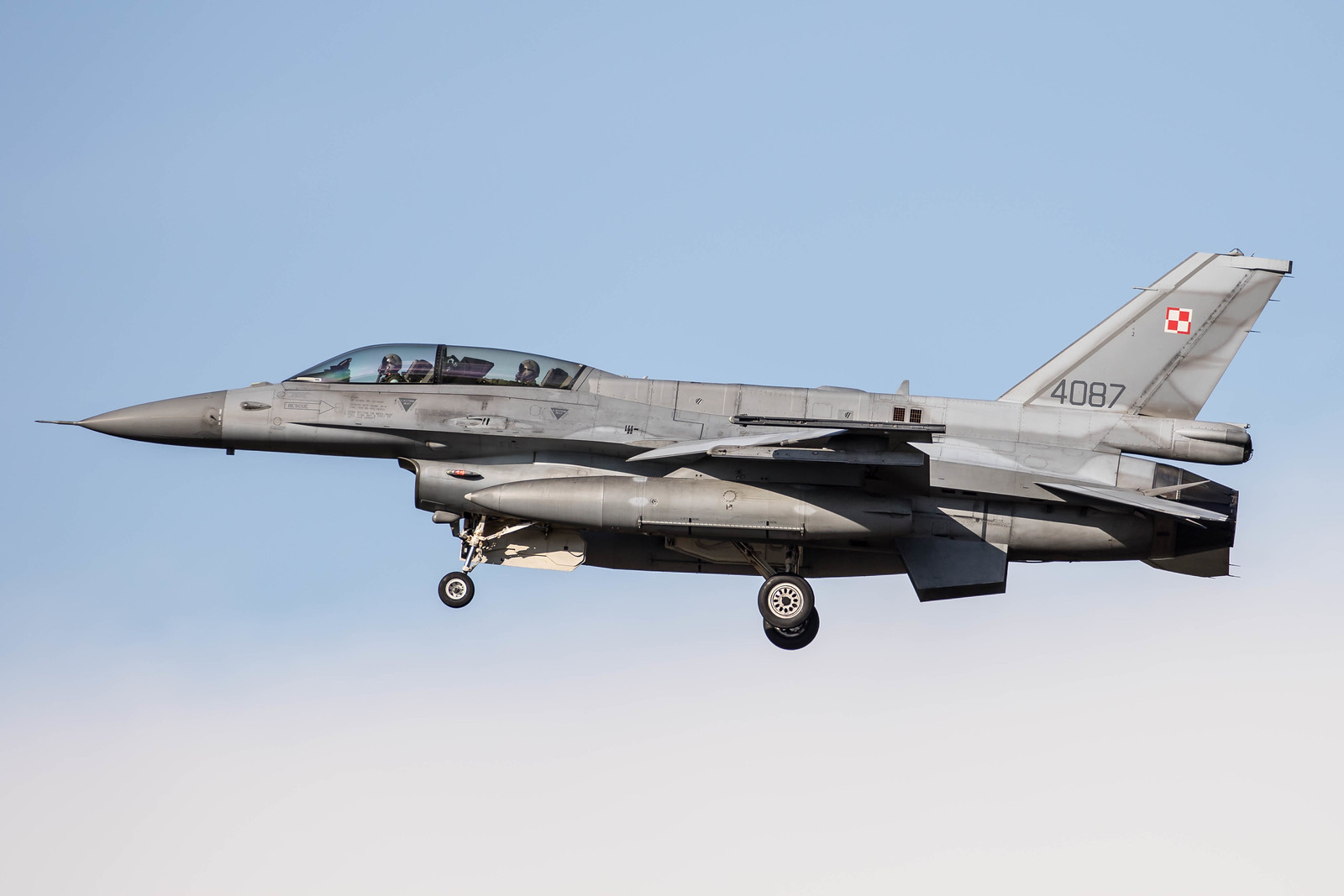
Further south, a third NATO state spent Sunday morning on the same kind of problem. Poland's army said it was verifying a possible violation of its airspace by an unidentified object, in a post on X reported by Reuters. "So far, there has been no confirmation of a violation of the airspace," the army said. It had nonetheless deployed a ground search-and-rescue team in the south of the Lublin region, in eastern Poland near the Ukrainian and Belarusian borders, to search for the object's possible crash site. Poland has been here repeatedly during Russia's war on Ukraine — scrambling jets during strikes on western Ukraine, closing the Lublin and Rzeszów airports as a precaution, and, in earlier incidents, recovering drone wreckage on Polish soil. Sunday's statement was careful to the point of understatement: a possible violation, unconfirmed, and a team in the fields looking for evidence either way.
Established, reported, and not established
Established: Lithuania issued a red air warning on Sunday morning, October 18, told residents in central and northern areas to shelter for about an hour, summoned NATO air-policing fighters and closed Kaunas airport; the alert covered Šiauliai and Panevėžys counties and was then lifted. Latvia issued and dropped a yellow warning in border regions in the same period. Poland's army said it was verifying a possible, unconfirmed airspace violation and deployed a search team south of Lublin. Reported: Lithuania's defence minister said the object was tracked on Lithuanian and fighter radars, could not be visually identified in fog and cloud, was last detected near Biržai, and may — unconfirmed — have crossed into Latvia. Not established: what either object was, where either came from, whether the Lithuanian and Polish cases are connected, whether anything crashed in either country, and whether any state was responsible. No casualties or damage were reported in either country in the reporting reviewed.
Why this matters
Sunday's alerts are the eastern flank's new routine made visible in a single morning — and they expose the gap at the centre of it. Lithuania's airspace has been crossed before: in September, Italian Eurofighters flying NATO's Baltic mission shot down a drone that had entered from Belarus, the first such shootdown over Lithuania, after residents around Vilnius and Kaunas were warned to find shelter. That engagement worked because the pilots could see their target. A month later, in autumn fog, the same system produced the opposite outcome: radar contact, fighters airborne, an airport closed, two counties in shelters — and no lawful shot available, because the one thing the rules require, a visual identification, was the one thing the weather withheld. The alliance has already recognised the problem in principle: after the 2026 Ankara summit, NATO redesignated Baltic Air Policing as Baltic Air Defence, a change NATO said would speed up decisions to engage objects that threaten the population, such as drones. Sunday is what that redesignation has to solve in practice — not detection, which worked, but the authority to act on a radar track alone, in a country at peace, over towns full of people who have just been told to shelter. Multiply that dilemma by Poland's unconfirmed object and Latvia's stood-down warning, and the morning's real significance emerges: three allied states spent it managing aerial uncertainty, and uncertainty itself — cheap for whoever or whatever generates it, expensive for everyone who must respond — is becoming a standing cost of the war's edge.
Both sides: shoot on radar, or hold fire until you can see it?
The case for faster authority to fire. Frontline governments argue that visual-identification rules written for peacetime air policing are being outpaced by one-way drones that fly low, slow and in bad weather precisely when they cannot be seen. On that view, an object that will not identify itself, inside sovereign airspace, during an active war next door, has already made the identification that matters — and every unanswered crossing invites the next one. The Baltic Air Defence redesignation, with its promise of faster engagement decisions, reflects exactly that argument. The case for restraint. The counter-argument is written in the same Sunday statements: the Lithuanian object remains unidentified, and Latvia's warning was for a "possible threat" that was never confirmed. Shooting on radar alone over populated country risks destroying a civilian aircraft, a weather system artefact, a flock misread by sensors, or a stray drone whose destruction over a town could do more harm than its passage — and risks manufacturing the NATO-versus-source confrontation that a genuinely ambiguous contact may not warrant. Lithuania's minister, notably, did not blame his pilots or his rules on Sunday; he said procedures may be reviewed. That distinction — review, not repudiation — is where the alliance's argument will actually be settled.
What happens next
Three checks will decide whether Sunday becomes a footnote or a precedent. First, the ground: Lithuanian teams surveying near Biržai and Poland's team south of Lublin will either find wreckage — which would identify at least one object and likely its origin — or find nothing, leaving both cases officially unresolved. Second, the procedures: watch whether Vilnius changes its visual-identification requirement, seeks allied agreement for radar-based engagement in defined conditions, or leaves the rules untouched; any change will be read across the whole eastern flank, from Tallinn to Bucharest, where Romania shot down two drones over the Black Sea only a day earlier. Third, the pattern: if unidentified-object mornings keep recurring across several allied states at once, the question stops being about any single drone and becomes about whether NATO treats the grey zone itself — the shelters, closures and searches — as the effect an adversary, or simple wartime spillover, is reliably producing. For now, the shelters have emptied, Kaunas airport has reopened, and the sky over the Baltics is quiet. What was in it on Sunday, nobody has yet said.
Related reading: NATO jets scramble in Lithuania's September drone alert · Poland's air-raid alarms on the Ukrainian border · Live Global Wars Tracker
Sources: Reuters, Oct. 18, 2026 (shelter order, red warning, NATO fighters summoned, Kaunas airport closed, Latvia yellow warning); Daily Baltic / LRT, Oct. 18, 2026 (Defence Minister Robertas Kaunas: radar tracking, visual-identification rule, fog and cloud, Biržai last detection, possible Latvia crossing, procedures review); Reuters via Devdiscourse, Oct. 18, 2026 (Polish army X post: possible violation unconfirmed, search-and-rescue team south of Lublin). Verification note: every factual claim above is attributed to the Lithuanian army, National Crisis Management Centre, Latvian army, Polish army or Defence Minister Kaunas as reported by those outlets; the origin and identity of both objects were unestablished in all reporting reviewed, and this article asserts neither.