Delta flight emergency landing Porto
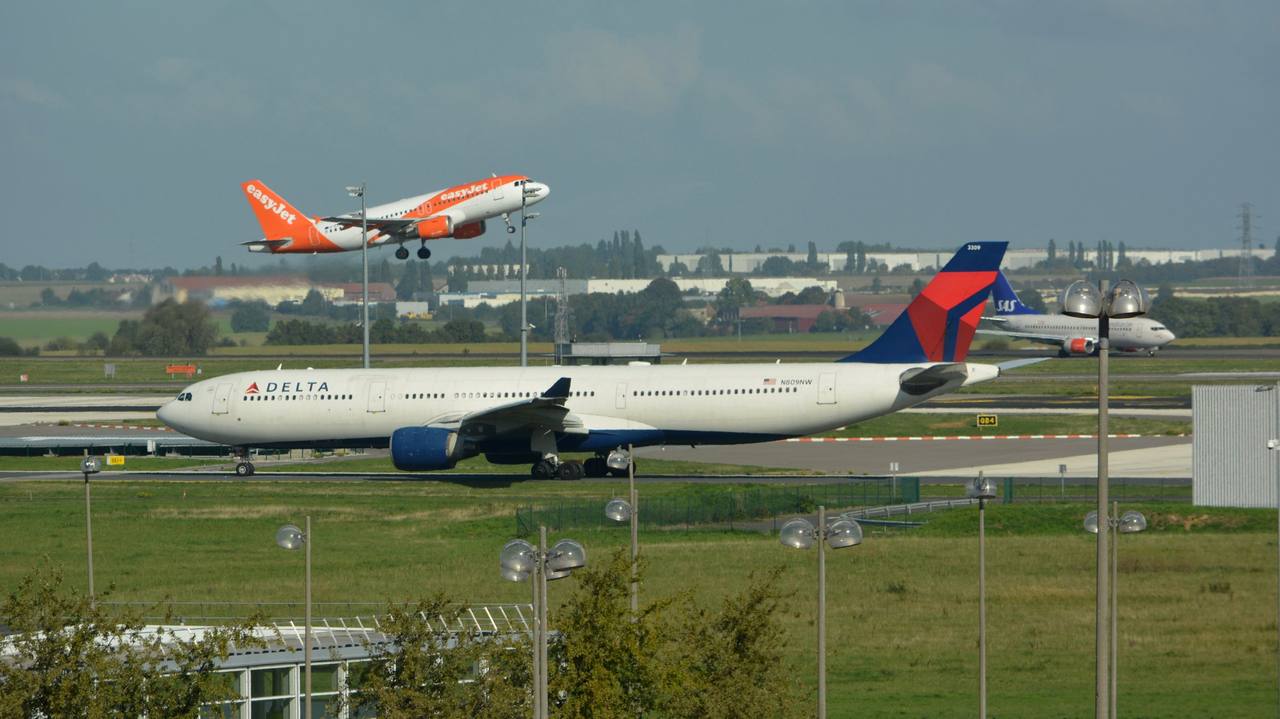
PORTO, Portugal — Delta Air Lines flight DL251, an Airbus A330-300 carrying 296 people from Barcelona to Boston, made a Delta flight emergency landing in Porto on Sunday afternoon, September 27, 2026, after smoke filled the cabin. The crew squawked 7700—the international emergency code—and diverted to Francisco Sá Carneiro Airport, landing safely at about 5:45 p.m. local time. Porto activated alert level 2 and deployed roughly 60 emergency responders. Eight passengers were treated on the tarmac, and published accounts say three or four people were taken to hospital. Everyone aboard survived.
The differing hospital totals should not be smoothed away. Reuters, citing Portuguese civil-protection authorities, reported that three people were hospitalized and eight were treated at the aircraft. The New York Post, citing Portugal's Jornal de Notícias, reported four hospitalizations—including one crew member—and said 12 people received oxygen during the flight. The same Portuguese reporting said two men reached São João Hospital's emergency department with mild respiratory symptoms from smoke inhalation and were stable. Those accounts may reflect updates taken at different moments, but no final reconciliation had been published when this article was prepared.
What happened aboard DL251
The Delta Barcelona–Boston smoke cabin timeline
Flight DL251 departed Barcelona El Prat at about 3:15 p.m. local time, or 1315 GMT, for what was scheduled as an approximately eight-and-a-half-hour transatlantic service to Boston Logan. Roughly two and a half hours into the journey, while the aircraft was over northern Spain and approaching the Atlantic portion of its route, the crew reported smoke in the cabin and a mechanical issue. The A330 turned west toward Porto rather than continuing into a long ocean crossing.
Delta characterized the diversion as a response to a mechanical issue. Portuguese emergency authorities confirmed that smoke in the cabin prompted the landing. Those statements overlap, but they do not identify the component that produced the smoke or odor. At publication time, the source remained unconfirmed and an investigation was open. It would be premature to label the event an electrical fire, an air-conditioning fault or any other specific failure without inspection findings.
DL251 squawk 7700 and the Francisco Sá Carneiro Airport emergency
Setting transponder code 7700 tells air-traffic control that an aircraft has a general emergency and needs priority handling. It does not diagnose the problem. In this case, it helped clear a rapid path into Porto while the airport brought fire, medical and operational teams into position. The level-2 alert and deployment of around 60 responders were proportionate to a widebody carrying nearly 300 people with reported smoke aboard.
The aircraft landed without a fatality. Emergency crews evaluated passengers on the tarmac, and the most serious publicly described symptoms were mild respiratory effects. Passengers then faced the less dramatic but still costly aftermath: the continuation to Boston was rescheduled for the following day, while travelers spent the night in Porto without access to their checked baggage. Missed connections, medication packed in checked luggage and disrupted hotel or work plans can turn a technically successful diversion into a long personal emergency.
Why this matters
A Delta A330 emergency landing in Portugal before the Atlantic crossing
Smoke or fumes in an aircraft cabin is among the emergencies crews are trained to treat with unusual urgency because the source may be electrical, hidden behind panels or moving through ventilation ducts. Smoke can impair vision, breathing and judgment quickly. A smell that initially seems minor can remain benign—or it can be the first warning of a fire developing out of sight. From the cockpit, the safe assumption is not that time will solve the problem.
That is why the decision to squawk 7700 and land a fully loaded widebody at the nearest suitable airport was the textbook call. Before an Atlantic crossing, crews still have large runways and emergency services within reach. Once committed over the ocean, diversion options become farther apart and the cost of a changing emergency rises sharply. The crew did not need certainty about the smoke's source to know that pressing on toward Boston would exchange a manageable risk for a potentially unmanageable one.
Porto's response supplies the other half of the safety system. A level-2 alert is not proof that disaster was imminent; it is evidence that the airport planned for the consequences if the situation deteriorated during approach or evacuation. Around 60 responders meant medical triage, firefighting capacity and ground coordination were ready before the A330 arrived, rather than being assembled after passengers stepped onto the runway.
The numbers in context
296 aboard, single-digit hospitalizations and no deaths
The essential result is easy to overlook amid the emergency language: 296 people were aboard, no one was killed, and the reported number admitted to hospital remained in the single digits. That is what a functioning safety chain looks like—detection, declaration, diversion, prepared ground response and medical evaluation—before an uncertain problem becomes a catastrophe.
The treatment figures still matter. Smoke inhalation can cause symptoms that develop after exposure, and oxygen administered during flight suggests the episode was more than a stray odor noticed by one person. At the same time, the available record does not establish a cabin fire or widespread severe injury. The responsible description sits between those extremes: a serious smoke event, a successful emergency landing and limited reported injuries whose final count was still inconsistent across sources.
Three odor or smoke events in weeks: pattern or coincidence?
DL251 comes a little over a month after a Delta flight bound for Fort Lauderdale made an emergency landing in Atlanta over a smoky smell, according to the New York Post. It also follows an Alaska Airlines flight from Los Angeles to Honolulu that reported an unknown odor on September 24 and left several people ill, as PEOPLE reported. Three events in a short period naturally invite a question about maintenance and cabin-air systems.
They do not, by themselves, prove a common defect or an industry trend. Odor reports are relatively common in commercial aviation, usually end without serious injury and can originate from very different systems—from an overheated component to residue entering an air supply. Different airlines, aircraft and causes cannot be merged into a single pattern merely because the symptoms sound similar. The cluster is a reason for scrutiny, not a diagnosis.
Investigators will therefore look for specificity: aircraft registration and maintenance history, fault messages, component condition, cabin reports, air-system data and whether any material showed heat damage. If the three events share no hardware, procedure or supplier, coincidence remains the more plausible conclusion. If they do, the meaning changes quickly.
Who wins, who loses
Passengers safe, but diverted and stranded in Porto
Passengers are the clearest winners on the question that mattered most: the aircraft landed safely before crossing the Atlantic. They are also the immediate losers in time, money and control. An overnight disruption without checked bags can mean missed onward flights, lost reservations, replacement clothing and medical essentials, and uncertainty over when a journey will resume. Safety and inconvenience are not competing verdicts; both can be true.
Delta absorbs the operational cost of grounding an A330 for inspection, rebooking nearly 300 people, arranging accommodation and repositioning crews and equipment. It also faces reputational pressure from a second smoke-related diversion in a matter of weeks, even though no evidence yet links the two. The distinction between repeated headlines and a repeated cause will be central to the airline's response.
Porto's emergency services are the quiet winner. Their role becomes visible mostly when something goes wrong, but the safest outcome is precisely the one that produces no dramatic footage: responders deploy, the aircraft lands, passengers are assessed and the runway returns to normal operations. Preparedness looks uneventful after it works.
What happens next
Inspection, rebooking and possible EU261 claims
Portuguese aviation authorities and Delta maintenance teams will inspect the aircraft and its systems. The first question is local: what produced the smoke? Investigators may examine electrical equipment, galleys, avionics, ventilation pathways and the air-conditioning packs that pressurize and circulate cabin air. If the problem is isolated to one component, the remedy may be repair and a return to service after testing. If a common or systemic component is implicated, Delta and the manufacturer could order targeted checks across similar aircraft. That is a scenario, not a reported fleet action.
Passengers also have rights because the flight departed Barcelona, inside the European Union. EU261 generally covers flights leaving an EU airport regardless of the operating airline. Delta's immediate duties can include care during a long delay—meals, accommodation when an overnight stay is necessary, transport between the hotel and airport—and rebooking or reimbursement under the regulation's conditions. Fixed cash compensation is more fact-dependent: an airline may avoid that payment if it proves extraordinary circumstances that could not have been prevented with reasonable measures, while an ordinary technical defect may not automatically qualify. Travelers should keep receipts and the airline's written disruption notice rather than assume every claim will be identical.
The continuation to Boston was scheduled for the next day. That resolves the itinerary only if the substitute aircraft, crew and baggage operation all align. For Delta, the practical test is how quickly it reunites passengers with checked bags and provides clear individual rebooking information, not merely when a replacement flight appears on the board.
Whether regulators examine the recent cabin-air cluster
Aviation regulators may compare this event with other recent smoke and odor reports, but comparison should follow evidence rather than headlines. A shared component, maintenance procedure or failure mode could justify broader guidance or inspections. Unrelated events would support the less dramatic conclusion that several independent problems occurred close together in a large global system.
The most useful next facts will be technical, not rhetorical: the aircraft's inspection report, Delta's account of the failed system, any findings by Portuguese investigators, and the reconciled medical total. Until those arrive, the firm conclusion is narrower. The crew recognized a potentially fast-moving risk before an ocean crossing, declared an emergency and put 296 people safely on the ground.
Sources
- Reuters: Portuguese emergency-response account, three hospitalizations and eight people treated on the tarmac
- CNN: flight route, diversion and Delta statement
- New York Post: Portuguese press account of four hospitalizations, oxygen treatment and passenger disruption
- PEOPLE: medical reporting and context on the September 24 Alaska Airlines odor event