Boeing 737 MAX software glitch
Boeing 737 MAX software glitch737 MAX missed approach software issueBoeing 737 MAX flight computer glitchSouthwest United refuse Boeing 737 MAX deliveriesFAA Boeing software investigation737 MAX 10 certification delayBoeing 737 MAX landing navigation failure737 MAX vertical navigation problem
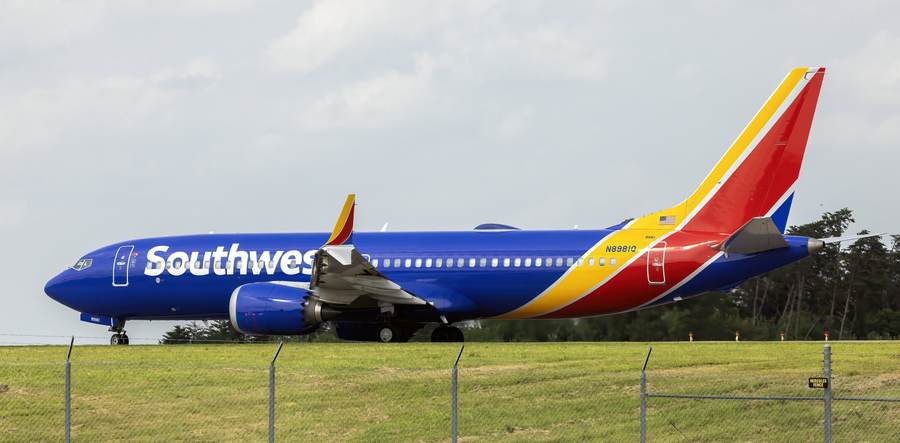
The Boeing 737 MAX software glitch is limited in scope but large in consequence. Boeing told all 737 operators in late August 2026 that pilots could experience reduced automation in a specific landing scenario. The company publicly confirmed the disclosure on Sunday, September 27, after The Wall Street Journal reported the defect from Boeing documents and industry accounts.
The trigger is unusually specific. A crew must first execute a missed approach, or go-around; then modify the preprogrammed flight path; then prepare for a subsequent approach. In that chain, automated vertical navigation—VNAV—can disengage and the aircraft can fall back to simpler pitch-control modes such as level change or vertical speed. Crews may need extra procedural steps to restore automated guidance, or fly manually while low and busy. This is not the same as losing every autopilot function, and it does not affect ordinary landings.
Missed approaches are routine safety maneuvers, occurring thousands of times a day worldwide. The important distinction is that this failure requires a narrower sequence: after going around, the crew changes the planned flight path and then prepares another approach. Low altitude, poor weather and the workload of reconfiguring the jet are what turn an unusual software edge case into a serious review question.
CBS News reporting republished by WSGW identified the affected flight-management-computer operating systems as versions 14 and 14.1. Boeing advised operators to reset the system after a missed approach as a precaution. The company says pilots are trained to land without VNAV and that existing procedures safely cover the condition while engineers build a permanent update.
Why this matters: a narrow defect meets a wide trust deficit
On technical facts alone, this episode is not MCAS repeated. The 2018 Lion Air and 2019 Ethiopian Airlines crashes involved a flight-control system repeatedly commanding nose-down movement, killing 346 people and grounding the MAX worldwide for nearly two years. The new problem concerns loss of one layer of automated vertical guidance in a rare sequence, with other modes and manual flying available. Conflating the two would be inaccurate.
But trust is not allocated only by technical severity. Boeing enters every software disclosure carrying the institutional memory of MCAS, certification failures exposed by the crashes, years of production-quality crises and the January 2024 Alaska Airlines MAX 9 door-plug blowout. The question for regulators and airline customers is therefore not merely whether a trained crew can handle this event. It is whether Boeing's design assurance, testing and safety-review system found the right failure combinations early enough—and whether customers received enough detail soon enough to make an independent judgment.
That is the deeper meaning of the 737 MAX cockpit software update. Modern airliners are layered systems: automation reduces workload, pilots monitor it, and procedures cover failures. A defect can be both manageable and important if it removes help during a go-around, precisely when crews are reconfiguring the aircraft, communicating with air traffic control and preparing a new approach. Safety is often protected not by one perfect component but by margins. This glitch appears to narrow one of those margins.
What Boeing, airlines and the FAA have actually said
In a statement carried by Reuters, Boeing said: “We shared information with operators that reinforced existing pilot procedures for safely handling such cases. Our engineers are working on a software update to permanently address the issue.” Boeing says the condition is not a safety risk; the FAA's independent review will determine whether that judgment is sufficient. Aviation Week reported that Boeing's work is taking place under FAA oversight.
The FAA said it was aware of a potential issue in a software update for flight computers on certain MAX aircraft and was working with Boeing and airlines. The agency said it would convene a Corrective Action Review Board and take immediate action if it identifies a safety concern. That wording matters: Boeing's judgment that existing procedures are safe is a company position; the regulator's formal review is the process that will decide whether additional mandatory action is warranted.
Southwest Airlines and United Airlines have already exerted commercial pressure. According to the Journal, both asked Boeing not to deliver new MAX aircraft carrying the flawed software and requested an earlier version instead. That is not a fleet-wide grounding. It is a customer refusing to inherit an avoidable configuration problem on a newly delivered jet.
A 2028 software fix is an extraordinary timeline
Investor's Business Daily, citing CNBC, reported that Boeing's notice pointed to a permanent fix sometime in 2028. For consumer software, that horizon would sound absurd. For certified flight software, it is a reminder that changing code is only one part of the job. Engineers must define the failure condition, prove the correction does not create another hazard, test it across aircraft and avionics configurations, document the behavior, secure regulatory approval and coordinate airline installation.
Even with that burden, a wait extending into 2028 is remarkable. Analysis, rather than confirmed fact, suggests two possible interpretations. Either the defect is considered sufficiently mitigated by procedures that it ranks below other certification work, or the correction touches a deeply coupled flight-management architecture that is costly to validate. The public record does not yet establish which explanation is closer to the truth. Boeing has said it is working on the update; the FAA review may change both the timetable and the interim requirements.
The numbers: a global fleet and a concentrated financial shock
More than 2,400 MAX aircraft have been delivered around the world. That number describes the programme's reach, not the number affected; neither Boeing nor the FAA has publicly established how many jets carry versions 14 or 14.1. The distinction is essential. A programme-wide headline should not become an unsupported claim about every individual aircraft.
India illustrates both scale and uncertainty. Outlook Business reported that Air India Express, Akasa Air and SpiceJet together operate about 100 MAX aircraft and have roughly 505 more on order. A delivery freeze would therefore bite directly into growth plans in one of aviation's fastest-expanding markets. Akasa said the issue had no impact on the safety of its operations and that its aircraft continued flying under established procedures and regulatory requirements.
Investors delivered a much faster verdict than regulators. Boeing shares fell 6.9% on Monday, September 28, closing at $184.39, a 10-month low and among the S&P 500's steepest decliners, according to Investor's Business Daily. The move does not measure the glitch's safety severity. It prices the risk that certification, deliveries and cash flow could again move to the right.
Who wins and who loses
Boeing loses leverage. Every additional review consumes engineering capacity and reinforces the idea that certification milestones are contingent rather than bankable. If deliveries are paused or reconfigured, cash receipts can slip. The legal risk remains uncertain: a known defect can generate claims if it causes measurable delay, cost or an incident, but no such outcome has been established.
Airlines gain negotiating power but inherit planning pain. Southwest and United can insist on an earlier software version, stronger contractual protection or a clearer retrofit plan. Yet a delivery pause does not create substitute airplanes. Carriers that built schedules and fleet plans around MAX arrivals may face capacity and maintenance complications if handovers move.
Pilots and their unions gain a concrete workload issue to scrutinize. The relevant debate is not whether qualified crews can hand-fly. They can. It is whether training, checklists, alerts and simulator scenarios realistically prepare crews to recognize the mode change and manage it during a go-around, including at night or in bad weather. The FAA review can convert that concern into standardized interim guidance.
Airbus gains indirectly. Any Boeing delay strengthens the competitive position of the A320neo family. Yet Airbus cannot instantly absorb a major migration of orders; its own narrowbody backlog and production constraints limit how quickly airlines can switch. Passengers, meanwhile, gain from transparent review but lose if uncertainty produces schedule disruption. On present evidence, there is no basis for telling travelers that routine MAX landings are affected or that the fleet has been grounded.
MAX 10 certification now carries the strategic risk
The timing is especially difficult. The MAX 7 won FAA approval for passenger service in August 2026, while the stretched MAX 10 is still awaiting certification. A finding that the same flight-computer logic creates an unsafe condition could force more testing, documentation or redesign work into a programme already delayed by years.
A formal review can lead to several outcomes. The least disruptive would validate the current procedural workaround while approving a defined software-update schedule. A middle case could require revised bulletins, training or configuration limits before delivery. The severe commercial case would require redesign and retesting that holds up MAX 10 approval and slows handovers of other aircraft. The FAA has not announced which outcome it expects, so any precise delay estimate would be speculation.
For context on the operational cost of aviation-system failures, see our coverage of the FAA outage that grounded Northeast flights, the dispute over U.S. flight-delay compensation rules, and the capacity stakes in Qantas's Project Sunrise fleet plan.
What flyers should know
Southwest and United say their in-service fleets do not carry the affected software, and neither airline has grounded its MAX aircraft over this issue. Pilots routinely train to complete approaches and landings without automated vertical navigation. The concern is not that the airplane becomes unflyable; it is that automation can disappear unexpectedly during a demanding sequence, which is why airlines want new deliveries configured with the earlier software while the FAA reviews the fix.
What happens next
The FAA's Corrective Action Review Board is the next decision point. Watch for four things: whether the agency formally classifies the condition as a safety concern; whether it mandates an airworthiness directive or accepts Boeing's existing bulletin; whether crews receive revised procedures or training; and whether MAX 10 certification is separated from, or tied to, a permanent correction.
The core uncertainty is not whether pilots can land without VNAV. Boeing is right that they are trained to do so. The unresolved issue is whether the system can unexpectedly remove automation at a high-workload phase, how often the trigger sequence occurs, which aircraft configurations are exposed and what margin the interim reset procedure leaves. Those are questions for evidence, not reassurance or alarmism.
Boeing's long recovery has repeatedly collided with the same problem: engineering detail becomes a corporate-trust event. A rare glitch can be operationally manageable while still revealing how little room the company has left for surprise. The decisive test will not be the speed of Boeing's public response but the completeness of the FAA's review—and whether the eventual fix, however long it takes, closes the technical defect without opening another institutional one.