World · Africa · Elections
The Cape Verde presidential election 2026 ended, provisionally, the way the campaign had long suggested it might: with the incumbent far ahead. With 96.8% of polling stations counted, provisional results from the electoral commission gave President José Maria Neves 63.8% of the vote against about 31.6% for Joana Rosa — a first-round margin wide enough, if the provisional result stands, to cancel the November 29 runoff entirely. Rosa conceded on Sunday night. Her defeat closes a historic candidacy: she was the first woman to run for president of Cape Verde since independence from Portugal in 1975.
Track it live: Africa wars and conflicts tracker
PRAIA, November 16, 2026 — Cape Verdeans voted on Sunday in a presidential election that doubled as a referendum on the question that hangs over every family in the archipelago: whether a young Cape Verdean can still build a life at home, or whether the future, as for so many relatives already abroad, lies somewhere else. By Monday morning, the provisional answer from the count was continuity. Neves, 66, the candidate of the African Party for the Independence of Cape Verde (PAICV), declared victory in a live press conference carried by the public broadcaster TCV after the provisional results put him beyond reach, according to Xinhua’s report from Praia. The electoral commission’s provisional figures, reported by AFP via France 24 and Le Monde, DW and other outlets, stood at 63.8% for Neves with 96.8% of polling stations counted. Joana Rosa, the lawyer and former justice minister backed by the opposition Movement for Democracy (MpD), took about 31.6% and conceded on Sunday night, Cape Verde time. Every figure in this article is provisional until the final official count and formal declaration, which are expected in the coming days — and the distinction matters, because the legal consequence of the result turns on it: a candidate who clears 50% in the first round wins outright, so if the provisional result stands, the runoff scheduled for November 29 will not be needed.
The scale of the win deserves a moment of attention before the history does. Neves won the presidency in 2021 with just over 51% of the vote — a working majority, narrowly earned. A provisional 63.8% is something else: not a squeak but a settlement, delivered in an election where the opposition had framed the vote as a chance to install a counterweight at the top of the state and where the challenger’s candidacy itself was the story. Analysts had tipped Neves as the favourite, Reuters reported before polls closed, but favourites in Cape Verde’s fluid two-party system do not usually win by thirty points. That they did so this time, provisionally, says something about how voters weighed the choice in front of them: between a president who promised cooperation across a newly flipped parliament and a challenger who asked the country to imagine a different kind of presidency altogether.
What happened on election day
Polls opened at 8 a.m. local time on Sunday, November 15, and closed at 6 p.m. (7 p.m. GMT), across the nine inhabited islands and in the diaspora polling stations that are a structural feature of every Cape Verdean election. Six candidates stood. Alongside Neves and Rosa, the ballot carried Antero Tavares, Casimiro Pina, Gilson Alves and Loisito Sousa. Alves, 45, a surgeon, ran the race’s most insurgent campaign, promising to fight corruption, allow gun ownership and restore the death penalty, the Associated Press reported — positions far outside the archipelago’s political mainstream, in a country that abolished capital punishment in the nineteenth century and has not carried out an execution since 1835. The minor candidates divided the remaining few points of the provisional count between them; the election, from the first returns, was a two-person race, and then very quickly a one-person one.
The electorate itself tells the country’s defining story in two numbers. The National Elections Commission (CNE) registered about 419,000 voters — roughly 343,000 at home and about 76,000 abroad. Set that against a resident population of around 500,000, and then against the harder truth that more Cape Verdeans live in the diaspora than live in Cape Verde at all, in Boston and Brockton, in Lisbon and Rotterdam and Luxembourg, and the arithmetic of this election comes into focus. The voters who queued on Sunday were deciding for a nation a large share of which was not in the queue — because it had already left, or because leaving is the plan. Emigration and youth jobs were the central campaign issues, Reuters and AP both reported, alongside housing, healthcare, education and wages: the everyday prices of staying.
The historic first: Rosa and 51 years without a woman on the ballot
Joana Rosa lost this election by a wide provisional margin, and she also made it historic, and both facts will be in the first paragraph of every account of it. Rosa, 61, is a lawyer who served as justice minister from 2021 to 2026. Backed by the MpD, she became the first woman to run for president of Cape Verde since independence in 1975 — a sentence that carries its own indictment, since it means that for fifty-one years, through nine presidential contests in one of Africa’s most stable democracies, no woman had ever appeared on the ballot for the head of state. Her campaign ran on creating opportunities at home to slow emigration, and on protecting the country from corruption, political interference and cronyism — themes pitched directly at the frustration AP captured in its reporting, in which Roselma Evora, a professor of political science and gender studies at the University of Cabo Verde, described voters who feel distant from a political class they feel does not understand their daily difficulties.
A concession on Sunday night, with the count at 96.8%, is the act of a candidate who can read a tally sheet: a gap of more than thirty points does not close in the last three percent of stations. But the meaning of Rosa’s 31.6% provisional share is not exhausted by the word defeat. She carried nearly a third of a national electorate in a race against an incumbent president backed by the party that had just won parliament, in a system where minor candidates typically fight for scraps. The barrier she broke does not reassemble itself: the next woman who runs for president of Cape Verde will not be the first, and the question Cape Verdean politics now has to answer is why it took until 2026, and whether the pipeline that produced one candidacy in half a century produces the second one faster. That is a legacy a concession speech cannot give and a landslide cannot take away.
Why this matters
A diaspora larger than the homeland
There is no other democracy quite like this one: a country whose citizens abroad outnumber its citizens at home, voting on whether the country can keep the next generation. Emigration is not one issue among others in Cape Verde; it is the economy’s shadow and its safety valve at once. Remittances from the diaspora sustain families and fund construction on every island. Departures drain the nurses, teachers and graduates the islands train. Every government in Praia governs both populations — the half-million who stayed and the larger nation that sends money home and votes from abroad — and the presidency, for all its constitutional modesty, is the one office elected by both at once. When Rosa campaigned on creating opportunities at home to slow emigration, and when Neves emphasised steadiness and cooperation, they were arguing about the same wound from different sides: she named the leaving as the problem to be solved; he asked voters to trust the hands already on the wheel while it is solved. Provisionally, by thirty points, the voters chose the wheel.
What a Cape Verdean president can and cannot do
The presidency of Cape Verde is influential rather than executive: the prime minister and cabinet govern, while the president arbitrates, promulgates or vetoes legislation, commands the armed forces in name, and embodies the state at home and abroad. That division is precisely why the election’s geometry mattered. In May 2026, the PAICV won the parliamentary elections with 37 of 72 seats, making Francisco Carvalho prime minister and ending a decade of MpD government. A Rosa presidency would have set an MpD head of state above a PAICV government — the counterweight she offered voters, with all the friction and all the checking that cohabitation implies. A Neves presidency aligns the palace with the parliament and the prime minister: smoother government, fewer vetoes, less theatre — and, critics of the arrangement will say, fewer obstacles between a governing party and everything it wants to do. Neves campaigned on cross-party cooperation, and his record gives the promise some texture: he spent fifteen years as prime minister before his presidency, governing in earlier eras alongside presidents from the other camp. Whether alignment becomes efficiency or becomes comfort is the governing question of the second term, and it will be answered in budgets and appointments, not in Sunday’s percentages.
Context: the archipelago that alternates
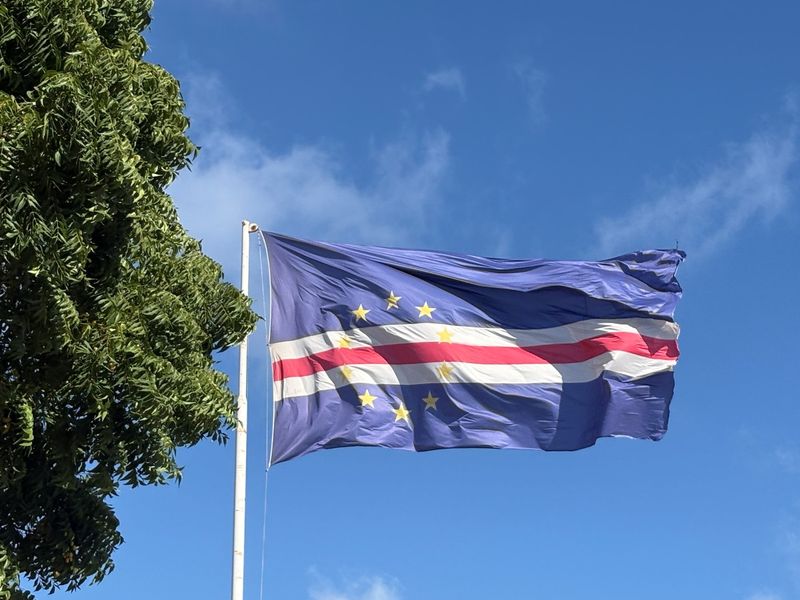
Cape Verde’s stability is easy to state and hard to overstate. Independent from Portugal in 1975, ruled for its first fifteen years by the PAICV as a single party, it opened to multiparty competition in 1991 and has since alternated power between the PAICV and the MpD with a regularity that much larger democracies might envy: elections happen, losers concede, and the flag over the Plateau in Praia changes its political weather without changing hands by force. Neves himself is a product of that system’s long apprenticeship — prime minister from 2001 to 2016, then president from 2021, a career spent inside institutions that outlasted him at every step. His provisional re-election continues the pattern in one respect and breaks it in another: incumbents in Cape Verde have not always been returned, and a 63.8% provisional share, if the final count confirms it, would rank among the most emphatic mandates the presidency has carried.
The regional contrast is worth drawing plainly, because this site’s recent coverage of African elections has so often run the other way — toward delay, dispute and force. In Guinea-Bissau, Cape Verde’s Lusophone neighbour on the mainland, December elections were delayed after a coup, a story Signal Post News covered in its report on Guinea-Bissau’s postponed vote. In Praia, by contrast, the drama of Sunday was arithmetic: a count, a percentage, a concession before midnight. It is the least cinematic outcome in politics and the one every election observer prays for. Democracies are not usually held together by their best days, but they are revealed by them, and a small island state of half a million people just held an election whose loser conceded on the night and whose winner’s mandate awaits only the formalities of the final count. That is not a small thing. In 2026, it is close to a regional exception.
The numbers in context
Strip the result to its frame and it reads like this. Registered voters: about 419,000, of whom about 76,000 were registered abroad. Candidates: six. The bar for a first-round win: 50% plus one vote. The provisional count at 96.8% of stations: Neves 63.8%, Rosa about 31.6%, the remaining four candidates sharing the rest. The comparison that flatters the winner most is his own past: 51% in 2021 has become, provisionally, 63.8% in 2026, a gain of nearly thirteen points across a term that spanned the post-pandemic tourism recovery and a cost-of-living squeeze felt on every island. The comparison that flatters the loser is historical rather than numerical: zero women on a presidential ballot in the fifty-one years before her, one on it now, carrying close to a third of the vote. And the number that will govern the next five years is neither of those — it is 37, the PAICV’s seats in the 72-seat National Assembly, because a president’s second term in a parliamentary republic is ultimately measured by what the government beneath him can pass, fund and survive.
What happens next
The formal sequence runs first. The general count that began under the CNE calendar produces the final official results in the coming days, after which the result is formally declared and Neves’s second five-year term is set in law. The November 29 runoff, provided for in case no candidate cleared 50%, falls away if the provisional result stands — and on a thirty-point margin at 96.8% counted, no serious reading of the remaining stations resurrects it, though this article keeps the provisional framing until the declaration makes it unnecessary. Politically, the questions queue up in order. For the government: whether a president and a parliament of the same party can convert alignment into delivery on the emigration economy — jobs that keep graduates in Praia and Mindelo, housing that young families can reach, wages that compete with the departure lounge. For the MpD: whether Rosa’s candidacy becomes a foundation or a footnote, and whether the party that ended a decade in power only to lose parliament and presidency in the same year rebuilds around the voters she mobilised. And for the diaspora, the largest constituency of all: whether a second Neves term is the one in which the flow of departures finally slows — or whether, five years from now, another election is held in a country still voting, above all, on the question of leaving. Sunday’s provisional answer was to trust the incumbent with that question. The count that makes it official is still, formally, to come.
Sources
Reuters, Julio Rodrigues, Praia, November 15, 2026, “Cape Verde votes for president with emigration in focus”: six candidates; polls open 08:00–18:00 local; Neves, 66, of the PAICV, president since 2021 after 15 years as prime minister, having won in 2021 with just over 51%; Joana Rosa, 61, lawyer and former justice minister (2021–2026) backed by the MpD, the first woman to run for president since independence in 1975; analysts tipping Neves as favourite; emigration and youth jobs as the central campaign issues. Associated Press, November 15, 2026: Rosa’s campaign themes; Gilson Alves, 45, a surgeon, promising to fight corruption, allow gun ownership and restore the death penalty; Roselma Evora of the University of Cabo Verde on voters’ distance from the political class; National Elections Commission figures of about 419,000 registered voters including about 76,000 abroad. Result reporting: AFP via France 24 and Le Monde, DW and Le Monde English, November 15–16, 2026, reporting the electoral commission’s provisional results; VNN count reporting of 96.8% of polling stations counted, Neves 63.8% and Rosa about 31.6%, and Rosa’s concession on Sunday night; Xinhua, November 15, 2026, on Neves declaring victory in a live TCV press conference. All results are provisional pending the final official count and formal declaration; a first-round win above 50% means the November 29 runoff will not be needed if the provisional result stands. Photographs are file photos and do not depict election day.