BUDGAM — Budgam encounter Hashim Moosa killed is the headline that rippled through Kashmir's security watchers on the morning of September 30. The Army's Chinar Corps announced that a joint cordon-and-search operation — codenamed Operation Korag — in the Korag area of Yousmarg, Budgam district, had ended in a firefight in which one militant was killed. At first light on September 30, troops searching the general area of Palmaidan recovered the body, along with what the Corps called “war like stores.” The Corps identified the slain man as “Mohammad Asif alias Hashim Moosa,” described as a Pakistan-based Lashkar-e-Taiba (LeT) operative — a name that immediately connected the encounter to one of the subcontinent's most consequential recent terror investigations: the April 2025 Pahalgam attack.
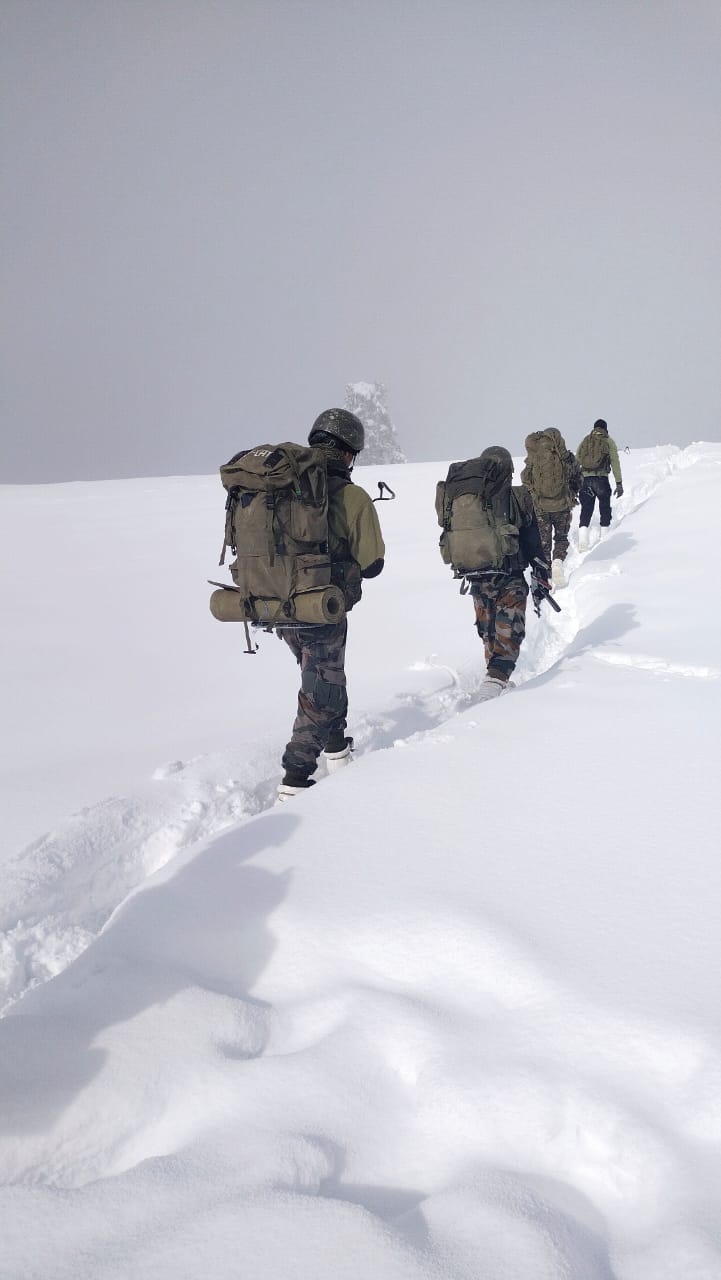
On the Army's account, the operation was launched on the night of September 29 by the Indian Army, the Jammu and Kashmir Police and the Central Reserve Police Force (CRPF) on the basis of a specific intelligence input about the presence of terrorists in the forested higher reaches. Alert troops noticed suspicious movement, challenged the suspected militants, and came under fire — triggering what the Army described as a fierce exchange in which one militant was neutralized. The identity and affiliation could not be established that night; the formal identification followed the next morning's recovery. The Army said the combing operation in the area was continuing.
How Operation Korag unfolded in Budgam's heights
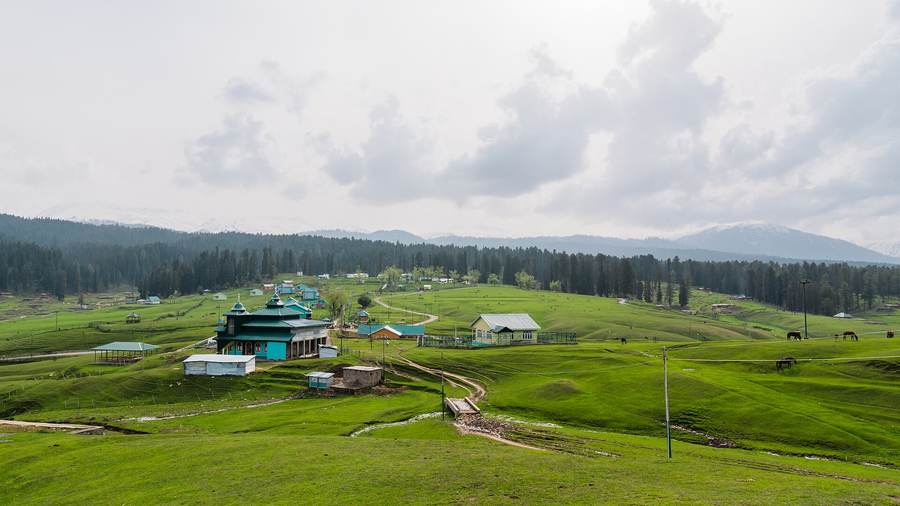
The sequence matters, because it shows how these encounters actually work. The operation began as a cordon-and-search — the standard three-agency template used across Jammu and Kashmir — in terrain that favors the hidden over the seeker. Yousmarg sits in the forested upper reaches of Budgam, dozens of kilometres from Srinagar, on the route between the Kashmir Valley floor and the Pir Panjal passes. That geography is the whole point: the same ridgelines that draw trekkers also serve as transit corridors for infiltrators moving between the Valley and the Poonch–Rajouri belt.
The official account then runs through a familiar choreography: contact, challenge, return of fire, neutralization, then the painstaking morning-after search. The Chinar Corps' X post the next day quoted its recovery note verbatim: “Update: OP KORAG. Further to the ongoing operation, during the search early morning in General Area Palmaidan, body of Pak based Lashkar-e-Taiba (LeT) terrorist, identified as Mohammad Asif alias Hashim Moosa recovered along with war like stores. Operation under progress.” The phrase “war like stores” — military shorthand for rifles, ammunition and field kit — is doing quiet evidentiary work: it establishes that the slain man was armed and equipped, not a bystander.
Note what the official record does not do. It does not name him the Pahalgam mastermind. It does not describe him as a former commando. It calls him a “Pak based Lashkar-e-Taiba (LeT) terrorist.” That restraint is worth holding onto, because the surrounding media narrative quickly became far more dramatic — and the gap between the two is where honest reporting has to live.
Why this matters: a name, a network, a message
Encounters in Kashmir are frequent enough that a single killing rarely makes national news. This one did, for three reasons that compound on one another. First, the identification. “Hashim Moosa” is not a random alias from a wanted poster; it is the name the Jammu and Kashmir Police publicly tied to the Pahalgam attack in April 2025, when it released sketches and names of three suspects and announced a ₹20 lakh reward for information on each. If the Army's identification holds — and the Corps was explicit about it — then security forces have killed a man wanted for the deadliest terror attack on civilians in Kashmir in years.
Second, the signal it sends about intelligence penetration. Targeted kills of named, high-value militants do not happen by accident. They happen when human or technical intelligence can place a specific individual in a specific forest grid square at night. The operation's success suggests that whatever network sheltered Moosa — overground workers, logistics, safe houses — has developed leaks. For a counter-terrorism grid, that is the real prize: not the one body, but the map it implies.
Third, the message to two audiences at once. Domestically, the families of the Pahalgam victims — who publicly welcomed the news, with victim Shubham Dwivedi's wife Aishanya Dwivedi praising the Army and victim Santosh Jagdale's daughter Asavari Jagdale expressing thanks on behalf of the 26 affected families — received a form of closure that governments rarely get to deliver. To militant networks and their handlers, the message is the opposite of closure: the forests are not safe.
The naming problem: who exactly was Hashim Moosa?
Here is where the story gets murky, and it deserves to be handled with care rather than glossed over. The Chinar Corps identified the slain man as “Mohammad Asif alias Hashim Moosa.” But across Indian media coverage of the encounter, at least four name-forms circulated: Mohammad Asif, Hashim Moosa (sometimes spelled Musa), Fauzi Musa and Sulaiman Shah alias Musa. The Jammu and Kashmir Police's own April 2025 sketch release named the Pahalgam suspect as “Hashim Musa alias Sulaiman,” alongside Ali Bhai alias Talha Bhai and Adil Hussain Thokar.
This alias clutter is normal in Kashmir's militant files — operatives deliberately cycle names, and police dossiers sometimes merge sightings from different aliases into a single composite biography. But it means the biographical details now being repeated — that he was a long-time operator in the Pir Panjal valley, that he coordinated attacks in the region for years, that he escaped an earlier Yousmarg-area encounter this September in which an associate named Yasir was killed — should be read as the claims of security officials and media reports, not as independently established facts. Where official statements and media color differ, the official statements are the firmer ground.
That caution applies with particular force to the two most sensational claims in circulation: that Moosa was the mastermind of the Pahalgam attack, and that he was a former Pakistani SSG commando. Indian media reports have made both claims; no official statement cited in the reporting so far establishes either. A suspect named by police sketches is not the same thing as a proven mastermind, and a “commander” in a militant hierarchy is not the same thing as a commando from an elite unit. Collapsing those distinctions would make for a better headline and worse journalism.
Background: from Pahalgam to the Pir Panjal belt
To understand why this encounter landed like it did, rewind to April 22, 2025. Gunmen opened fire on tourists at Baisaran meadow near Pahalgam, killing 26 people — one of the deadliest attacks on civilians in Kashmir in recent memory. Two days later, the Jammu and Kashmir Police released sketches and names of three suspected Pakistani militants: Hashim Musa alias Sulaiman, Ali Bhai alias Talha Bhai and Adil Hussain Thokar, each carrying a ₹20 lakh reward. The attack triggered a major security response and the most serious India–Pakistan confrontation in years, with New Delhi placing the Indus Waters Treaty in abeyance and the two countries trading strikes.
Moosa's reported operational geography explains why Budgam matters. Security officials quoted by Indian media describe him as active across the Pir Panjal — the Poonch–Rajouri belt south of the passes — as well as in south and central Kashmir, over several years. The Hindustan Times reported, quoting officials, that the group he was associated with was linked to attacks in Poonch and elsewhere in Jammu and Kashmir between 2021 and 2024 that killed several Army and security personnel. Reports also tie him, with varying degrees of official backing, to the October 2024 Sonamarg attack in Ganderbal that killed seven people including civilians. What is verifiable is the arc: a militant who, on the security establishment's telling, moved between both sides of the Pir Panjal for years, and who was finally cornered not in the southern districts where he was reportedly most active, but in central Kashmir's Budgam — suggesting either displacement by pressure elsewhere or a deliberate relocation that intelligence managed to track.
That tracking matters more than the terrain. Budgam is not a traditional militant stronghold the way some south Kashmir districts were in the last decade. An encounter in Yousmarg signals that the security grid's reach now extends into areas where militants previously moved with less friction — and that the forests between the Valley and the Poonch belt, long treated as a transit zone, are becoming a contested one.
Who benefits, who loses — and what the critics say
India's security establishment benefits immediately. A named, rewarded Pahalgam suspect killed in a clean intel-led operation is the kind of result that validates the post-2025 strategy: dense cordon-and-search grids, rewards that turn local knowledge into actionable leads, and sustained pressure across both sides of the Pir Panjal. It also buys political space — successes like this one make it easier to argue that the current approach is working, at home and in New Delhi's messaging abroad.
Lashkar-e-Taiba loses a field operator, but networks are replaceable. The honest counterpoint is that targeted killings have a mixed record in Kashmir. Every “commander” eliminated in the past decade was replaced, often within months. The disruption is real — institutional memory, local contacts and handler relationships take time to rebuild — but the history of this conflict argues against reading any single killing as a turning point. What degrades networks over time is not the body count but the intelligence architecture behind operations like Korag: the sources, the surveillance, the analysis that put troops in the right forest on the right night.
Pakistan's position remains denial. Islamabad has consistently denied state involvement in Kashmir militancy, and it has not, in the reporting available, commented on Moosa's identity or this encounter. That silence is itself part of the pattern: neither side's narrative can be adjudicated from press releases alone. The verifiable core is narrow — a man was killed, the Army identified him, war-like stores were recovered — and the responsible reader should hold the rest of the claims, on all sides, at arm's length until investigation records or captured material corroborate them.
Critics will flag two things. First, the identity question: until forensic or documentary confirmation beyond the Corps' statement is public, the naming discrepancy across reports leaves room for error, and past Kashmir encounters have occasionally produced misidentified bodies. Second, triumphalism: a former lieutenant general's claim, quoted in media, that all of the Pahalgam attackers have now been eliminated is an assertion, not a documented fact — and premature declarations of closure have a way of aging badly in this conflict.
The numbers in context
Put the figures side by side. Twenty-six people died at Pahalgam in April 2025. Three suspects were publicly named two days later, each with a ₹20 lakh reward — meaning the state put a combined ₹60 lakh price on information leading to that trio. One of the three is now dead, seventeen months after the attack. That timeline is worth sitting with: high-value targets in Kashmir's forests are not eliminated on schedule. They survive for years, sometimes a decade, because the terrain, the support networks and the cross-border supply lines all favor endurance.
The other number that matters is the overnight gap: contact on the night of September 29, recovery on the morning of September 30. That lag is standard practice — bodies are not approached in darkness in a live operational area — but it is also why the first reports of the encounter carried no identification. The fog of the first twelve hours is a feature of how these operations run, and it is worth remembering the next time an encounter's early reporting looks confused: confusion at that stage is usually honest.
Finally, compare the geography. Budgam lies between Srinagar and the Pir Panjal passes — closer to the capital than to the Line of Control. An encounter this deep in the interior, against a militant described as active in the Poonch belt, tells its own story about movement and pressure: either the net closed around him in the south and he ran north, or the security grid's center of gravity has shifted inward. Either reading points to the same conclusion — the operational tempo in central Kashmir is rising, and it is rising because the intelligence picture there is getting sharper.
What happens next: three scenarios
The most likely: follow-on operations. The Corps said the combing continued, and the real intelligence dividend of an operation like Korag arrives in the days after: recovered phones, documents and weapons get forensically mapped, and the resulting leads drive the next cordons. Expect further search operations in the Budgam–Poonch corridor and, if associates are detained, a slow drip of disclosures about the network's logistics.
The narrative battle: New Delhi will fold this killing into its broader case that cross-border militancy is being dismantled and that the post-Pahalgam security posture is delivering. Watch for official releases detailing the recovered “war like stores” — specifics about weapons and communications equipment would corroborate the official account and quiet the identity skeptics. Islamabad, for its part, is likely to stay silent or dismiss the identification, keeping the dispute in the realm of competing claims.
The risk scenario: retaliation and escalation. Militant groups have historically answered high-profile losses with attempted strikes, and the security grid will be watching for exactly that in the coming weeks. The wider India–Pakistan relationship, already strained since the 2025 confrontation, absorbs each encounter as either proof of resolve or provocation, depending on who is narrating. The encounter itself is over; its consequences will be negotiated in the months of operations and statements that follow.
Sources
- LatestLY — Chinar Corps statement, war-like stores recovered, and the Pahalgam suspect connection.
- Illustrated Daily News — the April 2025 J&K Police sketch release, the three named suspects and the ₹20 lakh rewards.
- Northeast Herald — Chinar Corps X posts and Hindustan Times reporting on Moosa's alleged prior attacks.
- Nation Press — reactions from Pahalgam victims' families and assessments of follow-on operations.
Reporting checked September 30, 2026. The account of the encounter draws on the Chinar Corps' official X statements and ANI/PTI wire reporting carried by the Times of India, The Hindu, IANS, Deccan Herald and India Today. Claims about Moosa's biography beyond the official identification are attributed to media reports and remain unverified by official statements.
War Desk · Kashmir security · Back to all stories