F-35 parts diverted to Hong Kong
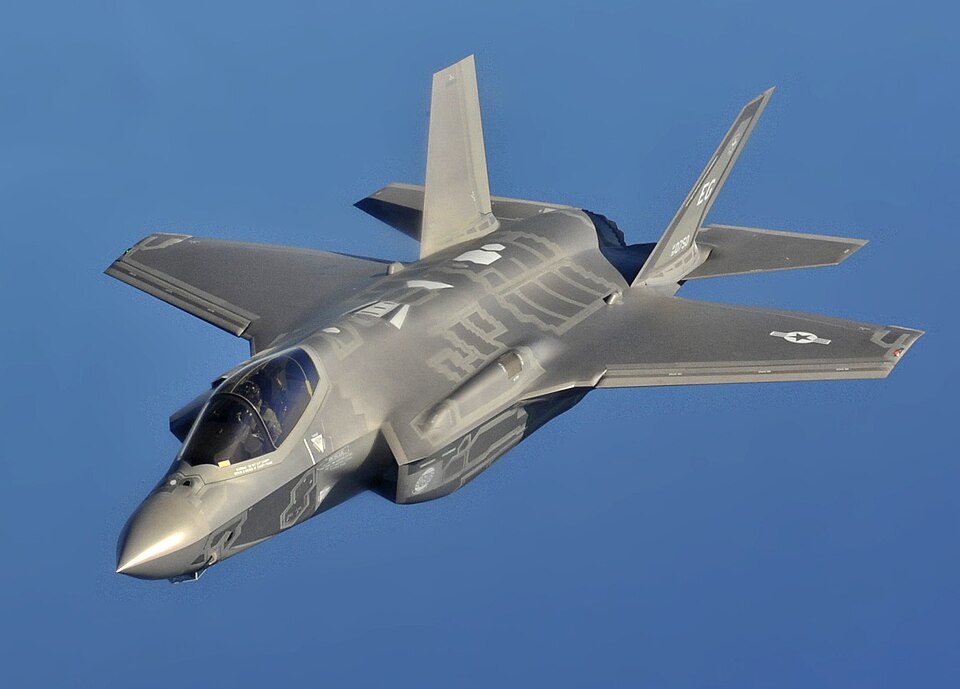
WASHINGTON — A routine maintenance shipment has become an unusually vivid test of the controls protecting the world's largest fighter program. Two components removed from an Australian F-35A — a cockpit canopy and a weapons-bay door — were being sent to the United States in late May when the package stopped in South Korea and was rerouted to Hong Kong. Bloomberg reported, citing people familiar with the matter, that Chinese authorities later took possession of the parts.
The Pentagon has confirmed the shipment problem and the effort to recover the equipment. It has not publicly confirmed, on the record, that the Chinese government possesses the parts. That strongest claim comes from Bloomberg's anonymously sourced reporting, a distinction that matters because Beijing's access, intent and technical exploitation remain unproven. China's Foreign Ministry said it was unaware of the matter, according to Associated Press reporting, while Hong Kong declined to discuss a specific case.
Even with those limits, the episode is serious. The F-35's low-observable design is not one secret held in one box; it is a system of shapes, coatings, manufacturing tolerances, maintenance procedures and mission software. A discarded or damaged component does not reveal that system by itself. But the possibility that radar-absorbing material and production details moved outside an allied logistics chain is enough to demand a precise accounting — especially because the diversion apparently remained unresolved for months.
What happened — the shipment that went sideways
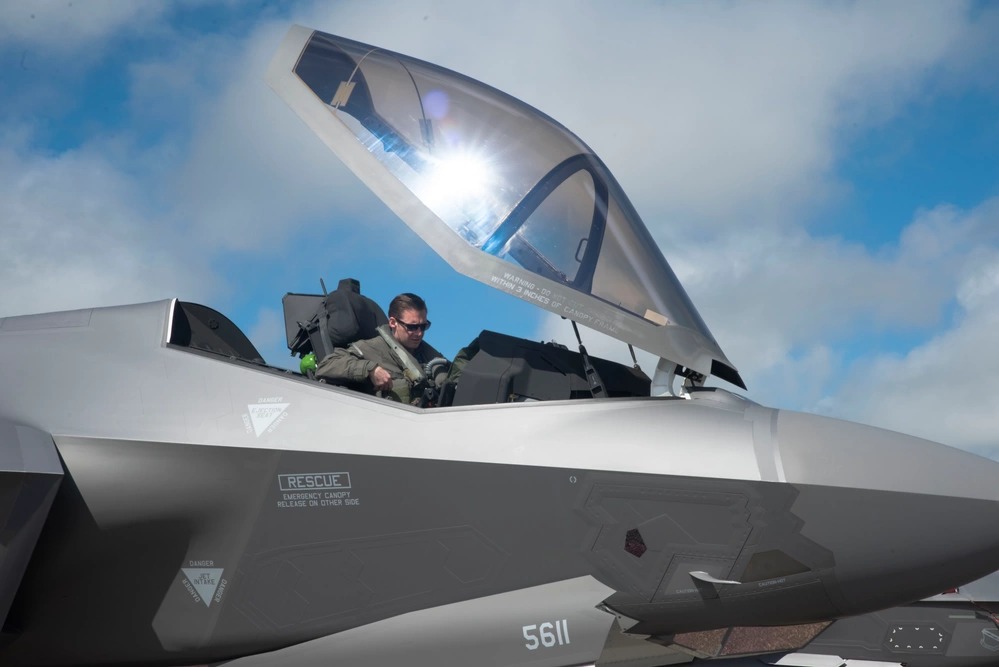
The shipment originated in Australia, where 72 F-35A aircraft form a central part of the Royal Australian Air Force's combat fleet. The canopy and weapons-bay door had been removed for maintenance and were described by the F-35 Joint Program Office and Lockheed Martin as unserviceable. They were not weapons, software modules or functioning sensors. But “unserviceable” means not fit for its intended operational use; it does not mean physically uninformative.
UPS was carrying the components toward the United States. Reporting from Bloomberg and Politico says the consignment paused in South Korea before it was diverted to Hong Kong. Why it was diverted is still unknown. Public reporting has not established whether the problem arose from a routing error, paperwork failure, customs issue, carrier decision, deliberate interference or some combination of events. No evidence released so far proves sabotage or espionage.
That uncertainty should prevent the story from hardening into a more dramatic claim than the evidence supports. The fact pattern is already consequential without embellishment: controlled military-aircraft components left the expected route, entered a jurisdiction where U.S. export controls and security relationships are politically sensitive, and reportedly came into the custody of Chinese authorities. The central investigative questions are therefore mundane and strategic at once: who changed the route, who knew, what notices were generated, what markings and handling rules applied, and how long each organization took to act?
The F-35 Joint Program Office said it was aware of a “shipment issue of unserviceable F-35 Lightning II components.” In a statement carried by Military.com, the office said it was working to retrieve the parts, investigate the incident and install safeguards to prevent a recurrence. That formulation is carefully limited. It confirms an incident and a recovery effort, but does not resolve how the diversion happened or what China may have learned.
How we know — from a June briefing to Wednesday’s bombshell
The chronology suggests the episode was known inside government well before it became public. State Department and Pentagon officials briefed congressional staff in June, according to reporting cited by Politico and other outlets. Politico first reported the investigation on September 18. Subsequent accounts added the identities of the components, the logistics route and the claim that Chinese authorities had taken possession.
That gap between a June briefing and a September public disclosure is not necessarily evidence of a cover-up. Sensitive loss investigations often begin quietly so authorities can identify a shipment, request records and attempt retrieval without advertising what they are seeking. But delay can also make accountability harder if documents, surveillance footage or handling records are not preserved. Congress will want to know when each institution — the Australian Defence Department, the program office, UPS, U.S. diplomatic officials and the prime contractor — learned the route had changed.
Several official and corporate statements provide balancing context. Australian Defence Minister Richard Marles said Australia was assisting the investigation and that his understanding was there was “a sense of comfort” because the shipment did not contain sensitive equipment or parts. Lockheed Martin described the components as unserviceable and “low risk for exploitation.” Those assessments are important, but they do not eliminate the need to retrieve the items. Risk is a spectrum, not a switch: a part can be low risk compared with mission software or an operational radar and still offer useful material, geometry or manufacturing clues.
There is also a difference between access and exploitation. Possession can be established through shipping and custody records. Technical exploitation would require examination, measurement and analysis, and no public evidence shows that such work occurred. Beijing has denied knowledge rather than acknowledged custody. Until investigators release more evidence, the responsible formulation is that the parts reportedly reached Chinese authorities and may have been available for examination, not that China definitively extracted F-35 secrets.
Why this matters — the stealth edge is America’s crown jewel
Stealth is often described as if an aircraft were simply invisible. In reality, survivability depends on reducing the signatures that sensors can detect and track. The F-35's outer contours redirect radar energy; its seams, fasteners and surface treatments are controlled to tight tolerances; its weapons are carried internally; and radar-absorbing materials help manage reflections. Operational tactics, electronic warfare, sensor fusion and data links then turn that lower observability into combat advantage.
A cockpit canopy is part of the aircraft's electromagnetic boundary. It must give the pilot a wide view while contributing to signature control and protecting against the environment. A weapons-bay door is similarly important because its shape, edges, hinges, seals and coatings sit on an aircraft whose radar signature depends on disciplined geometry. Neither component is a complete blueprint. Yet detailed examination could help an adversary test assumptions about material layering, surface finish, edge treatment, repair methods or degradation after service.
The likely intelligence value must not be overstated. China already fields advanced aircraft, radar laboratories and a sophisticated aerospace industry. It can study public imagery, air-show displays, patents, engineering literature and any debris or components obtained through other means. A damaged door or canopy would add one sample to a much larger technical puzzle. It would not hand Beijing the source code, sensor architecture or total radar-cross-section model of the F-35.
What makes this episode strategically important is therefore not only the content of two parts. It is the integrity of the allied logistics network. The F-35 is designed, built, operated and maintained across a multinational enterprise. Parts move among bases, depots, vendors and repair facilities. If ordinary freight processes can redirect identifiable components into an adversary's jurisdiction, the vulnerability is procedural and repeatable. The immediate loss may be limited; the systemic weakness could be larger.
Who benefits, who loses — Beijing’s windfall and Canberra’s embarrassment
If Chinese technicians obtained the parts and chose to inspect them, Beijing's benefit would be opportunistic rather than transformational. It could compare the physical objects with existing models, examine coatings and substrates, study wear patterns, or refine the questions its own engineers ask about Western maintenance practices. Even a negative result — finding that a suspected material or geometry is less important than assumed — can reduce uncertainty for a competitor.
For Washington, the loss is partly reputational. The United States asks partners to accept demanding security, export-control and maintenance rules around the F-35. A shipment that apparently slipped through commercial logistics raises questions about whether those controls are consistent from the flight line to the repair depot. It also gives Chinese officials a ready response to future U.S. criticism of technology leakage: America and its allies may have created the opening themselves.
Australia faces an awkward split between reassurance and responsibility. Marles is right to distinguish unserviceable components from operational secrets. But Canberra operates 72 F-35As and participates in the program's regional maintenance architecture. It needs to show not only that the parts were low risk, but that the chain of custody was understood, documented and corrected. The credibility of an ally is strengthened by a transparent fix, not by minimizing the problem before the investigation is complete.
UPS may face scrutiny over routing systems, subcontractors and escalation procedures, although the public record does not establish fault. The program office and Lockheed Martin must also explain packaging instructions, export-control markings and responsibility at each transfer point. Accountability should follow evidence. Commercial carriers move enormous volumes through complex networks; a security regime that depends on every parcel following the default route without active monitoring is a weak regime.

The numbers — what the F-35 program actually looks like
The scale of the program makes small logistics failures consequential. Associated Press reported that more than 1,200 F-35s have been built and that 19 countries have placed orders. The United States plans a fleet of roughly 2,500 across the Air Force, Navy and Marine Corps, while partner and foreign-military-sales customers operate the aircraft across Europe and the Indo-Pacific. Australia has 72 F-35As, enough that maintenance and parts movements are continuous rather than exceptional.
Cost is another measure of exposure. A 2024 Government Accountability Office report said the Defense Department planned to operate the F-35 through 2088 and spend more than $2 trillion on acquisition and sustainment. GAO put projected sustainment at about $1.58 trillion in 2023, up 44% from roughly $1.1 trillion in 2018. Those are long-range estimates that change with inflation, fleet size, service life and flying hours, not a bill already paid. They nevertheless show why the parts pipeline is a strategic asset in its own right.
Inventory control has been a documented problem. In 2023, GAO found that the government lacked complete accountability over F-35 spare parts managed through the contractor-led global pool. More than one million parts valued at over $85 million had been reported lost between 2019 and 2023, and fewer than 2% of those loss reports had been reviewed. Most of those losses were not equivalent to a diversion into Chinese custody, but the finding established a broader governance weakness: the government did not always know where parts were or who was responsible for them.
That background changes how the Hong Kong incident should be read. It may be an isolated routing failure. It may also be the visible edge of a system whose ownership, tracking and reporting rules have not kept pace with its scale. The right metric is not simply whether these two components were sensitive. It is whether every controlled part can be identified, located and recovered quickly enough that an anomaly does not become an intelligence opportunity.
What happens next — retrieval, reckoning, and the summit shadow
The first priority is recovery. U.S. officials will need cooperation from authorities in Hong Kong and Beijing, as well as complete records from UPS and every logistics or customs intermediary. If the parts are returned, investigators can inspect seals, packaging and surfaces for signs of opening, sampling or testing. If they are not returned, the program will have to assume some possibility of examination and assess whether maintenance guidance, coatings or design features require additional protection.
The second task is reconstruction. Investigators need a minute-by-minute chain of custody: when the shipment left Australia, why it stopped in South Korea, who changed the destination, what automated alerts fired and who reviewed them. Safeguards could include route geofencing, real-time escalation for controlled components, explicit prohibitions on transit through certain jurisdictions, tamper-evident packaging and a single accountable owner from origin to depot. The fix should address the process that failed, not merely warn staff to be more careful.
Congress is likely to ask why staff were briefed in June and what changed before the story became public in September. Australian lawmakers may press for the same detail. Oversight should also test the “low risk for exploitation” judgment: who made it, what technical assumptions it used, and whether it accounts for an adversary's ability to combine a physical sample with other intelligence. Public disclosure will necessarily be limited, but a classified assessment can still support an unclassified explanation of the control failures.
The timing adds political sensitivity. President Donald Trump hosted Chinese President Xi Jinping in Washington as the fuller details emerged. The overlap does not show that the shipment was connected to the summit, and it should not be used to imply one. It does mean the case landed during a high-stakes effort to stabilize relations while the two countries compete over military technology, semiconductors and artificial intelligence. Our analysis of the Trump–Xi summit's announced results and unresolved disputes explains that broader setting.
The incident also matters to partners deciding how tightly to bind their defense procurement to the United States. Canada's continuing review of its F-35 plans, discussed in our report on Mark Carney's “extreme tail risk” warning and Canadian defense choices, reflects a wider concern about dependence, sovereignty and allied reliability. A strong U.S.-Australian response would reinforce the case that a global fleet can correct mistakes without concealing them.
Conclusion: The Pentagon investigation should resist two temptations: dismissing unserviceable parts as harmless, and portraying them as a master key to the F-35. The evidence supports neither extreme. The canopy and weapons-bay door may offer limited technical clues, but the greater warning is logistical. A stealth aircraft's security is only as strong as the paperwork, routing rules and human decisions that protect its least glamorous components. Retrieval matters. So does proving that the next anomaly will be detected before a package reaches an adversary's hands.