British paratrooper killed Ukraine
TopicsBritish paratrooper killed UkraineGeorge Hooley inquestL/Cpl George Hooley explosionUK troops in Ukraine MoDSpecial Forces Support Group Ukrainecoroner Darren SalterPaul Wilks Ukraine car crash
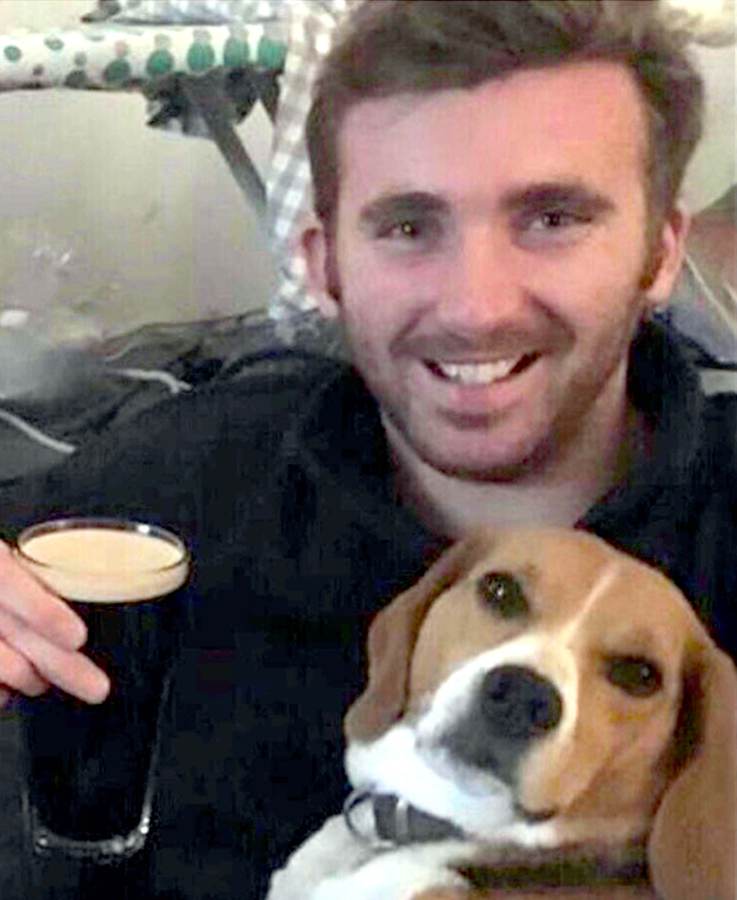
LONDON — The British paratrooper killed Ukraine story is not a battlefield fatality. L/Cpl George Hooley, 28, died after an explosion while he was observing Ukrainian forces test what the Ministry of Defence called “a new defensive capability” away from the front line. That distinction is the central fact in Senior Coroner Darren Salter's written conclusion, and it is the boundary any accurate account must preserve.
The George Hooley inquest found that the Parachute Regiment soldier sustained multiple injuries in the early hours of December 6, 2025. He received emergency treatment at the scene, underwent surgery and was moved between hospitals before dying at a Kyiv hospital on December 9. Salter recorded the medical cause as multiorgan failure and complications. He said the evidence about precisely how the explosion happened was limited, but found no suspicious circumstances.
Hooley was the first serving British soldier to die in Ukraine since Russia began its full-scale invasion in February 2022. That makes the death historically significant. It does not make it a combat death. The coroner's account and the MoD's original statement both describe an accident during observation of a Ukrainian test, away from the front line—not a British soldier “fighting Russia,” as some sensational headlines implied.
What the George Hooley inquest established
The Record of Inquest was completed in writing and released to the Press Association. The proceeding was kept largely private at the family's request, and Salter rejected a media request for a public hearing. The result is an unusually concise public record: enough to establish the sequence, location and medical cause, but not enough to answer the engineering and command questions that usually follow a fatal training or testing incident.
According to the record, the L/Cpl George Hooley explosion occurred early on December 6 while he was observing a Ukrainian weapons test. The phrase “new defensive capability” is important but broad. It does not identify the system, the agency running the trial, the safety perimeter, who controlled the test or whether British personnel had any operational role beyond observation. “Limited evidence” explains why the coroner could not give a more detailed mechanism; it does not supply one.
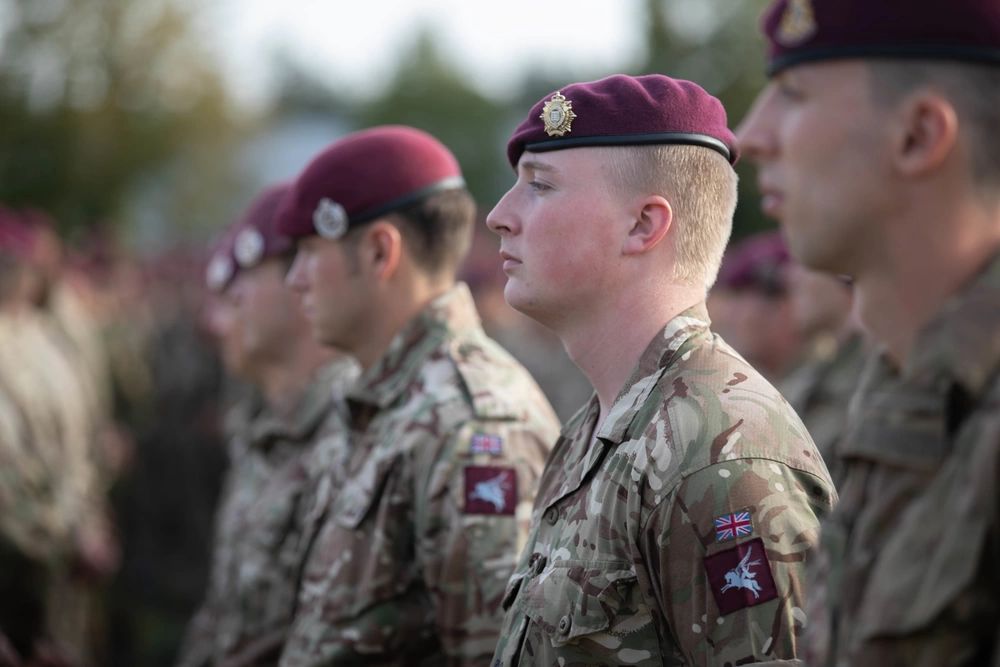
The MoD had already called the death a “tragic accident” in December 2025. It described Hooley, who was from Wallingford in Oxfordshire, as an “exceptional soldier and an impressive junior leader,” and Defence Secretary John Healey paid tribute. His company commander called him “a born soldier.” Those judgments fit a service record that began after training at Catterick: Hooley joined the Army in November 2015, finished at the top of his P Company cohort, entered the Parachute Regiment in June 2016 and served in Afghanistan, Africa and Eastern Europe. He was due to be promoted to corporal in January 2026.
Why this matters: a death pierces official ambiguity
Britain's support for Ukraine is vast and public in some places, deliberately indistinct in others. London openly describes weapons transfers, intelligence cooperation, sanctions, diplomatic security and the training of Ukrainian troops on British soil. It has also acknowledged a “small number” of UK military personnel inside Ukraine. It has never publicly disclosed the number, the complete mission set or the locations.
For four and a half years of full-scale war, that ambiguity carried no publicly confirmed British service death inside Ukraine. Hooley's death changed that. It makes the acknowledged presence tangible without proving the much larger claim Moscow will want to make: that NATO forces are secretly fighting Russia. The known facts point the other way. He was observing a Ukrainian defensive test away from combat, and the coroner found no suspicious circumstances.
This distinction matters beyond semantics. International law, alliance politics and public consent all treat combat participation differently from training, technical assistance, diplomatic protection or observation. A fatal accident can reveal that personnel are physically close to advanced systems and military risk without showing they took part in hostilities. Evidence should set the label; the label should not outrun the evidence.
Special Forces Support Group Ukraine: what 1 PARA suggests—and what it does not
Hooley served in 1st Battalion, the Parachute Regiment, the core Army element of the Special Forces Support Group. The SFSG was formed in 2006 to provide specialist infantry support to UK Special Forces, including rapid-response protection and assistance to special operations. That affiliation explains why his presence draws scrutiny: 1 PARA personnel are trained to operate in close support of highly sensitive missions.
It does not, by itself, prove that Hooley was on a covert operation, supporting a combat mission or deployed under UK Special Forces command when the accident happened. Units have broader tasks, individuals can be assigned to technical and liaison work, and the public record gives no mission chain. The most defensible inference is limited: Britain chose a highly trained paratrooper from a formation built to work near sensitive capabilities. Anything more requires evidence the inquest did not publish.
The broader training system is less secret. Operation Interflex, the British-led successor to Operation Orbital, has trained more than 50,000 Ukrainian recruits on UK soil with support from 13 partner nations. The program expanded from basic infantry instruction into longer courses and leadership and instructor training, and the government extended it through at least the end of 2026. Interflex shows the scale of Britain's declared involvement. Hooley's assignment shows there is also a smaller, less visible layer inside Ukraine.
UK troops in Ukraine: MoD secrecy versus the public's right to know
Operational secrecy can be legitimate. Publishing troop locations, technical systems or vulnerabilities could endanger British and Ukrainian personnel. Families may also have compelling reasons to limit public exposure at an inquest. Salter accepted the Hooley family's request for privacy, and those interests deserve weight.
But secrecy has costs. A service member died during an allied weapons test, and the written conclusion says evidence about the blast was limited. Without a public hearing, the public cannot see whether witnesses were called, what safety procedures existed, which organization owned the risk or what changed afterward. The family may have more information than the public, but the record does not show whether the institutional lessons have been tested in open court.
The issue is not whether every classified detail should be published. It is whether Parliament and the public can receive a safe, aggregated account: how many personnel are in Ukraine, the categories of work they perform, what legal authorities apply, how accidents are investigated and what protections exist. A refusal to reveal tactical detail need not become a refusal to explain policy.
How Moscow can frame the death—and why the facts resist it
Russia has repeatedly described Western military aid, intelligence and training as evidence that NATO is already a party to the war. A British soldier's death on Ukrainian territory will be used to reinforce that narrative. The SFSG connection gives propagandists a familiar shortcut: special-forces affiliation becomes proof of covert combat, regardless of the assignment actually described.
The record supports a more precise conclusion. Hooley was serving in Ukraine, close enough to a test to be killed by an explosion. That confirms real exposure to military danger. But the test was away from the front line; the death was accidental; no suspicious circumstances were found; and there is no public evidence that Russian forces caused the blast or that Hooley was engaged in fighting. Calling those facts “NATO combat involvement” would add claims the evidence does not contain.
Britain's answer should be evidence, not counter-propaganda. The more the government can safely disclose about mission categories, oversight and accident prevention, the less room there is for hostile actors—or domestic speculation—to fill the gaps.
How many British soldiers died in Ukraine?
As of October 2, 2026, the publicly confirmed answer for serving British military personnel since the February 2022 full-scale invasion is two. Hooley was the first. Major Paul Wilks, 40, an Intelligence Corps officer and father of two, became the second after a road traffic accident away from the front lines on September 12, 2026. The MoD announced his death four days later.
The Paul Wilks Ukraine car crash is an important comparison because both deaths were non-combat. Wilks was commissioned from Sandhurst in 2012, had received two Operational Service Medals and was awarded the Long Service and Good Conduct Medal in May 2026. His inquest is still to come. Together, the cases show that even missions outside direct fighting carry ordinary but severe hazards: road movements, testing ranges, unfamiliar systems, emergency medicine and hospital transfer.
The count also needs careful boundaries. British volunteers serving in Ukrainian units, aid workers and other civilians have died during the war, but they are not the same category as serving UK personnel deployed by the British state. “Two” answers the service-personnel question described by the MoD and these inquests; it is not a total for all British nationals killed in Ukraine.
What the numbers mean
Zero British service deaths in Ukraine for roughly four and a half years, followed by two non-combat deaths within ten months, can be read in two ways. The first is evidence of tight risk control across a deep but deliberately limited deployment. The second is a warning against mistaking a low fatality count for a low-risk mission. Rare events do not become impossible because they were absent for years.
The denominator is missing. Without troop numbers, deployment lengths and activity categories, no responsible analyst can calculate a fatality rate or compare risk with other missions. “Two deaths” is a human and political fact, not a safety metric. It cannot tell the public whether risk rose, whether the mission expanded or whether chance clustered two unrelated accidents.
That is why calls for disclosure are likely to focus on ranges rather than rosters. Parliament could receive total personnel bands, mission categories and aggregate incident reporting without exposing identities or locations. The government already uses that model for other sensitive deployments.
What this means for a future reassurance force
Britain and European allies have debated what security presence might follow a ceasefire or negotiated settlement, sometimes described as a reassurance force. Hooley's death will shape that argument in opposite directions. Supporters can say the existing small presence has operated for years without a combat death and that disciplined, bounded missions are manageable. Skeptics can say the accident demonstrates how quickly even a nominally non-combat deployment can produce casualties and political escalation.
Both points contain truth. “Non-combat” does not mean “no risk.” It means the source and purpose of risk differ. A reassurance force would need explicit rules of engagement, force protection, medical evacuation, investigation agreements and a public account of what happens if personnel are attacked—or killed in accidents. The Hooley case is a reminder to settle those questions before deployment, not after the first fatality.
What happens next
The first pressure point is Parliament. MPs can ask the MoD for a bounded description of personnel numbers, mission categories and accident-review procedures without demanding operational coordinates or capability details. The second is the Wilks inquest, which will test whether a second non-combat death produces a more open process and whether any common lessons emerge around transport and support in Ukraine.
The third is precedent. English and Welsh inquests are ordinarily public, but national-security concerns and family privacy can restrict proceedings or reporting. Hooley's largely private process may not become a template, but it will be cited the next time a death touches a classified deployment. The public-interest question is whether secrecy is tailored to the sensitive fact or spreads across the whole inquiry.
Most importantly, the death should not be turned into evidence for a story the coroner did not find. Hooley's service was real, Britain's presence in Ukraine is real and the policy questions are real. So is the conclusion: a British soldier died in a tragic weapons-test accident away from the front line. Accuracy is not a softening of that loss. It is the minimum respect owed to it.
Related Signal Post News coverage
Sources and method
This article distinguishes confirmed findings from inference. The Oxfordshire Coroner's Record of Inquest, completed in writing and supplied to the Press Association, is the basis for the sequence and cause of death; the record is quoted in the linked PA coverage. Where the public record is silent—such as the type of defensive capability or the exact mission—we do not speculate.
- BBC News report relay: coroner's findings on George Hooley, October 2, 2026
- Press Association reporting on Darren Salter's Record of Inquest
- Particle News overview of the inquest reporting
- UK Ministry of Defence: death of L/Cpl George Thomas Hooley, December 2025
- British Army: Parachute Regiment and Special Forces Support Group role
- UK MoD statement on extending Operation Interflex through 2026
- Reporting on Major Paul Wilks and the September 2026 road crash