Brazil presidential runoff 2026
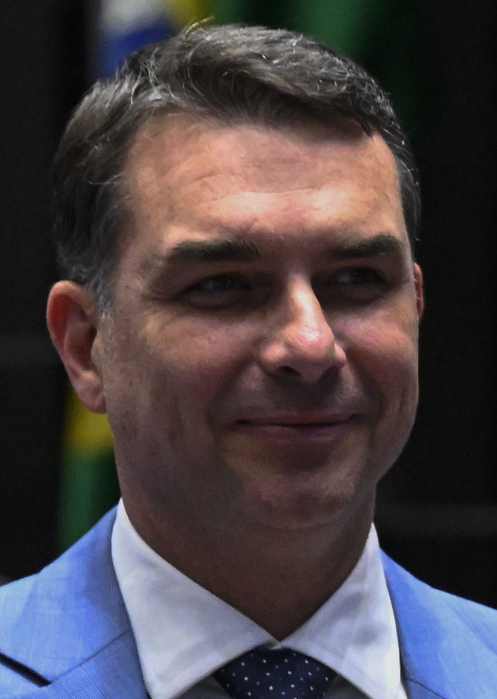
Augusto Cury, the author-psychiatrist who finished third in Brazil's presidential first round, endorsed Flávio Bolsonaro on Thursday for the October 25 runoff against Luiz Inácio Lula da Silva—reversing his earlier declaration that he would support neither finalist.
Bolsonaro shared a social-media video of Cury announcing the decision, Reuters reported on October 8. The video establishes the endorsement; the public record available at publication did not fully explain Cury's reasoning, so claims about his motives should be treated as interpretation rather than fact.
Why this matters: 2.89% is larger than the gap
Cury's 2.89% share looks marginal until it is placed beside the actual contest. Bolsonaro led Lula by 47.03% to 45.16% with 99.8% of votes counted—a difference of 1.87 percentage points, or roughly 2.3 million votes. Cury received about 3.4 million. His electorate is therefore about 1.1 million votes larger than the gap separating the finalists.
That does not mean an endorsement mechanically adds 3.4 million votes to Bolsonaro's total. Voters are not property, and outsider candidacies often collect people precisely because they dislike both major camps. Some will follow Cury, some will choose Lula, some will cast blank ballots, and some will stay home. The more defensible conclusion is narrower but still important: the Cury bloc is large enough to erase the first-round margin, and both campaigns must compete for it.
The symbolism may matter almost as much as the arithmetic. Cury campaigned as a 67-year-old Avante outsider under the slogan “Centered on what matters,” explicitly resisting the left-right division that has structured Brazilian politics. When the candidate most identified with escaping polarization joins Bolsonaro, the runoff narrative shifts. The right can argue that consolidation is broadening beyond its traditional parties; Lula can counter that Cury abandoned the premise that attracted his voters.
The Flávio Bolsonaro Augusto Cury endorsement reversal
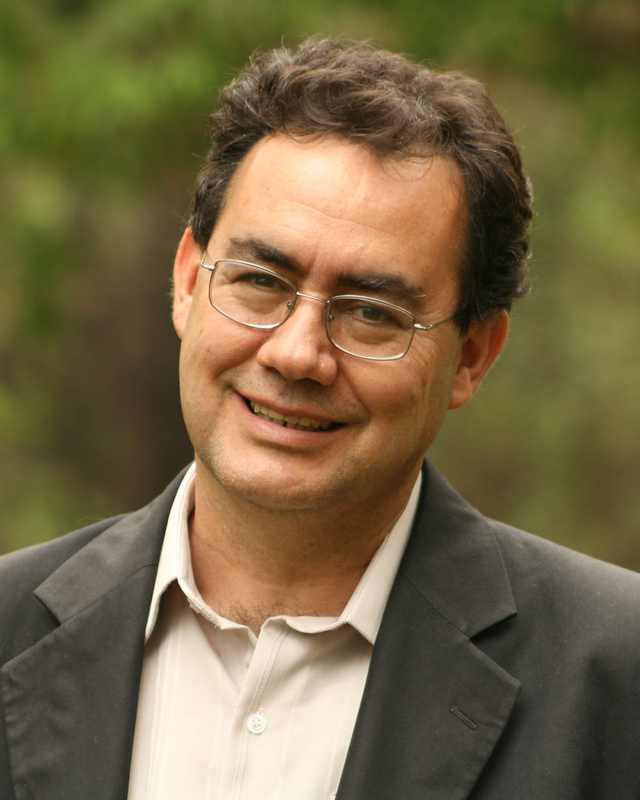
Augusto Cury Avante third place was an outsider campaign
Cury entered politics with a profile that differed sharply from the professional politicians around him. A best-selling author and psychiatrist, he offered a roughly 200-page platform organized around 18 projects. Its themes included emotional health, full-time schools, inclusion and support for entrepreneurs. He complained during the campaign about weak reach on social media, while publicly expressing respect for Brazil's electronic voting system.
That combination gave his candidacy a civic, self-help-inflected tone rather than the institutional language of the Workers' Party or the combative style associated with the Bolsonaro family. His 2.89% was not a path to the presidency, but it was enough for third place and for leverage in a close runoff. Days after saying he would endorse neither Lula nor Bolsonaro, he chose Bolsonaro.
The reversal exposes a familiar runoff dilemma. A third candidate can remain pure and risk irrelevance, or endorse a finalist and risk alienating the people who supported an alternative. Cury chose relevance. Bolsonaro gained a validating image and a new messenger to moderates. Cury gained influence over the final stage—but may lose part of the independence that made him useful.
Brazil runoff endorsement sweep consolidates the right
Ronaldo Caiado endorses Bolsonaro; Romeu Zema joins
Cury's move follows endorsements from Ronaldo Caiado and Romeu Zema. Caiado, the PSD candidate and former Goiás governor who took 2.18%, backed Bolsonaro on Monday. Zema, the former Minas Gerais governor whose NOVO candidacy drew 0.27%, did the same, according to Reuters' October 5 report.
Add their first-round shares—2.89% for Cury, 2.18% for Caiado and 0.27% for Zema—and candidates representing about 5.34% of valid votes have now aligned with Bolsonaro. That exceeds his 1.87-point lead nearly three times over. It is a powerful headline number, but not a forecast. The harder variable is the transfer rate: how many supporters see the endorsement as guidance rather than betrayal?
Renan Santos no endorsement keeps a protest lane open
Renan Santos, who received about 2.24%, has said he will not endorse either finalist. His position prevents a complete consolidation and preserves a visible home for anti-establishment voters unwilling to choose between Lula and Bolsonaro. In a race this close, even non-endorsement has strategic weight because it can depress turnout or increase blank and null ballots.
The endorsement map therefore favors Bolsonaro on paper, but the behavioral map remains unsettled. The people who voted for governors such as Caiado or Zema may be ideologically closer to Bolsonaro than Cury's mixed, anti-polarization constituency. Treating all three electorates as interchangeable would mistake coalition arithmetic for voter behavior.
Brazil election first round results changed the campaign
Bolsonaro 47.03, Lula 45.16
Bolsonaro's 47.03%—more than 56 million votes—against Lula's 45.16%, about 53.7 million, exceeded expectations and made the 45-year-old senator the first-round leader. The result matters because momentum is partly psychological: donors, regional politicians and low-information voters often respond to the candidate who appears to be gaining rather than the one who had been expected to lead.
Yet the first round also revealed a country almost evenly divided. The approximately 2.3 million-vote gap is only a little more than 1% of Brazil's 214 million people. With compulsory voting subject to exemptions and enforcement that does not eliminate abstention, turnout choices can matter as much as persuasion. A small shift in São Paulo's suburbs, Minas Gerais's cities or the Northeast's poorer municipalities could outweigh any national endorsement.
For a deeper account of the count and the polling surprise, see Signal Post News's first-round analysis and the earlier Brazil election results report.
Who benefits, who loses—and what critics will say
Bolsonaro gains a bridge to moderates
Bolsonaro benefits first. As the son of former president Jair Bolsonaro and an ally of US President Donald Trump, he already owns the clearest path to the conservative electorate. Cury offers something different: a bridge toward voters who do not identify with the Bolsonaro dynasty but are frustrated with Lula's Workers' Party era. The campaign can present the endorsement as permission to vote Bolsonaro without embracing every feature of Bolsonaro politics.
Lula gains a sharper contrast
Lula also receives a usable argument. The 80-year-old seeking a fourth nonconsecutive term can tell Cury voters that the outsider's reversal proves only Lula represents a counterweight to a consolidated right. Lula's strongest assets remain social programs, recognition among lower-income voters and a party organization built over decades. If the runoff becomes a contest over affordability and protecting benefits rather than endorsements, his coalition can still recover.
Cury risks the credibility that created his leverage
Cury bears the clearest reputational cost. Critics can reasonably ask what changed between his neutrality pledge and Thursday's video. Supporters may accept strategic evolution; skeptics may see inconsistency. Because his stated reasons were not fully available in the reporting at publication, it would be irresponsible to assign motives. What can be said is that an anti-polarization candidate has entered one pole, and that choice will define how voters remember his campaign.
Democratic politics often produces this contradiction: the third-place candidate has maximum bargaining power only after losing, but using that power requires narrowing the choices he once tried to expand. Cury's decision is not unique to Brazil. Runoff systems in France, Chile and elsewhere routinely transform first-round pluralism into second-round coalition discipline.
The campaign battlegrounds behind the endorsement
The remaining contest will be fought less over Cury's personal biography than over household life. Affordability is the broadest issue: food, transport, credit and wages reach voters before ideology does. Lula will emphasize social programs and the state as a buffer against insecurity. Bolsonaro will argue for a break with the PT era and tie public safety and corruption to a broader demand for change.
Public security may help Bolsonaro, particularly where fear of crime outweighs attachment to Lula's welfare legacy. Social policy may help Lula among poorer households and voters who associate earlier PT governments with upward mobility. Corruption cuts in both directions: each camp has a long archive of accusations against the other, making credibility and fatigue as important as any new allegation.
The foreign-policy stakes are real but likely secondary for most voters. A Bolsonaro victory could strengthen Washington's influence in Latin America and align Brasília more closely with Trump. A Lula victory would probably preserve greater distance from the United States and deepen Brazil's pragmatic relationship with China, its largest trading partner. Neither path eliminates Brazil's interest in autonomy; the difference lies in emphasis and tone.
Lula Bolsonaro runoff October 25: what happens next
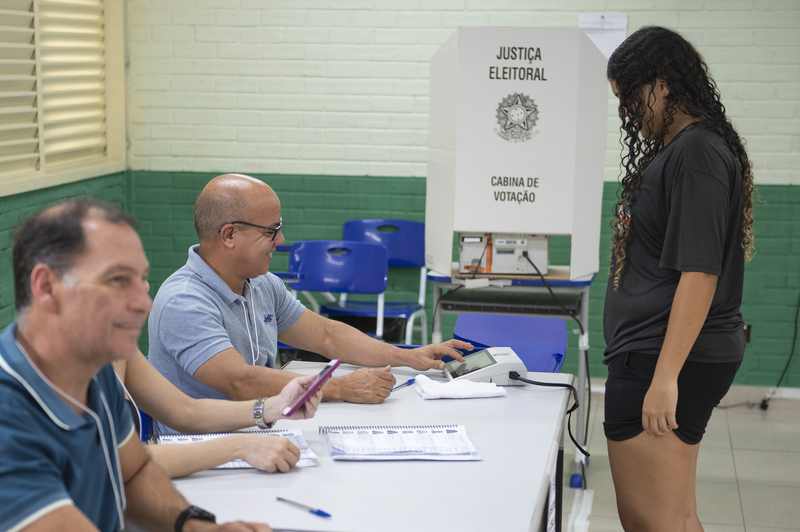
The finalists have a three-week sprint to turn endorsement headlines into field organization. The task is not merely to persuade undecided voters. It is to identify Cury, Caiado, Zema and Santos supporters, understand why they rejected the two leaders in round one, and give them a reason to participate again.
Scenario one: Bolsonaro consolidates and wins narrowly
If Bolsonaro retains nearly all of his first-round coalition and captures a strong share of the 5.34% represented by his endorsers, he can win without a dramatic national swing. Cury's support would then look less like a symbolic gesture and more like the final piece of right-wing consolidation. The risk is overconfidence: an endorsement-heavy campaign can mistake elite unity for voter enthusiasm.
Scenario two: Lula's social-policy machine flips moderates
Lula can prevail if he converts the runoff into a referendum on material security, mobilizes the Northeast and persuades enough centrist voters that his experience is safer than a Bolsonaro succession. Cury's supporters may be especially reachable if they interpret “centered on what matters” as competence, schools and mental health rather than conservative alignment. Lula does not need to win all of them; he needs to erase 1.87 points.
Scenario three: turnout produces the surprise
A lower-turnout runoff—or uneven participation across regions—could scramble both campaigns' models. A voter who chose Cury in round one may not see either finalist as acceptable. If abstention rises among centrist and protest voters, the contest becomes a test of which party has the stronger mobilization network. In a close election, a shift measured in tenths of a point can determine the presidency.
Brazil's next term begins January 5. Before then, the October 25 result will decide not only who governs Latin America's largest economy, but whether the runoff validates first-round momentum or Lula's capacity for coalition recovery.
What the numbers imply—and what they cannot tell us
The arithmetic is clear: 2.89% is larger than 1.87%; 3.4 million is larger than 2.3 million; and 5.34% is a potentially decisive endorsement bloc. The inference is not clear. Transfer rates are unknown, regional distribution matters, and a candidate's personal appeal does not automatically survive a public recommendation.
The best reading is probabilistic. Cury's endorsement improves Bolsonaro's position because it adds a prominent messenger, extends the consolidation story and targets the precise moderate bloc both sides need. It does not settle the race because Lula remains within a small national swing and retains structural advantages in social-policy politics and party organization.
That is why this endorsement matters without becoming destiny. The Brazil presidential runoff 2026 remains a live contest between two large coalitions, not a sum in which minor candidates' percentages are simply reassigned. Cury has changed the direction of the campaign's story. On October 25, his voters will decide whether they changed with him.
Sources
- Reuters, October 8 — Cury endorses Bolsonaro after third-place finish
- Reuters, October 5 — Caiado and Zema endorse Bolsonaro
- Associated Press — Brazil election and runoff context
Reporting note: Percentages and vote totals are sourced to the reporting above. Endorsements do not guarantee vote transfers; the scenarios in this article are analysis, not predictions.