Brazil election results 2026
- Brazil election results 2026
- Flavio Bolsonaro first round lead
- Lula vs Flavio Bolsonaro results
- Brazil runoff October 25
- Brazil election polls vs results
- who won Brazil election 2026
- Flavio Bolsonaro vote percentage
- Brazil first round vote count
- TSE Brazil election tally
- Bolsonaro pardon promise
- brazil election final results 2026
- flavio bolsonaro wins first round
- brazil election runoff october 25 2026
- flavio bolsonaro 47 percent lula 44 percent
- brazil election polling miss
- brazil runoff lula bolsonaro october 25
Updated: October 4, 2026
Final results
The Brazil election final results 2026 now show Flávio Bolsonaro winning the first round with 47.31% of valid votes against President Luiz Inácio Lula da Silva's 44.83%, with 98% counted in the Wall Street Journal's late-evening tally. Fox News reported the same effectively final outcome at 99% counted, rounded to 47.2% for Flávio and 44.9% for Lula. Neither candidate reached the required 50%, confirming a runoff on October 25 rather than an outright presidential victory.
Final numbers confirm a Bolsonaro first-round win
Flávio's advantage is a first-round win, not the presidency. The remaining count was too small to change the order of the top two, but the constitutional threshold still sends both candidates back to voters. Smaller candidates took roughly 5% combined, turning their supporters into the decisive pool for the three-week second round.
The polling miss: Datafolha had the race backward
Datafolha's final valid-vote estimate put Lula at 45% and Flávio at 42%. The actual result reversed that lead and lifted Flávio about five points above the poll, while Lula finished close to his projected share. The pattern points less to a broad Lula collapse than to pollsters undercounting the Bolsonaro coalition, late rightward movement, turnout differences and possible reluctance among conservative voters to disclose their choice. The regional sequence of the count explained the size of the early lead, but not the final polling error.
State results reveal a wider right-wing wave
Flávio carried São Paulo by 52% to 38%, Minas Gerais by 50% to 43% and Rio de Janeiro by 53% to 39%. Winning all three southeastern giants gave him a national base large enough to withstand Lula's later strength in the northeast. Conservatives also posted major gains in concurrent congressional and state elections. That makes the result bigger than a family succession story: the Trump-backed candidate beat every major final poll and added momentum to a right-wing wave with institutional power beyond the presidency.
Runoff math for October 25
Flávio begins ahead, but he must retain his first-round coalition and win enough center-right voters who backed Ronaldo Caiado, Romeu Zema and other smaller candidates. Lula needs nearly all of the remaining center and center-left vote, stronger turnout in his northeast base and a way to persuade moderates who rejected both finalists. That is Lula's central problem: anti-Bolsonaro appeals may consolidate the left, but victory requires voters who prefer market-friendly governors and remain skeptical of a fourth Lula term.
Markets, volatility and what comes next
The Ibovespa and the real now face three weeks in which political uncertainty is priced into every signal on fiscal policy, privatization and institutional stability. Investors may welcome Flávio's market-oriented promises, but a close, bitter or contested runoff could increase volatility rather than produce a clean relief rally. Next come concession and endorsement decisions from the defeated candidates, fresh coalition bargaining, debates and state-by-state turnout drives. The decisive test is whether Flávio can turn a surprise first-round plurality into a majority, or Lula can rebuild a broad moderate front by October 25.
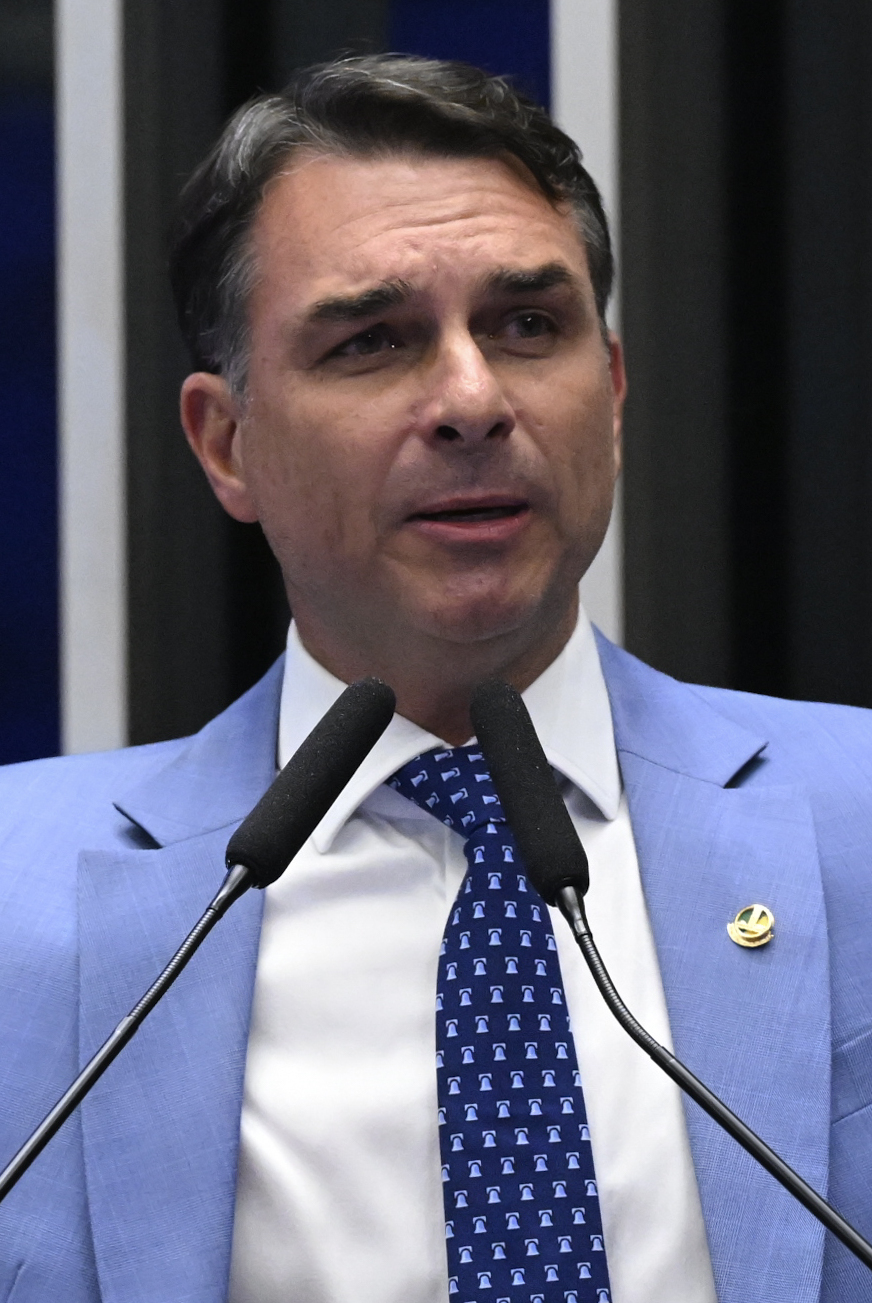
Earlier Sunday, the Brazil election results 2026 produced the first shock of the night. With 41.57% of ballots counted, the Superior Electoral Court, known as the TSE, showed Liberal Party candidate Flávio Bolsonaro on 50.41%, or 24,212,947 votes, against President Luiz Inácio Lula da Silva on 41.44%, or 19,903,245 votes. Every final poll put Lula ahead. Instead, Bolsonaro was flirting with the decisive threshold: more than 50% of valid votes, enough to avoid a second round.
That was a partial result, not a verdict. Brazil's early count tends to lean toward faster-reporting states in the south and center-west, where Bolsonaro's support is strongest. Lula's northeastern stronghold traditionally arrives later and can pull the national margin back sharply. The percentages will move as the denominator expands. The proper reading of this snapshot is that Flávio has outperformed expectations dramatically — not that the presidency has been settled.
That distinction is essential on a night when the number itself is politically explosive. A lead of nearly nine percentage points is not a routine polling wobble. It suggests either a large late swing, a turnout pattern the surveys did not capture, a familiar reluctance among some Bolsonaro voters to disclose their preference, or some combination of all three. Yet Brazil has seen election-night maps change character as the northeast reports. Caution is not hedging here; it is arithmetic.
Why this matters
A dynasty's gamble is paying off — so far
Flávio Bolsonaro, 45, is the eldest son of former president Jair Bolsonaro and the vehicle chosen by the right to preserve a movement after its founder's conviction. His candidacy asked voters to separate the political brand from the legal fate of the man who created it. The early answer is striking: the brand not only survived but, in the first hours of counting, reached beyond the ceiling most polls assigned to it.
The campaign's emotional center was never hidden. Flávio promised to pardon his father, who is serving a 27-year sentence for plotting a failed coup after losing the 2022 election. Supporters describe that promise as correcting a political injustice; opponents see it as an attempt to subordinate courts and accountability to family loyalty. A victory would therefore mean more than a change in economic policy. It would determine whether the Bolsonaro movement can use the ballot box to reverse the consequences of its founder's conviction.
The Flavio Bolsonaro first round lead also tests a broader political proposition: whether dynastic succession can retain the charisma of a populist founder without his name atop the ticket. So far, the senator appears to have consolidated the right while attracting enough late voters to threaten an outright win. Whether that coalition holds as the count becomes geographically representative is the central question of the evening.
Brazil runoff October 25 would reshape the hemisphere
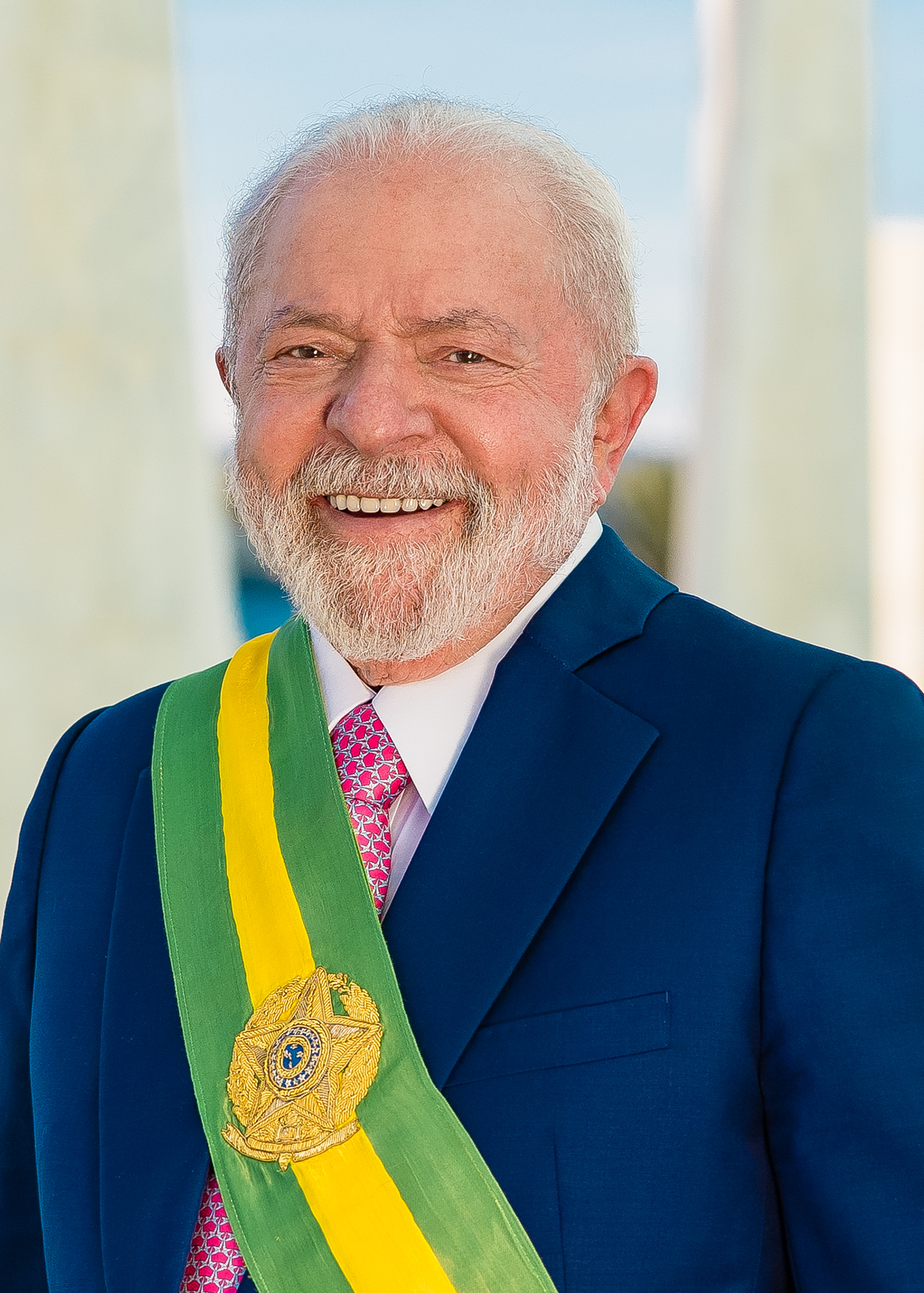
Brazil is not simply another national contest. It is Latin America's largest economy, a diplomatic heavyweight in the Global South and a country of 158.8 million registered voters choosing among 13 presidential candidates. A Bolsonaro victory would reinforce the rightward current running through the region and give Washington a large, ideologically aligned partner. A Lula comeback would preserve the left's most important government and extend the career of an 80-year-old president seeking an unprecedented fourth term.
If neither candidate clears 50% of valid votes, the Brazil runoff October 25 becomes a three-week struggle over nearly every voter outside the two dominant camps. That contest would reach beyond personalities. It would decide Brazil's posture on trade, privatization, climate policy, relations with the United States and China, and the institutional legacy of the Bolsonaro prosecutions.
How we got here: 2022, the polls, and the mechanics of a miss
Brazil election polls vs results: a familiar failure
The closing surveys told a coherent story. Datafolha's October 1 poll put Lula on 42% and Flávio on 38%. BTG/Nexus had it 42% to 37%. AtlasIntel/Bloomberg placed Lula at 45.3% and Bolsonaro at 42.2%. Different methods produced the same conclusion: the incumbent led by roughly four or five points, with a runoff likely. The partial count reversed both the order and the scale, showing Bolsonaro ahead by about nine points.
The gap revives the argument that has shadowed Brazilian polling since 2022, when Jair Bolsonaro's first-round strength was underestimated. Pollsters will examine whether their likely-voter screens misread turnout, whether late deciders broke heavily right, and whether a shy-voter effect kept some Bolsonaro supporters out of survey samples. They will also have to distinguish a genuine nationwide miss from the temporary distortion of an incomplete, regionally uneven count.
That is why the Brazil election polls vs results debate should wait for a complete tally before assigning blame. If Lula closes most of the gap when northeastern ballots arrive, the polls may prove directionally sound but poorly matched to the reporting sequence. If Flávio's margin endures, the industry will face a deeper crisis: repeated failure to measure one of Brazil's largest and most politically organized voting blocs.
The campaign that produced no favorite
Le Monde described a lackluster campaign, an apt phrase for a race that often felt more defensive than visionary. Lula asked voters to protect social programs, constitutional continuity and Brazil's independent foreign policy. Flávio asked them to punish an establishment he portrayed as hostile to conservatives and to restore the Bolsonaro project without its founder on the ballot.
Neither candidate entered election day with a durable majority. High rejection rates constrained both campaigns, and the final week was crowded by controversy over U.S. pressure, suspended consular services and the possibility of political violence. The result was a country mobilized less by enthusiasm than by the fear of what the other side might do with power.
Washington's shadow over the vote
President Donald Trump said on October 1 that the United States was “watching very closely.” The statement landed after Washington imposed a 50% tariff on Brazilian imports and after the United States designated the First Capital Command, or PCC, and Red Command as terrorist groups on May 28, effective in June. Lula used his September 22 address to the United Nations to warn against foreign interference in Brazil's democracy.
The United States also suspended consular services ahead of the election, adding a practical signal to an already charged relationship. For Bolsonaro voters, Trump's pressure underscored a shared campaign against organized crime and left-wing governance. For Lula's coalition, it looked like an effort to influence a sovereign vote. Either way, Washington was not a distant observer. It became part of the choice voters believed they were making.
Multiple angles: who gains, who loses
Winners: the Trump administration and the regional right
If the early pattern becomes the final result, the Trump administration gains an ally at the center of South American politics. A Bolsonaro government could align more closely with Washington on security, sanctions and trade negotiations, while strengthening a regional right-wing bloc that already sees Brazil as the largest remaining prize.
That alignment would also increase U.S. leverage over tariffs. A 50% import duty is both punishment and bargaining chip; a friendly administration in Brasília would be under pressure to seek relief quickly. The benefit for Washington is strategic, but the risk for Brazil is dependence: a victory celebrated as national renewal could begin with negotiations under conditions set abroad.
Winners: markets — conditionally
BBN Times' election analysis framed the Ibovespa and the real around expectations of privatization, deregulation and fiscal restraint under a Bolsonaro presidency. Investors often reward those signals in the first reaction, particularly when they believe a new government could reduce state intervention or accelerate asset sales. An enduring lead could therefore lift equities and strengthen the currency.
The word “conditionally” matters. Markets dislike uncertainty more than they like ideological labels. A narrow or disputed count, accusations against the voting system, protests, or a legally contentious pardon drive could erase an initial rally. The first price move would measure expectations; the following sessions would measure whether Brazil's institutions can carry the result without a rupture.
Losers: Lula's coalition and the Latin American left
Lula built his campaign on experience, social protection and the claim that only he could hold together a broad democratic coalition. Trailing by nine points at this stage places that argument under severe strain. Even if the northeast narrows the margin, the Workers' Party must confront evidence that its fourth-term offer did not mobilize the electorate as expected.
A defeat would begin an immediate succession crisis on the Brazilian left. Lula's singular political biography has repeatedly postponed the question of who comes next. At 80, he cannot easily promise another cycle. Governors, ministers and party leaders would begin positioning themselves before the result was cold, and the regional left would lose the leader with the greatest international stature.
What critics say
Bolsonaro's critics argue that a pardon promise for his father turns executive clemency into a test of loyalty and threatens the independence of democratic institutions. They point to the failed-coup conviction and warn that electoral victory should not become a mechanism for erasing legal accountability. Those concerns are not abstract; they go to the limits a president accepts on his own power.
Lula's critics counter with years of allegations around corruption, fiscal expansion and a governing model they say exhausts public money while protecting entrenched interests. They see the incumbent's long career not as stability but as a closed circle. Both critiques are documented political positions. Neither settles the election. Voters, and then the verified count, decide which risk they are more willing to take.
What the numbers mean
Partial-count math: 41.57% is not 100%
Reuters reported an earlier snapshot at roughly 11% counted: Flávio Bolsonaro on 51.09% and Lula on 40.67%. By the time the TSE tally reached 41.57%, those shares had shifted to 50.41% and 41.44%. Bolsonaro's margin narrowed as millions of additional ballots entered the denominator. That movement is exactly why an election-night percentage cannot be detached from the share of votes counted.
Partial returns are not samples selected to mirror the nation. They are administrative arrivals. A state that reports quickly can dominate the first picture even if its population is smaller than a slower-counting region. The relevant questions are not only how many votes remain, but where they are and how those places voted. A nine-point lead is formidable; its durability depends on the composition of the remaining 58.43%.
Regional skew: why the map favors Flávio early
The south and center-west, generally stronger for the Bolsonaro camp, tend to report efficiently and appeared prominently in the early total. Lula's strongest reservoir lies in the northeast, where later-arriving results can move the national balance. The 2022 election provided the clearest precedent: a right-leaning opening count tightened as more northeastern votes were processed.
That does not guarantee a Lula comeback. Flávio could be outperforming his father's earlier benchmarks inside Lula territory, or Lula could be losing turnout in communities his coalition assumed would hold. But it explains why analysts should watch state-level completion rates, not merely the national headline. The map tells whether the lead is expanding into new territory or resting on familiar strongholds counted first.
The 50%-of-valid-votes threshold
Brazil elects a president in the first round only when a candidate wins more than half of valid votes. Blank and null ballots do not count toward that denominator. At 50.41%, Flávio sat barely above the line in this snapshot. If his share falls to 50.00% or below as the count matures, the top two advance to October 25.
For an outright win, Bolsonaro must do more than preserve his raw lead over Lula; he must keep all other candidates collectively below his own share. For a runoff, Lula needs only to pull Bolsonaro beneath the threshold while holding second place. That is the crucial difference between the race margin and the constitutional test. A candidate can lead comfortably and still be forced into another election.
What happens next
Path one: an outright first-round win
An immediate victory requires the current pattern to survive the later northeastern count. Bolsonaro would need to offset expected Lula gains there with strong margins in populous southeastern states and continued dominance in the south and center-west. He would also need minor candidates to remain compressed enough that his valid-vote share stays above 50%.
That would be historically consequential because a first-round presidential win in a fragmented 13-candidate field is rare. It would deprive Lula of the three weeks normally used to unite anti-Bolsonaro voters and negotiate endorsements. It would also deliver the right a cleaner mandate than the polling suggested was possible even hours before voting began.
Path two: Lula vs Flavio Bolsonaro runoff on October 25
If Bolsonaro slips below 50%, the Lula vs Flavio Bolsonaro results become the starting line for a new campaign rather than the finish. The votes won by Santos, Cury, Caiado, Zema and other candidates would become the immediate target. Formal endorsements matter, but the transfer is never automatic: voters may cross ideological lines, abstain or cast blank ballots rather than follow a defeated candidate's instruction.
Flávio would enter a runoff with momentum and the advantage of having beaten the polls. Lula would argue that the late count proved the race competitive and would try to rebuild the broad anti-Bolsonaro alliance that carried him in 2022. Every debate, regional visit and endorsement would be judged against one question: which candidate can expand beyond a highly loyal but highly polarizing base?
Rejection rates near 50% make the runoff volatile
Both leading candidates carry rejection ratings near or above 50% in some surveys. That makes a second round unusually negative. The winning strategy may be less about converting enthusiastic new supporters than limiting defections, keeping reluctant allies at home and convincing voters that the alternative represents a greater institutional or economic danger.
Such a campaign can change quickly. A debate mistake, an endorsement from a defeated center-right candidate, a market shock or a confrontation over Jair Bolsonaro's sentence could move voters who are not emotionally attached to either camp. The first-round map would identify where those persuadable blocs are concentrated; it would not tell either finalist how reliably they will transfer.
Who won Brazil election 2026? Not yet decided
The honest answer to who won Brazil election 2026 is: not yet. Flávio Bolsonaro holds an extraordinary early lead, has broken the consensus of the final polls and sits just over the first-round threshold. Lula still has millions of likely favorable ballots to come from the northeast. Until the TSE reports a near-complete national count, victory declarations would outrun the evidence.
Watch the completion rate by state, the pace at which Bolsonaro's 50.41% changes, and official TSE announcements. Then watch for concession or celebration signals from the campaigns, any challenge to the count, the opening reaction in the real and Ibovespa, and statements from Washington. The first shock of the night is real. Whether it becomes an outright Bolsonaro victory or the frame for an October 25 runoff remains the decisive unanswered question.
Sources
- Reuters via DevDiscourse — results trickle in as Brazil awaits high-stakes election outcome
- Wikipedia — 2026 Brazilian general election and TSE tally
- Le Monde — Brazil's campaign and concerns over U.S. interference
- BBN Times — what the election means for the Ibovespa and the real
- Fox News — Brazil election tests Latin America's conservative shift
- The Wall Street Journal — Flávio Bolsonaro wins the first round and advances to a runoff
- CNN — Brazil presidential election first-round results
- Fox News — Bolsonaro wins Brazil's first round as conservative candidates advance
This report was updated from the earlier partial count with effectively final first-round figures reported by The Wall Street Journal, CNN and Fox News on October 4. The TSE count confirmed the order of finish and the October 25 runoff; rounding differs slightly by outlet and count completion.