Trump confuses Brazil with India
- Trump 125 million India election post
- Brazil election 2026 runoff
- India presidential electoral college
- U.S.–Brazil election tensions
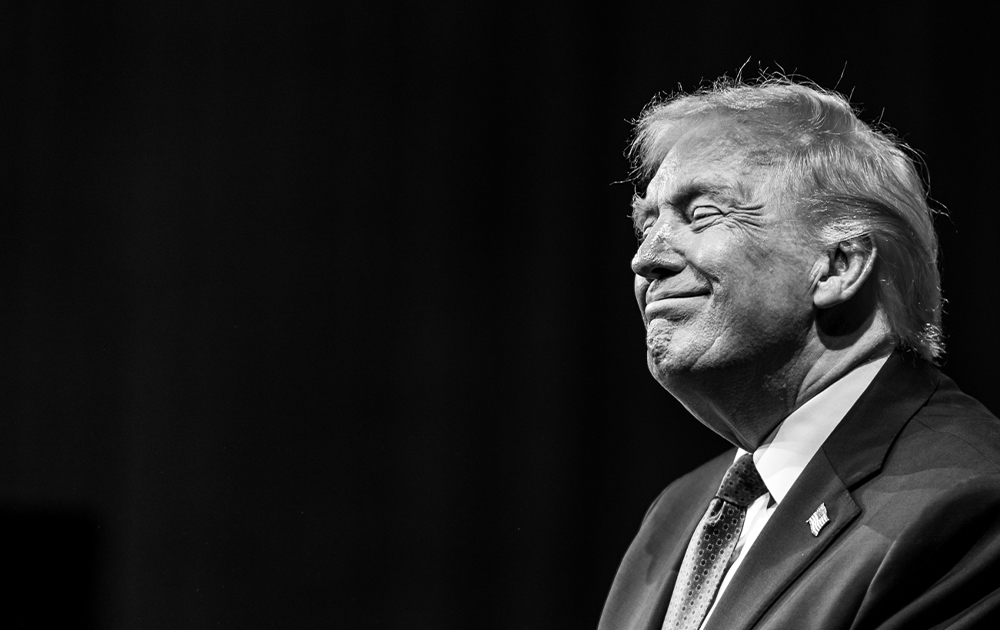
Hours after Brazilians voted in the first round of their presidential election on Sunday, Trump wrote:
“125 Million People voted today in the first round of India's Presidential Election. The results came out shortly after the vote closed, on the SAME DAY! In Detroit, Philadelphia, California, and numerous other U.S. Cities and States, the results, with much smaller numbers, will often take weeks to Rig, I mean, calculate. Voting in America is CORRUPT!!! President DJT.”
The text was reproduced by IANS via The Freedom Press, 7Globe and Inshorts. Those reports also said the White House Rapid Response account reposted it. No presidential election took place in India on October 4. Brazil held the vote, and Brazil's tally produced the figure in the post.
Why this matters
A leader can misspeak without changing policy. This mistake is more consequential because Trump was not making an offhand geographical reference; he was using another country's democratic process as evidence for a claim that American elections are corrupt. Misidentifying the country weakens the comparison before its underlying logic can even be tested.
The timing compounds the problem. Brazil's campaign has already featured allegations of foreign pressure. Lula has accused the Trump administration of election interference, and Brazil denied visas to two U.S. officials who planned a July “election integrity” visit. Reuters reporting republished by SRN News identified the officials as Riley M. Barnes and Samuel Samson. Separately, Reuters reported on September 30 that Brazil's ABIN intelligence agency had briefed French and German delegations on alleged U.S. and Russian interference.
That does not prove Trump's mistaken post was part of an organized influence effort. It does mean every presidential comment enters a diplomatic environment where intent, accuracy and leverage are already contested. A gaffe that might otherwise fade becomes usable evidence in Brazil's sovereignty argument.
What the numbers show
The Trump 125 million India election post points to Brazil
Brazil's Superior Electoral Court figures, as reported by 7Globe, showed roughly 99.99% counted, with Flávio Bolsonaro at 47.03% and President Luiz Inácio Lula da Silva at 45.16%. About 125.27 million valid votes were recorded. That total is the fingerprint: “125 Million People” is a rounded description of Brazil's result.
Earlier reports carried slightly different percentages because they captured the tally at different times. The Freedom Press/IANS item cited 47.24% for Bolsonaro and 44.91% for Lula with 98.81% counted. Other election-night reports put the candidates near 47.3% and 44.8% at 98%, or roughly 47% and 45.1% at 99.6%. Those snapshots are compatible with a moving count. They do not change the two durable facts: Bolsonaro finished first, and neither candidate crossed the majority threshold.
BBC News reported that the race would move to a second round. Flávio Bolsonaro and Lula are scheduled to compete again on October 25. Signal Post News has a full breakdown of the Brazil election 2026 Flavio Bolsonaro Lula runoff results and an earlier election-day guide to the matchup.
India presidential election: electoral college, indirect vote
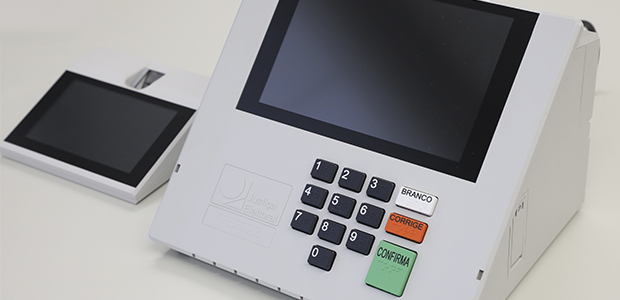
India's president is not chosen by a direct nationwide popular vote. Under Article 54 of the Indian Constitution, elected members of both houses of Parliament and elected members of state and qualifying union-territory assemblies form the electoral college. The vote uses proportional representation and a single transferable ballot. Citizens do not cast 125 million direct presidential votes.
India does hold enormous direct parliamentary elections. Its 2024 national electorate was about 970 million—often rounded in public discussion to 980 million—according to a U.S. Congressional Research Service overview. That is roughly 7.7 times Brazil's 125.27 million valid-vote total. If the post had actually described a major Indian popular vote, 125 million would have represented only a fraction of the eligible electorate.
The overlooked irony: whose fast count did Trump praise?
The Trump Truth Social Brazil election gaffe meets Brazil's machines
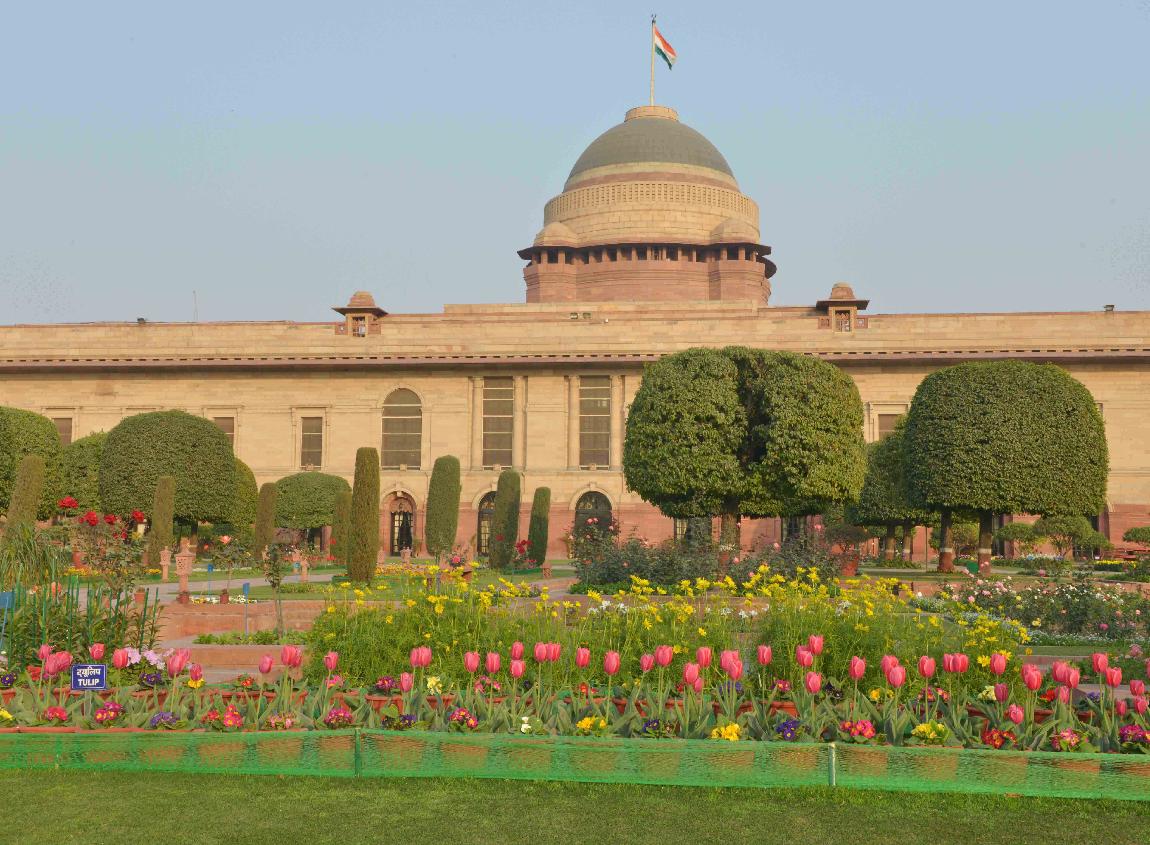
Trump praised the result for arriving shortly after polls closed. That was, in effect, praise for Brazil's centralized electronic voting and tabulation system—the same system Jair Bolsonaro spent years attacking without substantiating claims of systemic fraud. Brazil's election authorities defended the machines, courts imposed consequences for false claims, and the count again moved quickly on Sunday.
The comparison with the United States is structurally weak. American elections are decentralized across thousands of local jurisdictions, involve multiple ballot types and are governed by different state rules. Large volumes of mail ballots, provisional ballots, signature review and statutory cure periods can extend counting even when no fraud exists. Fast is not automatically clean; slow is not automatically corrupt.
Nor does Brazil's speed validate Trump's claim that U.S. cities take “weeks” to “rig” results. Election-night media projections are not certification, and some states cannot legally begin processing mailed ballots until late in the cycle. The relevant test is whether valid votes are counted under transparent procedures—not whether two very different systems publish comparable totals on the same clock.
The political backdrop
Jair Bolsonaro's 27-year sentence and coup-attempt case
Flávio Bolsonaro enters the runoff carrying both the power and the burden of his father's political brand. Jair Bolsonaro is serving a 27-year prison sentence after conviction for masterminding a failed coup attempt aimed at overturning the previous election. Trump called the prosecution a “witch hunt.” In 2025, his administration imposed 50% tariffs on Brazilian goods in a package linked publicly to the Bolsonaro case.
Trump later hosted Flávio Bolsonaro at the White House, an unmistakable signal of access and affinity. But as of Sunday night, Trump had not formally endorsed a candidate in the runoff. That distinction matters. Personal warmth, official hosting and tariff pressure can shape perceptions without crossing the bright line of an explicit campaign endorsement.
U.S.–Brazil tariffs and election-interference claims
Tariffs have become more than a trade dispute. To Lula's government, linking economic punishment to Jair Bolsonaro's prosecution made the policy look like pressure on Brazil's judiciary and political process. To Trump allies, the measures were a response to persecution and censorship. Both sides therefore interpret the same policy through a democratic-legitimacy frame.
That is why the country mix-up lands badly in Brasília. Washington is claiming enough knowledge of Brazil's institutions to judge its courts and elections, while the president's post named the wrong country. Brazilian critics can argue that the intervention is both forceful and poorly informed. Supporters can dismiss the wording as a simple labeling error while emphasizing that Trump correctly recognized Brazil's rapid count. The numbers support the error diagnosis; the political meaning remains contested.
Who benefits—and who loses
Lula's camp gets a ready-made sovereignty argument
Lula's campaign gains the clearest immediate advantage. It can pair the post with its interference narrative: an American president aligned with Flávio Bolsonaro comments on Brazil's vote, misnames the country, and uses the result to attack U.S. elections. That is a compact message for debates, advertising and diplomatic briefings.
Indian news outlets and comedians also get obvious material because the factual contradiction is unusually stark. India did not vote for president on Sunday, and its constitutional procedure could never produce the mass direct-vote scene described. Humor can travel faster than a correction, increasing the story's reach beyond Brazil and the United States.
Credibility and diplomatic standing take the hit
Trump loses credibility on the narrow claim he wanted to advance. An argument about election administration requires command of basic facts: which electorate voted, under which rules and in what system. The wrong country invites audiences to discount the rest.
The United States also absorbs a diplomatic cost. Brazilian officials deciding how to engage Washington on trade, critical minerals, security and recognition of the eventual result must now account for another public intervention. The post is unlikely to break bilateral relations, but it adds friction at precisely the moment both governments need clear channels.
Flávio Bolsonaro's campaign faces a mixed effect. Trump's attention can energize voters who admire the U.S. president, yet it also helps Lula frame the runoff as a choice between national sovereignty and foreign influence. What mobilizes one coalition may consolidate the other.
What happens next
Brazil runoff October 25, 2026
The immediate contest is arithmetic. Bolsonaro begins near 47%, Lula near 45%, and the remaining first-round vote becomes decisive. Each campaign must win minor-candidate supporters, reduce abstention where it has strength and avoid a mistake that changes the runoff's theme. Trump's post gives Lula a theme; whether it changes votes will depend on how often the campaign can connect it to household concerns and sovereignty.
Four signals to watch before the runoff
First, an endorsement. Trump has hosted Flávio Bolsonaro but has not formally endorsed him. A direct endorsement would erase that remaining ambiguity and test whether U.S. support is an asset or liability in Brazil.
Second, tariff leverage. Any promise to lift, preserve or increase the 50% tariffs could be read as economic policy—or as leverage over voters and institutions. The wording and timing will matter.
Third, critical minerals. Brazil's reserves and processing ambitions make minerals a strategic part of U.S.–Brazil relations. A deal framed around investment could lower tensions; one tied to political outcomes could intensify interference claims.
Fourth, recognition of the result. Washington's response after October 25 will be the most consequential test. Prompt recognition of a certified outcome would steady relations. Claims detached from evidence—especially after a post that named the wrong country—would magnify the credibility damage.
The bottom line
The Trump 125 million India election post was not ambiguous. Its vote total, timing and reference to a first round all point to Brazil. India's president is elected indirectly; Brazil counted about 125.27 million valid presidential votes and sent Flávio Bolsonaro and Lula to an October 25 runoff.
The deeper story is the collision between accuracy and influence. Trump used Brazil's fast electronic count to attack U.S. elections while praising a system his closest Brazilian ally's father spent years trying to discredit. He did so during a campaign already charged with allegations of U.S. pressure. The label may have been a simple error. The diplomatic and political consequences are not so simple.
Sources
- IANS via The Freedom Press — Trump's post and election context
- 7Globe — post text and Superior Electoral Court tally
- Inshorts — White House Rapid Response repost
- BBC News — runoff outcome and October 25 date, reported October 4, 2026
- Reuters — ABIN briefings on alleged foreign interference
- Reuters via SRN News — denied visas for planned U.S. election-integrity visit
- Congressional Research Service — scale of India's 2024 national electorate
Reporting basis: The Truth Social text is quoted as reproduced by the linked reports. Vote shares differ slightly across reports because they captured different stages of Brazil's live count. Near-final figures are attributed to the Superior Electoral Court via 7Globe. Interpretive judgments are identified as analysis rather than confirmed events.