Published September 30, 2026 at 11:00 a.m. PDT
Francken dark winter Europe warning
The warning in Brussels
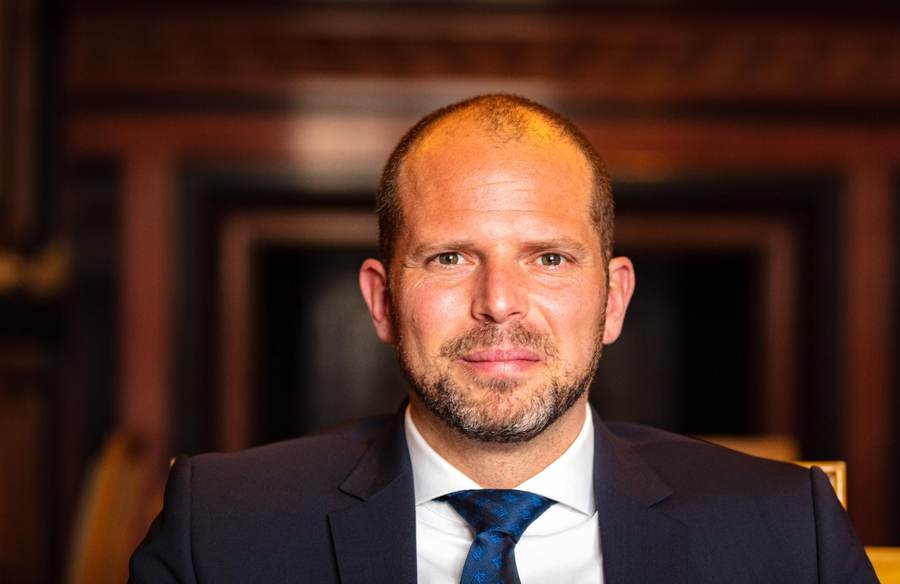
BRUSSELS — The Francken dark winter Europe warning arrived as ministers and military commanders were already counting incursions, drone alerts and nights when civilian airports had to yield to security operations. Speaking at the Euronews Defence & Space Summit on September 30, Belgian Defence Minister Theo Francken predicted an escalation in pressure that is designed to frighten, distract and exhaust without crossing cleanly into declared war.
“There will be more hybrid threat actions (in the) coming months. It will be a dark winter for Europe,” Francken said. He called Russia Belgium's biggest security threat and argued that Moscow's hybrid methods are not a recent improvisation: “This is not something that Russia [has been] doing for two or three years.” The depth of that experience, he said, is one reason attribution remains difficult.
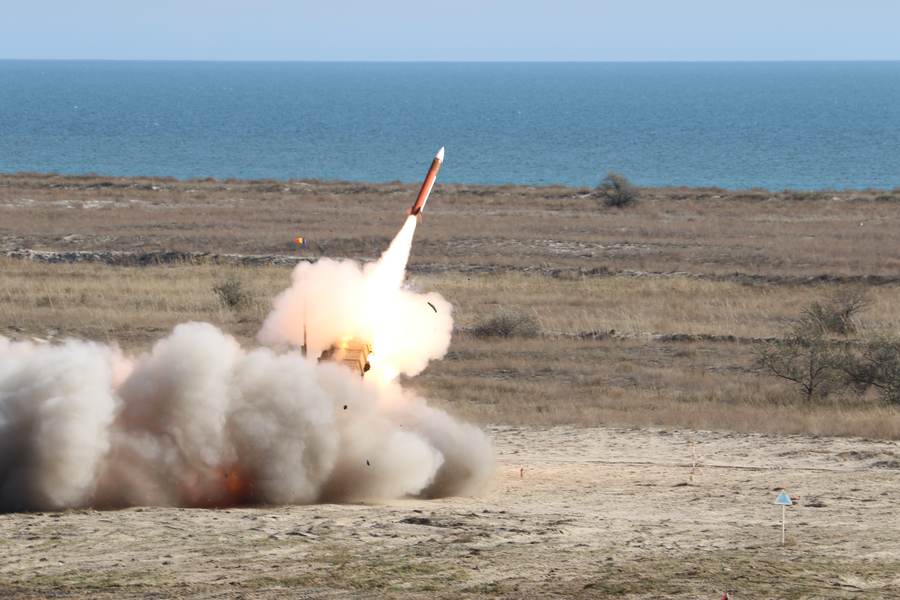
His operational prescription was blunt. Francken flagged increased Russian use of jet-powered drones and said Europe must respond at industrial speed: “We need to scale up our air defences and we need to have more stocks, scale up production. Everything has to go faster.” Russia has denied involvement in incidents where it has responded to Western accusations. That denial does not erase European security concerns, but it makes public evidence—not inference alone—essential.
Why this matters: a minister grading his own defences
Francken's warning is most revealing when read as an audit of Europe rather than a forecast about Russia. A hybrid campaign succeeds when the defender must spend heavily, suspend normal activity and argue publicly over responsibility even if the attacker spends little and accepts none. The target is confidence in institutions as much as infrastructure.
Belgium has doubled defence spending from roughly 1% of gross domestic product, but a higher budget line does not instantly create trained crews, launchers, sensors or interceptor inventories. “I cannot do in 18 months what has been neglected for 40 years,” Francken said. That is the readiness gap in one sentence: political urgency can change overnight; industrial capacity and military competence cannot.
The admission also changes the burden of proof on government. If ministers ask citizens to accept emergency procurement, airspace closures and less fiscal room for domestic priorities, they must distinguish demonstrated threats from worst-case planning. Security policy fails when it reacts too slowly, but it also loses legitimacy when certainty outruns published evidence.
The hybrid campaign so far in 2026
The pattern worrying European governments is cumulative. Drone sightings over airports and sensitive sites force closures or military responses; cyber operations probe networks; airspace violations test reaction times; influence operations exploit the uncertainty that follows. Each event can be small. Together they keep authorities in a state of costly alert.
Belgian security services say they have found “strong indications” of Russian involvement in drone incidents over sensitive locations, but authorities have not publicly released the evidence behind that assessment. The wording matters. “Strong indications” is an official judgment, not a courtroom finding, and reporting should not turn it into one.
The eastern flank supplied same-day context. Romania and Poland scrambled aircraft during an overnight Russian attack on Ukraine involving 188 drones, according to Ukrainian reporting cited in coverage of the alerts. Poland's Lublin and Rzeszow airports were disrupted by drone-related security measures. A separate incident in Moldova, where a Russian drone was reported to have come down near Hirbovat, showed how quickly the geography of the war can spill beyond Ukraine even when no NATO state is directly attacked.
Ukraine's prime minister said Russia had shifted toward mass attacks on energy infrastructure. That makes winter pressure both military and civilian: damaged generation, transmission and heating systems can drive displacement while nearby NATO states face air-policing demands, border disruptions and the risk of debris or weapons crossing sovereign airspace.
The attribution problem
Hybrid warfare is built to exploit the distance between suspicion and proof. A cheap drone can be launched through an intermediary; a cyber operation can route through compromised systems; a sabotage plot can be designed so that arrests reveal operatives but not a public chain of command. Francken's point about long Russian experience goes to method: ambiguity is not a side effect but part of the weapon.
Critics are right to challenge governments that blame Moscow without showing enough evidence. Premature attribution can harden public opinion around a false conclusion, hand Russia a propaganda opening and make later corrections look like concealment. Russia's denials must be reported where relevant, and Belgium's unpublished evidence should be described precisely as an assessment by its services.
NATO's Supreme Allied Commander Europe, General Alexus Grynkewich, has urged governments to attribute destabilising Russian activities publicly. The strategic argument is that silence lets separate incidents appear random and protects the aggressor's deniability. The democratic answer cannot be assertion by rank; it has to be a disciplined release process—technical indicators, timelines and confidence levels—designed to expose enough without burning intelligence sources.
Who benefits, who loses
Moscow benefits if Europe spends a large amount to answer a small, deniable intrusion and then fractures over whether the response was justified. The cost asymmetry is political as well as military: one ambiguous incident can consume days of official attention, disrupt travel and force a public debate about escalation.
There is a legitimate counterargument. Threat inflation can become a subsidy for weak procurement discipline, and governments may use the language of emergency to avoid scrutiny. Europe should not answer every unexplained drone with a maximal claim. The choice is not between complacency and panic; it is between evidence-led resilience and improvisation.
Belgium's fiscal constraint sharpens that choice. Its public-debt burden is among the European Union's highest, leaving defence expansion to compete with pensions, health services, energy support and investment. Defence contractors and security agencies gain orders and authority; households and taxpayers absorb the opportunity cost. If ministers cannot show what each new system protects and why it is the right layer, consent will erode before readiness improves.
What the numbers say
The overnight figure of 188 drones illustrates the saturation problem. Even a high interception rate can leave dangerous leakage when the incoming wave is large. Air defence therefore cannot be judged by percentages alone; it must be judged by what gets through, what remains protected and how many more nights the defender can repeat the performance.
The economics are unfavorable when an expensive interceptor is the only answer to a comparatively cheap drone. Europe needs a layered system: electronic warfare and lower-cost short-range options where they work, guns and missiles where they are necessary, and higher-end systems reserved for the targets that justify them. Stockpile depth matters as much as the number of launchers because an empty battery is only a landmark.
Belgium's move from roughly 1% toward 2% of GDP is a substantial political change, but the percentage says nothing by itself about delivery time, production bottlenecks or available rounds. Francken's contrast—18 months in office against 40 years of neglected investment—captures the core arithmetic. Money can be appropriated quickly; factories, skilled labor and integrated command systems take years.
What happens next
The most dangerous winter scenario is not a single spectacular attack on NATO. It is a sustained Russian energy campaign against Ukraine that repeatedly pushes drones, debris, electronic interference and emergency flight operations toward allied borders. Each episode would force local decisions before alliance capitals have finished debating the last one.
NATO Secretary General Mark Rutte says the alliance is strengthening integrated air and missile defence after repeated incidents on the eastern flank. That work will be tested on three fronts: whether sensors and commanders share a usable picture quickly; whether countries can buy enough interceptors and cheaper counter-drone tools; and whether political leaders can explain attribution without exposing intelligence or overstating certainty.
Grynkewich's public-attribution push will likely produce sharper statements and pressure for coordinated evidence releases. Budget fights will be harder. Belgium and its neighbors must fund stockpiles and production while voters confront debt, housing, energy and social-service costs. The central reality behind Francken's warning is temporal: incidents arrive in minutes, factories expand in years and democratic budgets move through political cycles. Europe cannot compress all three clocks, but it can stop pretending they run at the same speed.
Sources
- The Guardian Europe live blog, September 30, 2026: Francken's summit warning and regional drone alerts (summit photo credited to Olivier Matthys/EPA)
- Today.az, September 30, 2026: Belgian minister warns of a dark winter for Europe
- Devdiscourse, September 30, 2026: Dark winter warning and NATO response
Reporting basis: Published September 30, 2026. Facts and quotations are attributed to the reports above; analysis, scenario framing and judgments are Signal Post News's. Russia denies involvement where it has responded, and Belgian authorities have described “strong indications” without publishing the underlying evidence.