Poland airports closed Russian strikes Ukraine
Lublin and Rzeszów went dark to civilian traffic overnight as Polish jets scrambled in response to Russia's ballistic-missile and drone barrage on Ukraine — a disruption that is becoming the new normal on NATO's eastern flank.
What happened
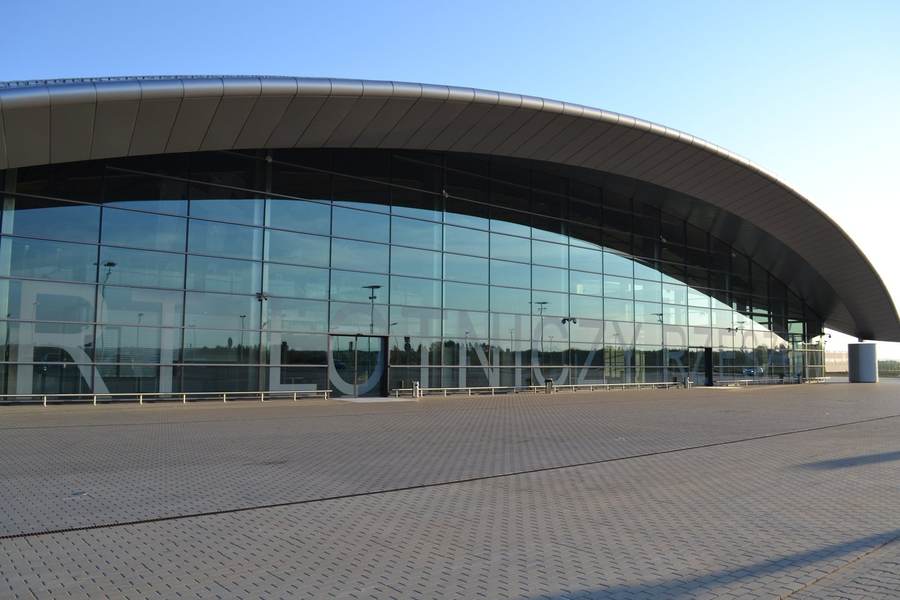
Early on Wednesday, September 30, Poland temporarily closed the airports in Lublin and Rzeszów to civilian flights as its military aircraft operated in the country's airspace in response to Russian strikes on neighboring Ukraine. Air operations at both airports resumed around 7 a.m. local time, Poland's Air Traffic Authority announced in a post on X.
The Polish army said military aviation was operating in Polish airspace because of Russian strikes on Ukraine "using airborne assault means" — Moscow's overnight barrage of ballistic missiles and jet-powered drones that hit Kyiv and the Danube port of Izmail. As a defensive measure, Poland readied its ground-based air defense systems and radar reconnaissance to secure its airspace.
The night added a sharper edge: Lt. Col. Jacek Goryszewski of the Armed Forces Operational Command told Poland's TVN24 that a Russian jet-powered drone crashed near the Dorohusk–Jagodzin border checkpoint. "It's again a danger [getting] very close to our border," he said. The drone came down on the Ukrainian side, and Polish officials said national airspace was not violated. The air attack warning was later lifted.
A note on sourcing: the core facts — the closures, the resumption, the Polish army's statement, and the drone crash — are confirmed by Reuters, Poland's Air Traffic Authority, and the Polish Armed Forces Operational Command. Russia's Defense Ministry has confirmed it carried out a "massive strike" overnight, claiming it hit a communications center and energy facilities in Kyiv and port facilities in Izmail; that is a belligerent's account and could not be independently verified.
Why this matters
This story is significant less for the few hours of closed runways than for what the closures reveal about the war's third-order effects. Three things stand out.
First, NATO airspace disruption is being routinized. Poland has now repeatedly shut airports and sections of its airspace during Russian attacks on Ukraine — Reuters documented a "second halt" at these same two airports on September 17, and an earlier closure in April. The Guardian's live coverage put it bluntly: the scrambles are "becoming increasingly regular and routine as Russian airstrikes on Ukraine intensify." When a NATO member has to suspend civilian aviation every few weeks to clear the sky for its fighters, the war is no longer something happening next door — it is a recurring operational reality inside the alliance's airspace.
Second, Rzeszów is not just any airport. Rzeszów–Jasionka is NATO's principal logistics hub for military aid flowing into Ukraine. Closing it, even briefly, touches the artery of the Western war effort. Russia knows this. The strikes that triggered the closure hit western Ukraine — the corridor the aid hub serves — and a jet-powered drone crashing near Dorohusk–Jagodzin, the land crossing that corridor feeds, underscores how close Moscow's campaign is brushing against the alliance's supply lines without crossing them.
Third, the jet-powered drone is a new vector of anxiety. These faster, harder-to-intercept munitions are appearing in growing numbers — Ukraine's president said 90 of 120 drones fired in one recent day were jet-propelled. A jet drone that can fly to the Polish border and crash beside a checkpoint is a different threat than the slow Shaheds of 2022. It compresses Poland's reaction time and raises the stakes of every "routine" scramble.
Background: a pattern, not an incident
The September 30 closure fits an established pattern. On September 17, the Polish Air Navigation Services Agency announced a second temporary halt at Lublin and Rzeszów to facilitate military aviation operations; in April, the same pair of airports was closed and reopened within hours amid Russian long-range strikes. Each time, the script is the same: radar detects Russian missile and drone activity against western Ukraine, the Operational Command orders preventive deployment of military aviation and raises air-defense readiness, civilian traffic is held, and within hours the all-clear sounds.
The tempo is accelerating with Russia's campaign. September has seen Russia intensify its aerial assault on Ukraine — near-nightly strikes on Kyiv, the September 28 jet-drone hit on the National Academy of Sciences, ballistic-missile attacks — and each wave brings the possibility of another Polish closure. What began as an emergency measure is becoming standard operating procedure.
Who gains, who pays — and what the critics say
Russia's calculation is that it can strike Ukraine ever closer to the NATO border without triggering a response — calibrating its barrages to the edge of the alliance's red lines. The drone at Dorohusk–Jagodzin is the physical expression of that calibration: close enough to force Poland to scramble, not far enough to constitute an attack on NATO. Critics of the West's posture argue this salami-slicing works: each unanswered brush with the border normalizes the next one.
Poland's position is defensive caution. Warsaw's preventive deployments protect its airspace and its citizens, and the rapid resumption of flights shows it can manage the disruption. But the repeated closures carry costs: civilian aviation delays, the economic drag on a key logistics hub, and the psychological toll of living under recurring air-attack warnings. Polish officials frame the scrambles as routine precisely to deny Russia the satisfaction of having rattled them.
The alliance's dilemma is the hardest to solve. NATO cannot stop Russian strikes on Ukraine without entering the war, but it cannot ignore the spillover either. The EU's foreign policy chief has warned the bloc needs to "rearm more quickly," arguing Russia appears "not interested in peace at all." Each Polish closure is fresh evidence for that argument — and fresh pressure on alliance members to fund the air defenses that make the scrambles survivable.
The numbers in context
Consider the cadence: the April closure, the September 17 "second halt," and now September 30 — three documented closures of the same two airports in under six months, with the interval shrinking. The September 17 and September 30 closures are 13 days apart. If the current tempo of Russian strikes holds, Poland's air-traffic authority may soon be issuing these notices as often as weather advisories.
The drone numbers give the trend its teeth. Ukraine's president has reported jet-propelled drones making up the majority of some Russian salvos, with interception rates around 57 percent on the worst days. A weapon that fast, launched in those numbers, aimed at western Ukraine, will keep finding its way to the border. The Dorohusk–Jagodzin crash is unlikely to be the last.
What happens next
Three scenarios are worth watching. The most likely: the closures continue as a background rhythm of the war — Poland refines its procedures, airlines build the disruptions into schedules, and the alliance treats each scramble as routine. Normalization, however, is its own risk: routine procedures are the ones most vulnerable to a genuine surprise. The diplomatic track: the incidents feed the European debate over rearmament and air-defense spending, and over whether the EU needs its own rapid-response mechanism for what officials now call hybrid attacks. The wildcard: a Russian munition that does not stop at the border. Every preventive deployment is designed to prevent exactly that; but with jet-powered drones flying to the frontier in growing numbers, the margin for error narrows with each wave.
For the passengers who woke up on September 30 to delayed flights out of Lublin and Rzeszów, the strategic analysis is secondary. Their morning was disrupted by a war their country is not fighting — but whose front line keeps creeping toward their runway.
Related coverage
Sources
- Reuters — "Polish airports in Lublin and Rzeszow resume flights" (September 30, 2026)
- The Guardian (live blog) — "Poland scrambles military aircraft in response to Russian strikes on western Ukraine" (September 30, 2026) — via europesays.com
- Devdiscourse — "Polish airports in Lublin and Rzeszow resume flights" (September 30, 2026)
- Conflingo — "Poland Temporarily Closes Two Airports Due to 'Military Activity'" (September 30, 2026)