Russia nuclear warning NATO Kaliningrad
Moscow's informal diplomatic warning moves the dispute beyond embassy statements, while NATO's answer tries to reject nuclear coercion without treating a media scenario as an operational crisis.
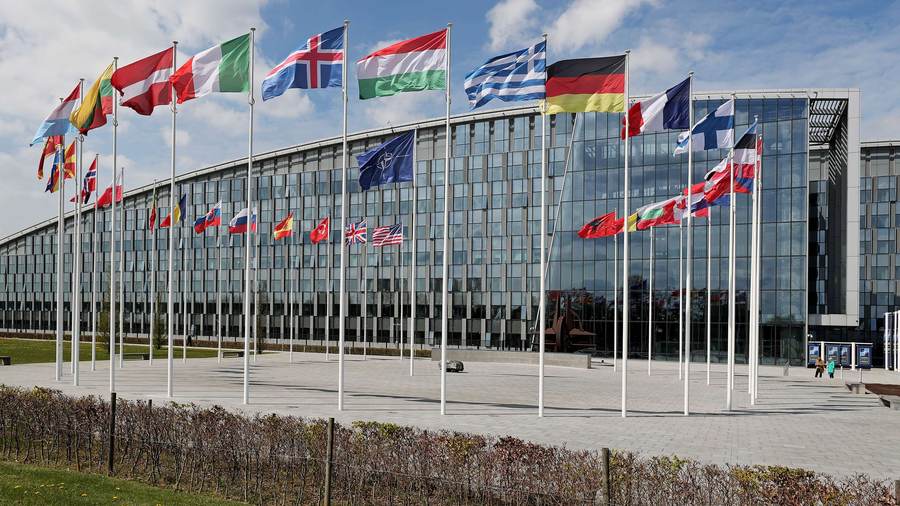
BRUSSELS — The Russia nuclear warning NATO Kaliningrad dispute entered a more formal and more dangerous phase when Moscow sent the alliance an informal diplomatic document saying it could use every force available to defend the Baltic exclave, including nuclear weapons, if NATO tried to isolate it. Reuters reported Wednesday that it had seen the document, known in diplomatic practice as a non-paper.
The text accused NATO of pursuing what Russia called a “dangerous and reckless course” with “high risks of the outbreak of a direct armed conflict.” It also raised the possibility of Russian strikes against “decision-making centers in the alliance's member states right from the outset of the conflict.” Those are Moscow's words and threat claims, not a description of any NATO plan. Reuters said the document did not identify an alliance decision to blockade or attack Kaliningrad.
NATO spokesperson Allison Hart confirmed that the alliance received the non-paper and sent a reply. “We strongly denounce the threat of force, including any irresponsible nuclear rhetoric. We call on Russia to end its unprovoked war in Ukraine,” she said. Hart added that NATO is defensive and that its exercises do not threaten Russian territory. Russia, for its part, denies planning to attack NATO and rejects European allegations that it is conducting a hybrid campaign across the continent.
What the Russia non-paper NATO Kaliningrad warning says
The document's most consequential sentence is conditional but expansive. It says Russia “will be ready to use the entire arsenal of forces and capabilities at its disposal, including nuclear weapons” if NATO countries attempt to cut Kaliningrad off from the rest of Russia. The same passage expands the potential response beyond the Baltic theater by referring to strikes on allied decision-making centers at the outset of a conflict.
That wording does two things at once. It draws a red line around Russia's sovereignty and access to the exclave, and it makes the consequences deliberately difficult to bound. “Entire arsenal” is a phrase designed to preserve uncertainty. Naming nuclear weapons removes any doubt that the uncertainty reaches the highest rung of escalation, even though the document does not announce a change in force posture, deployment or alert status.
The private message was accompanied by a public campaign. Russian embassies in at least three European countries issued statements over three days accusing NATO of using military exercises and public planning scenarios to intensify pressure around Kaliningrad. TASS reported the warning from Russia's embassy in Belgium. The earlier London embassy statement, covered separately by Signal Post News, addressed similar themes but was a public reaction to British media discussion. The new reporting is distinct because NATO received a diplomatic non-paper directly.
Why this matters
A nuclear threat is not the same thing as a nuclear order, and an informal note is not a treaty notification. But the channel, wording and geography make the message strategically important. NATO and Russia already operate aircraft, ships, radars and missiles in a compact Baltic space. The danger is less that either side has chosen a war than that repeated signaling changes what commanders and governments expect the other side to do in a fast-moving incident.
The message also compresses several different subjects — alliance exercises, wartime support for Ukraine, transit rules, media commentary and a fictional television drama — into one account of encirclement. That is useful to Moscow because it creates a single deterrence narrative. It is difficult for NATO because the alliance must answer the threat without accepting the premise that training or a broadcast amounts to preparation for an attack.
The practical test is whether both sides keep political messaging separate from operational behavior. A harsh statement can remain rhetoric if military posture is stable and military-to-military communication stays open. The same words become more dangerous if paired with unusual deployments, ambiguous air activity, interference with transport, or exercises whose timing is read as confirmation of hostile intent.
Kaliningrad's strategic role in Baltic tensions Russia NATO
Kaliningrad is a Russian exclave on the Baltic Sea, separated from mainland Russia and bordered on land by Poland and Lithuania. Both neighbors are members of NATO and the European Union. The territory hosts Russia's Baltic Fleet and layered military infrastructure, making it an important platform for surveillance, air defense and naval operations. Its location also makes it vulnerable: access depends on sea and air links or transit through neighboring states.
That combination — heavily militarized yet geographically detached — gives Kaliningrad unusual leverage in crisis messaging. Russia can present any restriction as a threat to sovereign territory. NATO's eastern members can view the same territory as a base capable of complicating reinforcement and defense in the Baltic region. Neither perception proves aggressive intent, but both shape contingency planning.
The history of the Kaliningrad blockade threat shows why definitions matter. During disputes over sanctioned goods moving through Lithuania, Moscow used the language of blockade while European officials described the measures as enforcement of sanctions with permitted civilian transit continuing. A future argument could turn on rail schedules, customs rules, airspace or maritime inspection long before anyone imposed a literal military siege. Nuclear rhetoric applied to an imprecise term creates room for misinterpretation.
Why a non-paper is a significant diplomatic instrument
A non-paper is an informal document used to communicate a position without the ceremonial weight of a signed diplomatic note. It can test language, frame a negotiation or place a warning on record while leaving governments room to adjust. That flexibility is useful in crisis management; it also permits ambiguity about exactly whose authority the text carries and what response would satisfy it.
In this case, the format matters because Moscow did not rely only on public embassy posts. Sending the warning to NATO created a direct diplomatic exchange and prompted a written alliance response. The move can therefore be read as both escalation and risk control: escalation because nuclear language was transmitted institutionally, risk control because a channel existed in which NATO could answer without a military move.
The Allison Hart NATO statement followed that logic. It rejected force and nuclear rhetoric, described the alliance as defensive, and redirected attention to Russia's war in Ukraine. The response did not mirror the threat or promise a particular countermeasure. That restraint avoids a rhetorical auction while preserving NATO's standing commitment to defend allied territory.
Hybrid-war accusations widen the dispute
European governments have accused Russia of conducting a hybrid campaign involving sabotage, arson, cyber operations, disinformation and interference with infrastructure. Reuters cited Estonia's accusation concerning an attack connected to a defense company supplying Ukraine. Russia denies directing such acts. Those competing claims are part of the political environment surrounding the non-paper, but they should not be collapsed into proof about any single incident.
The hybrid-war argument matters because it changes the threshold question. If allied governments see sabotage and covert disruption as parts of one campaign, they may treat a new incident as cumulative rather than isolated. Moscow can then portray coordinated investigations, exercises or sanctions as evidence of NATO escalation. Each side's defensive measure can become the other's evidence of aggression — a classic security dilemma intensified by attribution disputes.
The media trigger adds another layer. Sky News's The Wargame, aired this month, dramatized a hypothetical British response involving Kaliningrad. A fictional scenario is not government policy. Yet Russian officials cited public scenarios and commentary as signs of intent. The episode shows how entertainment, analysis and official planning can blur in strategic messaging, especially when states are already searching for evidence that confirms their threat assessments.
Who benefits, who loses and what critics say
Moscow gains deterrence leverage but risks diluting the signal
Russia benefits if the warning makes allied governments more cautious about language or exercises involving Kaliningrad. The message also supports a domestic narrative that the state is defending vulnerable territory against encirclement. By coordinating embassy statements, Moscow can amplify that message across several national debates at once.
The cost is signal credibility. If nuclear language is repeatedly attached to hypothetical or media-driven scenarios, foreign governments may treat it as routine coercion rather than new information. That can weaken the warning's deterrent value. It can also create pressure for harsher future language, because yesterday's extraordinary phrase becomes tomorrow's baseline.
NATO preserves unity but faces an eastern-flank reassurance problem
NATO benefits from responding collectively rather than allowing separate national statements to drift apart. Hart's formulation gives all members a common position: the alliance is defensive, rejects the threat and will continue supporting Ukraine. That limits Moscow's ability to exploit differences in public messaging.
But eastern allies bear more immediate exposure. Poland and Lithuania border Kaliningrad; other Baltic states depend on allied reinforcement through a constrained region. Their governments may want visible readiness. Members farther west may place greater weight on avoiding a cycle in which every exercise is answered by a threat and every threat by another exercise. Alliance management requires both reassurance and restraint.
Ukraine and European civilians absorb indirect costs
Ukraine could benefit if the threat reminds NATO governments that Russian pressure extends beyond the battlefield and strengthens support for collective defense. It could lose if allied attention, air-defense assets or political bandwidth shift from Ukraine toward a separate Baltic confrontation. Moscow's call for NATO to alter its behavior also seeks to raise the perceived cost of backing Kyiv.
European civilians and businesses carry the less visible costs: tighter security around infrastructure, disrupted transport during alerts, higher insurance and investment uncertainty, and the risk that suspected sabotage becomes a source of political panic before facts are established. None of those effects requires a shooting war. Strategic coercion works partly by making normal activity more expensive.
Critics of NATO will argue that exercises near Russia and public discussion of blockading Kaliningrad are needlessly provocative. Critics of Moscow will answer that an alliance cannot allow nuclear threats to veto lawful defensive training or open debate. Both arguments identify a real risk; neither establishes that NATO has adopted a plan to isolate the exclave. The evidence reported Wednesday concerns a Russian warning and NATO's reply, not an allied blockade decision.
Data-driven reading: scale, channels and asymmetry
Three counts organize the immediate story. One non-paper created a direct institutional exchange. At least three Russian embassies reinforced the message publicly in three days. Two NATO members share land borders with Kaliningrad. The pattern matters more than any single quotation: a private warning, a distributed public campaign and a geographically concentrated theater.
The asymmetry is also important. Russia can invoke a broad range of conventional and nuclear capabilities in one sentence. NATO must respond on behalf of many governments with different risk tolerances and different proximity to the exclave. That does not mean NATO lacks military power; it means alliance signaling requires consensus, while Moscow can centralize its message.
The phrase Russia strikes NATO decision-making centers is especially escalatory because it moves the hypothetical target set away from Kaliningrad itself. Yet the document describes a possibility in an imagined conflict, not reported strikes or an announced target list. Responsible analysis must preserve that distinction. Treating conditional language as an imminent operation would exaggerate the evidence; ignoring it would understate the warning.
What happens next
Scenario one: de-escalation through existing channels
The lowest-risk path is a private clarification cycle. NATO reiterates that it has no plan to isolate Kaliningrad, Russia records the response, and both sides avoid pairing public rhetoric with unusual deployments. Military hotlines, diplomatic missions and the Russia-NATO communication channels that remain available can reduce the chance that an exercise or transit dispute is misread.
De-escalation does not require either side to accept the other's political narrative. It requires precise language: distinguish sanctions enforcement from blockade, exercise scenarios from operational plans, and territorial defense from threats against cities or command centers. Precision is not weakness; it is a way to keep deterrence from becoming self-fulfilling.
Scenario two: further NATO Russia nuclear rhetoric September 2026
A second path is continued rhetorical escalation without an operational change. More embassies could repeat the warning, allied officials could issue stronger rebuttals, and each side could publicize exercises as proof of readiness. This is the most politically convenient outcome because it demonstrates resolve at relatively low immediate cost. It is also corrosive: repetition normalizes nuclear language and makes later audiences less able to distinguish theater from warning.
Scenario three: a transit or exercise dispute creates miscalculation
The most dangerous scenario begins with something smaller than a deliberate attack — a disputed shipment, an aircraft's route, a naval maneuver, interference with infrastructure or an exercise interpreted through the non-paper's language. A local decision could then be judged against publicly declared red lines. The short distances around the Baltic compress decision time, while the threat to strike decision-making centers widens the potential theater.
That is why the immediate indicator is not another quotation. It is whether military posture changes: force movements, alert levels, exercise scope, airspace restrictions or official guidance to civilian infrastructure operators. Absent those signs, the non-paper is best read as coercive diplomatic signaling. If those signs appear, the same text could become part of an escalation ladder.
For now, the facts support a careful conclusion. Moscow has issued an explicit, institutionally delivered nuclear warning tied to a hypothetical attempt to isolate Kaliningrad. NATO has rejected the threat and denied that its activities endanger Russian territory. No reported alliance decision establishes a blockade or attack plan. The risk lies in how repeated rhetoric can narrow room for interpretation before a real Baltic incident tests it.
Related coverage
Sources
- Reuters — Russia issues nuclear warning to NATO as tensions rise in the Baltic (September 30, 2026)
- TASS — reporting on the Russian Embassy in Belgium warning concerning Kaliningrad.
- Business Day — syndicated reporting carrying NATO spokesperson Allison Hart's response (September 30, 2026)