World · Bangladesh · South Asia
The Sheikh Hasina return Bangladesh plan — a December homecoming from exile in India, announced after Dhaka rejected her request for a new passport — has set off the country's most serious unrest since the uprising that drove her from power: crude bombs and arson in at least 28 districts, two attributed deaths, and a nationwide paramilitary deployment ahead of her banned party's November 19 lockdown.
DHAKA, November 18, 2026 — Bangladesh has deployed hundreds of paramilitary troops across the country as unrest grows over the planned return of ousted prime minister Sheikh Hasina, Reuters reported on Wednesday. The Sheikh Hasina return Bangladesh plan is simple to state and explosive in effect: Hasina, who has lived in exile in neighbouring India since she fled Dhaka following violent protests demanding her resignation in August 2024, has requested a new passport and identity card, saying she plans to return in December — a request the government has so far rejected, Reuters reported. Around that single piece of paper, a crisis has assembled itself in ten days: police have recorded dozens of crude bomb blasts and vehicles torched in at least 28 districts, and Hasina's Awami League — banned from political activity — has announced a week-long programme of protests and rallies culminating in a nationwide lockdown on November 19. The deployment, the arrests and the fires are all, in one way or another, arguments about whether she comes home.
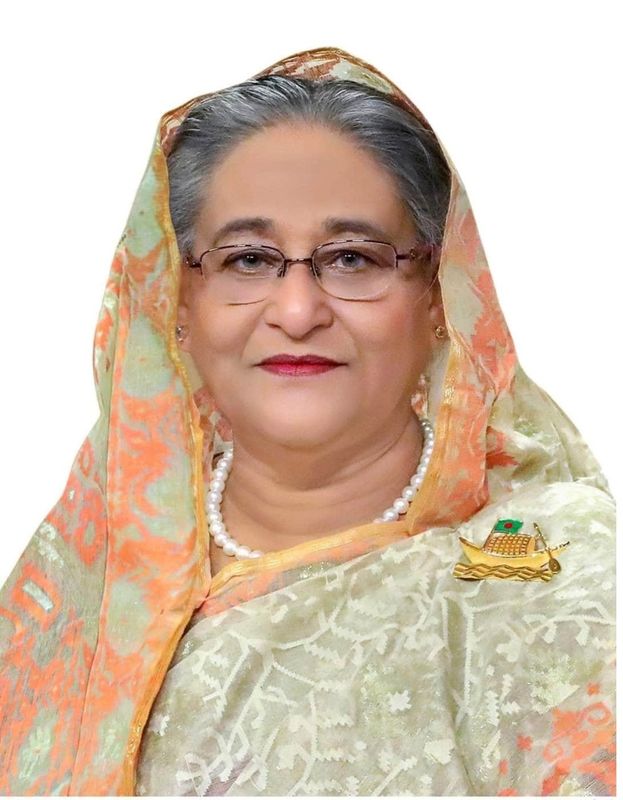
The sequence matters, because each step raised the stakes of the next. The Awami League announced its protest programme last week, Reuters reported — a week of protests and rallies building to the November 19 lockdown, the party's most ambitious show of defiance since it was banned. The violence followed the announcement rather than preceding it, spreading district by district until the police count reached at least 28. And the timing carries a symbolism neither side chose by accident: Tuesday marked one year since Hasina was sentenced to death by a court that found her guilty of ordering a deadly crackdown on the 2024 student-led uprising, Reuters reported — corroborating reports describe the International Crimes Tribunal sentence as imposed in absentia, death on one charge and life imprisonment on another. A banned party announcing a comeback, a death sentence's first anniversary, and a leader promising to fly home: the Bangladesh paramilitary deployment Hasina's return plan has triggered is the government's answer to all three at once.
Bombs and arson
The pattern of the last ten days, as police have recorded it, is not a single riot but a scatter: dozens of crude bomb blasts and vehicles set on fire across at least 28 districts, with several police officers and civilians injured, Reuters reported. Crude bombs — improvised devices designed to terrify as much as to kill — and torched vehicles are the signature of a campaign meant to be felt everywhere at low cost, and the Bangladesh bomb blasts arson 28 districts figure is best read that way: not as one organisation's single operation, which no source has established, but as a nationwide atmosphere in which attacks have become a nightly occurrence.
A BNP activist allegedly killed in Gopalganj
The gravest incident came late on Tuesday. An activist of the ruling Bangladesh Nationalist Party (BNP) was allegedly killed by unidentified people during a protest near Gopalganj, Hasina's home district, police said, according to Reuters. Every word of that sentence carries its attribution deliberately: the killing is alleged, the perpetrators are unidentified, and the account is the police's. Gopalganj is the Awami League's heartland — the district most associated with Hasina's family — and a BNP activist dying there, during a protest, in the week of the lockdown call, is the kind of incident that hardens a confrontation into a feud. The same night, police said, a crude bomb exploded outside the Dhaka residence of Cultural Affairs Minister Nitai Roy Chowdhury, and in Gopalganj the house of a BNP lawmaker and shops belonging to BNP supporters were set on fire, Reuters reported. A minister's home in the capital and a lawmaker's home in Hasina's district, attacked within hours of each other, describe a campaign — whoever is conducting it — aimed at the ruling party at both ends of the country.
A bus helper burnt to death in Pirojpur
On Wednesday morning, the violence claimed its second attributed life. A bus company helper was burnt to death in Pirojpur district after two buses were set on fire, authorities said, according to Reuters. Torched vehicles have been a constant of the ten days, but a man burning to death inside the transport network the lockdown is designed to paralyse is a different order of event. Two deaths are recorded in this account — the BNP activist allegedly killed near Gopalganj, attributed to police, and the bus helper in Pirojpur, attributed to authorities — and this article reports no higher toll, because no source in the reporting supports one. What the two deaths share is their setting: both happened at the points where a lockdown is enforced or resisted — a protest in a contested district, and the buses whose absence from the roads is the lockdown's whole object.
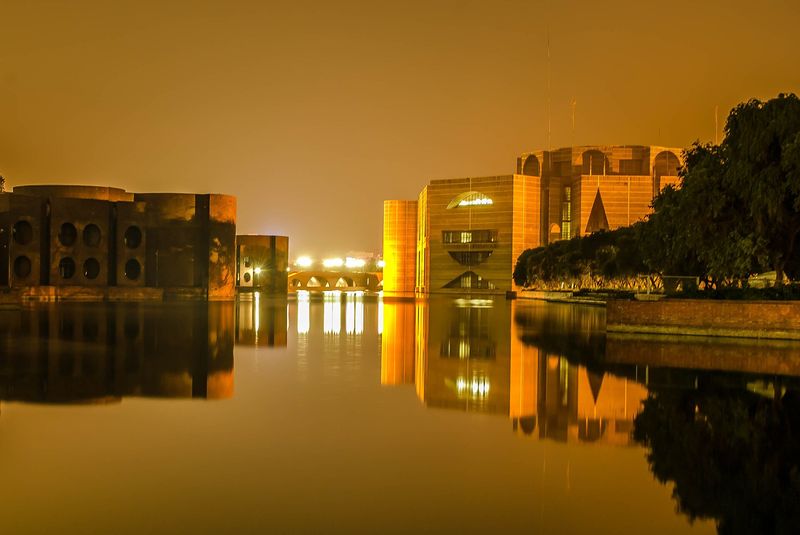
Why Grameen Bank is being targeted
Of all the targets of the past week, the most distinctive is a bank. At least 37 Grameen Bank branches and offices have been targeted in arson attacks or attempted fires since November 10, with 14 more hit since midnight on Tuesday alone, the bank said, according to Reuters. The Grameen Bank arson attacks are not random vandalism against a financial institution; they are an attack on a symbol. Grameen was founded by Nobel laureate Muhammad Yunus, the microfinance pioneer who led the interim government that ran Bangladesh after Hasina's ouster in 2024, Reuters noted. For Hasina's supporters, Yunus is not a neutral elder statesman but the man who personifies the order that replaced her — the interim administration that governed while her party was banned and her prosecution prepared. To burn a Grameen branch is to strike at the founding institution of the post-Hasina settlement without striking at the state itself.
There is a colder logic beneath the symbolism. Grameen's network reaches deep into rural Bangladesh — precisely the terrain where the Awami League's remaining organisation also lives. A campaign against its branches demonstrates reach: it tells supporters in the districts that the party, though banned, though its leader is in exile and under sentence of death, can still make its presence felt in their village on a chosen night. Fourteen sites in a single night since midnight Tuesday, on the bank's own count, is a demonstration of coordination as much as of anger. It is also, for the government, the most awkward kind of target to defend: hundreds of small branches, each one a soft target, each fire a photograph. The attacks on Grameen do not threaten the state's survival. They advertise its limits.
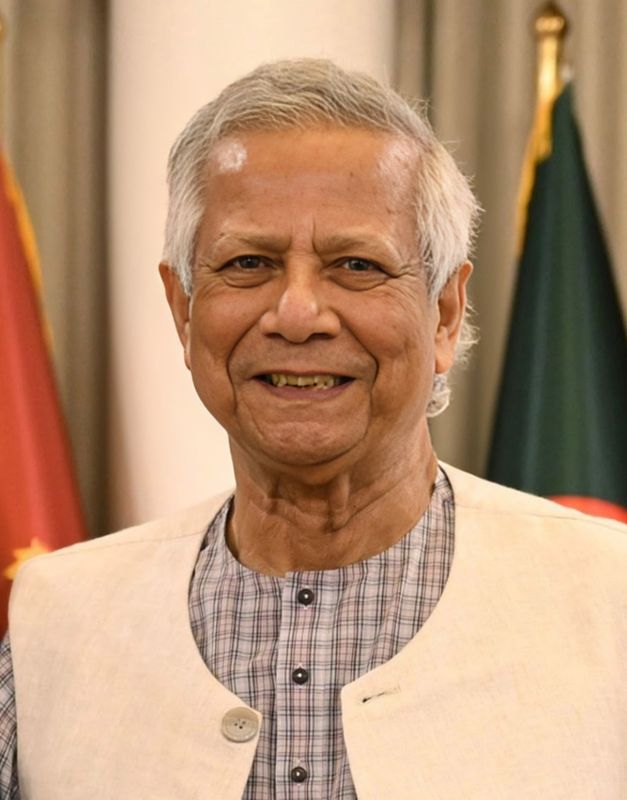
The government's response
The government of Prime Minister Tarique Rahman — a BNP administration, governing a country whose previous ruling party it has banned — has answered on three tracks: troops, arrests and accusation. The first is the deployment itself. Reuters reported hundreds of paramilitary troops sent out across the country as the unrest grew. The more specific figure comes from a different source and is attributed accordingly: The Business Standard, citing a Border Guard Bangladesh (BGB) press release, reported 44 BGB platoons deployed in the industrial areas of Dhaka, Gazipur, Narayanganj and Mymensingh — up from 42, in a build-up that began on November 11, as summarised by The Library Estate. The geography of that deployment is its own analysis: those four districts are the industrial belt, the garment-producing heartland whose shutdowns carry an economic price the whole country pays — a concern this newsroom has covered in the wage-board protests, linked below. Reuters itself reported only the hundreds of troops, without identifying the force or giving a number; the 44 platoons are the BGB's own account, via The Business Standard, and should be weighed as such.
Dhaka arrests: 71 members of banned organisations held
The second track is the police work. Dhaka Metropolitan Police arrested at least 71 members of banned organisations, including the Awami League, in the last 24 hours, spokesperson Niaz Mehedi said, according to Reuters. The Dhaka arrests Awami League 71 figure is the government's evidence that the unrest has an address — that the fires are not spontaneous but organised, and that the organisation behind them can be dismantled cell by cell. Whether 71 arrests in the capital materially reduce a campaign that has touched 28 districts is the open question hanging over Thursday: a lockdown does not need a headquarters, and a movement practised at operating underground — as a banned party by definition is — is structured to survive exactly this kind of sweep.
The third track is the accusation, made at the top of the government. Home Minister Salahuddin Ahmed said on Tuesday that Awami League leaders abroad were inciting supporters to destabilise Bangladesh and torch property, and that those involved would be identified and prosecuted, Reuters reported. The charge closes the government's circle of explanation: the violence comes from exile, directed by leaders outside the country — a description that fits, above all, one leader in India. Balance requires the other half of the record, and Reuters supplied it in a single line this article repeats in full: Awami League leaders, most in hiding, could not be reached for comment. The party accused of running a nationwide arson campaign has given no account of itself in this reporting, because its leaders cannot safely be found. Readers should hold both facts at once — the minister's accusation, attributed, and the accused party's silence, explained.
How we got here
None of this is intelligible without August 2024. Hasina had governed Bangladesh for fifteen consecutive years when a student-led uprising — begun over public-sector job quotas and swollen by a deadly crackdown — turned into violent protests demanding her resignation. She fled Dhaka for India, and the order she left behind was rebuilt without her: an interim government led by Muhammad Yunus, then elections that brought the BNP administration of Prime Minister Tarique Rahman to power. Her party, the Awami League — for decades one of the two poles of Bangladeshi politics — was banned. And a court, the International Crimes Tribunal, tried her in absentia for ordering the deadly crackdown on the uprising and sentenced her to death on one charge, with life imprisonment on another, according to the corroborating reports of the verdict. Tuesday was the first anniversary of that sentence.
The Bangladesh unrest Hasina death sentence anniversary has produced is therefore not a spasm but a collision of two incompatible claims. In the government's account, Hasina is a convicted fugitive whose party is banned and whose return would be an arrest, not a homecoming — hence the Sheikh Hasina passport request rejected, the refusal of the new passport and identity card that would let her travel as an ordinary citizen. In her supporters' account, she is an exiled leader sentenced by her successors' tribunal, planning a December return that her movement treats as a restoration. The Hasina return December exile India plan sits precisely on that fault line: she cannot come back quietly, because the state that would receive her has sentenced her to death, and she cannot be kept away quietly either, because her party has just demonstrated it can set fires in 28 districts in her name. Times Now has reported that Dhaka is pursuing Hasina's extradition from India under a bilateral treaty — reported here as that outlet's reporting, not as settled fact — which would, if pursued to its end, make India the arbiter of the whole confrontation.
Why this matters
Analysis: the first thing this crisis establishes is capacity. A banned party, its leader exiled and sentenced to death, its senior figures in hiding or abroad, has nonetheless sustained ten days of coordinated disruption across at least 28 districts, hit 37 sites belonging to a single symbolic target in eight days, and forced a nationwide paramilitary deployment. Whatever the Awami League can no longer do — hold rallies openly, contest elections, speak to reporters — it can still do this. For a government, that is the most uncomfortable category of opponent: too weak to negotiate with, too strong to ignore, and organised in a form — clandestine, deniable, leaderless at the point of action — that arrests degrade slowly if at all. The 71 arrests and the 44 platoons are real exertions of state power. The fires continuing alongside them are the measure of their limits.
The second thing is the calendar. The Awami League did not choose the week of the death sentence's first anniversary by accident, and the government cannot treat the symbolism as decoration. A death sentence imposed in absentia on a former prime minister is, to her movement, not a verdict but a martyrdom narrative with a date attached; anniversaries are when such narratives are renewed. The November 19 lockdown is the movement's attempt to convert that narrative into a fact on the ground — a country visibly shut down on command. If Thursday passes quietly, the anniversary will have been marked and survived, and the government will have won the round. If the lockdown bites, the anniversary becomes a founding date: the day the banned party proved it could still stop the country, a year after the state sentenced its leader to die.
The third thing is December, and what a return would actually force. Hasina cannot simply arrive. She has no valid new passport — the request has been rejected so far — and she faces a death sentence on arrival, which makes any return either a surrender to arrest or a confrontation at the border of the state's authority. A December return would force every actor to stop postponing: the BNP government would have to arrest a former prime minister or visibly fail to; India, hosting her, would have to facilitate, obstruct or extradite — with Times Now reporting Dhaka is pursuing extradition under the bilateral treaty, a claim this article attributes rather than adopts; and her party would have to decide whether her return is a legal strategy, a mass mobilisation, or a bluff that has already achieved its purpose by detonating November. India's position is the quiet hinge of the whole story. Hasina has sheltered there since August 2024; New Delhi has neither surrendered her nor, in this reporting, endorsed her return. A guest who announces she is leaving to reclaim power in a neighbouring capital is a guest whose hosts must eventually choose — and every week of unrest in Bangladesh raises the price of not choosing.
The risks to the BNP government run in both directions, which is what makes them risks. A heavy hand — mass arrests, a lockdown answered with force, casualties at a protest — hands the Awami League the imagery of repression it needs and echoes, however unfairly, the crackdown that brought Hasina down. A light hand lets the fires set the agenda and invites the charge that the state cannot protect a minister's home, a lawmaker's house or a bank branch. Between those poles sits the government's actual policy — troops in the industrial belt, arrests in the capital, prosecution promised for incitement from abroad — and its success will be judged on a single day's evidence: Thursday, November 19, and whether Bangladesh moves or stops.
The numbers, in context
Set the attributed figures side by side and the shape of the crisis appears. Twenty-eight districts in ten days: the geographic spread of bomb blasts and torched vehicles recorded by police, per Reuters. Thirty-seven Grameen Bank branches and offices targeted since November 10 — 14 of them in the single night since midnight Tuesday — on the bank's own count, per Reuters: the tempo of the symbolic campaign, accelerating into the lockdown. Seventy-one arrests in 24 hours in Dhaka alone, per the metropolitan police spokesperson: the tempo of the state's reply. And 44 Border Guard Bangladesh platoons in four industrial districts — Dhaka, Gazipur, Narayanganj and Mymensingh — up from 42 since the build-up began on November 11, per The Business Standard citing a BGB press release: the weight of the deployment where the economy is most exposed. Two deaths, each attributed, neither inflated here. These numbers do not agree with each other because they are not meant to: they are the two sides' competing measures of the same week — disruption counted by its targets, control counted by its arrests — and Thursday's lockdown is the test of which count was the truer one.
What happens next
The immediate test is Thursday. The Awami League lockdown November 19 call asks Bangladesh to stop — transport halted, shops shut, streets emptied — and a lockdown of that kind is a referendum conducted by absence: it succeeds if the country stays home, and fails if it does not. The government's deployments, arrests and prosecutions talk are all aimed at that single day's turnout-in-reverse. Watch the buses: the Pirojpur killing happened on the transport network because transport is where a lockdown is real. If buses run and markets open on Thursday, the week of fire will read, in retrospect, as a spasm the state absorbed. If they do not, the banned party will have demonstrated a power no ban has extinguished, and December stops being a date and becomes a countdown.
Beyond Thursday, the passport refusal is the lever to watch. So long as the Sheikh Hasina passport request rejected position holds, her December return has no lawful instrument — no passport, no identity card — and any journey home would have to be made as an act of defiance rather than of travel. The December scenarios branch from there. In the first, the refusal holds, the extradition question — reported by Times Now as being pursued under the bilateral treaty — grinds on between Dhaka and New Delhi, and the return plan dissolves into a promise repeatedly renewed and never kept, its power spent in Novembers like this one. In the second, India moves — toward extradition, toward quiet pressure for a negotiated exile, or toward letting her go — and Bangladesh faces the arrival it has sentenced in absentia, with all the street consequences this week has previewed. In the third, she attempts the return without documents and without India's blessing, forcing the confrontation at the moment of her choosing rather than the state's. None of the three can be assigned a probability from the reporting available; what the reporting does establish is that the choice is no longer Dhaka's alone, and that a party with no legal existence has spent ten days proving it can set the agenda of a country of 170 million. That — more than any single fire — is what the troops on the streets of four industrial districts are deployed against.
Related coverage
Bangladesh Forms Wage Board as Garment Workers' Protests Shut 529 Factories
Bangladesh Measles Outbreak Coverage — Signal Post News
Bangladesh Dengue Death Toll Hits 418 After the Deadliest Month of the Year
More world coverage: Signal Post News — World
Sources
Sources: Reuters, “Bangladesh deploys paramilitary troops as unrest grows over Hasina's return,” November 18, 2026 — reuters.com — reporting that Hasina has lived in exile in India since fleeing Dhaka in August 2024; that she requested a new passport and identity card saying she plans to return in December and the government has so far rejected the request; that the Awami League announced a week-long programme of protests and rallies culminating in a nationwide lockdown on November 19; that police recorded dozens of crude bomb blasts and vehicles torched in at least 28 districts over 10 days, with several police and civilians injured; that a BNP activist was allegedly killed by unidentified people during a protest near Gopalganj, police said; that a crude bomb exploded outside the Dhaka residence of Cultural Affairs Minister Nitai Roy Chowdhury and a BNP lawmaker's house and BNP supporters' shops in Gopalganj were set on fire, police said; that a bus company helper was burnt to death in Pirojpur after two buses were set on fire, authorities said; that Tuesday marked one year since Hasina was sentenced to death for ordering a deadly crackdown on the 2024 student-led uprising; that at least 37 Grameen Bank branches and offices were targeted in arson or attempted fires since November 10, 14 more since midnight Tuesday, the bank said, and that Grameen was founded by Nobel laureate Muhammad Yunus, who led the interim government after Hasina's ouster; that Dhaka Metropolitan Police arrested at least 71 members of banned organisations including the Awami League in 24 hours, spokesperson Niaz Mehedi said; that Home Minister Salahuddin Ahmed said Awami League leaders abroad were inciting supporters to destabilise Bangladesh and torch property and those involved would be identified and prosecuted; that Awami League leaders, most in hiding, could not be reached for comment; and that hundreds of paramilitary troops were deployed. The Business Standard, reporting a Border Guard Bangladesh press release, via The Library Estate, “Bangladesh raises security nationwide ahead of Hasina return plans and Awami League lockdown call” — thelibraryestate.com — reporting 44 BGB platoons deployed in industrial areas of Dhaka, Gazipur, Narayanganj and Mymensingh, up from 42, with the build-up begun on November 11. Times Now, “Violent protests in Gopalganj as Sheikh Hasina return reports grow” — timesnowworld.com — reporting, as attributed in this article, that Dhaka is pursuing Hasina's extradition from India under a bilateral treaty. Photographs: official portraits by the Press Information Department, Bangladesh (public domain) and a photograph of the Jatiya Sangsad Bhaban by Syedsazzadulhoque, all via Wikimedia Commons and credited in the captions.