Bangladesh measles outbreak: 202,000 suspected cases and 1,147 deaths since March — 94 percent of them children under five — in what the CDC calls the world's largest active measles outbreak, after the country's once-celebrated vaccination coverage slid from 96 percent to 90 percent in a single year of political turmoil.
Sylhet / They came only after the funerals — how the world's best vaccination story broke in a year
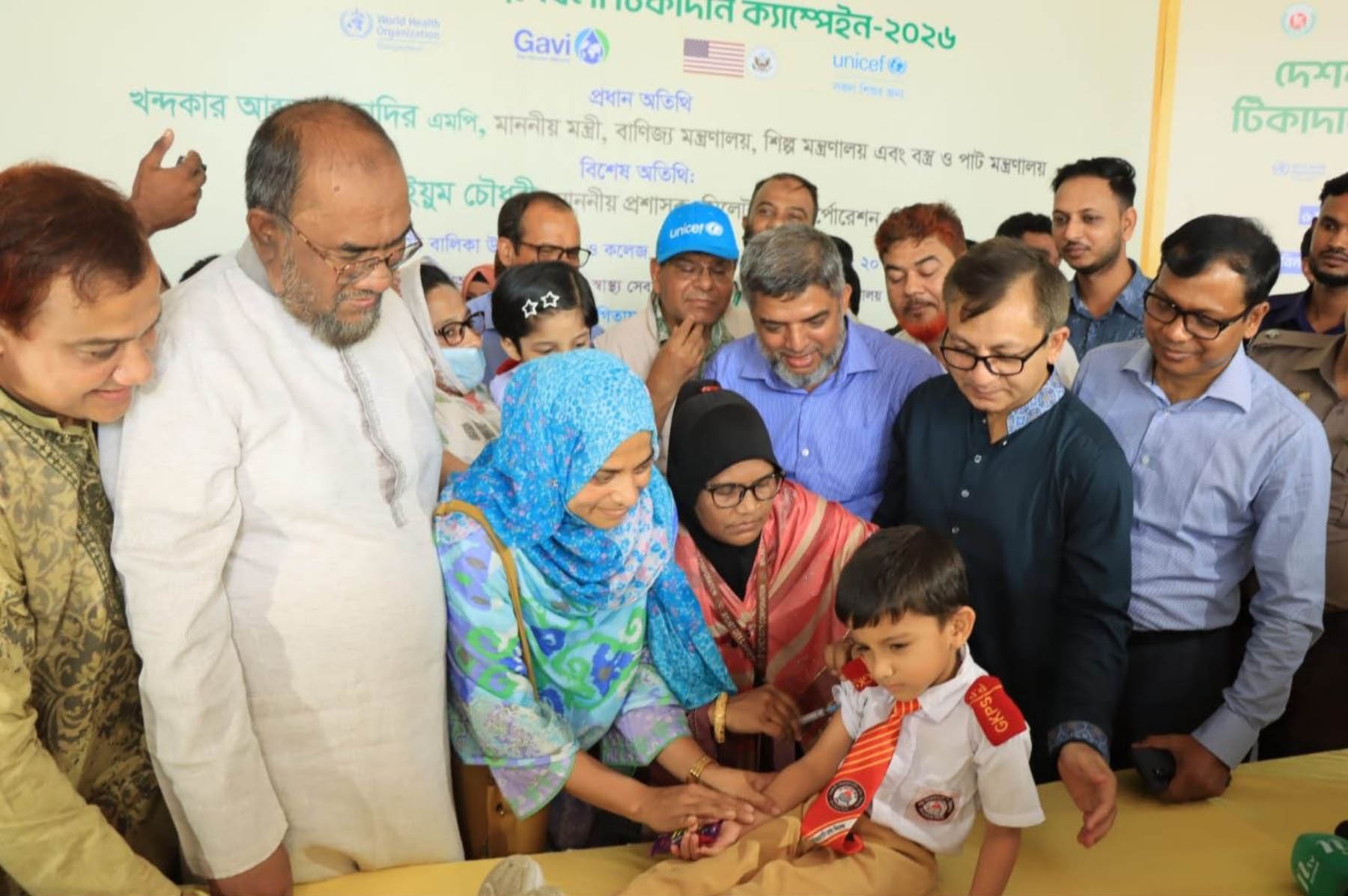
SYLHET, Bangladesh — The world's worst measles outbreak is not happening in a country that forgot how to vaccinate. It is happening in a country that was, until very recently, one of the world's vaccination success stories — and that is exactly why a Reuters investigation published on Saturday, October 17 should worry health officials everywhere. Bangladesh has recorded 202,000 suspected measles cases and 22,000 laboratory-confirmed infections since the outbreak began in mid-March, according to World Health Organization figures running to October 9. At least 1,147 people have died — more suspected cases than any other country on Earth this year — and 94 percent of the reported deaths were children under the age of five. In the northeastern Sylhet region, one of the worst-hit areas in a nation of 178 million people, Reuters found families who said health workers arrived to offer vaccinations only after a child in their community had already died. "They came only after I buried my son," said Amin Mia, 26, whose unvaccinated two-year-old, Arman Hossain, died in July, 24 hours after being admitted to hospital — treatment the family paid for by selling its three-wheeled auto rickshaw.
Track it live: Live global outbreak tracker
The numbers, in full
Start with the scale, because the scale is the story. Two hundred and two thousand suspected cases in seven months. Twenty-two thousand of them confirmed in laboratories. One thousand, one hundred and forty-seven deaths reported to the WHO by October 9 — a toll that had already passed 1,000 in late September, when Bangladesh launched a fresh nationwide measles-rubella campaign targeting 3.4 million previously missed children aged six to 59 months, lowering the minimum vaccination age from nine months to six because so many of the sick were infants who were not yet eligible for a routine shot. The U.S. Centers for Disease Control and Prevention has described Bangladesh's as the world's largest active measles outbreak. In September alone, Bangladesh reported a daily average of 1,198 new cases — the highest daily total since May — even though the health minister had declared in May that the emergency drive had brought cases in the hotspots "almost to zero" and the outbreak was under control.
Measles normally kills two or three people in every 1,000 cases, the WHO says, and it kills more readily where malnutrition is common. Bangladesh's reported figures imply a toll at the harsh end of that range, concentrated with brutal consistency in one group: children under five, and above all unvaccinated children. Meeting minutes from April and August, reviewed by Reuters and not previously reported, show that the share of confirmed cases who had never been vaccinated was "virtually unchanged" — 82 percent before the emergency campaign and 85 percent after it. The campaign vaccinated millions. It did not reach the children who were dying.
How a success story broke
To understand how this happened, you have to understand what Bangladesh had built. The WHO and UNICEF estimated that in 2024 the country achieved 96 percent coverage for the first measles vaccine dose and 93 percent for the second — within touching distance of the 95 percent level the WHO says is needed to stop measles spreading through a population, and a record most wealthy countries would envy. Then the politics broke. In 2024, protests ended 15 years of rule by Prime Minister Sheikh Hasina, and in the turmoil that followed, health workers went on strike, vaccine orders were delayed and the routine follow-up work that keeps coverage high was disrupted. Separate reporting on the outbreak's origins has also pointed to a vaccine stockout and a contested shift away from UNICEF's procurement system during 2024–2025, which outside experts say left warehouses short and a planned nationwide campaign postponed and then cancelled.
The result, in the WHO and UNICEF estimates published in July, was a slide that looks small on paper and was catastrophic in practice: first-dose coverage fell to 90 percent in 2025 and second-dose coverage to 86 percent. Measles is the most contagious virus most doctors will ever deal with — one case can infect a roomful of unprotected children — and herd immunity is a cliff edge, not a slope. At 96 percent coverage, the virus struggles to find a path. At 90 and 86 percent, in dense communities where as many as 40 percent of children go unregistered at birth, according to UNICEF and the Bangladesh Bureau of Statistics, and where roughly a third of health-worker posts are unfilled, the virus found millions of paths. The July report also raised questions about the quality of Bangladesh's own vaccination data for 2023 to 2025, noting preliminary figures that sometimes showed more children inoculated than the entire target population — a statistical impossibility that points to counting errors in both doses and targets.
Why this matters
This is not only a Bangladesh story, and treating it as one would be the easiest mistake a reader in Los Angeles, London or Lagos could make. "This is a real warning to every country," said Mark Jit, a WHO vaccine adviser and professor at the School of Global Public Health at New York University. "Preventing an outbreak through vaccinations was easier, cheaper and safer than responding to an emergency. The response will stop the outbreak eventually, but in the meantime, many will have had measles, and some will have died." The warning lands in a specific global moment: the Reuters investigation notes that vaccine hesitancy is rising, particularly in wealthier nations, and measles is resurgent in the United States as well — Pennsylvania alone has passed 1,000 cases this year in an outbreak we have covered separately. But Bangladesh demonstrates the other, less discussed way coverage collapses. There, experts told Reuters, the bigger hurdles were not parents refusing vaccines. They were access and awareness — workers who never came, lists that never included the child, a system whose records left out millions. In Sylhet, eight of 16 families Reuters interviewed said they had not seen health workers offering vaccinations at all; at least six said workers visited only after a child had died.
Consider what the emergency response itself revealed. In April, the government moved fast — a campaign designed in four weeks that ultimately vaccinated almost 20 million children in April and May, and ministers said every child in the target group had been covered. Then, in June, a different routine health intervention produced a target list for the same age group with four million more children on it. Four million children who existed for one programme had simply not existed for the measles campaign. The April 19 meeting minutes reviewed by Reuters show officials chose one round of readiness checks instead of the usual four, to save time; the single round suggested most — but not all — districts were ready. "When preparedness checks are not done properly, it is often the poorest and hardest-to-reach children who miss out on vaccination and pay the price," said Professor Mahmudur Rahman, an epidemiologist who chairs Bangladesh's National Verification Committee for Measles and Rubella Elimination. Tajul Islam Abdul Bari, who led immunisation in Bangladesh until 2017, noted that campaigns of this kind usually demand months of planning. Speed saved lives in the districts that were ready. It buried children in the ones that were not.
The families at the centre of it
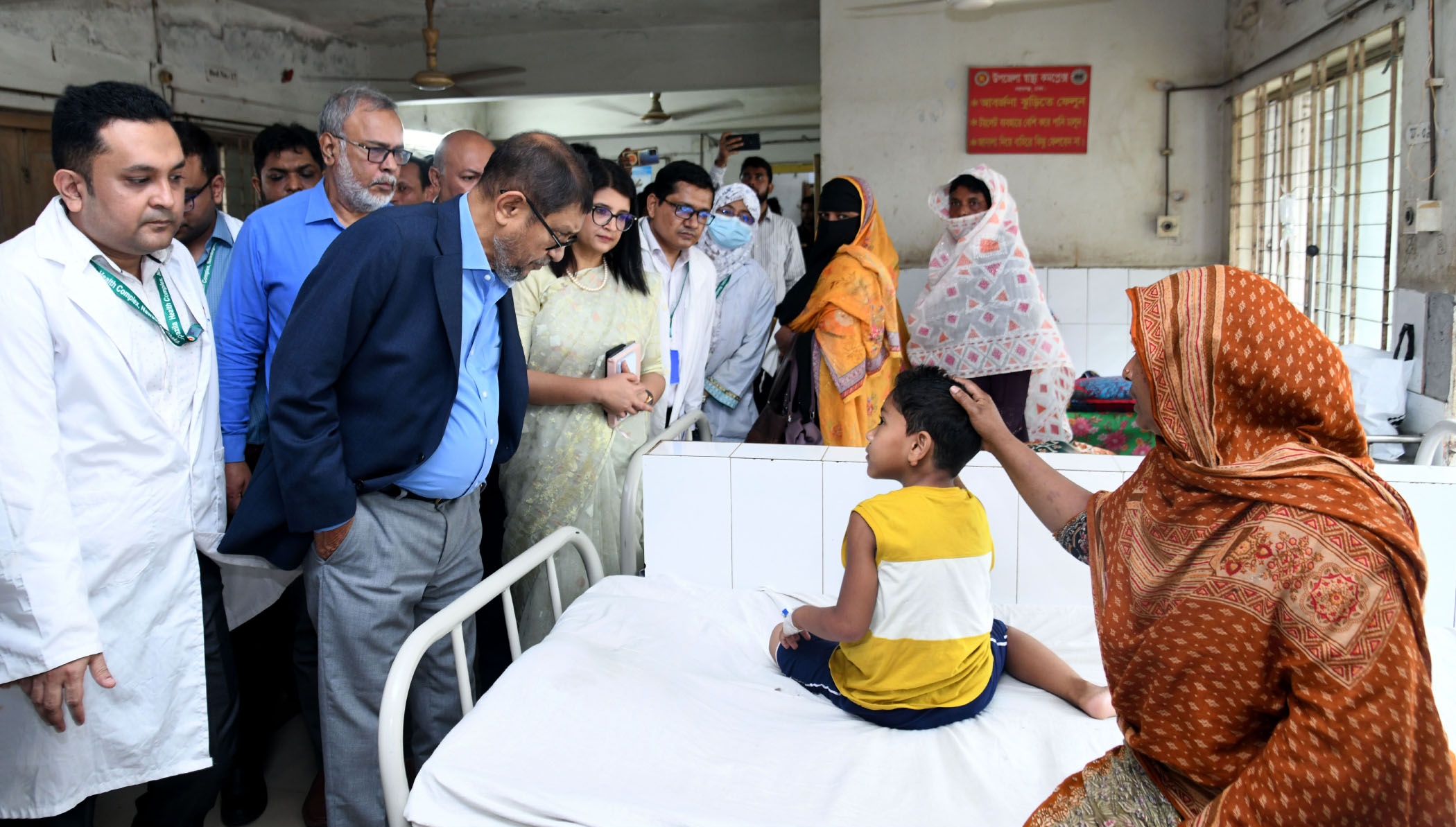
The statistics have names. In Chhatak, in the Sylhet region, the nine-month-old daughter of Humayun Rashid, a 30-year-old carpenter, died unvaccinated in June. Labiba Akter could have been inoculated in April, when the emergency programme lowered the vaccination age to six months. "No health worker came to tell us," her father said. In Sylhet itself, official records show 180 children have died, and in September every ward in the city's 100-bed Shahid Shamsuddin Ahmed Hospital, which is treating measles cases, appeared overwhelmed — 178 patients admitted on the day Reuters visited, in a 100-bed facility, while the country simultaneously fights a dengue epidemic that competes for the same wards, the same staff and the same exhausted system.
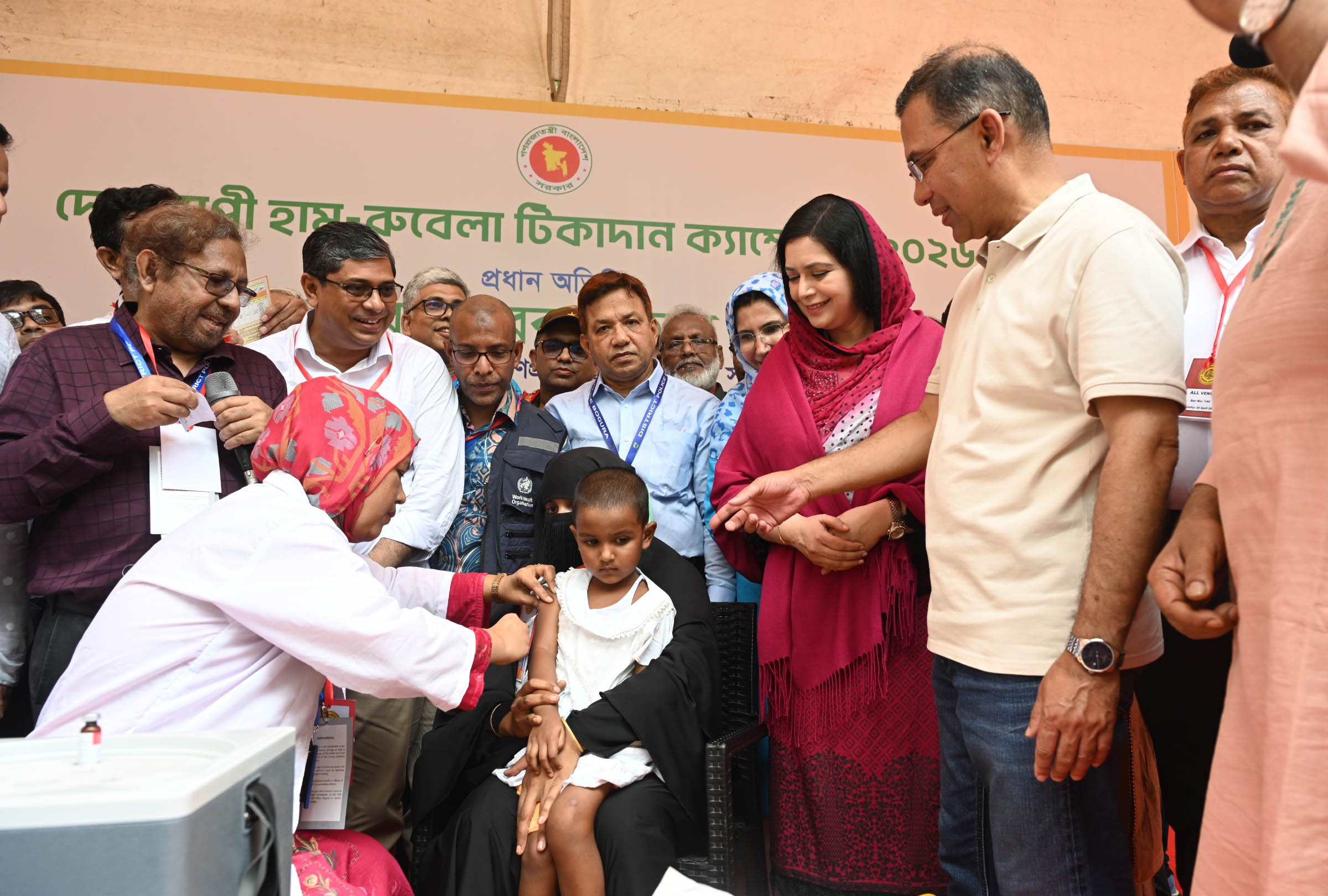
Prime Minister Tarique Rahman's government, for its part, says it is doing everything it can. Ziauddin Hyder, special assistant on health affairs to the prime minister, told Reuters in September the government was doing everything possible to end the outbreak; he attributed part of the April campaign's gap to vaccine hesitancy by parents and to child illnesses keeping children away on vaccination days, and the government did not respond to further questions sent in October. Deputy WHO representative Dr Rajesh Narwal said the organisation was determined to support the goal of vaccinating every child at risk: "Routine immunisation must become more effective and resilient so that these gaps do not develop again." Health experts are also pressing the government to widen the late-September campaign — which targets 3.4 million missed children — beyond the under-fives, because children over five account for a third of all measles cases, and scientists in Bangladesh are studying a separate, worrying question: why immunity appears to be waning faster than expected in babies under six months, who are normally still protected by their mothers' antibodies.
What happens next
The honest answer is that the outbreak ends the way measles outbreaks always end: when the number of unprotected children falls low enough that the virus runs out of hosts — either because they have been vaccinated or because they have been infected. The only choice governments get is which of those two routes does the work, and at what cost in children's lives. Bangladesh's September campaign, the push to register the unregistered, the effort to fill a third of health-worker posts that stand empty, and the unresolved question of the over-fives will decide how much longer the first route takes. The deeper lesson travels further than Dhaka. A coverage rate is not a permanent achievement; it is a daily practice, maintained by lists, fridges, salaries and trust, and it can be dismantled in a single year of political chaos — 96 percent to 90 percent was all it took. Every country watching its own coverage slip by a point or two, for whatever reason, is now looking at the worked example of what the other side of the cliff looks like: 202,000 suspected cases, 1,147 dead, and fathers selling the family rickshaw to pay for a hospital bed. We will keep tracking this outbreak, and outbreaks worldwide, on our live outbreak tracker.
Related coverage: Pennsylvania measles outbreak passes 1,000 cases · Pennsylvania records a fifth measles death · Congo Ebola death toll passes 4,000
Sources
Reuters, October 17, 2026, "'They came only after I buried my son' — Bangladesh is battling measles; it's a 'real warning' to other nations" (WHO figures to October 9: 202,000 suspected cases, 22,000 lab-confirmed, 1,147 deaths, 94% under five; WHO/UNICEF coverage estimates; April and August meeting minutes reviewed by Reuters). Reuters, September 26, 2026, "Bangladesh launches measles vaccination drive amid deadly outbreak" (nationwide campaign targeting 3.4 million children; CDC description of the world's largest measles outbreak; Directorate General of Health Services figures). Associated Press via Medical Xpress, September 2026, "Suspected measles cases kill nearly 1,000 as Bangladesh struggles to contain outbreak" (DGHS toll trajectory and emergency drive with WHO, UNICEF and Gavi). Al Jazeera, October 2026, "Why Bangladesh has lost 1,000 lives to measles despite record vaccine drive" (20 million vaccinations since April). World Health Organization and UNICEF joint estimates, July 2026 (2024 coverage 96%/93%; 2025 coverage 90%/86%).