Typhoon Dujuan Japan flooding
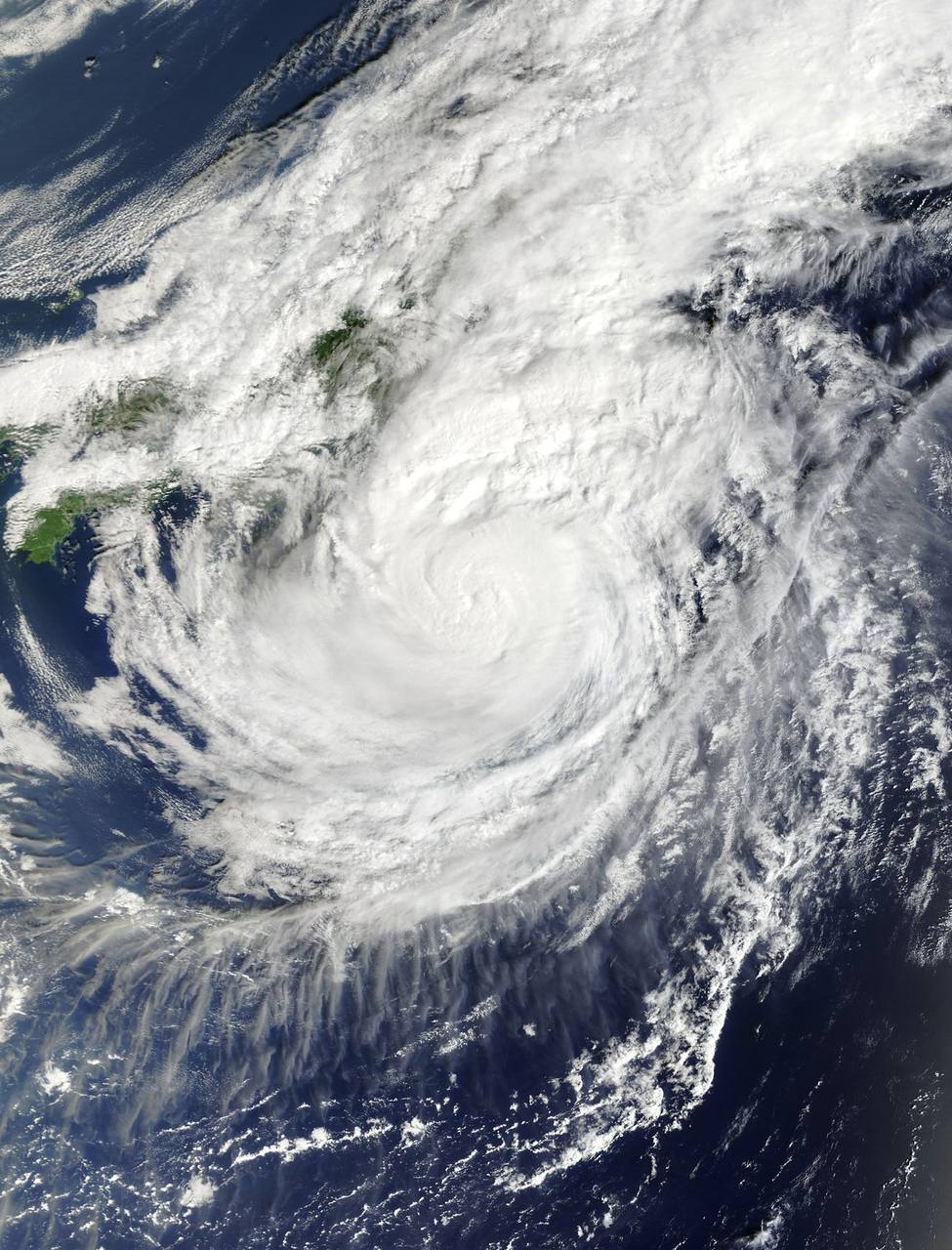
It was, by the wind scale, an unremarkable typhoon — a Category 1 that never even made a formal landfall on Japan. But the Typhoon Dujuan Japan flooding catastrophe of September 21-22 has killed at least 11 people, left three more missing, and turned the Tokyo region's heaviest September rains on record into a slow-moving disaster that is still unfolding: four days later, more than 10,000 homes in Chiba remain without electricity, thousands lack running water, and repair crews are racing a second typhoon bearing down on the same saturated ground.
What happened
On the morning of Monday, September 21, Typhoon Dujuan — the season's 25th named storm, a compact system that had been meandering northwest from the waters between Micronesia and Guam since September 13 — swung sharply north and raked Japan's Pacific coast. Its center passed south of the Kanto region without a textbook landfall, but its rainbands parked themselves over Chiba, Kanagawa, and Tokyo for the better part of two days. By Tuesday morning the storm was moving away and transitioning into an extratropical cyclone; the dying, they say, was just beginning, because the ground was already giving way.
The toll, as it stands
Japan's Fire and Disaster Management Agency reported 12 dead and three missing nationwide as of September 24 — seven in Chiba, four in Kanagawa, and one in Miyazaki. Kyodo News and NTV put the figure at 11 dead (seven in Chiba, four in Kanagawa) with three missing, and the toll rose in steps through the week: four dead on Monday, seven by Tuesday, nine by Wednesday. The victims died the way typhoon victims usually die in Japan now — buried by landslides, or drowned near submerged vehicles — not by wind. Twenty-two more were injured. The figures remain preliminary; search operations by Self-Defense Forces personnel, prefectural police, and fire authorities were still underway in Chiba and Kanagawa on September 23-24, and officials warn the count can move.
Rainfall that broke the instruments' sense of normal
The numbers are the story's spine. Oshima, an island 120 kilometers south of central Tokyo, recorded 832 millimeters of rain in 48 hours — more than double its average rainfall for the entire month of September, and an all-time station record, according to public broadcaster NHK. In Tokyo's Edogawa Ward, 282.5 millimeters fell in 24 hours, also a record. Chiba prefecture issued landslide warnings across its hill country; in Kamogawa, a man in his 70s missing after a landslide was confirmed dead on September 23, lifting Chiba's toll to seven. At their peak, the storm's sustained winds reached 130-144 km/h with gusts near 194 km/h — strong, but not historic. The rain was historic.
Levees, blackouts, and water
Water did what water does to flat, densely settled land. About 100 meters of the North Inbanuma embankment failed near Funakata in Narita on September 22; an agricultural drainage embankment at Shitakata breached as well, and Chiba confirmed a further breach on the Nagato River at Sakanao in Sakae on September 23. Flooding around Lake Imbanuma and the Nagato River swamped homes and farmland across northern Chiba. At the peak, power was cut to some 58,000 households in Chiba; by Friday, September 25, more than 10,000 were still dark, with TEPCO warning that landslides and fallen trees were blocking access to damaged infrastructure and that restoration could take time. Around 2,700 households remained without running water. Residents were collecting water from distribution centers and eating off disposable utensils to conserve supplies. The infrastructure ministry aimed to bring Lake Imbanuma's level back to normal as early as Saturday — ahead of the next storm.
Why this matters
The rain-not-wind lesson, again
Dujuan is the latest exhibit in the argument that Japan's typhoon danger has quietly changed categories. The storm peaked at 140 km/h — a Category 1, the kind of system that once would have meant a day of cancelled trains and little else. What killed people was water: 832 millimeters in two days on Oshima, a 24-hour Tokyo record, saturated hillsides that kept sliding even after the skies cleared. Chiba prefecture's September 23 notice said it plainly — saturated ground could produce further landslides "even with light rainfall." Modern Japan loses very few people to typhoon winds; its roofs, shutters, and building codes handle those. It loses people to rain, and the rain is getting heavier. Scientists say human-driven climate change is intensifying the risk of heavy rainfall because a warmer atmosphere holds more water — the standard, increasingly un-ignorable mechanism behind records like Oshima's.
Silver Week timing multiplied the damage
Dujuan arrived in the middle of "Silver Week," Japan's cluster of September holidays — a five-day stretch when millions travel, festivals run, and big events fill calendars. The timing turned a weather event into an economic and logistical one: the Tokyo Game Show, one of the world's biggest video-game trade fairs, closed early on its final Monday; a major outdoor music festival and a baseball game in Chiba were cancelled; JR East suspended or partially suspended the Joban, Sobu, Uchibo, Kururi, Sotobo, Togane, and Narita lines, with NTV reporting some Chiba rail sections face months of disruption. Evacuation orders at their height covered between 1.6 and 1.9 million people across six prefectures — Ibaraki, Chiba, Tokyo, Kanagawa, and others. A storm that hits on a quiet Tuesday disrupts commutes; a storm that hits during Silver Week disrupts a nation on the move.
Chiba, the repeat victim
There is a cruel geography to this story. Chiba — the peninsula east of Tokyo that took the worst of it — had already endured severe flooding in August and early September of this year. Its hillsides were wet before Dujuan arrived; its drainage systems were already stressed; its residents were already tired. The prefecture that recorded five of the first seven deaths is the same one still counting the cost of storms weeks earlier. Disaster policy tends to treat each typhoon as a discrete event with a discrete recovery budget. Chiba's 2026 suggests the unit of analysis is wrong: it is the season, not the storm, that is breaking places.
Background: a long, wet road to Kanto
Thirteen days from Guam to Tokyo Bay
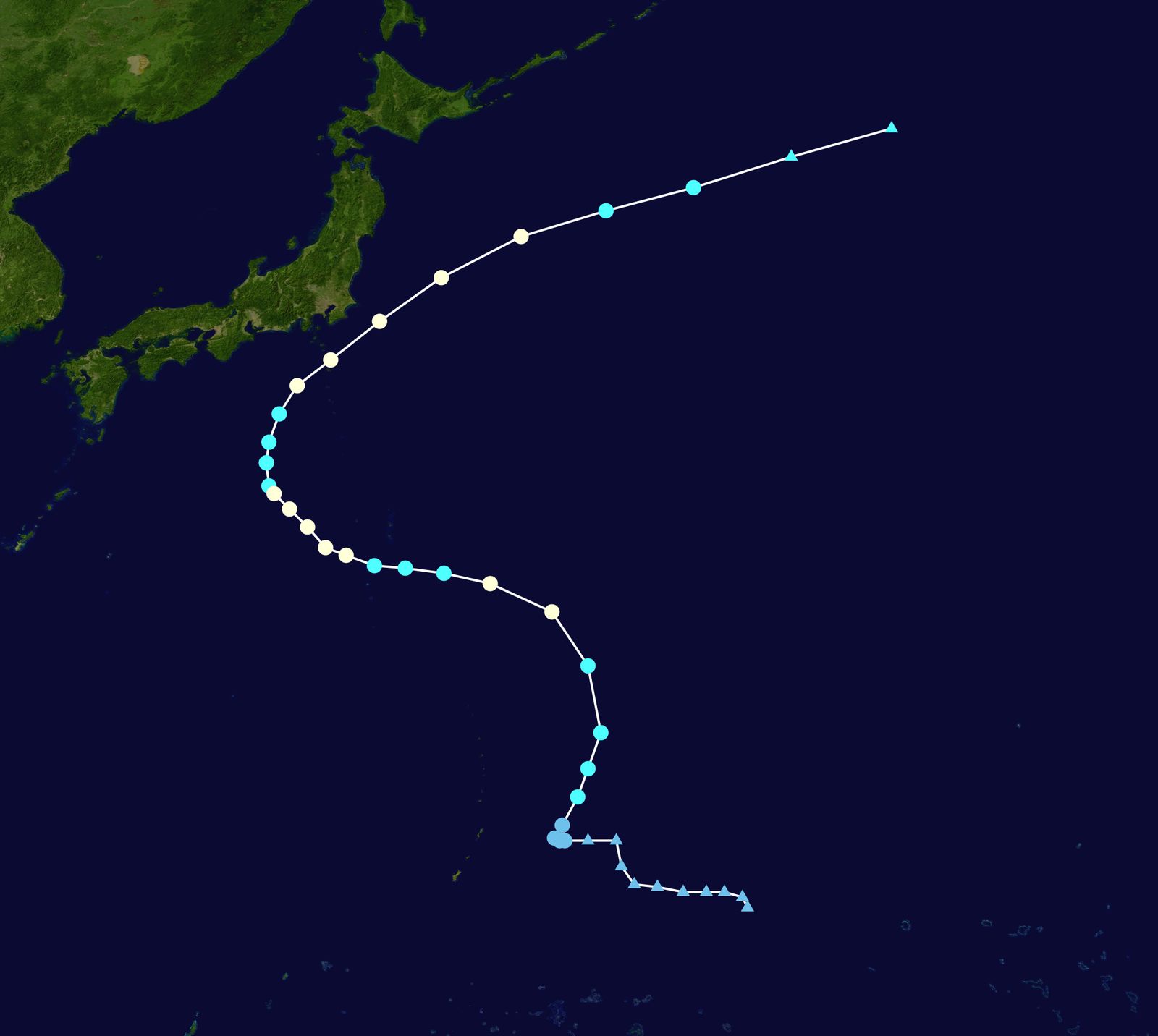
Dujuan's biography is ordinary until it isn't. The Japan Meteorological Agency spotted a tropical depression between Micronesia and Guam on September 13; the Joint Typhoon Warning Center designated it 24W on September 15; both agencies had it a tropical storm on the 16th, when JMA assigned the name Dujuan — Mandarin for azalea, contributed by China, and now attached to its fifth cyclone. It reached typhoon strength around September 17-18, wobbled between tropical-storm and typhoon status as agencies disagreed on its organization, and on September 19-20 turned sharply north, aiming at Honshu and the Kanto plain. On September 22 it weakened and began extratropical transition, completing it later that day. Total lifespan as a tropical system: nine days. Total damage window in Japan: about 48 hours of rain.
Kanto's water problem
The Kanto plain — home to roughly a third of Japan's population — is famously flat, famously paved, and threaded with rivers that have been engineered, leveed, and re-engineered for a century. It is also ringed by the hills of Chiba and Kanagawa, where post-war suburban sprawl pushed housing onto slopes that slide when the rain won't stop. Dujuan's rain fell hardest exactly where the terrain is least forgiving: Oshima's volcanic slopes, the Boso Peninsula's hills, the Tama-area ravines of western Tokyo. Japan's flood infrastructure is among the world's best — the underground discharge channels beneath Saitama are an engineering marvel — but it was designed for the rainfall statistics of the 20th century. Oshima just recorded more than twice its September average in two days.
A season already full
Dujuan was the 25th named storm of the 2026 Pacific season, and it was not the season's first Japanese disaster. Earlier in September, JMA issued its highest Level 5 emergency landslide warning for Yakushima after 576.5mm fell in 48 hours. The Asian Games, being held in Japan, had events disrupted by earlier storms. The season's drumbeat matters because recovery capacity is finite: the same Self-Defense Forces units, the same prefectural emergency staffs, the same TEPCO repair crews get called out again and again, and each call-out starts from a lower baseline.
The numbers, honestly
Eleven, twelve, and the fog of counting
Readers deserve candor about the death toll, because it moved all week and different reputable outlets landed in different places. The honest statement: at least 11 people are confirmed dead and three are missing, with Japan's disaster agency reporting 12 dead including one in Miyazaki prefecture, far to the southwest — a reminder that Dujuan's outer bands reached well beyond Kanto. Early counts (four dead Monday, per Kyodo) always undercount in landslide disasters, because the missing are found over days. The toll rose to seven Tuesday (five Chiba, two Kanagawa), nine Wednesday, and 11-12 by Thursday. Twenty-two injured, six initially missing, more than 460 homes damaged in Chiba alone. None of these numbers is final.
1.6 million moved; 10,000 still dark
The evacuation figures are almost hard to picture: up to 1.9 million residents across six prefectures were under emergency evacuation advisories at the peak — one of the largest such orders in recent years — with authorities also issuing landslide warnings for parts of Tokyo, Chiba, Kanagawa, and Shizuoka. Against that, the lingering hardship: 10,000+ Chiba households without power on Friday (down from 58,000 at the peak, but TEPCO says full restoration will take time), dozens more in Kanagawa, 2,700 without running water, and rail lines in Chiba facing months of repair. The ratio tells the preparedness story honestly: Japan moved nearly two million people out of harm's way with remarkable efficiency, and still could not keep the lights on for ten thousand of them four days later. Both things are true.
832 millimeters, in context
Put Oshima's 832mm in 48 hours against benchmarks: it is more than London gets in a year (about 600mm), more than double Oshima's own September average, and an all-time record for the station. Edogawa's 282.5mm in 24 hours is roughly a month of Tokyo's rainiest-season rain in a single day, in one of the most densely populated wards on earth. These are not "heavy rain" numbers; they are the kind of numbers that make engineers revisit design assumptions.
Who bears it, and what the critics will ask
The losers are local
The deepest losses sit with the families of the dead and missing in Chiba and Kanagawa — people killed in homes buried by hillsides or in cars overtaken by water. Beyond them: Chiba's farmers, whose fields around Lake Imbanuma went under just as autumn crops were maturing; small businesses in Kamogawa, Ichikawa, and Narita that flooded twice in two months; and the 10,000 households entering a second weekend without power, some relying on limited solar, collecting water by hand. Kamakura's mayor took to X to warn residents that "travelling by car is dangerous" as streets around the famous station flooded — a small, telling image of a tourist city turned hazard zone.
The response, graded
Japan's disaster machinery did what it is designed to do: JMA's warnings were early and specific, evacuation orders reached nearly two million people, and the SDF-police-fire search apparatus deployed immediately. The casualty count, while tragic, is low relative to the rainfall — a testament to that machinery. But the levee breaches at Imbanuma and the Nagato River will draw scrutiny: were those embankments maintained to standard, and did the back-to-back storms of August and September expose an inspection gap? TEPCO's four-day-plus restoration timeline in Chiba will likewise be questioned, though fallen trees and landslides blocking access are a genuine constraint, not an excuse. Expect the Diet's disaster committees to ask both questions this autumn.
What is genuinely uncertain
Three uncertainties hang over the story. First, the final toll: with three people still missing and searches continuing, the number may yet rise. Second, the next typhoon: Qazinform, citing Kyodo, reports authorities are rushing drainage and emergency levee repairs specifically because another typhoon is approaching — and it would strike ground that Chiba's own prefecture warns can slide "even with light rainfall." Third, the economic accounting: NTV reports some Chiba rail sections face months of disruption, and the farm and business damage around Imbanuma has not yet been tallied. The disaster is over as a weather event; as a human event, it is mid-story.
What happens next
The repair race
The immediate future is a race between repair crews and the weather. The infrastructure ministry's target — Lake Imbanuma back to normal levels by Saturday — is explicitly about creating buffer capacity before the next storm. TEPCO crews are cutting through fallen trees to reach downed lines; prefectural teams are shoring up the breached embankments at Funakata, Shitakata, and Sakanao with emergency works. If the next typhoon arrives before those works are done, northern Chiba floods again — this time starting from saturated ground and full reservoirs.
A second storm on the horizon
That approaching typhoon is the story's cliffhanger. Japan's September has already delivered Yakushima's Level 5 warning, Dujuan's records, and now a third system lining up. Forecast tracks will firm up in the coming days; what is already certain is that the Kanto region will face it with depleted defenses — hillsides at their slide threshold, rivers high, repair crews exhausted. Disaster officials' nightmare is not one historic storm but a sequence, and 2026 is serving exactly that.
The policy reckoning
Longer term, Dujuan will feed Japan's running argument about climate adaptation. The country's flood-control investments are world-class but backward-looking: design rainfall statistics drawn from a cooler century. Oshima's record and Edogawa's record, set within the same 48 hours, are data points in the case for revising those standards upward — at a cost that will run into trillions of yen. Chiba's double battering will also revive the question of managed retreat from the most slide-prone slopes, a debate Japan has historically avoided. The alternative is accepting that "record rainfall" becomes a seasonal phrase, and that the death tolls, however bravely minimized by evacuation machinery, keep being counted in landslides.
Dujuan lasted nine days as a tropical cyclone and needed only two of them to rewrite rainfall records, kill at least eleven people, and leave a prefecture dark and waiting for the next storm. The wind was unremarkable. The water was not. Japan's typhoon future, like its typhoon present, will be measured in millimeters.
For related context: Signal Post News has also covered the separate article previously labeled for Typhoon Dujuan, the World Bank's Colombia earthquake recovery financing, and the Virgo Transport 8 ferry disaster in Indonesia.
Sources and reporting basis
- AFP, September 23, 2026 — “Typhoon Dujuan leaves seven dead in Japan from landslides, flooding”
- The Watchers, September 24, 2026 — “Typhoon Dujuan leaves 12 dead and 3 missing, record rain, floods and landslides hit Japan” (citing Japan's Fire and Disaster Management Agency)
- Qazinform (citing Kyodo News), September 25, 2026 — “Over 10,000 homes still without power in Japan after typhoon Dujuan”
- NTV News 24 Japan — “Typhoon Dujuan leaves 11 dead in Chiba and Kanagawa”
- Asal Media — “Typhoon Dujuan Kills Four Near Tokyo, 1.6M Evacuated”
- Human Resources Online (citing Kyodo News) — “Nine killed as Typhoon Dujuan triggers flooding and landslides in eastern Japan”
- Wikipedia — “2026 Pacific typhoon season” (storm track/intensity data)