Zelenskyy London visit: the Ukrainian president meets Andy Burnham at Downing Street on Wednesday, with a £45 million missile package and a new sanctions push on the table.
Burnham Pledges 'Rock-Solid' Support as Zelenskyy Comes to London
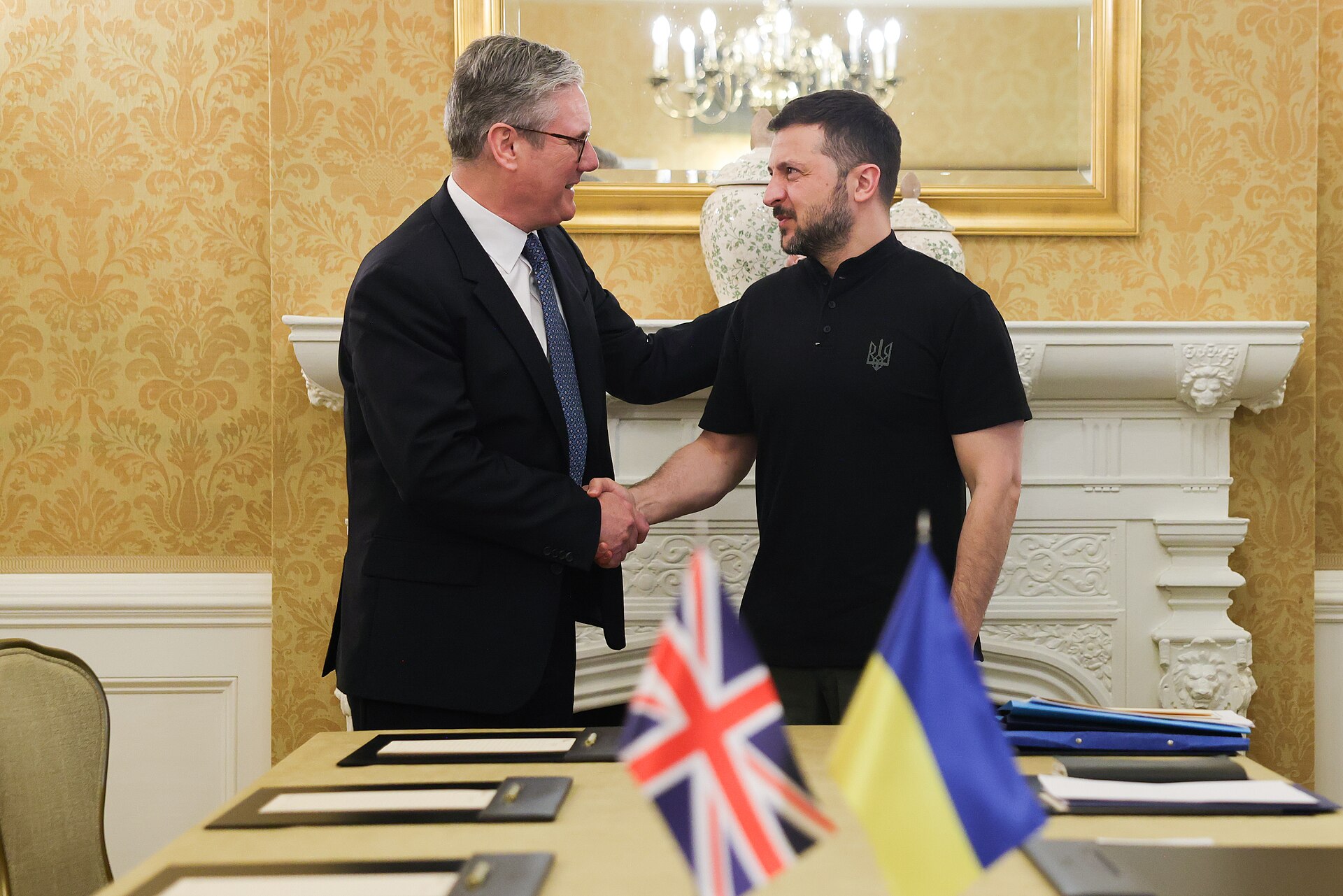
Ukrainian President Volodymyr Zelenskyy will meet British Prime Minister Andy Burnham in London on Wednesday, as Britain moves to reaffirm its support for Ukraine with a new package of surface-to-air missiles, Reuters reported. The visit — Zelenskyy's first to a European capital since President Donald Trump temporarily lifted sanctions on Russian diesel last week — is a deliberate public show of unity at a moment when Kyiv's allies are openly split over how much pressure to keep on Moscow.
Track it live: Ukraine war map · live war tracker
What Britain is putting on the table
Burnham announced a planned delivery of £45 million (about $59.6 million) of surface-to-air missiles designed to target jet-powered Russian drones, with £10 million of that package fast-tracked to meet an urgent Ukrainian need, according to Reuters. British reporting from Classic FM and LBC added that deliveries of more than 5,000 Lightweight Multirole Missiles will be accelerated over the next four years, backed by £1.6 billion in funding, and that the prime minister has asked ministers to draw up proposals for further sanctions, military aid and fiscal packages in the coming weeks.
The diplomatic pressure is meant to travel with the hardware. Britain's foreign and finance ministers have been lobbying allies to ban the maritime services that support Russian liquefied natural gas exports, Reuters reported, and Classic FM reported that Chancellor John Healey will press other countries to adopt an equivalent LNG ban at International Monetary Fund meetings in Bangkok this week. London has said plainly that it does not support the US-Russia diesel deal and wants allies to keep up economic pressure on Moscow.
Why this matters
The timing is the story. Zelenskyy arrives in London after the hardest week of his presidency in months: on Monday and Tuesday, Russian ballistic missiles struck Kyiv twice in 24 hours without the advance warning from Western partners that Ukraine says it normally receives, hitting the CHPP-4 thermal plant and a nine-storey apartment block and killing two people. Kyiv has asked, publicly and pointedly, why the warnings stopped — while insisting, through Foreign Minister Andrii Sybiha, that US intelligence cooperation continues. At the same time, Zelenskyy has proposed fresh talks with US envoys Steve Witkoff and Jared Kushner, and the Kremlin says ceasefire contacts are continuing. London is therefore not just a courtesy call: it is Kyiv testing whether Europe will hold a harder line than Washington while negotiations with the Trump administration are live.
Burnham's language was chosen for that audience. In a statement issued ahead of the meeting, he said Britain's message to Ukrainians was that it stands with them for as long as it takes, and that his government would go further and faster in its support. He framed backing Ukraine as a British security interest, not charity — vital, he said, to keeping people in the UK safe. Foreign Secretary Ed Miliband, by contrast, described the last few days in relations with Washington as very difficult, an unusually candid admission that the diesel deal has strained the alliance it was supposed to leave intact.
The numbers, in context
£45 million is modest next to the multi-billion packages of the war's first years, and it should be read as a speed signal rather than a scale signal: £10 million fast-tracked, aimed at one specific problem — the jet-powered drones Russia now uses to saturate Ukrainian air defences ahead of missile waves. The bigger money sits behind it: the accelerated Lightweight Multirole Missile programme, more than 5,000 missiles over four years with £1.6 billion of funding reported by British outlets, is a production commitment, not a one-off transfer. And the proposed LNG maritime-services ban targets a revenue stream — Russian gas shipped on Western-insured, Western-serviced vessels — that sanctions have so far only partly closed. If allies matched it, the measure would bite harder than the missile package; whether they will is the open question Burnham's ministers are now lobbying on.
Who gains, who pushes back
For Kyiv, the visit produces the photograph it needs — a European leader pledging missiles and sanctions days after Trump said, at the weekend, that Zelenskyy should be replaced as Ukraine's leader, and days after Washington cut its diesel deal with Moscow. For London, it is a claim to leadership of the harder-line camp inside the alliance, at relatively low immediate cost. For Washington, the visit is pressure by demonstration: an ally publicly organising the sanctions policy the US has just loosened. A group of six Republican and six Democratic senators has already called the diesel move a gift to Moscow; Burnham's package gives that criticism an allied government standing behind it.
What has not been heard is Moscow's response: no Russian government reaction to the London package was published in the sources checked for this article, and the Kremlin's public position this week has been confined to saying that ceasefire and energy-truce contacts are continuing. Ukraine's critics of the British approach argue that missile deliveries on this scale do not change the air-defence arithmetic over Kyiv — a point the last two nights of strikes underline — while supporters counter that fast-tracked interceptors for jet-powered drones are precisely what frees scarcer systems for ballistic threats.
What happens next
Wednesday's meeting will be judged on three deliverables: whether the £45 million package gets a firm delivery date, whether the further sanctions and LNG proposals Burnham has commissioned emerge with allied names attached, and whether Zelenskyy leaves London with anything that answers his warning question. His own diplomacy runs on two tracks this week — London for pressure, and the proposed Witkoff-Kushner channel for talks — and the gap between those tracks is now the central fact of the war's politics. If the London show of unity produces signatures, it strengthens Kyiv's hand in both. If it produces only statements, it will read, in Washington and Moscow alike, as Europe talking to itself.
Related coverage: Zelenskyy asks Witkoff and Kushner for new talks within days · Russian missiles hit Kyiv power plant CHPP-4 for a second night · Kyiv hit without warning as the energy ceasefire frays
Sources: Reuters; Classic FM / LBC (Global); The Times.