Russian missile strike Kyiv power plant: ballistic missiles hit the Darnytska CHPP-4 plant and a nine-storey apartment block on Tuesday night, October 13 — the second night in a row Kyiv says it received no warning.
Russian Missiles Hit Kyiv Power Plant CHPP-4 for a Second Night Without Warning
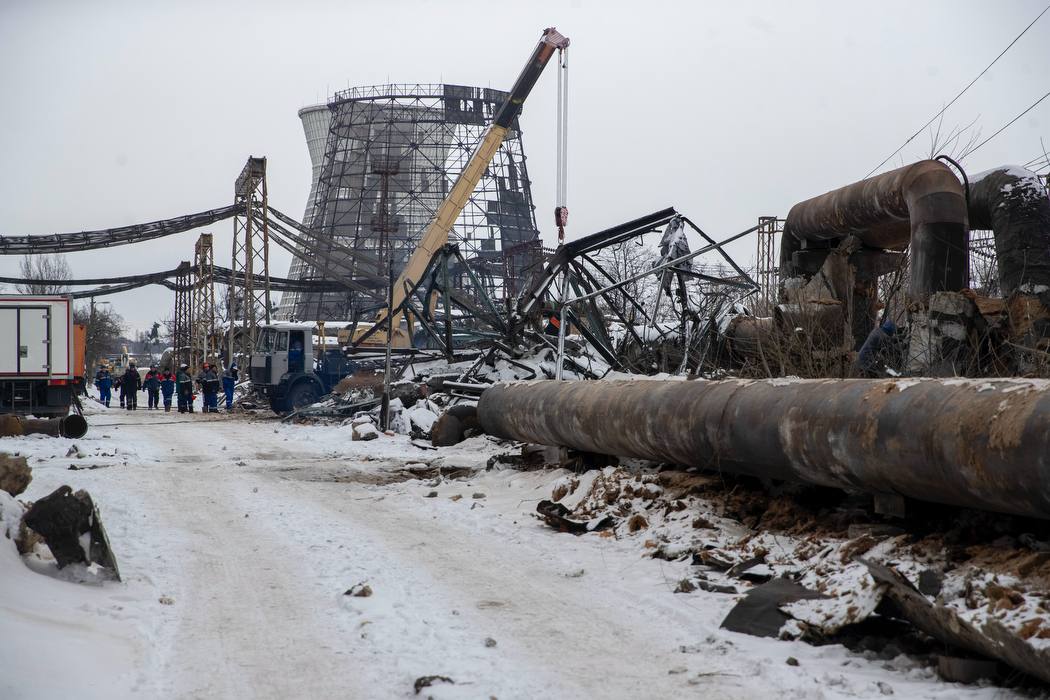
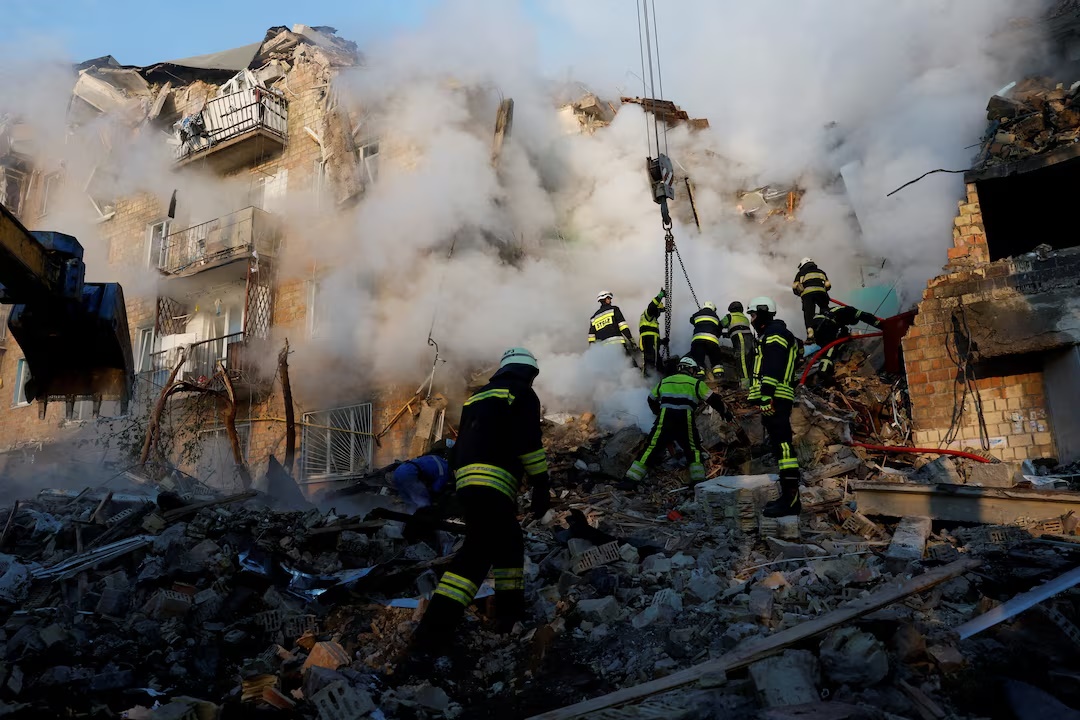
A Russian missile strike on Kyiv's power plant network and a residential block late on Tuesday killed two people in a nine-storey apartment building in the Desnianskyi district and hit thermal plant No. 4, the Darnytska CHPP-4, President Volodymyr Zelenskyy and Mayor Vitali Klitschko said. Klitschko said 21 people were injured in the apartment block, 16 of them treated in hospital and four in a serious condition, as emergency crews battled fires in apartments throughout the building and evacuated residents. An earlier count from the mayor's office put the toll at one killed and 13 injured; the figures were updated as rescue work continued. Reuters witnesses in the capital reported a series of explosions late in the evening with no warning or air-raid alert issued in advance.
Track it live: Ukraine war map · Live Global Wars tracker
Zelenskyy, in a statement on Telegram, said the main target was energy infrastructure — specifically thermal plant No. 4 — and that, once again, there had been no advance warning from Ukraine's partners. Ukrainian systems, he said, detected the missiles only when they were virtually on approach to Kyiv. He added that Ukrainian intelligence indicated Russia was preparing further ballistic missile launches, and that the strike showed Moscow did not consider itself bound by what the president of the United States had said, referring to Donald Trump's announcement at the weekend of an energy ceasefire between Russia and Ukraine. Ukraine, Zelenskyy said, had supported that ceasefire proposal and had not struck Russian energy targets in the two days since it was announced.
A second night without a warning
Tuesday night's attack was the second in 24 hours in which Kyiv says the usual partner warning of ballistic launches did not arrive. On Monday night, five ballistic missiles hit civilian infrastructure in the capital, a residential building in Kharkiv was destroyed with four people killed and 41 injured, and Zelenskyy said then, too, that Ukraine had received no early warning — the subject of our earlier report on the first no-warning strike and the energy ceasefire dispute. Earlier on Tuesday, Trump told reporters that Washington was helping Ukraine and was sharing intelligence, and that both countries wanted the war to end but did not know how to get there. Asked about Russian strikes on Ukrainian energy sites, he said Ukraine had hit many sites the day before, and he did not say whether Russia had broken the ceasefire he announced. Ukrainian officials, as reported in summaries of Tuesday's briefings, attributed the missing warnings in part to technical problems in the warning chain and noted it was not the first time launch information had failed to arrive; Zelenskyy has not publicly accepted that as a complete explanation, and the two accounts — a technical failure, or intelligence being withheld as pressure — remain unreconciled in the public record.
Why this matters
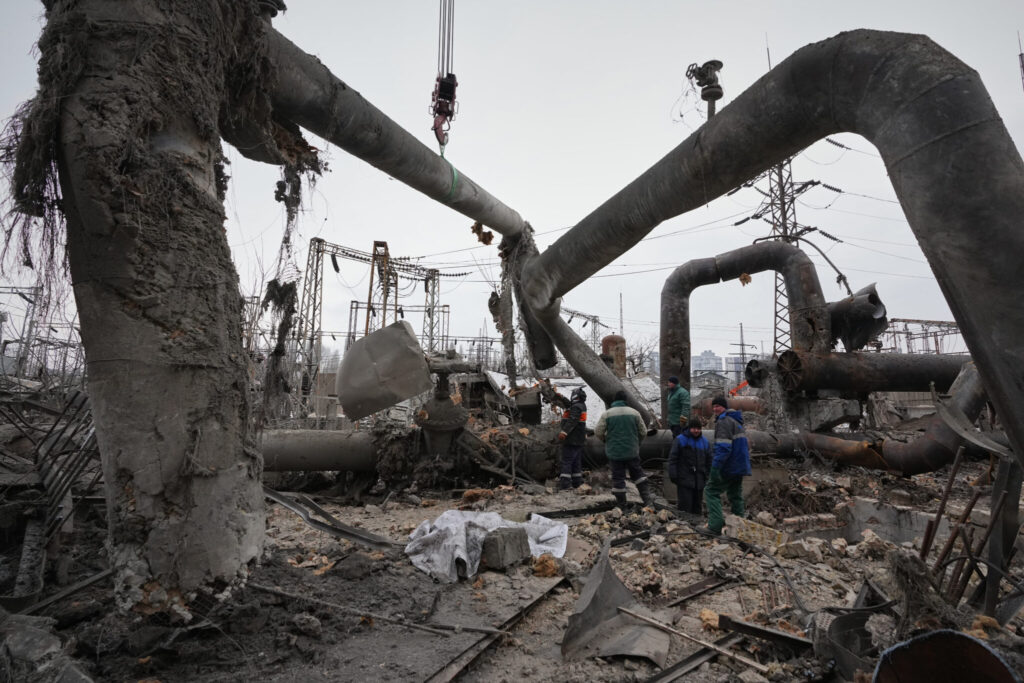
Two separate contests are being fought in this strike, and both run through the same few minutes. The first is physical. CHPP-4 supplies heating and electricity to Kyiv's Dniprovskyi district and parts of the Darnytskyi district on the left bank of the Dnipro. It has been hit repeatedly during the war: a strike in February this year severely damaged the plant and forced it to shut down, leaving more than 1,000 residential buildings without heating and hot water, along with 47 schools, 72 kindergartens and 18 medical institutions, according to figures reported by Reuters at the time. A plant that has already been rebuilt once, in part, is being struck again on the edge of winter — mid-October is when Kyiv's heating season begins — and each successful hit converts directly into cold apartments if repair crews cannot restore capacity faster than missiles remove it. The second contest is about minutes. A ballistic missile reaches Kyiv from launch in a very short time, and partner early-warning data is what turns those minutes into shelter time. When Zelenskyy says the warning did not come, twice in two nights, he is describing the failure of the single most life-protecting service allies provide short of interceptors themselves. That is why the warning question, and not only the damage, leads his statements — and why Washington's answer, that intelligence sharing continues, is now being tested publicly against events on the ground, night by night.
The ceasefire that exists on one side
The strike also lands on a specific diplomatic claim. On Sunday, Trump announced an energy ceasefire, saying both sides had agreed to halt attacks on power plants and refineries, alongside a US move to ease restrictions on Russian diesel that Kyiv has criticised — the dispute covered in our report on Zelenskyy's response to the diesel deal. Kyiv says it has held its side: no strikes on Russian refineries or energy sites for two days. Russia's foreign minister, Sergey Lavrov, said after the announcement that Ukraine did not deserve the respite a ceasefire would bring and that Europe would use one to supply Kyiv with new weapons. Moscow has not confirmed an energy ceasefire in the terms Trump announced, and no Russian Defence Ministry statement on Tuesday evening's strike on Kyiv had been published in the sources checked for this report; on Monday the ministry had described its overnight strikes as directed at Ukrainian military-industrial and logistics targets. Those are the two public positions, and the observable fact between them: Ukrainian energy infrastructure in the capital was hit by ballistic missiles for a second consecutive night while the ceasefire was supposedly in effect.
Who gains, who pays, and what the numbers say
Measured narrowly, one night's strike on one plant does not decide a war of this scale. Measured as a pattern, the arithmetic is different. Ukraine's air defences are, by Kyiv's own repeated statements, critically short of interceptors for ballistic missiles; ballistic weapons are precisely the class that partner warnings most help against, because radar alone detects them late. Russia, for its part, is spending scarce ballistic missiles — weapons it has used against energy targets in every winter campaign of this war — on a plant it has already wrecked once, which suggests the target is not only the hardware but the repair cycle itself and the political argument around it: if the ceasefire Trump announced cannot keep Kyiv's lights on for even two nights, its value as a building block toward a wider settlement falls for every audience watching, in Kyiv, in European capitals, and in Washington, where a bipartisan group of 12 senators wrote to Trump this week urging him to rescind the Russian diesel deal. The people who pay first, as always in this campaign, are neither generals nor negotiators: they are the residents of one apartment block in Desnianskyi district, two of whom did not survive Tuesday night, and the households in two districts whose heating depends on a plant that keeps being hit.
What happens next
Three things will show whether Tuesday was an episode or a new baseline. First, the warnings: if a third night's launches are again detected only on approach, the technical-failure explanation becomes much harder to sustain, and the argument over intelligence sharing — including reported US threats to curtail it unless Ukraine stops striking Russian refineries — moves from briefing rooms into the open. Second, the plant: Kyiv's authorities are expected to report how much of CHPP-4's capacity survived and how long repairs will take, the number that decides whether left-bank districts face heating restrictions as temperatures fall. Third, Washington's wording: Trump has so far declined to call the strikes a ceasefire violation; a changed formulation from the White House would signal that the energy truce, such as it is, is being policed, and a continued silence will be read in Kyiv and Moscow alike. Zelenskyy is expected in Brussels on Friday for a European Council summit, where the warning failure and the ceasefire dispute will be at the top of his public agenda. Signal Post News will update this story as casualty figures, damage assessments and any Russian or US statements are confirmed. Sources: Reuters, October 13, 2026 (updated reporting syndicated via Devdiscourse and The Guardian's Ukraine war briefing); BBC/Reuters reporting via The Geneva Times, October 13, 2026; President Zelenskyy's statement on Telegram, October 13, 2026. Related coverage: Zelenskyy's push for new talks with US envoys.