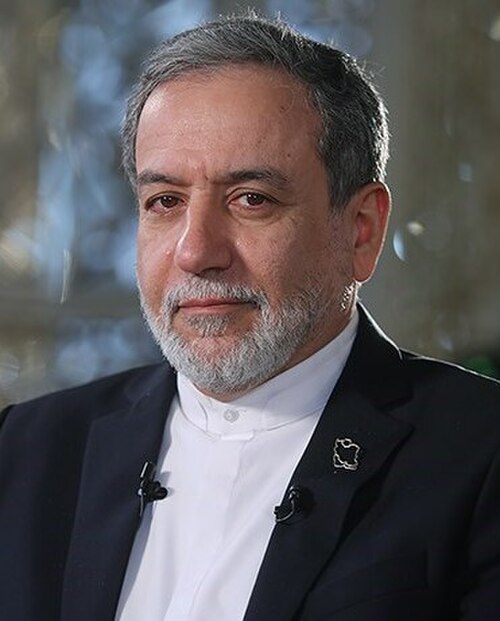
Iran no nuclear concessions Hormuz is now the clearest formulation of Tehran's public red line after its seven-day reopening offer. A senior Iranian official told Reuters that Iran would show no flexibility over its nuclear program even if Washington accepted the proposal, and that the Strait of Hormuz would remain closed until “all of Iran's conditions are met.” The official was not named, making the statement authoritative enough to move diplomacy but not equivalent to a public declaration by President Masoud Pezeshkian, Foreign Minister Abbas Araghchi or Supreme Leader Ayatollah Ali Khamenei.
The intervention matters because it arrived immediately after Araghchi outlined a compressed pathway for reopening the world's most important oil chokepoint. At a private gathering on the sidelines of the United Nations General Assembly, the foreign minister described a seven-day sequence linking a ceasefire across all fronts—including Lebanon—to an end to the U.S. naval blockade of Iranian ports, the release of frozen Iranian funds and a waiver of oil sanctions. The United States had not publicly responded by this article's publication cutoff.
That juxtaposition is the news. Tehran is offering speed on Hormuz while signaling that speed should not be mistaken for surrender on enrichment or nuclear material. It is both a negotiating invitation and a warning against assuming that a maritime bargain automatically resolves the nuclear dispute.
What the seven-day offer does—and does not—promise
Araghchi's proposal, described by people familiar with the UNGA-side discussion, appears designed to turn a broad political bargain into a short operational sequence. Its reported conditions are substantial: a ceasefire covering the war's connected fronts, including Lebanon; the lifting of the U.S. naval blockade; access to frozen Iranian funds; and relief from oil sanctions. Hormuz would reopen after those steps, rather than before them.
The timeline is dramatically shorter than the 60-day memorandum discussed in June. Seven days is 53 days fewer—about 88% less time. That compression reduces the period in which each side must trust the other before seeing performance, but it also leaves far less space to verify complex military, financial and sanctions steps. A faster schedule can build momentum; it can also magnify the consequences of one disputed ship movement, strike or sanctions interpretation.
The previous framework ultimately collapsed after Iran resumed attacks on shipping. That history explains the skepticism in Washington and among regional governments. It also explains why the formula is conditional rather than unilateral: Iran is not promising to reopen first and negotiate later.
The nuclear red line arrives at the most sensitive moment
The anonymous official's no-concessions statement creates apparent tension inside Iran's diplomatic presentation. Araghchi is describing a pathway toward an agreement. Pezeshkian has separately been reported as willing to dilute Iran's stock of uranium enriched to 60%, a step that would address one immediate proliferation concern. Yet the unnamed official's language points toward a harder line: no flexibility on the nuclear program, even if the maritime conditions are accepted.
Those positions are not necessarily irreconcilable. Dilution can be framed as a reversible technical measure while preserving what Tehran calls its right to peaceful enrichment. “No concessions” may mean no surrender of the underlying program, not no change in stockpile form or verification arrangements. But the ambiguity matters. Washington will want to know whether the seven-day offer comes with practical nuclear steps, while Iranian hard-liners will scrutinize any technical compromise for signs that negotiators have crossed a sovereign red line.
The speaker's anonymity adds another layer. Reuters described the source as a senior Iranian official, but anonymity prevents readers from knowing whether the remarks reflect the final negotiating authority, one security faction, or a deliberate effort to harden the opening bid. Responsible analysis therefore stops short of treating the comments as a named leadership decision.
Trump's public claims remain claims—not terms of a signed deal
President Donald Trump has said the war is “very close to being over” and that Iran “wants to make a deal very badly.” He has also claimed that Tehran agreed to hand over what he called “nuclear dust,” that Israel would be “prohibited” from attacking Lebanon and that Iran would “never close” Hormuz again. No jointly released agreement has established those terms.
Iranian sources cited in an Al Jazeera-sourced account described the contacts as preliminary, rejected any surrender of nuclear material and said a reopening would last only for the ceasefire rather than permanently or on Trump's stated terms. Those are also attributed positions, not independent confirmation of a final text. Taken together, the competing statements reveal a negotiation being conducted partly through public messaging, with each side presenting the possible deal to its own audience before agreement exists.
Two audiences inside the bargaining room
Araghchi's reported reference to a quick deal helping Trump before November's midterm elections, relayed by Quincy Institute executive vice president Trita Parsi, indicates that Tehran sees domestic U.S. timing as leverage. The calculation is straightforward: a reopening that eases shipping and energy pressure could be marketed in Washington as a result, while Iran could seek immediate economic relief rather than a promise after a long implementation period.
But domestic politics run in both directions. An agreement that appears to reward closure of a global waterway would face sharp criticism in the United States. In Iran, security hard-liners could reject sanctions, inspection or nuclear terms that they view as capitulation. Parsi described “deep suspicion” and uncertainty over whether the security establishment would accept compromises. The anonymous no-concessions message may be aimed as much at that internal audience as at the White House.
Why Hormuz turns a bilateral dispute into a global one
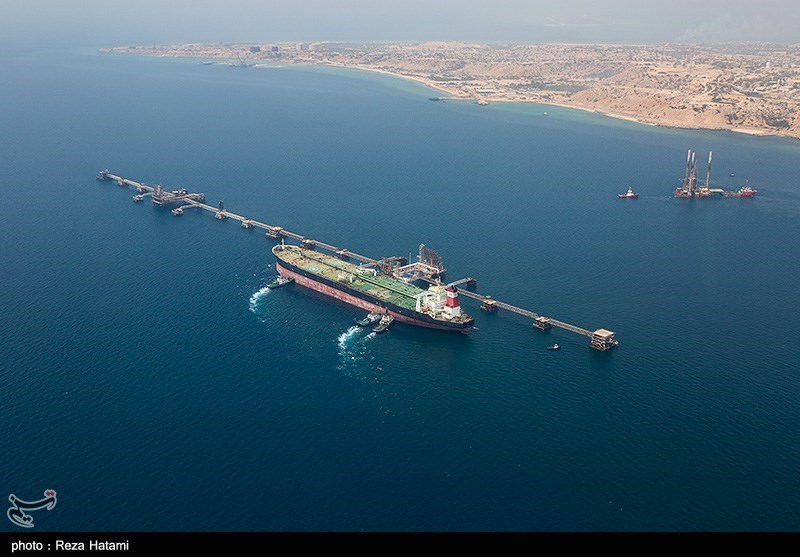
Roughly one-fifth of the world's traded oil passed through the Strait of Hormuz before the war, according to energy-market estimates cited in reporting on the crisis. That scale means a closed strait is not merely an Iran–U.S. issue: it affects importers, exporters, insurers, shipowners and consumers far from the Gulf.
About 80 countries demanded an urgent reopening in a statement read at the United Nations by Bahrain's foreign minister. The group condemned Iranian and Houthi actions and also denounced Houthi strikes on Saudi Arabia and attacks affecting Red Sea shipping. Iran and the Houthis characterize their actions as defensive; the multinational statement reflects how differently many governments assess the costs and legality of those actions.
The blockade and export disruption plainly put pressure on Iran's economy, but the reporting sources used for this analysis did not provide a consistent, independently verified estimate of how far Iran's oil production has fallen since the blockade began. Signal Post News is therefore not assigning a percentage to that decline. Export flows, domestic production and terminal throughput are related but distinct measurements, and combining them would create false precision.
Qatar's mediation track remains the practical channel
Qatar remains central to the diplomatic architecture. Pezeshkian hosted Qatar's prime minister early Friday, underscoring Doha's role as an intermediary able to carry messages without requiring immediate direct U.S.–Iran talks. Qatar's value is procedural as much as political: it can clarify whether phrases such as “lifting the blockade,” “waiving sanctions” and “ceasefire on all fronts” have matching operational definitions.
That work is unglamorous but decisive. A seven-day sequence cannot survive if one side treats a temporary licensing waiver as sanctions relief while the other expects unrestricted oil sales, or if one side defines a ceasefire geographically while the other includes allied armed groups across the region. Mediation has to turn slogans into synchronized actions.
Who gains and who loses
Potential winners: Global importers and shippers would benefit first from a credible reopening, followed by Gulf economies seeking lower war-risk costs. Trump could claim a diplomatic result before the midterms. Iran could regain access to funds and oil revenue while preserving its public nuclear position. Qatar would strengthen its role as an indispensable mediator.
Potential losers: Actors on either side that favor continued military pressure would lose leverage if the ceasefire holds. Iranian hard-liners could see economic relief tied to verification as a retreat. U.S. and regional hawks could see sanctions waivers as rewarding coercion. Any armed group constrained by an all-fronts ceasefire would face pressure to accept a bargain negotiated elsewhere.
Three scenarios to watch
1. A narrow maritime bargain. The parties agree on a sequenced pause, limited sanctions relief and a temporary reopening without resolving the wider nuclear dispute. This is the fastest route to restored shipping, but it is also vulnerable to a single alleged violation.
2. A broader ceasefire-for-relief package. Qatar helps convert the proposal into synchronized steps covering Lebanon, the naval blockade, frozen funds, oil waivers and monitoring. This would be harder to negotiate within seven days but more durable if implemented.
3. Public positions overtake private diplomacy. Trump's expansive claims and Tehran's no-concessions response harden into incompatible baselines. The strait stays closed, pressure on shipping continues and each side blames the other for rejecting the opening.
The immediate test is not whether either government declares victory. It is whether Washington gives a concrete response to the seven-day sequence and whether Tehran identifies which authority can bind its security establishment. Until then, the proposal is a serious diplomatic opening surrounded by unresolved definitions, competing public claims and a nuclear red line that could either be carefully interpreted—or end the bargain.
Related Signal Post News coverage
- Iran's seven-day Hormuz plan and the compressed implementation timetable
- The earlier disputed offer to reopen the Strait of Hormuz
- Pezeshkian's UNGA diplomacy and live Iran updates
Sources and reporting notes
- Reuters: senior Iranian official on nuclear flexibility, Hormuz conditions and the seven-day proposal
- Associated Press via Las Vegas Review-Journal: Araghchi's UNGA-side proposal, June comparison, domestic skepticism and Qatar mediation
- Al Jazeera-sourced account: Trump's claims and Iranian-source pushback
- Reuters via The Business Standard: 80-country U.N. statement demanding Hormuz reopen
Reporting cutoff: September 25, 2026. The United States had not publicly responded to the seven-day proposal by publication. Statements from the anonymous Iranian official, Trump, Iranian sources, regional governments and armed groups are attributed; none is presented as a jointly verified agreement.