UN Sudan ceasefire resolution
UN Sudan ceasefire resolutionUN Human Rights Council SudanSudan war ceasefire demandSudan fact-finding mission extendedel-Fasher hallmarks of genocideSudan drone strikes civilian deathsBurhan rejects Sudan peace talksSudan humanitarian crisis 13 million displacedRSF SAF war crimes SudanGeneva Sudan resolution vote 28-10no military solution Sudan
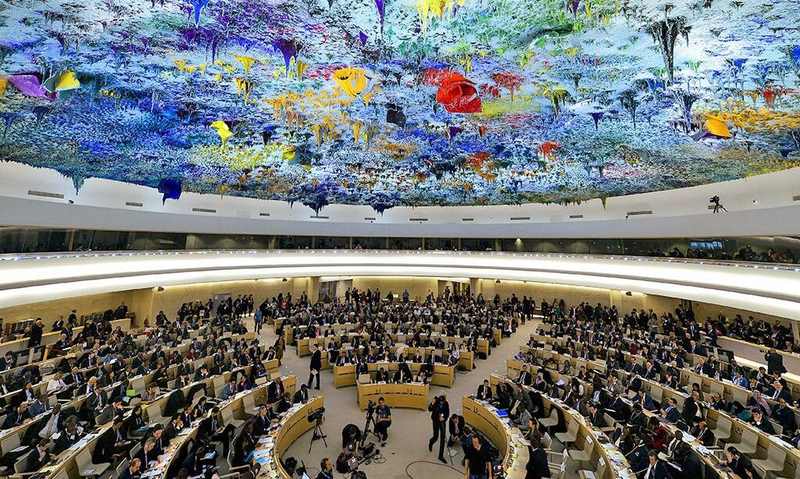
GENEVA — The UN Sudan ceasefire resolution adopted on Monday is unusually direct about a war that diplomacy has repeatedly failed to stop. By 28 votes to 10, with nine abstentions, the UN Human Rights Council demanded “an immediate and complete ceasefire by all parties, without preconditions,” renewed the independent investigation into abuses for another year and blamed both the Sudanese Armed Forces and the Rapid Support Forces for attacks that have made civilians the war's main victims.
The vote is important, but it is not a ceasefire. Neither army chief Abdel Fattah al-Burhan nor the RSF has agreed to halt operations. The council has no army of its own and cannot order the combatants back to barracks. What Geneva created is a stronger record, a longer investigative runway and a political test: whether governments that voted for a truce will fund, monitor and enforce the principles they endorsed.
That distinction matters because the resolution arrived at the precise moment battlefield rhetoric hardened. A day earlier, Burhan publicly rejected peace talks and vowed to retake “every inch” of Sudan. On the day of the vote, US envoy Massad Boulos met him in Egypt to press for a humanitarian truce. The diplomatic message from Geneva was clear. The military answer from Sudan remains just as clear.
What the Geneva resolution actually does
Geneva Sudan resolution vote 28-10: a mandate, not an armistice
The 47-member council's arithmetic produced a clear majority: 28 in favor, 10 opposed and nine abstaining. The resolution extends the mandate of the Independent International Fact-Finding Mission for Sudan for one year. Investigators can continue gathering testimony, preserving digital and documentary evidence and mapping chains of command. That work does not deliver immediate relief, but it can make later denials harder and future prosecutions or targeted sanctions more defensible.
The text also asks for an independent monitoring mechanism, the restoration of basic infrastructure and an unconditional cessation of hostilities. Its language reaches beyond frontline exchanges. It condemns indiscriminate attacks on civilians; aerial bombardments and drone strikes that kill civilians; destruction of schools, hospitals and other critical infrastructure; and foreign interference through illicit finance, illegal arms transfers and mercenaries.
Sudan fact-finding mission extended for another year
The mandate renewal is the resolution's most concrete mechanism. A ceasefire demand can be ignored overnight; an investigation accumulates. Witness interviews, satellite imagery, weapons analysis and command records can be retained long after a front line shifts. For officers and political patrons, that changes the time horizon: conduct that produces a short-term battlefield advantage may generate legal and financial exposure years later.
The council also called for a Sudanese-led political process and declared that there is no military solution. That formulation rejects the premise advanced by commanders on both sides that one more offensive, one more city or one more supply corridor can create a decisive national settlement. It does not prescribe who should govern. It says military victory cannot substitute for a political compact.
Why this matters
RSF SAF war crimes Sudan: Geneva assigned blame to both camps
The resolution's symmetry is politically significant. It did not treat the conflict as a simple struggle between a lawful state and a uniquely criminal rival, nor did it excuse the RSF because the army controls Sudan's recognized institutions. It condemned widespread violations of international humanitarian law by both the Sudanese Armed Forces and the RSF, including indiscriminate attacks, aerial bombardments and drone strikes causing civilian deaths and destroying civilian infrastructure.
That balance does not mean every allegation, incident or command structure is identical. The RSF faces specific accusations tied to its siege and capture of el-Fasher. The army faces scrutiny over air and drone strikes in populated areas. A credible inquiry has to distinguish actors, orders, weapons and intent case by case. The council's point is narrower and more consequential: neither side receives a blanket exemption from the laws of war.
El-Fasher hallmarks of genocide are now tied to a renewed inquiry
In February 2026, the fact-finding mission concluded that the RSF's siege and capture of el-Fasher bore “the hallmarks of genocide.” Investigators described civilians deprived of food and medicine before mass summary executions accompanied the city's fall. Renewing the mission means those findings are not left as a terminal report. Investigators can pursue responsibility, corroborate survivor accounts and examine whether the pattern continued elsewhere.
The timing adds force. The council spoke plainly one day after Burhan rejected Sudan peace talks and vowed to retake territory. Geneva's declaration that there is no military solution therefore reads as a direct rebuttal to the logic of total reconquest. It applies equally to RSF ambitions to govern or dominate the territories it controls.
How Sudan got here
From the April 2023 SAF–RSF split to el-Fasher's fall
The war began in April 2023 after an alliance between the army and the RSF fractured over power, command and the timetable for integrating the paramilitary force into the regular military. What started as a contest around Khartoum spread across the country. Institutions split, supply lines became battlefields and neighborhoods were treated as military terrain.
El-Fasher, long a refuge and the last major army-aligned center in Darfur, became a defining siege. Civilians were trapped between hunger, bombardment and dangerous escape routes. When it fell, the military map changed, but the greater consequence was humanitarian and evidentiary. Signal Post News's report on the fall of el-Fasher and Burhan's withdrawal details how the battle shifted the balance without ending the war.
Sudan drone strikes civilian deaths and the war above the front line
The conflict's drone phase has expanded the reach of violence beyond conventional front lines. UN figures say drone strikes killed more than 1,100 people in the first five months of 2026. Drones can strike supply columns, headquarters and vehicles with precision, but targeting failures, poor intelligence and operations near civilians have turned markets, homes, schools and hospitals into lethal spaces.
Diplomacy has moved in parallel without keeping pace. On October 5, US envoy Massad Boulos met Burhan in Egypt and pressed for a humanitarian truce. A day earlier, the World Food Programme said an airstrike hit its aid trucks in South Kordofan and killed a driver. The sequence captured the central contradiction: envoys were asking for humanitarian access while humanitarian workers and cargo remained exposed. Signal Post News reported the WFP truck strike and the UN ceasefire appeal in detail.
What the numbers say
A strong majority with visible limits
Twenty-eight votes are enough to show that the council's center of gravity favors investigation and an unconditional truce. But the 10 opposing votes and nine abstentions are not background noise. Together, 19 members declined to support the resolution. Some objected to the mandate or argued that Sudan's sovereignty and stated reservations were not adequately respected; others chose not to align publicly with either camp.
That split matters when enforcement moves from statement to policy. A broad coalition can sustain investigator funding, evidence preservation and diplomatic pressure. A divided council gives Sudan's government and outside partners room to argue that the resolution is politically selective. The vote is decisive, not unanimous, and future action will depend on whether the 28 remain committed when costs rise.
Sudan humanitarian crisis: 13 million displaced, 33 million in need
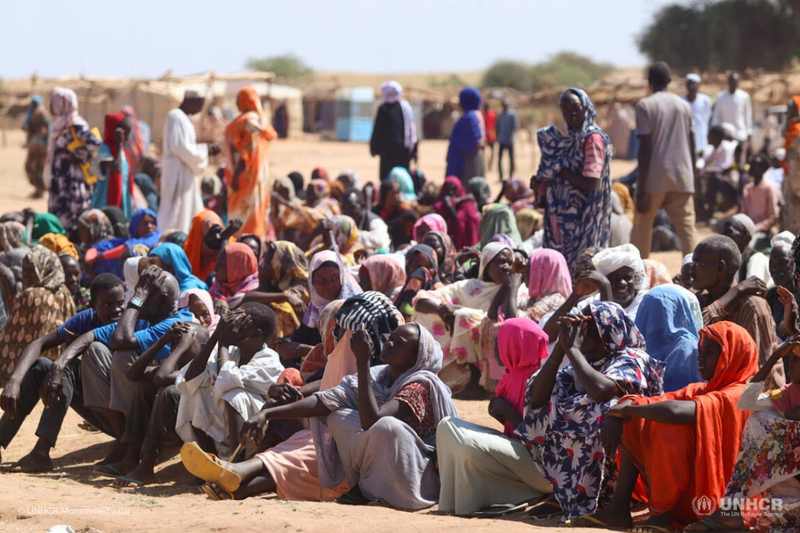
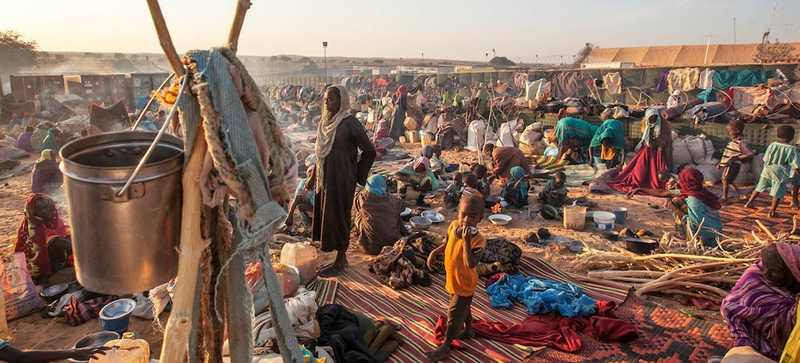
More than 13 million people have been displaced, making Sudan the world's largest displacement crisis. More than 33 million need humanitarian assistance. Tens of thousands have been killed, although the true toll is uncertain because fighting, destroyed health systems and inaccessible territory make complete counting impossible.
The figure of 1,100 reported drone deaths in five months is more than a measure of one weapon. It shows how quickly remote strike capacity has become central to the war. The 13 million displaced figure shows the cumulative result of thousands of local decisions: flee a neighborhood, abandon a farm, cross a border, split a family, move again when the next front approaches. The 33 million in need shows that the emergency is not confined to camps; it has become a national condition.
Who gains, who loses, what the critics say
The Sudan war ceasefire demand gives civilians recognition, not protection
Civilians gain an explicit international statement that neither side may condition a ceasefire on military concessions. They also gain another year of independent evidence gathering. But they do not gain a protected road, a functioning hospital or a guaranteed meal simply because the vote passed. The resolution's moral and legal value should not be confused with physical security on the ground.
Both warring parties lose legitimacy. The army loses the argument that state status should shield its methods from scrutiny. The RSF loses any claim that opposition to the army absolves it of responsibility for siege tactics, killings and abuses in territory it controls. External backers are put on notice as well: the resolution condemns illicit financial networks, illegal arms transfers and foreign mercenaries.
Sudan's government says its reservations were ignored
Sudan's government opposed the resolution and said its reservations were not taken into account. Its critique is that outside mechanisms can become politicized, duplicate domestic processes and flatten distinctions between the national army and a paramilitary force accused of grave atrocities. Supporters of the resolution answer that domestic accountability has been too weak and that state sovereignty does not erase international obligations toward civilians.
There is also a conspicuous omission: the resolution condemns outside interference generically but does not name the governments, financiers or networks accused of sustaining the combatants. That may have been necessary to assemble 28 votes. It also reveals the council's limit. Members could agree that foreign arms, money and mercenaries are prolonging the war, but not on a common public list of who should be held responsible.
What happens next
Most likely: the no military solution Sudan warning is ignored
The most likely near-term outcome is continued fighting. Burhan has pledged reconquest, and the RSF has strong incentives to consolidate territory and bargaining power. Under that scenario, the resolution becomes a reference point cited after new attacks rather than a mechanism that prevents them. North Kordofan is the immediate place to watch: control of roads and towns there connects military campaigns with humanitarian access.
Accountability pressure builds slowly
A second path unfolds over months and years. The renewed mission builds case files, links units to commanders and preserves evidence that can support International Criminal Court work, national prosecutions under universal jurisdiction or targeted sanctions. Such pressure rarely stops an offensive immediately. It can, however, isolate commanders, constrain travel and finance, and alter the calculations of political or commercial partners.
Monitoring language becomes the seed of a future observer force
A third possibility is that the call for an independent monitoring mechanism becomes institutional architecture for a later agreement. If the parties eventually accept a humanitarian pause or localized truce, mediators will need observers, reporting rules and procedures for alleged violations. Geneva has supplied a concept before the politics exist to implement it. Whether that grows into a credible mission will depend on consent, security and money.
The next signals are practical: whether Boulos secures follow-up access to Burhan and RSF leaders; whether donor governments fund the fact-finding mission at the level its mandate requires; whether aid agencies regain safer movement in Kordofan and Darfur; and whether council members translate the condemnation of outside interference into scrutiny of finance and weapons flows.
The resolution is therefore neither empty symbolism nor a diplomatic breakthrough. It is a line drawn in law and politics while the war continues across it. Its value will be measured not by the precision of Geneva's words, but by whether those words produce evidence, access and leverage before more civilians are killed or displaced.
Sources and methodology
This analysis distinguishes the council's adopted language, reported battlefield events, official positions and forward-looking scenarios. Adoption of the resolution does not mean either belligerent accepted a ceasefire.
- Associated Press report — the council vote, condemnation of attacks on civilians and ceasefire demand.
- Al Jazeera report — the resolution's terms, Sudanese opposition and humanitarian context.
- AFP report — the mandate extension, vote count and council debate.
- Reuters — Massad Boulos's meeting with Burhan in Egypt and the push for a humanitarian truce.
- UN News — displacement, humanitarian need and the UN's Sudan reporting.