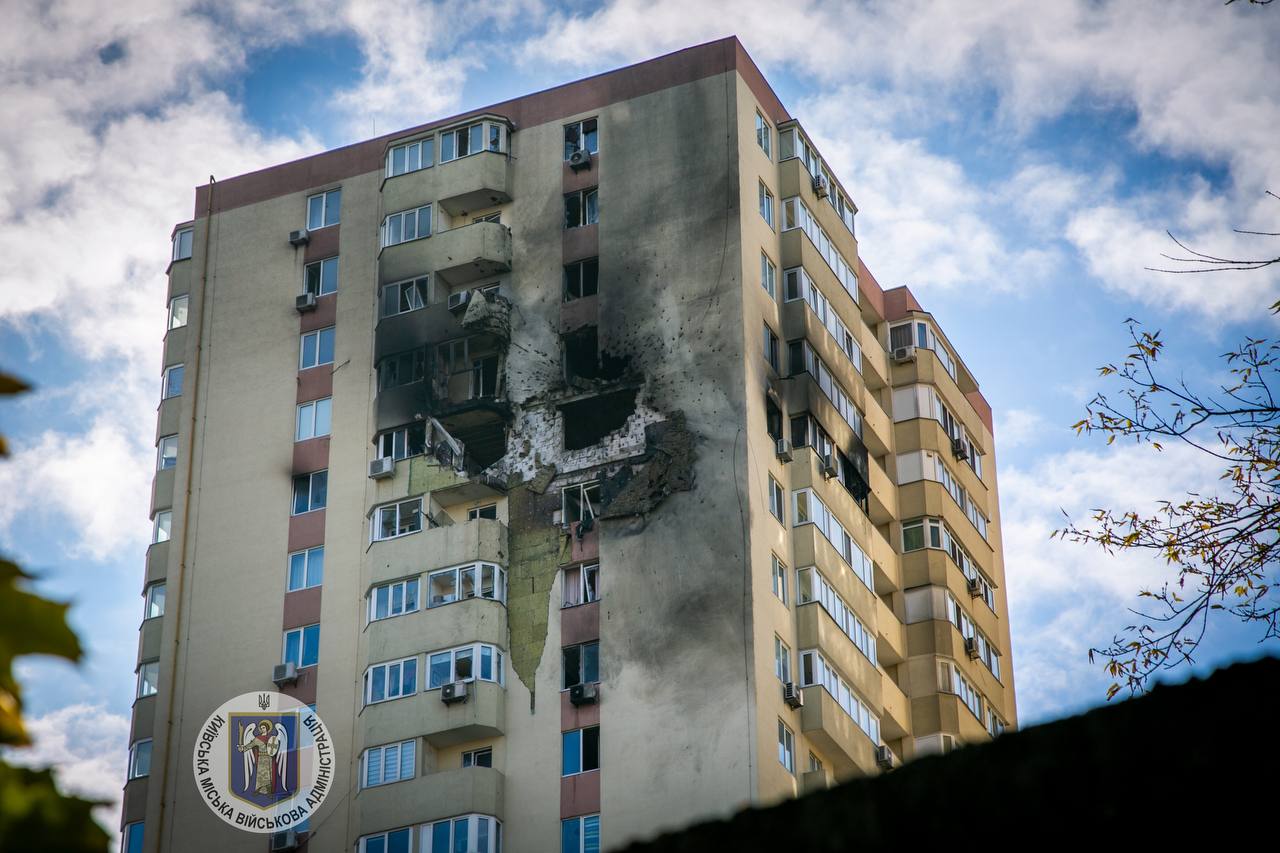
The Ukraine civilian casualties September 2026 toll has reached at least 200 killed and 1,234 injured in the first 24 days of the month, the United Nations said on Thursday, warning that Russian attacks across the country have taken on what its monitors call a "new intensity." The finding lands in the middle of UN General Assembly week — just as Washington is floating a new round of trilateral diplomacy — and it describes a battlefield reality moving in the opposite direction from the negotiating table.
According to the UN Human Rights Monitoring Mission in Ukraine, Russian forces carried out repeated attacks across the country "over the past several days," killing and injuring civilians and damaging homes, hospitals, shops and workplaces. The arsenal, the monitors said, spanned ballistic and cruise missiles, drones and guided aerial bombs — the full spectrum of Russia's long-range strike complex, applied not to a single front but to cities and towns across the map.
The mission's head, Danielle Bell, put the human texture of the statistics bluntly: "Workers have been killed while sorting vegetables. Families have been caught beneath the rubble of their homes." The mission cited hits on shopping centres, pharmacies, food warehouses and fuel stations — the unglamorous infrastructure of daily life. "This is 48 hours in Ukraine," Bell said, "and it comes after months of mounting civilian casualties."
Why this matters
The headline number — 200 dead in 24 days — is a verified floor, not a ceiling. The mission stresses that its figures are expected to rise as verification continues, which is the UN's careful way of saying the true toll is already higher. But the more telling number may be the frequency figure: Kyiv recorded civilian casualties on 16 of the first 24 days of September, the highest monthly frequency since the full-scale invasion began in February 2022. Two out of every three days, the capital's emergency services were pulling civilians from rubble.
That frequency matters more than any single strike because it describes a campaign, not an incident. A single devastating attack can be an accident of targeting or a one-off escalation; casualties on two-thirds of the days in a month describe a tempo — a deliberate, sustained pressure on population centres. It is also the metric least susceptible to dispute: it does not depend on attributing any one explosion, only on counting the days the medics were called.
The timing sharpens the significance. The UN's assessment was published on the same Thursday that Ukraine's president was briefing reporters about a possible trilateral meeting with the United States and Russia, and the same week that Russia was telling Reuters its forces had struck Ukrainian defence-industry sites, ports and vessels. Diplomacy and bombardment are accelerating simultaneously — which is precisely the pattern of wars where each side bombs to improve its bargaining position.
Seven farm workers killed sorting vegetables
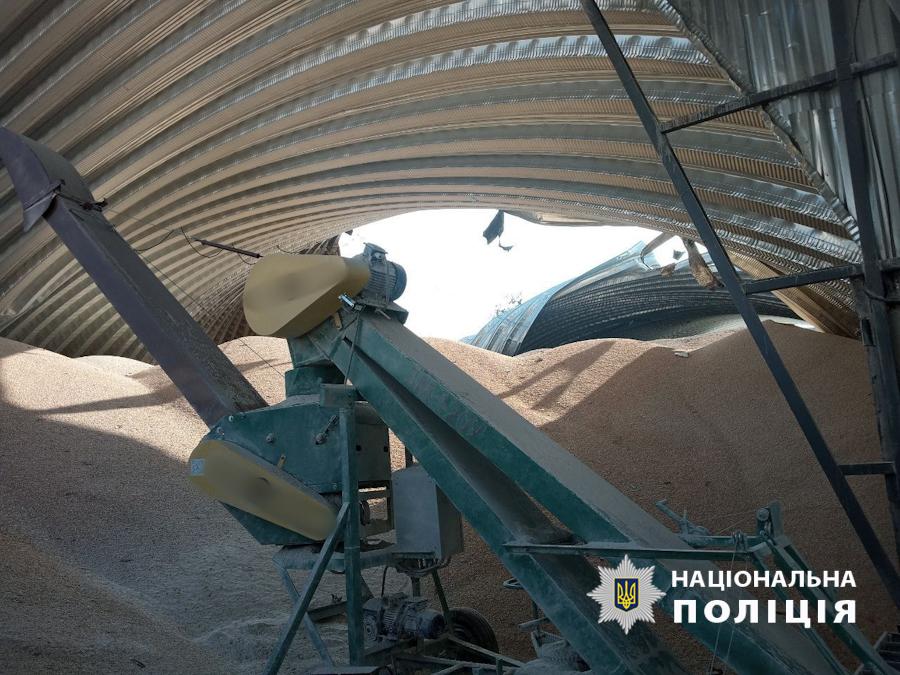
The single incident the UN chose to highlight illustrates why the civilian toll keeps climbing. On Thursday, Russian forces hit a vegetable sorting facility on a farm in Stara Hnylytsia, in the Kharkiv region, killing seven civilians and injuring 12 others, according to local authorities. All of the dead were reportedly farm workers, killed in the middle of a shift sorting vegetables.
There is no plausible military interpretation of a vegetable packing shed that survives scrutiny without evidence, and none has been offered. What the strike does illustrate is a pattern the monitors have been documenting for months: the steady erosion of the distinction between military and civilian objects in Russia's target selection. Food warehouses, pharmacies, shopping centres, fuel stations — these are the nodes of civilian survival, and they are being hit with weapons accurate enough that their destruction cannot be waved away as collateral.
To be clear about what is and is not established: the UN mission verifies civilian casualties through its own methodology, cross-checking local authority reports, and its figures lag the news cycle by design. The Stara Hnylytsia toll comes from local authorities, cited by the UN. Russia has not publicly addressed this specific strike. Its defence ministry's public statements this week described strikes on drone assembly and storage sites, logistics hubs, port infrastructure and vessels it said were linked to Ukraine's military — claims Reuters reported but said it could not independently verify.
Kyiv's deadliest month: what the numbers actually say
Two hundred killed and 1,234 injured over 24 days averages to roughly eight deaths and more than 50 injuries per day — and because the count is a verified minimum, the real daily rate is higher. For comparison within the UN's own framing, no previous month of the full-scale invasion has seen Kyiv take civilian casualties on so many of its days. The capital, with the country's densest air defences, is absorbing the heaviest sustained civilian punishment of the war.
Friday's daylight raids underlined the point. A Russian drone strike on a Kyiv office building killed at least three people during the workday, and CNN, citing the Kyiv mayor, reported seven civilians including a teenager killed and 59 injured across a series of daytime strikes on the capital — one of eight regions hit that day, according to Ukrainian officials. Earlier on Friday, a drone hit a residential tower in the Pechersk district, killing a 14-year-old boy.
Odesa, meanwhile, has faced repeated attacks of its own. Russia's defence ministry said its forces struck logistics hubs in the Odesa region, port infrastructure at Reni on the Danube, a drone assembly and storage site in the Kyiv region, and cargo vessels it said were carrying military and dual-use goods to the ports of Odesa and Chornomorsk — plus, in a later statement, a data centre it said processed Ukrainian military intelligence. None of these claims has been independently verified, and the UN's parallel documentation of civilian-object hits in the same regions tells a darker story about what the missiles are actually landing on.
The view from Moscow: ports, ships and a data centre
Fairness requires stating Russia's account as Russia states it. Over two days, its defence ministry described a coordinated campaign against Ukraine's military logistics: drone production and storage in the Kyiv region, telecommunications centres serving the military, logistics hubs at Odesa, port infrastructure on the Danube at Reni, two cargo vessels said to be delivering military supplies, and a data centre said to handle intelligence processing and transmission. In Moscow's telling, this is interdiction — degrading the depots, ports and networks that feed Ukraine's war effort.
The problem for that telling is the civilian wreckage the UN keeps photographing. Bell's list — shopping centres, pharmacies, food warehouses, fuel stations, a vegetable sorting shed — does not read like a target deck of drone factories. Either Russian intelligence is catastrophically misidentifying targets, or the category of "military-linked" has been stretched past recognition. Readers should hold both possibilities: precision weapons can miss, and target lists can be dishonest. What cannot be held is the proposition that 1,234 injured civilians in 24 days is the expected byproduct of a purely military campaign — a figure that scale demands an explanation Moscow has not provided.
The strikes going the other way
The UN report is explicit that the escalation runs in both directions. Ukraine, it notes, "has stepped up strikes on Russian territory, where local authorities report growing civilian casualties." Ukrainian drones have been hitting Russian oil refineries and industrial facilities — including, Ukrainian reports say, sites tied to missile-component production — and on Friday Ukraine struck Russian refineries again in direct response to the Kyiv office-building attack.
This is the other half of the civilian-toll equation, and it deserves equal scrutiny. Russian local authorities' casualty claims are as unverifiable in real time as Moscow's target claims in Ukraine. But the strategic effect is not in doubt: the refinery campaign has visibly strained Russia's fuel sector — President Trump wrote on Truth Social on Monday that Russia had "unfortunately lost control" of its diesel industry — and Trump has been urging Kyiv to stop the refinery strikes, arguing they are "hurting the world" as U.S. diesel prices hit records. Ukraine's calculation is transparent: impose costs Russia's leadership feels, in the hope that pain at home translates into flexibility at the table.
The moral symmetry here is uncomfortable but real. Both sides now routinely strike infrastructure whose destruction harms civilians far from any front line — energy, fuel, food logistics. The UN's mandate covers both directions, and so should any honest accounting. The difference that matters is one of scale and documentation: the UN has 200 verified dead on one side of the ledger for September and a monitoring mission with access on only one side of the front.
Who gains, who pays
Russia's gains are attritional and psychological. Sustained strikes on cities strain Ukraine's air defences, force Kyiv to spend interceptors it cannot quickly replace, punish the population's endurance, and — with winter approaching — lay the groundwork for an energy campaign. Ukraine's energy minister, Denys Shmyhal, has claimed Russia plans to knock out Kyiv's energy systems this winter; Zelenskyy has warned of a new massive Russian attack and says Kyiv is ready for an "energy ceasefire" if Russia spares power, heating and water infrastructure. The offer itself is a signal: Kyiv expects the grid to be the next battlefield.
Ukraine's gains are leverage and narrative. Every refinery fire inside Russia is evidence — for Western capitals and for Moscow — that the war's costs are not one-directional. The reported U.S. diesel price spike gives Kyiv's campaign an audience in Washington whether Trump welcomes it or not.
The payers are civilians, overwhelmingly Ukrainian, and then everyone who eats or drives. Port and grain-infrastructure strikes revive the food-security anxieties of 2022–23, when a single granary attack at Izmail destroyed 13,000 tons of grain bound for Egypt and Romania. Fuel disruptions are already moving pump prices. This is how a regional war taxes the globe: not through grand strategy, but through the compounding cost of burned warehouses and sunken cargo.
Critics of the UN's framing will note — correctly — that the mission documents what it can verify and that verification favours the side with open access. Critics of Moscow's framing will note — correctly — that "military-linked" has become a label flexible enough to cover a vegetable shed. Both criticisms can be true at once; the fog of war is not evenly distributed, but it covers everyone.
What happens next: winter, Patriots and a table in the Emirates
Three clocks are now running. The first is the weather: if Shmyhal's warning is right, the current tempo of strikes is the prelude to a winter campaign against heat and light — the tactic Russia has used before, now backed by a demonstrated willingness to hit civilian infrastructure weekly. Zelenskyy's "energy truce" offer is both a humanitarian plea and a diplomatic trap: accept it and the bombing pauses; refuse it and the responsibility for a freezing Kyiv is documented in advance.
The second clock is air defence. Zelenskyy told reporters on Friday that Trump had made a "final decision" to grant Ukraine licenses to manufacture Patriot missiles — quoting the president directly and describing "concrete agreements." Treat that as a claim, not a contract: Trump has not publicly confirmed it, the White House has not commented, and a license is not a factory. Patriot interceptors are among the few systems that can kill ballistic missiles, and a global supply crunch has left Ukraine short; domestic production would be strategically transformative, but production lines are measured in years, not weeks. The announcement's real function may be deterrent signalling — telling Moscow that the interceptor shortage it is exploiting has an expiration date.
The third clock is diplomatic. The United States has proposed the United Arab Emirates as the venue for a trilateral, technical-level meeting of Ukraine, Russia and the U.S.; Zelenskyy said his negotiators would brief the Europeans while Washington talks to Moscow, "and in ten days, we will come back with views and results in some shape or form." The Kremlin called such a meeting possible "in the near term."
Set those three clocks against the UN's numbers and the pattern is stark: the bombing intensifies as the talking approaches. That is not a paradox. It is how wars end — or how they convince everyone they cannot. September's 200 dead are the price of the current tempo; October will show whether the Emirates table changes it, or whether the "new intensity" the UN documented was merely the new normal.
Sources and further reading
- UN News — "World News in Brief: 'New intensity' to Russian attacks on Ukraine, Yemen, Gaza and Colombia updates" (September 25, 2026)
- Reuters — "Russia says it struck Ukrainian defence industry facilities, vessels" (September 25, 2026)
- Reuters — "Russia says strikes hit Ukrainian military-linked facilities, vessels" (September 24, 2026)
- CNN — "Zelensky says Trump has made 'final decision' to allow Kyiv to make Patriot missiles" (September 25, 2026)
Reporting basis: Civilian casualty figures, the Stara Hnylytsia strike, and all quoted statements from Danielle Bell are from the UN Human Rights Monitoring Mission in Ukraine via UN News (September 25, 2026). Russian defence ministry claims are as reported by Reuters, which noted it could not independently verify them. The Patriot-license account is Volodymyr Zelenskyy's claim as reported by CNN; the White House had not confirmed it at publication time. Ukrainian strikes on Russian refineries and Russian local-authority casualty reports are as carried by international wires. Analysis and projections are the author's own.