Published October 4, 2026 at 9:00 a.m. PDT
Trump taxpayer money ads
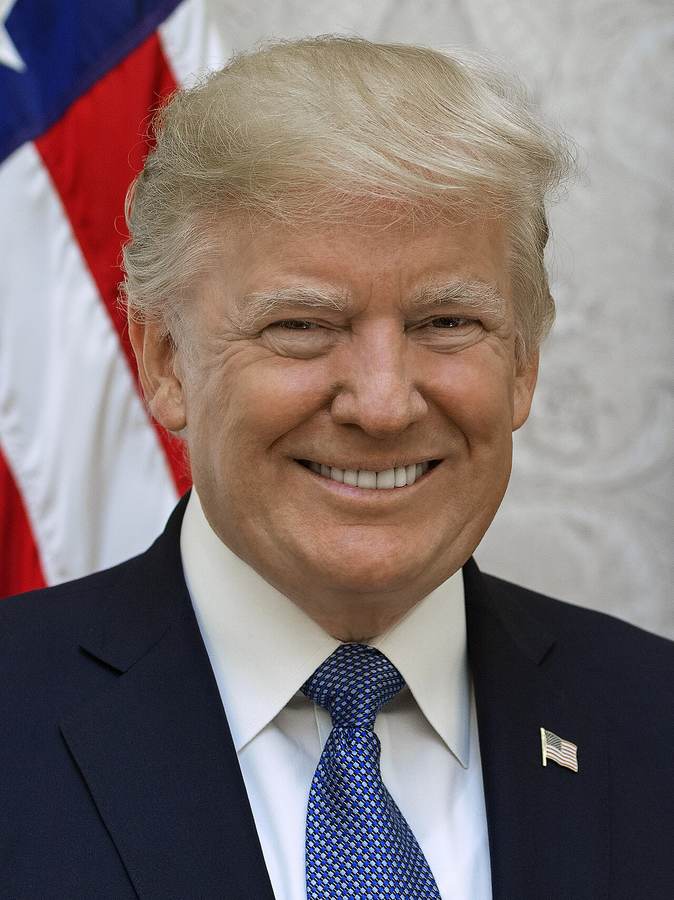
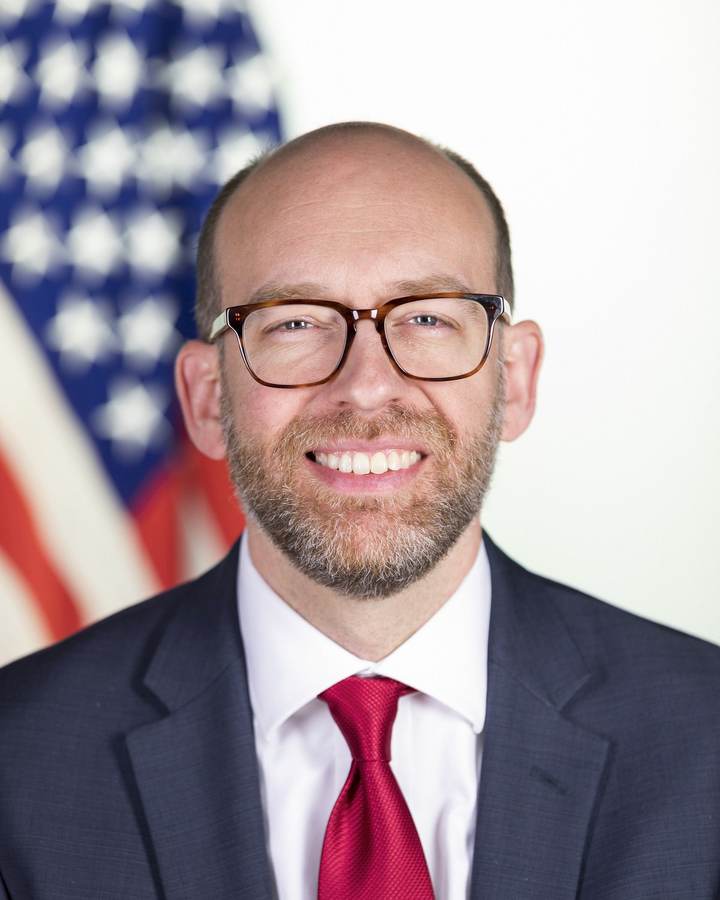
WASHINGTON — The most expensive vanity project in American politics now has an itemized receipt. The New York Times reported this week that President Donald Trump personally instructed his budget director, Russell Vought, to find government money for television ads praising him and his presidency — a directive that produced a $20 million contract paid for with Department of Homeland Security funds. The reporting, drawn from interviews with 12 people familiar with the matter, describes a president eager to see laudatory ads on the air and a White House willing to reclassify border-security money to get them there.
The mechanics moved with remarkable speed. On September 19, the Office of Management and Budget shifted $20 million from Customs and Border Protection into a line for “commemorative events.” One day later, CBP awarded Maryland-based LMD Agency, part of MarCom Group, a $20 million “National Media Campaign” contract. Three spots — “The Country He Loves,” “Celebrating The Enduring Spirit” and “Final Battle” — began appearing across Fox News, CNN and MS Now, then in Fox football, NFL broadcasts, CBS, ABC and NBC newscasts, “Meet the Press,” “Good Morning America” and “Jimmy Kimmel Live!” AdImpact has tracked at least $2.5 million in airtime; CNN later identified at least 13 separate ads, many assembled by the White House video team. What began as a small set of presidential tributes is becoming a broad, still-expanding media campaign.
The directive at the center of it
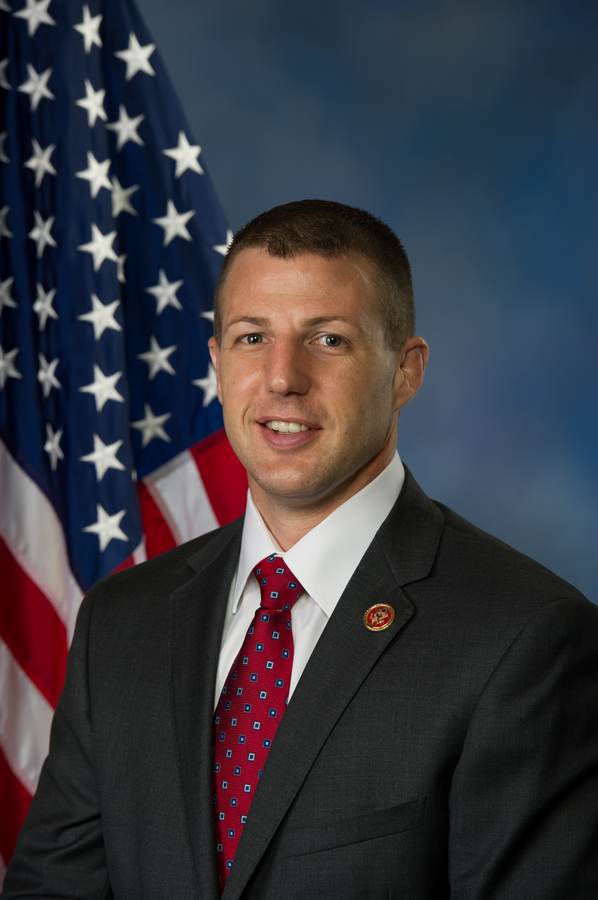
The defining fact is not merely that an agency bought advertising. It is who initiated the purchase and what the ads celebrate. According to the Times, Trump told Vought to come up with government money for spots focused on the president himself. OMB general counsel Mark Paoletta and White House staff secretary Will Scharf provided legal sign-off, while Trump and Chief of Staff Susie Wiles spoke with Homeland Security Secretary Markwayne Mullin about the campaign.
The president's interest was already visible in an August Oval Office meeting. Republican allies had come to discuss deploying super PAC money on behalf of vulnerable GOP candidates. Instead, according to the Times account, Trump spent much of the meeting watching flattering clips of himself supplied by aide Natalie Harp. That scene matters because it links the eventual federal expenditure to a personal preoccupation, not to a communications plan that began with a stated CBP mission.
Why this matters
Federal agencies have long spent money to explain programs, publicize benefits or encourage compliance with the law. What investigators and lawmakers now have to decide is whether this is categorically different: the first known use of taxpayer money for television advertising that glorifies a sitting president personally. The Government Accountability Office has faulted Democratic and Republican administrations for policy campaigns that crossed the statutory line, but those disputes involved promotion of government initiatives, not a president cast as the central national hero.
The timing sharpens the distinction. The ads are airing roughly 30 days before the November 3 midterms, on programs and sports broadcasts prized by political advertisers. They require no disclaimer identifying a candidate committee because the purchaser is the federal government. That is the governing-versus-campaigning line in its most practical form: a message that looks and sounds political can reach voters without being paid for or regulated as political advertising.
The most important political fact is that the objection is bipartisan. Senate Majority Leader John Thune said, “It's a great message. I like the message, but it shouldn't be paid for by taxpayer dollars.” Senator Thom Tillis compared the tone to Viktor Orbán addressing Hungarians. Senator John Kennedy said no public official should spend public money on private ads for themselves. Senators Patty Murray and Chris Murphy, writing to Mullin, called the arrangement “a shockingly corrupt misuse of taxpayer dollars” and described the spots as “government propaganda one might expect in North Korea.” That last phrase is partisan rhetoric, but the shared concern across party lines is concrete: public funds appear to have purchased personal praise.
Richard Painter, the former White House ethics lawyer, has called the conduct an “impeachable offense.” That is his legal and political assessment, not an established finding. No court, congressional chamber or GAO decision has reached that conclusion. Its significance lies in the severity of the constitutional argument now being made, not in treating an advocate's judgment as settled fact.
How we got here: a 70-year-old ban and an accounting trick
Since the 1950s, annual federal spending laws have prohibited money from being used for “publicity or propaganda” not authorized by Congress. The rule does not ban all government communication; it is meant to stop agencies from disguising advocacy as neutral information or using appropriations to build political support. GAO found violations in public-relations campaigns during both the George W. Bush and Barack Obama administrations. Even those precedents, however, centered on policies. The present controversy goes further because the advertised object is the president's character and record.
Washington Post legal analysis identified a second problem: Congress tightly described what the relevant CBP money could fund, including port inspection equipment, border surveillance and screening unaccompanied children. “Commemorative events” traditionally meant memorials for personnel who died in the line of duty. Moving border-security dollars into that category and then treating presidential television spots as commemoration may be the accounting maneuver on which the entire purchase depends.
Senator Susan Collins, who chairs the Senate Appropriations Committee, said her panel had no role and that the administration took money Congress had provided to CBP in the reconciliation law. In her words, officials “went around the appropriations process.” Public Citizen has challenged the campaign, setting up a test of both the propaganda restriction and the purpose limits attached to the money. Separately, the band JMSN sent a September 28 cease-and-desist over the use of “Love Me,” adding a copyright dispute to the growing legal docket.
Who benefits, who loses
Trump is the obvious beneficiary: he receives nationwide airtime that a campaign or allied group would otherwise have to buy. Supporters of the message benefit too. Thune's formulation is revealing because he likes what the ads say while rejecting how they were funded. That separates the content debate from the public-finance question and gives Republicans room to object without disowning the president's record.
Taxpayers bear the immediate cost. CBP programs named in the underlying law bear the opportunity cost, even if $20 million is small beside the department's overall appropriation. Republicans in close races bear the political cost of explaining why government money financed presidential tributes; Collins, who faces a difficult reelection, has already put distance between herself and the decision.
Then there is the $400 million question. MAGA Inc., the pro-Trump super PAC, entered the fall with roughly that sum available. If allies wanted celebratory ads, the political system already contained a well-funded vehicle to buy them. Using taxpayer money instead transfers the bill from voluntary donors to the public and gives the message the imprimatur of the government.
Trump disputes the premise that the ads serve him privately. “I'm not running for office,” he said, describing them as “ads for the country.” He added: “If somebody said that's wrong, I'll gladly pay the money.” The White House calls the spots public-service announcements celebrating the nation and the administration's accomplishments. That is the administration's strongest defense: an incumbent government may tell citizens what it believes it has achieved. The unresolved question is whether an ad centered on the president's praise can still be a public-service message merely because the government labels it one.
What the numbers actually mean
The $20 million contract is a ceiling, not evidence that every dollar has already been spent. AdImpact's $2.5 million tally represents about one-eighth of the contract. At least $315,967 ran during football from September 25 through 27, including a single $65,366 buy during a Fox college-football broadcast. At the reported pace of roughly $1.5 million a week, the remaining contract could finance about 13 more weeks — long enough to run through the November 3 midterms and well beyond them.
Scale can be expressed three ways. Against the $175 billion DHS received in the One Big Beautiful Bill Act, $20 million is roughly 0.01 percent: tiny in departmental terms. Against MAGA Inc.'s roughly $400 million reserve, it is 5 percent: material but readily affordable to the political operation. Against the federal prohibition at issue, however, size is beside the point. A purpose restriction is either honored or it is not.
What happens next
The first path is administrative law. GAO can be asked to determine whether the campaign violates the publicity-or-propaganda prohibition or improperly uses CBP money for a purpose Congress did not authorize. Such opinions do not carry the same force as a court judgment, but they shape appropriations practice and can require an agency to report an Antideficiency Act violation.
The second path runs through Public Citizen's challenge and any related litigation. Courts could examine standing, the scope of the spending provisions and whether the ads are informational enough to survive review. The third path is congressional oversight, currently muted because the Senate is in recess. If Democrats win the House on November 3, subpoenas for Vought, Paoletta and Mullin would be a predictable early move. A Republican-controlled Congress could still investigate through appropriations committees, especially given Collins's objection.
Trump's promise to “gladly pay the money” opens more questions than it closes. Pay whom — the Treasury, CBP or the contractor? Pay the $2.5 million already booked, the full $20 million obligation or some other figure? And would reimbursement cure an unauthorized use after the fact? Returning money might reduce the public loss without erasing the decision that caused it.
Meanwhile, the campaign is expanding. More ads, more programs and more spending raise the stakes of every later ruling. The central issue is now larger than one contract: whether a president can convert appropriated program money into a government-financed image campaign and defend it as civic celebration. The answer will set a precedent future administrations of either party will remember.