
WASHINGTON — The Trump Hormuz blockade October 2026 announcement followed the collapse of U.S.–Iran ceasefire talks in Islamabad this weekend, replacing an unfinished diplomatic framework with a maritime enforcement deadline. President Donald Trump said Sunday that the U.S. Navy would “begin the process of BLOCKADING any and all Ships trying to enter, or leave, the Strait of Hormuz.” Hours later, U.S. Central Command described a narrower operation: all maritime traffic entering or leaving Iranian ports and coastal areas would be blocked from Monday at 10:00 a.m. Eastern time, but vessels transiting Hormuz to or from non-Iranian ports would not be stopped.
That difference is the central fact. A blockade of the strait itself would threaten traffic bound for ports across the Gulf. A blockade limited to Iran is still a grave escalation, but it preserves a corridor for ships serving other nations. The gap between the political language and the operational order may be deliberate risk control, an unresolved policy dispute, or both.
What happened: the Islamabad talks fail and two blockade messages follow
American and Iranian negotiators met in Pakistan on October 3 and 4, but the talks ended without an agreement. NBC News reported that Vice President JD Vance and the U.S. delegation failed to secure a peace deal. Trump said most points had been settled, yet described nuclear policy as the decisive unresolved issue.
The face-to-face session ran for 21 hours before ending early Sunday, according to the Associated Press, which described it as the highest-level direct U.S.–Iran meeting since Iran's 1979 Islamic Revolution. Vance led the American side; Iranian Parliament Speaker Mohammad Bagher Qalibaf led Tehran's delegation. The duration and seniority underscore that this was not a preliminary contact: both governments put top political figures in the room and still could not close the gap.
Trump's Truth Social statement went farther than the military notice that followed. He said the Navy would act against ships trying to enter or leave the Strait of Hormuz and would interdict vessels in international waters if they had paid a toll to Iran. He called those payments illegal extortion and accused Iran of laying mines in the waterway. Those are claims by the president; the available reporting does not independently establish each allegation.
CENTCOM then supplied the actionable terms. Beginning Monday at 10:00 a.m. Eastern time, it said, the United States would block maritime traffic entering or departing Iranian ports and coastal areas. Enforcement would apply impartially to vessels of all nations. But the command explicitly carved out ships moving through Hormuz to and from non-Iranian ports — a material step down from closing the entire strait.
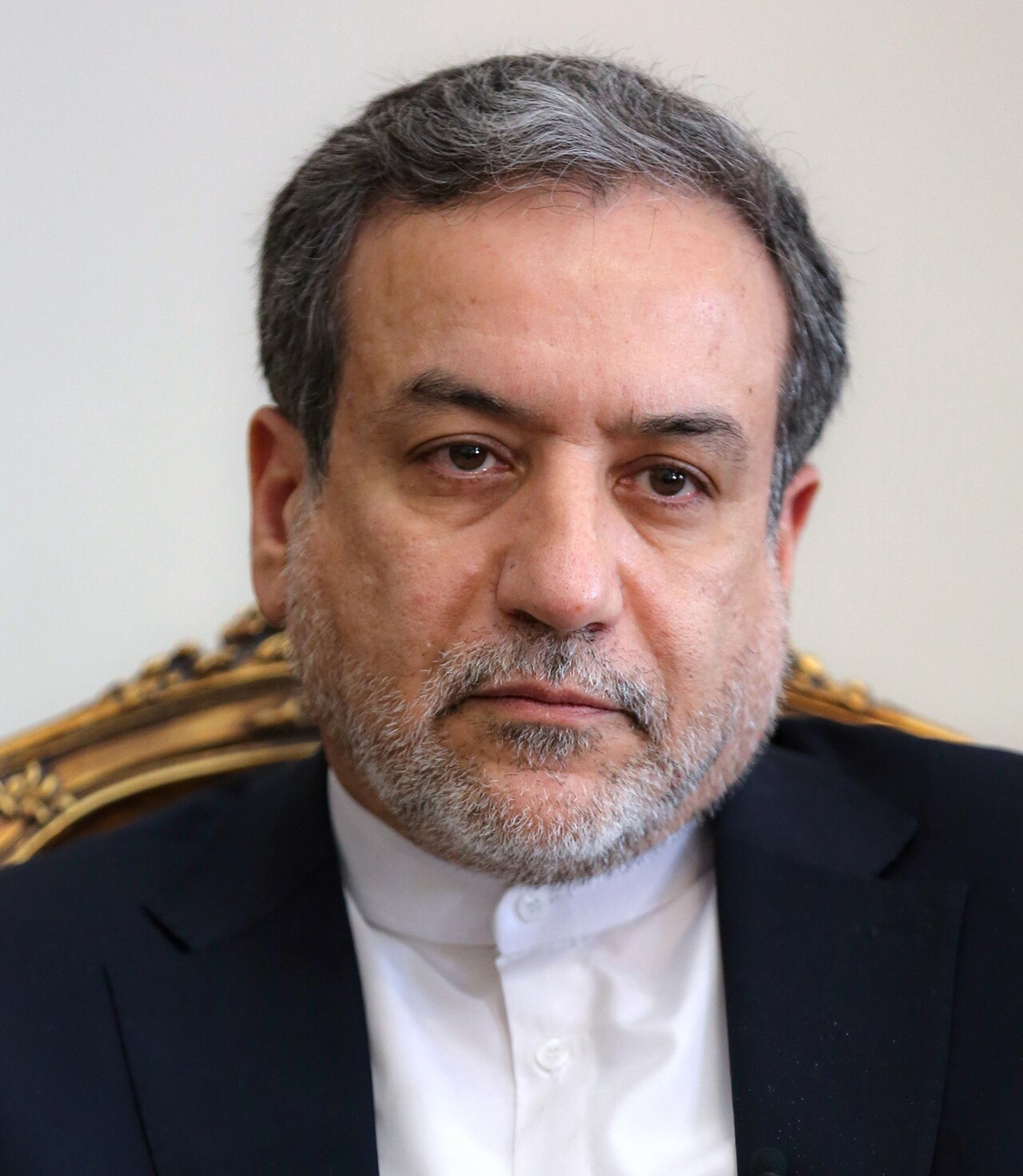
Iran answered with two signals of its own. The Islamic Revolutionary Guard Corps Navy warned that military vessels approaching the Strait of Hormuz would be treated as violating the ceasefire and “dealt with severely.” Foreign Minister Abbas Araghchi said Tehran negotiated in good faith and was “inches away” from an “Islamabad MoU” before encountering what he called “maximalism, shifting goalposts, and blockade.” His conclusion — “Good will begets good will. Enmity begets enmity” — framed the breakdown as a choice imposed by Washington. The United States contests that account through Trump's claim that Iran would not resolve the nuclear issue.
A U.S. official told AP that Washington's red lines required Iran never to obtain a nuclear weapon, end uranium enrichment, dismantle major enrichment facilities, surrender its highly enriched uranium, reopen the Strait of Hormuz, and stop funding Hamas, Hezbollah and the Houthis. Iran's 10-point proposal, by contrast, centered on ending Israeli strikes against Hezbollah in Lebanon; Israel says the U.S.–Iran ceasefire does not cover its Lebanon operations. These were not drafting disputes. They linked nuclear dismantlement, regional armed groups, shipping access and a separate battlefield into one package.
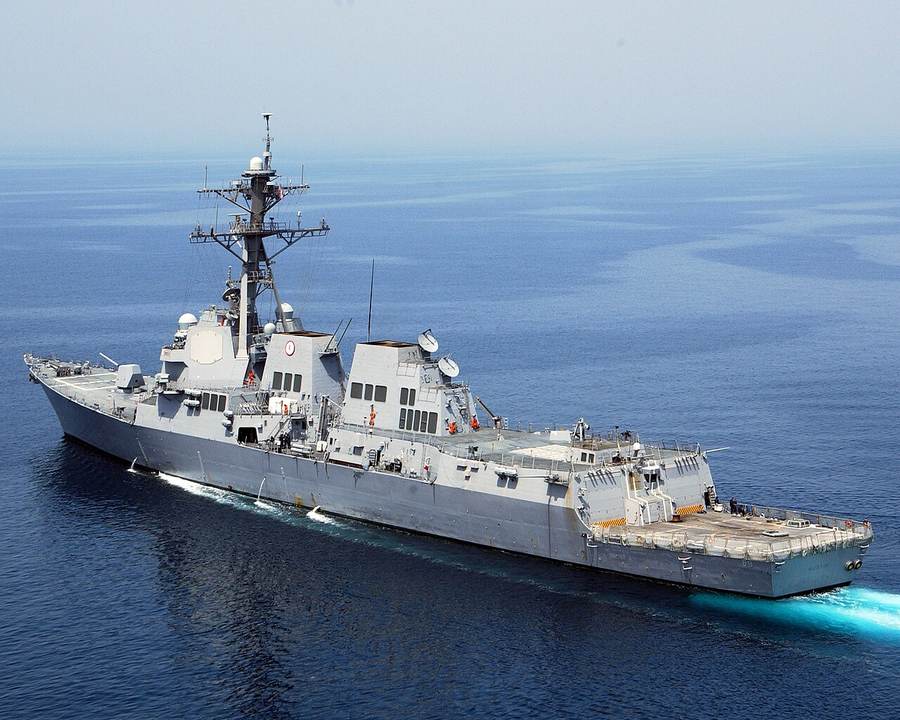
The risk at sea was already being tested during the negotiations. The United States said two destroyers transited Hormuz ahead of mine-clearing work, the first such U.S. naval passage since the war began. Iran denied that the transit occurred. Trump later told Fox News that nuclear ambitions were at the heart of the failure and again threatened strikes on civilian infrastructure. Back in Iran, Qalibaf addressed the president directly: “If you fight, we will fight.” Each statement raised the cost of compromise after the delegations left Islamabad.
Why this matters: a blockade is leverage, but also a tripwire
The United States has treated pressure on Iranian ports as its principal source of leverage in the war. A blockade can choke export revenue and raise the cost of imports without immediately striking targets on land. That makes it attractive as coercion. It also puts American and Iranian forces into repeated close contact, where a disputed boarding, warning shot or misread maneuver could expand the conflict faster than either capital intends.
The narrower CENTCOM language is therefore not a technical footnote. It avoids declaring every ship in the world's most important oil chokepoint a potential target. The order focuses the economic penalty on Iran while trying to reassure Gulf partners and commercial operators that lawful transit to their ports remains open. In strategic terms, Washington is attempting to isolate Iran rather than isolate the Gulf.
Whether that distinction survives contact with the water is the harder question. Naval crews must identify destinations and ownership, determine whether a vessel is entering an Iranian coastal area, and enforce the rule against friendly as well as hostile-flagged ships. Iran's warning also places military vessels near Hormuz inside a claimed red line. The result is a policy designed to be narrower than Trump's rhetoric but still dependent on consequential encounters at sea.
Oil jumps above $100 as traders price a new enforcement risk
Markets reacted before the first interdiction. In early Sunday trading, U.S. crude rose 8 percent to $104.24 a barrel, while Brent gained 7 percent to $102.29. Brent traded around $70 before the war began in late February. The increase from roughly $70 to just over $102 is about $32 a barrel, or approximately 46 percent — a measure of how much conflict and shipping risk have been embedded into the benchmark.
The move does not prove that physical supplies have already been removed. It reflects the probability of disruption: delayed cargoes, higher insurance, diversions, precautionary buying and the possibility of retaliation. Markets had already pushed crude toward $107–$108 during September's most acute Hormuz tensions, which shows both the scale of the risk premium and that prices can reverse if a corridor remains reliably open.
Hormuz normally carries about one-fifth of global petroleum liquids consumption. Prewar traffic was roughly 138 ships a day; since the ceasefire, reporting cited more than 40 a day. Even reduced traffic is too large for an enforcement regime to treat as marginal. The phrase “impartially against vessels of all nations” matters because oil cargoes are commonly owned, flagged, financed and insured across several jurisdictions. The burden will not stop at Iran's coastline.
Background: from the rejected seven-day plan to the Islamabad MoU
The weekend breakdown did not begin in Islamabad. On September 26, Trump rejected an Iranian proposal to reopen Hormuz for seven days as part of a ceasefire pathway. Our earlier report on the rejected Hormuz reopening plan traced the central dispute: Tehran wanted a staged economic release, while Washington wanted guarantees strong enough to preserve military and financial pressure.
The talks nevertheless moved toward what Araghchi called the Islamabad memorandum of understanding. The framework reportedly covered sanctions relief, release of frozen assets, and a halt to military operations, including in Lebanon. Those are linked bargains. Sanctions and blocked assets are the economic exchange; pauses in military operations are the security exchange. Nuclear policy, by Trump's account, remained the point neither side could bridge.
The wider pressure campaign has been visible for months. Signal Post News previously examined the proposed phased deal built around Hormuz and blockade relief. The new order reverses that logic: instead of easing enforcement to create space for diplomacy, Washington is tightening enforcement after diplomacy failed.
Diplomacy is bruised, not formally closed
Pakistan's foreign minister, Ishaq Dar, said Islamabad would try to facilitate another dialogue, and Iran's state-run IRNA reported that Tehran remained open to continuing talks. The European Union urged diplomacy. Oman's foreign minister called for “painful concessions,” a phrase that captures the problem the 21-hour session could not solve: any workable agreement now requires each side to surrender something it has publicly defined as essential.
Russia also positioned itself as a possible broker. President Vladimir Putin told Iran's president that he was ready to help reach a settlement. That offer gives Tehran another diplomatic channel, but it does not remove the central U.S. demands or the Monday maritime deadline. Mediation can preserve contact; it cannot substitute for decisions by Washington and Tehran.
Multiple angles: pressure, revenue and the law of escalation
The U.S. pressure case. Washington gains leverage if it can reduce Iranian port activity while keeping commerce moving to allied ports. That would demonstrate an ability to impose costs selectively, strengthen the hand of U.S. negotiators, and limit the inflationary damage of a full closure. The strategy depends on credible enforcement: exceptions that become loopholes would weaken it, while indiscriminate enforcement would erase the distinction CENTCOM just drew.
Iran's revenue and deterrence case. Tehran loses export income and access to maritime trade if the blockade holds. It also faces a strategic choice between absorbing those costs and testing the operation. The IRGC warning is meant to raise the expected price of U.S. enforcement. Yet an attack on a military vessel could give Washington the justification for the broader campaign Iran says it wants to avoid.
Importers, shippers and insurers. Asian energy importers have the greatest direct exposure because they depend heavily on Gulf supplies. Shipowners and crews face route uncertainty; insurers face war-risk claims and must decide which voyages remain coverable. Oil producers outside the immediate conflict may benefit from higher prices, but consuming economies lose through fuel inflation and weaker growth.
The legal argument. Blockades are acts of coercion with established rules under the law of armed conflict, including requirements concerning declaration, effectiveness, impartiality and access to neutral ports. Supporters will say CENTCOM's public deadline, neutral application and non-Iranian carve-out are designed to satisfy those constraints. Critics will argue that stopping neutral vessels in international waters risks unlawful interference and a wider conflict. Those competing legal claims will turn on how the order is executed, not only how it is announced.
The Lebanon dimension is becoming inseparable from the Iran talks
The dispute over Lebanon moved in parallel with the Islamabad breakdown. AP reported that Israeli Prime Minister Benjamin Netanyahu visited Israeli-controlled territory in southern Lebanon on Sunday, his first such visit since the fighting began. Israel and Lebanon are expected to begin negotiations Tuesday in Washington after Israel's surprise authorization of talks. The diplomatic opening came on the same day Lebanon's National News Agency reported six people killed in Maaroub near Tyre.
That sequence explains why Iran's proposal put Israeli strikes against Hezbollah at its center and why Israel's position — that the U.S.–Iran ceasefire does not apply in Lebanon — is so consequential. Washington may be trying to negotiate the Lebanon track separately, but Tehran treats its regional alliances as part of the same security bargain. Progress in one room can therefore be undercut by events on another front before negotiators reconvene.
The human cost already extends well beyond shipping and oil. AP's latest toll puts the war at at least 3,000 people killed in Iran, 2,055 in Lebanon, 23 in Israel, and more than a dozen across Gulf Arab states. The figures come from different national authorities and conflict environments and may be revised, but together they show why a maritime escalation cannot be assessed only in barrels, vessel counts or insurance rates.
What the numbers imply for Hormuz shipping
The comparison between 138 daily ship movements before the war and more than 40 since the ceasefire shows a corridor already operating far below normal. If enforcement affects only Iran-bound traffic, the remaining volume could stabilize around non-Iranian Gulf trade. If uncertainty causes operators to avoid the route regardless of destination, the economic effect could resemble a broader closure even without a formal one.
The oil move offers a second measure. A 7–8 percent jump in a single early session is not merely a verdict on talks; it is a demand for compensation for uncertainty. At $102–$104, crude is far above its prewar level but below September's reported peak. Traders appear to be pricing a severe but not yet total disruption — consistent with the CENTCOM carve-out, and vulnerable to rapid repricing if the first boarding goes wrong.
The Monday deadline creates a third measure: time. Shipowners have only hours to clarify destinations, instructions and insurance. Military commanders have only hours to publish procedures that separate interdiction from escalation. Iran has only hours to decide whether its warning is a deterrent signal or an operational commitment.
What happens next: four tests after Monday's deadline
The first interdiction. The first ship stopped, diverted or boarded will define the policy more clearly than either announcement. Its flag, cargo, destination and treatment will show whether “impartial” enforcement can be applied without alienating partners.
The IRGC red line. Iran has warned military vessels away from Hormuz, while CENTCOM says non-Iranian transit will continue. If U.S. warships stay outside the strait and enforce near Iranian approaches, the two positions may leave a narrow path to avoid contact. If either side tests the other inside the channel, the risk of direct fire rises sharply.
The fate of the Islamabad MoU. Araghchi's “inches away” language suggests a document existed in advanced form, not that every dispute was solved. That leaves a route back if both sides use the blockade as leverage rather than as a permanent end state. It also means the nuclear disagreement is likely to remain the gate through which any renewed talks must pass.
Domestic political pressure. With U.S. midterm elections approaching, the administration will want to show strength without creating another uncontrolled inflation shock. Tehran will want to avoid appearing to negotiate under force. Those political needs push both sides toward hard public positions even when their operational choices remain more cautious.
The most important indicator is therefore not another social-media threat. It is whether Monday's enforcement looks like a targeted port blockade with transparent procedures, or whether incidents begin to erase the distinction between Iranian trade and the Strait of Hormuz itself. The former preserves a narrow diplomatic exit. The latter could turn a failed memorandum into a regional maritime war.
Sources and reporting notes
- Associated Press via Boston 25 News: talks, blockade terms and oil-market reaction
- NBC News: U.S. delegation leaves Pakistan without a peace deal
- Eastleigh Voice: Trump's Sunday blockade statement
- Mint: Araghchi's account of the Islamabad MoU
- USA Today: September 26 ceasefire proposal context
Reporting note: Statements by Trump, CENTCOM, Araghchi and the IRGC are attributed claims. The distinction between a blockade of Iranian ports and a blockade of all Hormuz traffic is central to this report. Oil-price changes and shipping estimates are snapshots from the cited reporting; scenario, beneficiary and legal-risk analysis is Signal Post News analysis.