President Donald Trump has put on the record, for the first time himself, the claim that Iran is turning toward chemical and biological weapons now that its nuclear path has been shut. He said it in a Fox News interview in Shenzhen, hours before a first-ever trilateral meeting with Xi Jinping and Vladimir Putin. The claim is his stated “indication,” not a published intelligence finding — and on the same day, the FBI’s deputy director told Congress that reporting about alleged Iranian plots against Washington is “largely aspirational.” Iran calls the whole narrative fabricated. This article keeps those layers separate, because the distance between them is where the policy will be made.
Track it live: Iran war tracker · Live wars tracker
SHENZHEN, November 18, 2026 — The Trump Iran biological weapons claim now has the president’s own voice behind it. In an interview with Fox News correspondent Jacqui Heinrich in Shenzhen, China — recorded on Thursday local time, Wednesday in the United States, during the APEC summit trip that brought him from the ASEAN meetings in the Philippines to China — President Donald Trump said there are signs Iran is exploring chemical and biological weapons because its route to a nuclear weapon has been closed off. “There is indication that Iran is looking at gases, looking at bio, because we’ve shut them out with the nuclear. Nuclear is much harder,” Trump said. “And they’re looking at gas and they’re looking at the bio, you know, the biological weapons, not nice.” It is the first time Trump himself has stated the allegation publicly. Until Wednesday, it had lived in intelligence reporting attributed to unnamed officials — reporting that a senior FBI official, testifying to Congress on the same day, pointedly declined to inflate.
Three distinct things happened on Wednesday, and they should not be merged. First, the president made a claim about Iranian intentions, in his own words, on camera. Second, the FBI’s second-in-command told lawmakers that much of the reporting about Iranian plots aimed at Washington is “largely aspirational” — a calibration, delivered under the lights of a House hearing room, that sits in obvious tension with any reading of the reporting as an operational plan. Third, Iran’s Foreign Ministry dismissed the underlying reports as baseless and fabricated. Behind all three sits a fourth, quieter development: reporting by The New York Times that Israel’s prime minister is pressing Trump to join a new, short strike campaign against Iran, and that Trump has not decided. The president’s Shenzhen remarks land in the middle of that deliberation, and they will be read in Tehran, Jerusalem and Washington as part of it.
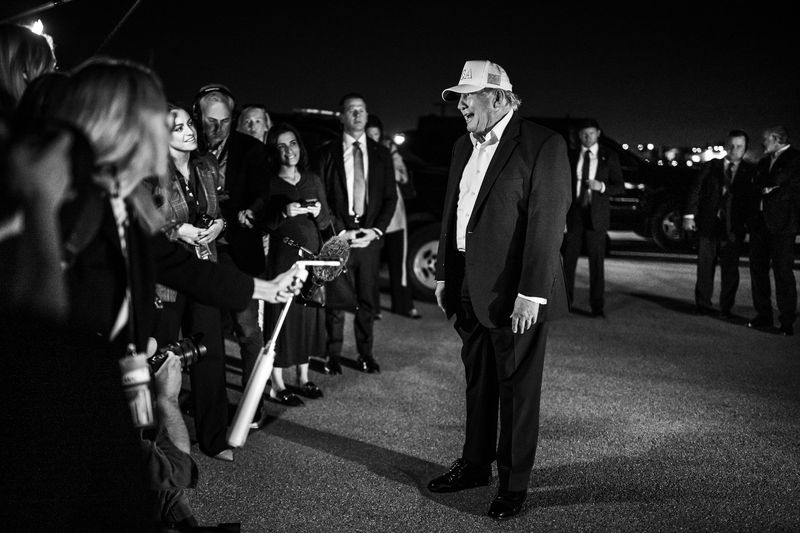
What Trump said in Shenzhen
The setting matters for how the remarks will travel. Trump gave the interview in Shenzhen, where he is attending the APEC leaders’ summit and where, on Thursday, he is due to sit down with China’s Xi Jinping and Russia’s Vladimir Putin for the first formal three-way meeting of the three leaders — a session the White House has said will focus on nuclear reduction. Iran was already expected to shadow that table. Speaking to Heinrich, Trump moved it to the centre of his own public message. His claim, stated precisely, was about direction rather than inventory: not that Iran possesses chemical or biological weapons, not that any specific program has been identified, but that there is an “indication” Iran is “looking at” them — and that, in his account, the reason is substitution. “Because we’ve shut them out with the nuclear. Nuclear is much harder.”
Read closely, the sentence is a theory of Iranian behaviour offered by the president, not an intelligence assessment read into the record. Trump did not cite a finding, name an agency, describe a facility or offer evidence in the interview. That does not make the claim empty — presidents speak from briefings the public cannot see, and his wording may compress classified material he is not free to detail. But it does fix the claim’s evidentiary status tonight: it is a presidential assertion of an “indication,” attributed throughout this article to Trump, and it has not been accompanied by any published assessment from the US intelligence community, the IAEA or the OPCW, the international chemical-weapons watchdog. Readers should hold it at exactly that weight — no lighter, because of who said it; no heavier, because of what has not been shown.
The dirty-bomb question — and the FBI’s “largely aspirational” assessment
Heinrich also asked Trump about the reporting that has circulated in Washington this week: CNN and other outlets have reported that US intelligence indicates Iran is developing plans to target senior administration officials in Washington with a dirty bomb or a chemical weapon. Asked whether people in the capital should be worried, Trump said he did not think so — and then attached the deterrent threat that has become his signature construction: “Look, if it does happen, we’ll wipe them out.” The sequence is worth noting. The president simultaneously downgraded the immediate danger to Washington residents and maximised the promised consequence for Tehran. That is deterrence language, not an intelligence judgment, and it should be read as such.
What is new here is the president’s voice, not the underlying reporting. Signal Post News covered the intelligence reporting on November 16 in its account of how US intelligence reporting described Iranian dirty-bomb plans aimed at Washington: the reporting was sourced to unnamed officials, it was not described as imminent, and the White House position at the time was that there were “no credible threats.” The reported plot remains exactly that — a reported, alleged plot, described in intelligence reporting, not a confirmed plan. Nothing in Wednesday’s interview changes that status, and Trump’s own answer to the worry question pointed away from imminence rather than toward it.
The strongest calibration, however, came from the FBI. Deputy Director Christopher Raia told the House Homeland Security Committee on Wednesday that much of the reporting on such Iranian plots is “largely aspirational.” That phrase, from the Bureau’s second-ranking official in public testimony on the same day the president spoke, is the single most important qualifier in this story, and it belongs near the top of it. “Aspirational” describes intent discussed, explored or wished for inside a hostile service — the raw material intelligence agencies collect constantly about adversaries — as distinct from an operational plan with people, materiel and timing in place. Both things can be true at once: Iranian officers may talk about striking Washington, and the FBI may judge that talk to be mostly aspiration. What the public record does not currently contain is evidence of capability or imminence, and the official charged with domestic security has now said so, in so many words, on the record.
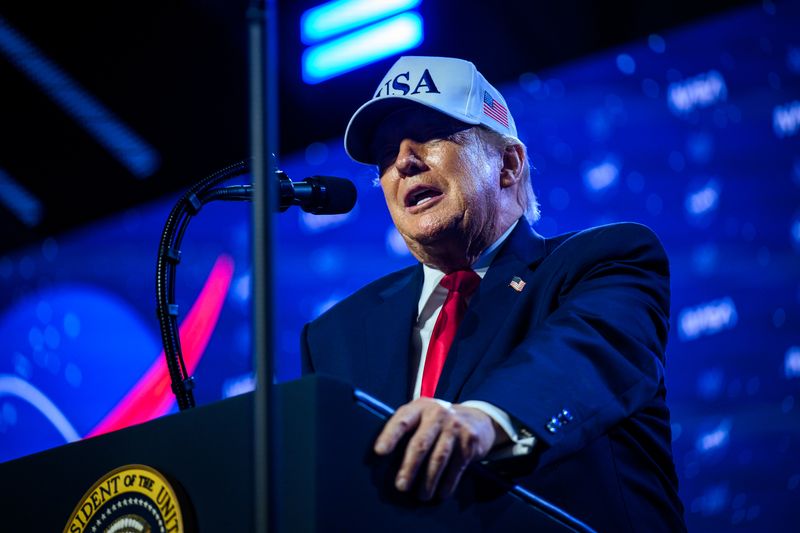
Iran’s answer: a denial
Tehran’s response was categorical. Esmaeil Baghaei, the spokesperson for Iran’s Foreign Ministry, dismissed the reporting as baseless and as a fabricated media narrative, in comments posted on X. Iran’s position, as stated, is that the plot reporting is manufactured — material produced to build a case for pressure or further strikes against it. The denial was aimed at the underlying intelligence reporting rather than at a point-by-point rebuttal of Trump’s “indication” formulation, and Tehran has offered no evidence of its own in public; denials of this kind are statements of position, and this article carries Baghaei’s as such. Two facts frame the exchange without resolving it. Iran is a state party to both the Chemical Weapons Convention and the Biological Weapons Convention, the treaties that ban the two categories Trump named. And Iran carries a particular history here: its soldiers and civilians were the victims of Iraqi chemical weapons on a large scale during the 1980–88 war, a memory Iranian officials invoke whenever the accusation is turned toward Tehran. None of that proves a negative. It does mean the claim Trump voiced on Wednesday is contested at every level — by the accused state, and, in its most alarming form, by the FBI’s own characterisation of the plot reporting.
Behind the remarks: a new strike campaign is being weighed — not decided
The interview did not happen in a vacuum, and the reporting around it explains why a presidential aside about “gases” and “bio” carries operational weight. The New York Times has reported that Israeli Prime Minister Benjamin Netanyahu is pressing Trump to join a four-to-seven-day strike campaign against Iran, citing fresh Israeli intelligence describing Iran rebuilding its missile and drone arsenals and advancing chemical and biological programs. That is a report of deliberations and advocacy — Netanyahu’s case, built on Israeli intelligence as described by the Times — not a decision. Trump has not decided whether to join such a campaign, and no new strikes have been ordered or launched. His own formulation, quoted in the reporting, was deliberately open-ended: “One way or the other, we’ll finish it off.”
Trump added one more element in Shenzhen: a date, or the shadow of one. “We’re going to have a new year coming up, and we’ll see what happens after … Jan. 1,” he said. It is a hint, not an announcement — no policy, order or deadline was attached to it, and it can be read as pressure on Tehran, as a signal to Jerusalem, or as the kind of temporal marker Trump often plants and later renegotiates. But coming alongside the gases-and-bio claim and the reported strike deliberations, it gives every capital watching this story a date to circle. The deliberations themselves follow a year in which American and Israeli airpower has already been used against Iran repeatedly, most recently in the strikes on the IRGC missile site on Qeshm Island covered in the report on US strikes on Qeshm Island. The question the Times reporting poses is whether that campaign is about to resume at larger scale — and the honest answer tonight is that the decision, by all available reporting, has not been made.
Context: a war that began on February 28
The United States and Israel have been at war with Iran since February 28, 2026. The nuclear file was the war’s first target set: strikes on Iran’s enrichment and weapons-related infrastructure were justified in Washington and Jerusalem as foreclosing an Iranian bomb, and Trump’s Shenzhen phrasing — “we’ve shut them out with the nuclear. Nuclear is much harder” — is a compressed statement of that claimed achievement. Whether Iran’s nuclear program has been destroyed, delayed or dispersed is contested by experts and unresolvable from public sources; what is not contested is that the administration’s position is that the nuclear rung of the ladder has been kicked away. Trump’s argument on Wednesday is that Tehran is responding by reaching for lower rungs.
Iran’s observable behaviour since the February strikes has run through missiles and drones: rebuilding the arsenals the Israeli intelligence cited by the Times describes, and, this month, formally lifting the self-imposed 2,000-kilometre limit on its ballistic missile range, as covered in the report on Iran lifting its ballistic missile range limit. Missiles, however, are delivery systems in search of a warhead logic: on their own they are expensive fireworks unless paired with something that makes them strategic. That is the analytical space into which the chemical and biological claim falls. Chemical and biological weapons are the historically travelled route for states that cannot match an adversary’s conventional or nuclear power — cheaper than a nuclear program, easier to hide inside a civilian chemical and pharmaceutical industry, and far harder for inspectors or airstrikes to eliminate with confidence. Syria’s chemical arsenal survived years of war and international pressure; Iraq’s pre-1991 programs were uncovered only after a ground invasion; and the 2003 Iraq war itself stands as the permanent cautionary tale about intelligence claims concerning unconventional weapons — claims that were stated with far more confidence than Trump’s “indication,” and that proved wrong. Every part of Wednesday’s story is read, in every serious capital, against that history.
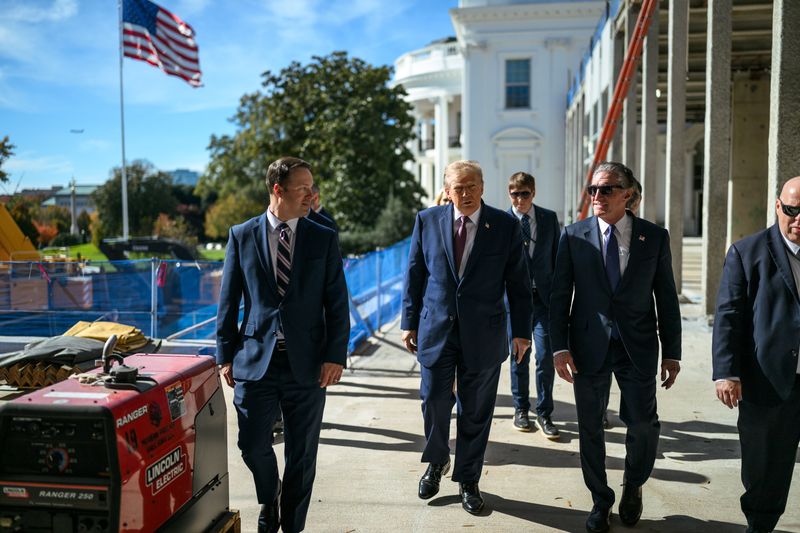
Why this matters
Analysis: a president does not muse about an adversary’s chemical and biological intentions, on camera, in a third country, on the eve of a summit about nuclear reduction, by accident. Whether the Shenzhen remarks were a deliberate signal or a characteristic improvisation, they now function as a signal — and signals of this kind do work in the world regardless of the evidence published beneath them.
The ladder moves down, not up
The first consequence is conceptual. For a decade, the Iran debate was organised around a single threshold: the nuclear one. Trump’s claim relocates the argument to thresholds that are murkier in every way. There is no equivalent of uranium enrichment for chemical and biological work — no single chokepoint material, no cascade hall whose destruction settles the question. The relevant capabilities live inside fertiliser plants, pesticide factories, vaccine laboratories and university departments, in every industrial country on earth, including Iran. If the standard for action becomes an “indication” that a state is “looking at” such weapons, the target set implied by that standard is not a handful of nuclear sites but a diffuse industrial base that cannot be bombed into verified absence. That is why the wording matters so much: “looking at” is a claim about intent, and intent is the one thing airstrikes cannot destroy and inspectors cannot certify away. A policy built on it has no natural endpoint.
The evidence question
The second consequence is evidentiary, and Wednesday supplied both poles of it within hours. At one pole, a president stating an “indication” without published support. At the other, an FBI deputy director telling Congress the plot reporting is “largely aspirational.” Between them sits the Israeli intelligence case described by the Times, which the public also cannot examine. Allies asked to support a new strike campaign, and publics asked to support another round of war, will press the obvious questions: Is there a finished intelligence assessment behind the president’s remark, and does it say more than he did? Has the OPCW been given anything to inspect? Do the claims describe weaponisation — agents produced, filled and mated to delivery systems — or research and rhetoric, which Raia’s testimony suggests is where at least the Washington-plot reporting currently sits? The 2003 precedent does not prove today’s claims false. It does establish who bears the burden of proof, and how expensive it is, for everyone, when that burden is waived.
A signal sent from Shenzhen
The third consequence is geographic. Trump said this in China, hours before sitting down with Xi and Putin to talk, of all things, about reducing nuclear weapons. Iran’s remaining economic lifelines run through Beijing; its diplomatic cover runs partly through Moscow. A public American claim that Iran is reaching for chemical and biological weapons, delivered on Chinese soil during a summit built around arms control, is a message addressed to those two audiences as much as to Tehran: your partner is becoming a liability of a new kind. And the January 1 hint gives the message a fuse. Markets, militaries and foreign ministries will now price the possibility of a decision in the new year — which is itself a form of pressure, whether or not any decision follows.
What happens next
Three scenarios bracket the coming weeks. In the first, the remarks remain rhetoric inside a negotiation: the trilateral meets on Thursday, the strike deliberations stay deliberations, and the gases-and-bio claim functions as leverage — a reason Tehran is given to accept constraints before January 1 rather than after. In the second, the evidentiary track moves: the United States or Israel publishes intelligence intended to substantiate the claim, the OPCW or IAEA is drawn in, and the argument shifts from a president’s “indication” to documents that allies and inspectors can test. That scenario would strengthen the claim if the evidence holds, and damage it badly if it does not. In the third, the decision Trump has not yet made gets made — after the new year, on the timeline he himself sketched — and the reported four-to-seven-day campaign becomes the second major round of the war that began on February 28. Which scenario unfolds will be visible first in small things: whether officials below the president repeat the claim with specifics, whether Israel publishes its intelligence, whether Iran’s response escalates beyond Baghaei’s dismissal, and whether the January 1 marker is repeated or allowed to lapse.
What is established tonight is narrow, and it is enough to state plainly. The president of the United States has said, on the record, that there is an indication Iran is looking at chemical and biological weapons because its nuclear path has been shut. The FBI’s deputy director has said, also on the record, that reporting about Iranian plots against Washington is largely aspirational. Iran has denied the narrative outright. And a new strike campaign against Iran has been reported as under discussion, with no decision taken. Signal Post News will update this story as the trilateral meets in Shenzhen and as any evidence, official assessment or decision changes that balance.
Sources
Sources: The Associated Press wire report of the Fox News interview, November 18, 2026: President Trump’s interview with Fox News correspondent Jacqui Heinrich in Shenzhen, China, during the APEC summit trip following the Philippines ASEAN stop — the “looking at gases, looking at bio” remarks in full, the dirty-bomb question and the “we’ll wipe them out” answer, and the “after … Jan. 1” new-year hint. The same interview as reported by the Washington Examiner, ANI and the Daily Mail, November 18, 2026. CNN and other outlets’ reporting, November 2026, that US intelligence indicates Iran is developing plans to target senior administration officials in Washington with a dirty bomb or chemical weapon; and Signal Post News, November 16, 2026, on that reporting (unnamed officials; not described as imminent; White House: “no credible threats”). FBI Deputy Director Christopher Raia’s testimony to the House Homeland Security Committee, November 18, 2026, characterising much of the reporting on such plots as “largely aspirational.” Iran Foreign Ministry spokesperson Esmaeil Baghaei’s statement on X dismissing the report as baseless and a fabricated media narrative. The New York Times, November 2026: reporting that Prime Minister Benjamin Netanyahu is pressing President Trump to join a four-to-seven-day strike campaign against Iran, citing fresh Israeli intelligence on Iran rebuilding missile and drone arsenals and advancing chemical and biological programs; that Trump has not decided; and Trump’s remark, “One way or the other, we’ll finish it off.” Photographs: The White House (Patrick Witty; Daniel Torok), via Wikimedia Commons, credited in the captions; all are file photographs and none depicts the Shenzhen interview.