Trump disaster aid Wisconsin
President announces $17.9 million in federal relief for July's EF-3 tornado — and credits his party's gubernatorial rival instead of the governor who asked for it. Wisconsin's governor says the state learned about the aid the same way everyone else did: on social media.
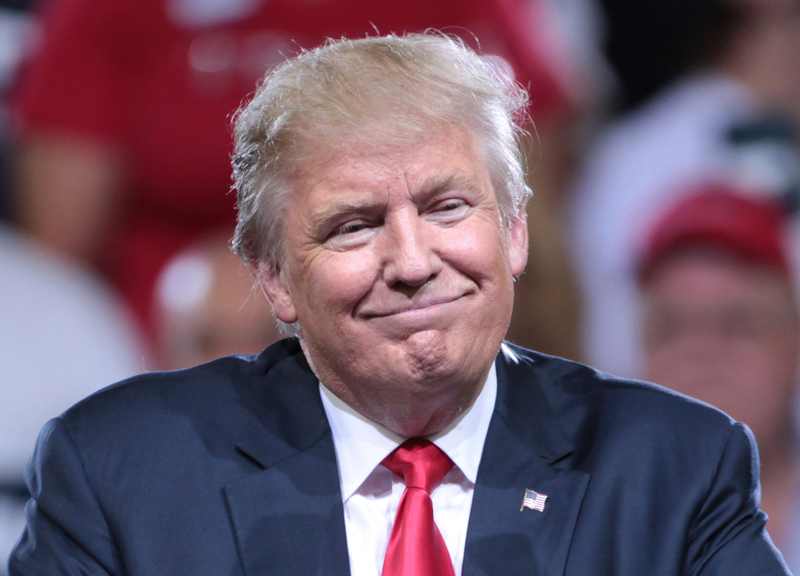
On October 7, 2026, President Donald Trump announced on Truth Social that he is approving $17.9 million in federal disaster relief for Wisconsin, targeting recovery from severe storms and an EF-3 tornado that devastated parts of the Fox Valley on July 27. The announcement carried an immediate twist: Governor Tony Evers, the Democrat who formally requested the federal disaster declaration in August, says his administration received "zero" information about the aid — learning of the president's decision from the social media post itself.
Why this matters
Disaster relief is normally the least political thing in American government. The choreography is almost ceremonial: a governor surveys the damage, asks Washington for help, FEMA assesses, and the president signs a declaration. Nobody scores points; the cameras show rubble, not rivals. This time the announcement arrived as a social media post that credited the governor's Republican challenger — and the governor found out the way everyone else did. With about four weeks left before the November 3 midterms, in a perennial battleground state, with the governor's race itself on the ballot, the process became the story. The $17.9 million is real relief for families still living with July's wreckage. But the question consuming Wisconsin today is not whether the money is coming — it is who gets to say it came because of them.
The storm that started it all: July 27 in the Fox Valley
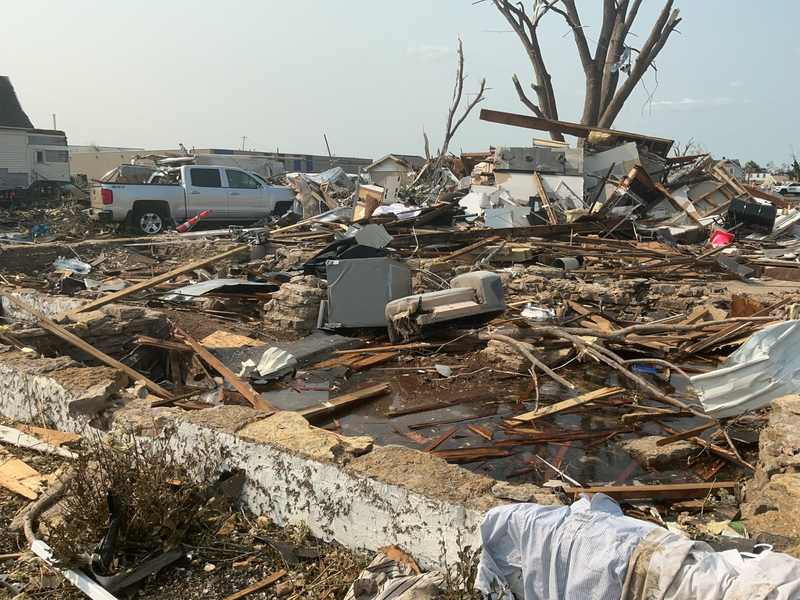
The damage was not abstract. On July 27, 2026, a powerful storm system drove an EF-3 tornado through the Fox Valley, tearing into Appleton, Fox Crossing, and Menasha across Winnebago and Outagamie counties, with severe damage also reported in Forest and Vilas counties. Homes and businesses were destroyed, neighborhoods left unrecognizable, and the cleanup stretched for weeks. On August 26, Governor Evers formally requested a federal disaster declaration. His letter said the combination of powerful winds and the EF-3 tornado caused extensive damage across multiple counties and that the local impact "exceeded local and state resources." A Joint Preliminary Damage Assessment across Outagamie, Winnebago, Forest, and Vilas counties reviewed 2,346 residential structures — a number that gives the disaster its scale: this was not a few downed trees, but thousands of households touched by a single storm. Then came the wait. On October 3, the Fox Valley held a "Rally for the Valley." On October 6, CBS Mornings featured Menasha's need for federal assistance. By the time the president's post landed on October 7, seventy-two days had passed since the storm.
Two versions of one announcement
The Trump-Tiffany version
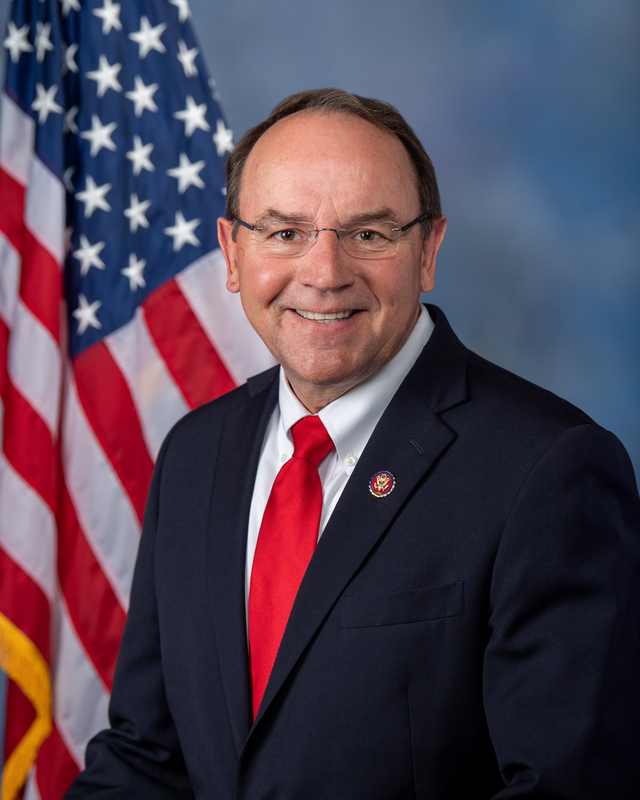
Trump said he spoke with Rep. Tom Tiffany about the aid — Tiffany, notably, is the Republican candidate for Wisconsin governor, running to unseat Evers. Tiffany confirmed the conversation and said securing federal aid for the severe storms "has been a top priority of mine," adding that he has been in regular contact with the administration and that Trump called him to say roughly $18 million had been approved. Trump's post closed with a flourish aimed at the storm's survivors: "The people are tough and smart, and will come back stronger than ever." In this telling, the story is a fast federal response unlocked by direct presidential communication — a congressman in the loop, a president who picked up the phone.
The Evers-Crowley version
The governor's office tells a different story. Evers spokeswoman Britt Cudaback told the Milwaukee Journal Sentinel that the administration "has not been notified" and that the governor — who is charged with distributing the funds — has received "zero" information aside from the president's social media post. She accused Trump and Tiffany of being in "cahoots" and of "meddling with Wisconsin's disaster aid." Milwaukee County Executive David Crowley, himself a Democratic candidate for governor, struck a different note: he said he is glad the president "finally" agreed to provide the relief. "I look forward to seeing this money actually delivered to our communities to help them rebuild," Crowley said. "We should always put politics aside when it comes to making sure Wisconsin families, businesses and communities get the support they need."

Facts vs. claims — what each side has actually established
The verified facts are narrow and important: Trump did announce the $17.9 million on Truth Social on October 7. Evers did formally request a federal disaster declaration on August 26. A joint federal-state damage assessment did review 2,346 residential structures. Tiffany did say Trump called him about the approval. The rest is claim and counterclaim. The Trump-Tiffany camp claims a working partnership delivered the aid; the Evers camp claims the state — the entity that must actually receive and distribute the money — got no formal notification at all. Both cannot be fully true in the way each side implies, and the formal FEMA declaration paperwork will eventually settle which version of the process the record supports.
The numbers, in context
Put $17.9 million next to 2,346 assessed structures and the scale comes into focus: roughly $7,600 per structure on average, though that crude division understates the point — the money flows through programs covering public infrastructure, individual assistance, and hazard mitigation, not as a check per house. What matters is the comparison to the normal path. A standard major disaster declaration travels from the governor's request through FEMA's preliminary damage assessment to the president's desk, with the state notified through official channels at every step. Here the travel was reversed: a social media announcement first, the formal machinery presumably to follow, and the state government saying it is still waiting for the paperwork. An EF-3 tornado, for context, carries winds in the 136–165 mph range — strong enough to level well-built homes, debark trees, and hurl cars. That is the force that turned Fox Valley neighborhoods into the images seen in the damage photos, and it is why the July assessment stretched across four counties.
What happens next
Three things have to happen before this announcement turns into help on the ground. First, the formal FEMA declaration process still has to run — a social media post is a promise, not a disbursement. Second, the state must be notified through official channels; the governor's office says that has not happened yet, and federal disaster money cannot move without the state's administrative machinery. Third, the money has to actually flow to Winnebago, Outagamie, Forest, and Vilas counties. Overlaid on all of it is the governor's race: whoever wins on November 3 will be the one distributing these funds. Two scenarios branch from here. In the first, the funds flow cleanly, the paperwork catches up to the announcement, and the "zero information" dispute fades into campaign noise. In the second, the notification gap hardens into a campaign issue — a Democratic governor arguing the process was politicized, a Republican challenger arguing he delivered where the governor's formal request stalled. Either way, the families in Menasha and Appleton are watching the same thing: not the credit, but the calendar.
Sources and further reading
This article is based on reporting from the Appleton Post-Crescent ("Trump says he's approving $17.9M in disaster relief for Wisconsin," October 7, 2026) and the Milwaukee Journal Sentinel ("Trump announces disaster aid, but Evers cites 'zero' information," October 7, 2026), plus President Trump's October 7 Truth Social post announcing the aid.