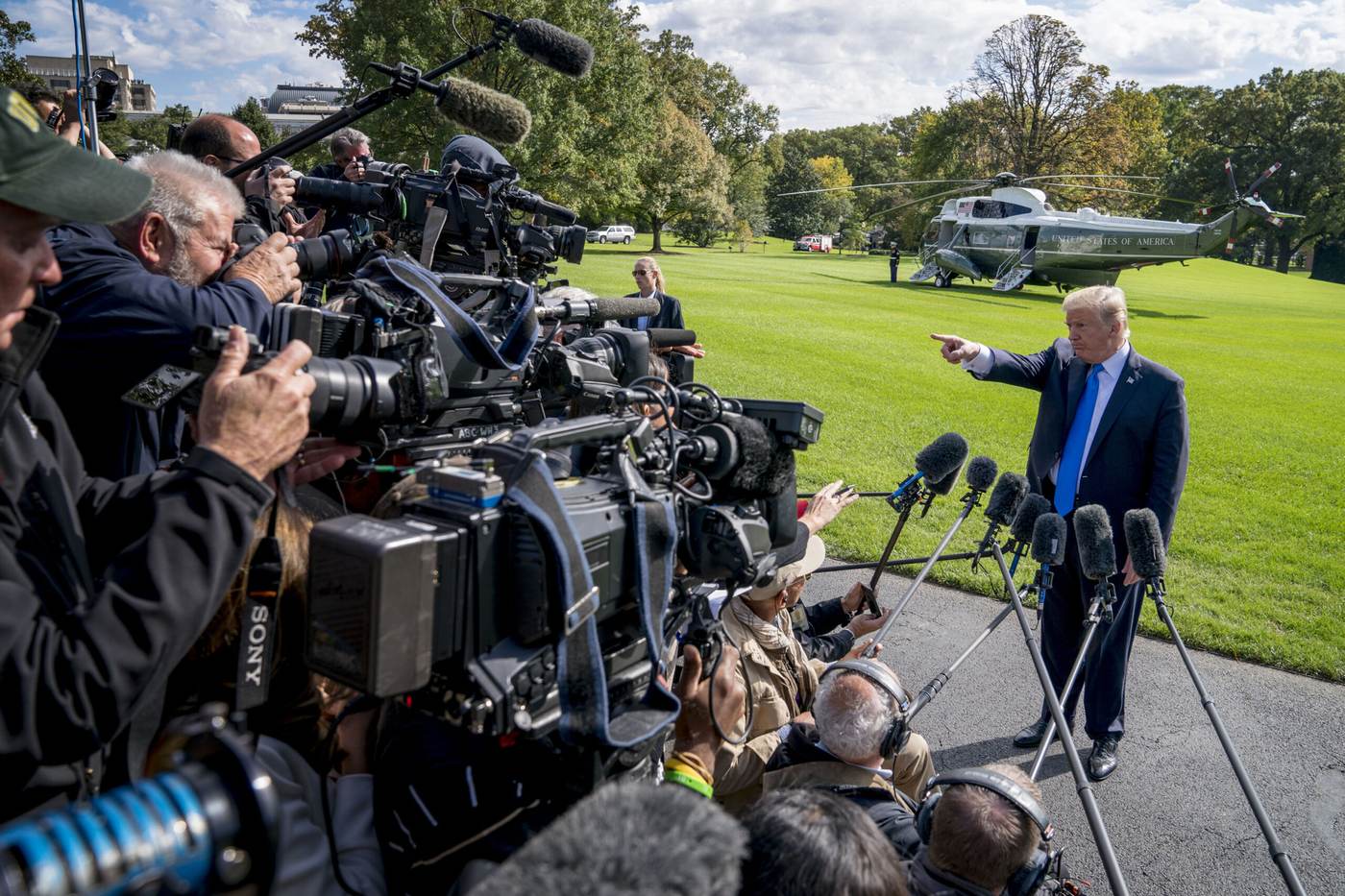
The White House launched the round-the-clock stream at 7 p.m. Eastern time on Monday, September 21, on its website and YouTube, according to reports by the New York Post, The National News Desk and ANI via The Hindu Business Line. The service carries presidential speeches, archival footage and administration announcements, with the White House describing it as an official channel that will be updated in real time.
Its opening program relied in part on prerecorded appearances, including President Donald Trump’s July 3 address at Mount Rushmore. Early audience figures showed roughly 8,000 concurrent viewers. That number is meaningful as a launch signal but modest as a measure of public reach: a concurrent count records the people watching one stream at one moment, while the traditional pool supplies material that can be carried, clipped and reported by numerous national and international outlets across television, digital platforms and subsequent broadcasts. The two numbers are not directly comparable. The structural difference is the more important one.
Why this matters: a presidency is building its own substitute for independent access
Presidents have always tried to shape their coverage. Franklin Roosevelt used radio, John F. Kennedy mastered live television, Ronald Reagan’s communications operation staged visually disciplined events, Barack Obama expanded White House video and social publishing, and every recent administration has livestreamed speeches. Those systems supplemented adversarial reporting. The present confrontation is different because an official, president-branded 24/7 stream appeared as independent access was being restricted and the television pool was withholding its feed.
That combination turns a communications strategy into an information-governance question. The White House benefits by controlling camera placement, timing, excerpts and the sequence in which viewers encounter events. It can reach supporters directly and ensure that routine announcements remain available even when networks decline to carry them. Those are legitimate political advantages, and there is no constitutional rule requiring a broadcaster to air a presidential event.
The public can lose something less visible: independent verification at the moment official claims are made. Pool reporters can ask questions, describe what is happening outside the frame, note who is present and share material with outlets that could not fit inside a room. An official channel can be useful evidence, but it is a primary source created by one of the parties being covered. It is not a replacement for observation by journalists whose role includes testing the government’s account.
How the standoff reached this point
On Friday, September 18, Trump announced that CNN, MS NOW and Politico would be excluded from the White House, calling their coverage “fake news.” Reporters from the three organizations were denied entry beginning Saturday, September 19. On Monday, the outlets filed a federal lawsuit in Washington seeking immediate restoration of access, according to USA Today’s report on the filing.
The White House’s stated position is that the presidency is not obligated to grant access to organizations it regards as dishonest or disruptive and that it can communicate with the public through its own platforms and willing outlets. Trump defended the exclusion on Truth Social as an “assault on the FAKE NEWS.” Outside Gracie Mansion in New York after meeting Mayor Zohran Mamdani, he dismissed the prospect of a durable network boycott: “They said they were going to boycott me, but they never boycott me.”
The three organizations argue the opposite principle: once the government opens White House press access to a class of news organizations, it may not remove selected outlets as punishment for viewpoints or coverage the president dislikes. Their complaint raises First Amendment and due-process claims and asks the court to block the exclusion while the case proceeds. The legal outcome is uncertain, and the complaint’s allegations have not yet been adjudicated.
The institutional response broadened the dispute beyond the three plaintiffs. ABC, CBS, CNN, Fox News Media and NBC issued a joint statement saying, “The public has a vital interest in receiving accurate, independent information about its government,” and suspended the television pool feed. Fox News Washington bureau chief Bryan Boughton, chair of the TV pool, informed members that pool coverage was suspended.

Monday’s ribbon-cutting for the new White House helipad showed the practical effect. The White House distributed video without audio, and the major networks did not air it, according to the New York Post. Without pool audio, viewers could see an official image but not hear the complete event through the usual shared system. Hours later, Trump TV offered a White House-controlled route around that impasse.
What the television pool does—and why its absence is larger than a network boycott
The television pool is a logistics arrangement, not a single editorial voice. Because every broadcaster cannot place a full crew in restricted presidential spaces, a rotating team records events and shares the resulting feed among participating organizations. Each newsroom can then decide what to air, how to describe it, which claims to check and what additional reporting to attach.
That division between gathering and editing matters. A pool feed expands access while preserving competition over interpretation. Suspending it removes shared raw material not only from networks in the dispute but also from local stations and digital newsrooms that depend on pooled pictures. Trump TV restores moving images, but it does so under different rules: the producer and the subject are the same institution.
The White House therefore gains message discipline, a permanent archive and a direct line to viewers. Supporters can receive speeches without commercial-network editing, and the administration can keep broadcasting when news organizations make collective decisions it considers unfair. The costs fall on audiences that want independently gathered sound and pictures, on smaller outlets without their own access, and on the historical record when official video becomes the only visual account of a consequential event.
The legal precedents point in different directions
Legal specialists quoted in USA Today’s First Amendment analysis described the new ban as substantially broader than the 2025 restriction on the Associated Press during the dispute over the administration’s preferred “Gulf of America” terminology. Breadth can matter: excluding three large organizations from White House access altogether may look more like viewpoint retaliation than a dispute over access to particular limited spaces.
But the AP litigation also shows why predictions should be cautious. A Trump-appointed district judge initially blocked that restriction, while an appeals panel later reversed the order 2–1. The disagreement exposed unresolved questions about which White House spaces count as generally available press forums, how much discretion officials retain over limited-access events, and what evidence establishes that a decision punished protected reporting rather than enforced a neutral access rule.
The 2018 fight over CNN correspondent Jim Acosta supplies another comparison. After the White House revoked Acosta’s credential, a federal judge ordered it restored, focusing on due-process protections. The administration then issued written rules. That episode suggests courts can require procedural safeguards even without deciding every First Amendment question. It does not guarantee the same result here: the current plaintiffs, scope of exclusion and factual record are different.
The strongest case for the outlets would show that access was withdrawn because of disfavored coverage and that similarly situated organizations remain admitted. The White House will likely emphasize presidential control over limited spaces, security and orderly operations, and the availability of official video. A court could issue a temporary order restoring access, uphold some restrictions while requiring clearer procedures, or allow the ban to continue pending fuller litigation.
Eight thousand viewers versus a national distribution system
The roughly 8,000 concurrent viewers reported around launch offer only a snapshot. They do not count later views, embedded clips or rebroadcasts, and they should not be treated as the channel’s total audience. Nor is there a single equivalent “pool audience”: pooled footage is infrastructure that can flow through multiple networks and platforms over time.
Even with those caveats, the scale difference clarifies the immediate contest. Trump TV did not replace the reach of the established television ecosystem on its first evening. What it created was an owned distribution asset whose value can grow regardless of initial ratings. The White House can promote it through official accounts, use it as the default source for future events and generate clips optimized for social platforms. Over time, habit may matter more than premiere-night size.
That creates an asymmetry. Networks need access to report fully on the presidency; the presidency can portray their need for access as proof that a boycott cannot hold. The White House’s new channel lowers the political cost of denying independent access because some footage will still reach the public. It does not remove the democratic cost of losing independent questions, contextual observation and a shared evidentiary record.
What happens next: the lawsuit, the U.N. and Xi’s state visit
The first test is judicial. A rapid temporary-restraining-order decision could restore the three outlets while the lawsuit continues, or leave the exclusion in place and force the organizations to appeal. Any order will be scrutinized for whether it turns on viewpoint discrimination, due process, the nature of particular press spaces or the government’s claimed operational authority.
The second test is practical. Trump traveled to New York for the United Nations General Assembly and is expected to host Chinese President Xi Jinping for a state visit later this week. Those events involve diplomacy, security and carefully managed ceremony. If Trump TV becomes the principal or only audiovisual source for important moments, the question will not simply be whether viewers can watch. It will be whether independent journalists can observe, question and corroborate the same events.
Three scenarios are plausible. The networks could resume pooled coverage after a negotiated access arrangement; the blackout could persist while official feeds become the default; or a court could restore access without resolving the broader conflict over the pool. A hybrid is also possible, with networks carrying selected official material while labeling its source and continuing to withhold the shared pool.
The deeper issue will outlast this week. If a president can exclude major outlets, endure a pool suspension and replace much of the missing imagery with a branded government stream, future administrations of either party will inherit that template. The public would still receive presidential communication, but with a weaker guarantee that the first draft of the visual record was gathered independently.
Trump TV’s launch is therefore not important because 8,000 people watched an archival program. It matters because the channel converts a fight over three press passes into a contest over the infrastructure through which Americans see the presidency. The courts may decide the immediate access dispute. Whether the press pool survives as a durable norm will depend on what news organizations carry, what viewers demand and whether official video is treated as evidence to be examined rather than journalism to be substituted.
Sources and reporting notes
- New York Post: Trump TV launch, opening broadcast, early viewership and Trump’s response to the boycott
- The National News Desk: channel format, press ban, network statement and pool suspension
- ANI via The Hindu Business Line: 24/7 platform launch and media-access dispute
- USA Today: CNN, MS NOW and Politico lawsuit filed September 21
- USA Today: First Amendment arguments, legal analysis and comparison with the AP case
- New York Post: White House helipad ribbon-cutting, missing audio and network decision not to air the video
Reporting cutoff: September 22, 2026, 12:15 a.m. Pacific time. The lawsuit remains pending, the duration of the network pool suspension is unknown, and early concurrent viewership is a moment-in-time platform metric rather than a total audience. Analysis of institutional precedent and possible outcomes is identified as analysis.