Tata Sons listing dispute
Business / India / Governance
MUMBAI — The Tata Sons listing dispute broke into a more personal and consequential phase on October 5, when Noel Tata, his son Neville Tata, senior lawyer Darius Khambata and longtime Tata executive Bhaskar Bhat wrote to fellow Tata Trusts trustees Venu Srinivasan and Vijay Singh. According to Reuters reporting on October 6, the four accused their colleagues of abandoning the trusts' long-standing opposition to taking Tata Sons public.
The Noel Tata Venu Srinivasan letter exchange is not merely a clash of personalities. It asks whether the controlling shareholder may set the strategic boundary for a private holding company, whether directors must act independently of that shareholder, and whether regulatory classification can force an ownership model built around charitable trusts into public markets.
The October 5 letter used pointed language. It said an “epiphany” appeared to have struck Srinivasan and Singh in April 2026, when both endorsed a listing in media interviews, and faulted them for going “straight to the media, rather than deliberate upon and discuss the matter with your co-trustees,” according to the Economic Times account carried by Mint. The tone makes reconciliation harder, but the underlying governance questions would remain even if the language were cooler.
Why the Tata Sons listing dispute matters
Control of India's most storied conglomerate is being tested
Tata Sons sits above a group described in the reporting as a $277 billion empire spanning 31 companies and more than $180 billion in revenue last year. Its brands include Jaguar Land Rover and Air India; group companies have ties to Tesla and Apple and a partnership with Starbucks. A change in the parent company's status would therefore reach far beyond one boardroom.
The dispute also tests a broader corporate-law principle. Tata Trusts owns about two-thirds of Tata Sons, yet Tata Sons directors owe duties to the company rather than simply taking instructions from the majority shareholder. If the board can override the trusts on a decision as foundational as a listing, supporters will call that director independence. Critics will call it a dilution of ownership rights. Both descriptions capture part of the tension.
For Indian capital markets, a Tata Sons IPO could be a generational event. It could bring a highly influential holding company under continuous public disclosure, give investors access to a portfolio they now reach mainly through listed operating companies, and set a precedent for other private conglomerate parents. It could also create one of India's largest-ever offerings, though the size cannot be responsibly fixed until the structure, free float and valuation method are known.
How a charitable trust came to control a corporate empire
From the 1868 founding to the 2016 Cyrus Mistry rupture
The Tata story began in 1868 under Jamsetji Tata. Over generations, ownership of Tata Sons was concentrated in philanthropic trusts rather than in a conventional founding-family block. Dividends flowing to those trusts helped fund education, health, science and social projects, tying corporate earnings to a public-purpose identity that became central to the Tata name.
That arrangement has never eliminated conflict between ownership and management. The 2016 ouster of Tata Sons chairman Cyrus Mistry exposed how quickly disagreements over strategy, board authority and shareholder power could become litigation and a national governance debate. The Shapoorji Pallonji group, connected to Mistry and now holding roughly 18.4% of Tata Sons, emerged from that rupture needing a credible route to monetize an illiquid stake.
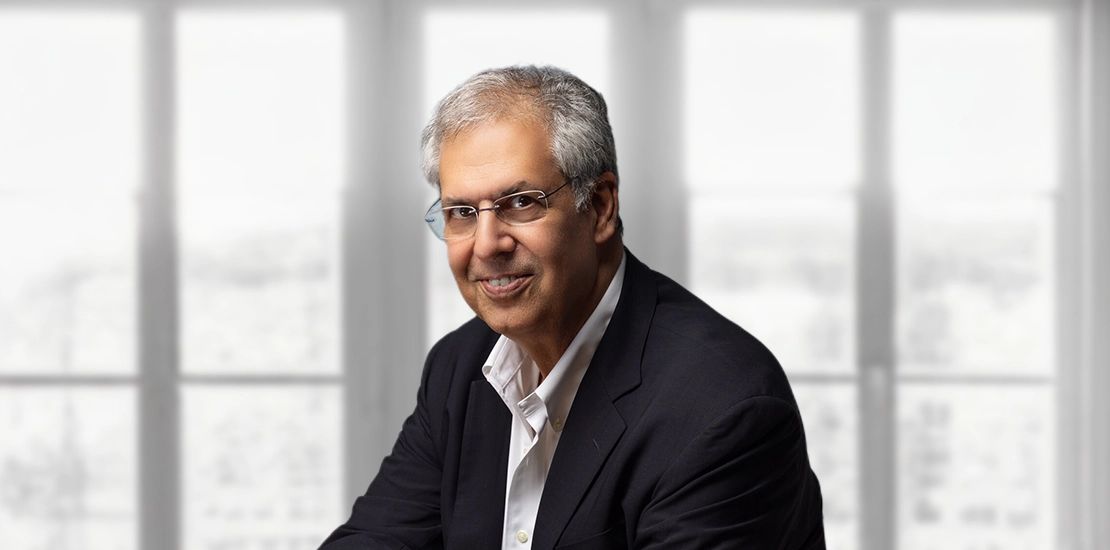
After Ratan Tata's death, Noel Tata succeeded him as chairman of Tata Trusts. The transition preserved family continuity at the trusts, but it did not collapse the legal separation between the trusts and Tata Sons. That separation is central to the present argument: the trusts control the votes attached to about 66% of Tata Sons, while the holding company's board controls corporate decisions within its own duties.
Why Tata Sons is not listed — and how the RBI clock began
Tata Sons has remained private because its controlling trusts regard privacy and concentrated ownership as protection for long-term stewardship and philanthropy. The immediate pressure comes from its classification by the Reserve Bank of India as an upper-layer non-bank financial company. That status created a regulatory path ordinarily associated with listing unless the company could change its business profile or surrender the registration.
Noel Tata's camp argues that the RBI Tata Sons listing rule has been overstated. In an October 4 letter described by the Economic Times account, the authors said RBI had declined Tata Sons' application to surrender its registration but “does not mention listing, prescribe any particular step, or state that Tata Sons is in breach of anything.” They also insisted that “the Trusts do not run Tata Sons”; as controlling shareholders, they said, trustees were expressing opinions rather than directing management.
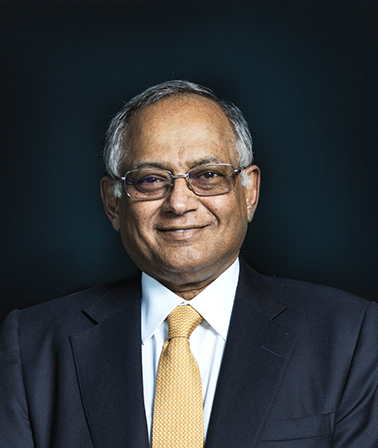
Srinivasan and Singh have a different governance concern. On September 24, Srinivasan asked Maharashtra's charity regulator to examine what he described as the trusts' increasing intervention in Tata Sons' commercial affairs. Singh filed a similar complaint on September 30. The regulator has power to suspend trustees, making the complaint more than a request for mediation. Reuters reported the probe request as the rift deepened.
The Tata Trusts trustees fight, from board vote to merger proposal
September produced two competing routes for Tata Sons
On September 17, the Tata Sons board outvoted Noel Tata, granted N. Chandrasekaran a third term as chairman and began steps toward a public listing. Srinivasan voted in favor. The vote demonstrated that a majority at Tata Trusts does not automatically translate into a majority on every Tata Sons board question.
Eleven days later, Tata Trusts proposed merging Tata Electronics Systems Solutions and Tata Consulting Engineers into Tata Sons. The reported purpose was to lift operating income enough for Tata Sons to cease being treated as a core-investment company or NBFC, thereby avoiding a listing. Srinivasan and Singh objected on September 30, saying they had not been consulted and that no board resolution authorized the proposal. Reuters detailed the objections on October 1.
The pro-restructuring case is that a company should be free to simplify or alter its operating profile if that lawfully removes an ill-fitting regulatory classification. The criticism is that moving operating businesses into Tata Sons to escape a listing requirement may look engineered around an outcome rather than around industrial logic — especially if trustees and directors were not fully consulted.
The pro-listing case is that the board has confronted the RBI classification, minority-shareholder liquidity and disclosure demands directly. The criticism is that directors may be using regulation as a lever to transform the ownership compact of a company whose controlling shareholder has repeatedly opposed going public.
Who benefits from Tata Sons IPO news — and who bears the cost
Liquidity, transparency and a route out for Shapoorji Pallonji
The most immediate beneficiary of a listing would be the Shapoorji Pallonji group. Its roughly 18.4% holding is immensely valuable but difficult to sell in a private company with transfer restrictions and concentrated control. A public market could provide price discovery and a route to sell over time, easing the financial strain attached to an illiquid stake.
Public investors would gain a new way to own exposure to the Tata ecosystem. Transparency advocates would gain prospectus-level disclosure, audited segment information, related-party scrutiny and recurring market discipline at the parent level. Those benefits are real, but they do not guarantee attractive returns: a holding company can trade below the sum of its parts, and investors would need to understand debt, cross-holdings and governance rights.
The trusts could lose some of the privacy and strategic patience that helped define Tata's model. A listed parent would face quarterly market expectations, activist pressure and a permanently observable share price. The trusts' 66% stake would still represent control in a conventional voting sense, but dilution, public-float rules and governance norms could reduce their room to act without market challenge.
The philanthropic model is not automatically destroyed by a listing. The trusts could continue receiving dividends and directing charitable spending. The real risk is more subtle: pressure to optimize market valuation could alter capital allocation at the parent, while any future dilution of the trusts' stake could change the scale and predictability of the income supporting philanthropy.

Tata Sons valuation: what the known numbers can — and cannot — tell us
$277 billion is the empire's scale, not an IPO price tag
The reported $277 billion figure describes the wider Tata empire, not the equity value that would automatically attach to Tata Sons in an IPO. The parent owns stakes in listed and private companies, carries obligations, and may deserve either a discount for complexity or a premium for control. Comparing it directly with the headline market values of other Indian conglomerates would therefore be misleading without a common methodology.
The ownership numbers are clearer. Tata Trusts holds about 66%; the Shapoorji Pallonji stake in Tata Sons is roughly 18.4%. Together they account for more than four-fifths of the company, which means the size of any public float would depend on whether existing holders sell shares, Tata Sons issues new equity, or both.
A ₹25,000 crore buyout offer to the SP group over 18 months was floated on September 17. Taken as a simple pro-rata signal, ₹25,000 crore for 18.4% implies about ₹1.36 trillion for 100% of Tata Sons. That is arithmetic, not a valuation conclusion: payment timing, control discounts, restrictions and negotiated terms can make a private block price a poor proxy for a public offering.
The ₹25,000 crore proposal would also buy only part of the strategic problem. It could provide SP liquidity without an IPO, but it would require financing and agreement on price. A below-market offer would be unacceptable to SP; an above-market offer could be criticized as transferring value from Tata Sons or its controlling trusts to resolve a governance dispute.
What happens next in the Tata Sons listing dispute
Four routes: IPO, restructuring, regulator action or court
Listing proceeds. Tata Sons and its advisers move from preparatory work toward approvals, prospectus disclosures and a chosen free float. If the size matches the parent company's scale, it could become India's largest IPO, but that label remains conditional until the offer structure is public.
Restructuring succeeds. The proposed mergers, or another change in operating income and business mix, remove the classification pressure. That would answer the immediate regulatory problem but not the governance dispute over who approved the route and whether it serves an independent business purpose.
The charity regulator intervenes. Maharashtra's regulator could investigate and, in an extreme outcome, suspend trustees. Any such action would change voting power inside Tata Trusts and could alter the Tata Sons board calculus. Due process, evidence and appeals would matter; a complaint is not a finding.
Courts become the final arena. The parties could litigate the meaning of trust duties, board independence, regulatory obligations or the fairness of any share transaction. The 2016 Mistry dispute shows how a boardroom rupture can become years of corporate litigation.
The next documents will matter more than the next insult. Watch for a formal RBI order or clarification; minutes or resolutions authorizing restructuring; Tata Sons' concrete listing timetable; the charity regulator's response; and any binding offer to the SP group. Until then, the Tata Sons listing dispute remains a contest among plausible principles: regulatory compliance, board independence, shareholder control, minority liquidity and the protection of a philanthropic ownership model.
Sources
- Reuters, October 6: trustees accuse two peers of breaking ranks over a listing — October 5 letter, participants and dispute context.
- Reuters, October 1: trustees question the merger plan to avoid a listing — restructuring proposal and consultation objections.
- Reuters, September 30: governance-probe request deepens the rift — charity regulator complaint and trustee-governance stakes.
- Mint: letters in the Tata Trusts dispute — quotations and the argument over RBI's communication.
- Tata group: Making of the new Bombay House — source for the headquarters and boardroom photographs.
- Tata Trusts: Noel N. Tata — source for the official portrait.
- Tata group leadership — source for the Venu Srinivasan portrait.
Reporting note: Dollar and rupee figures retain the units used in the underlying reporting. The ₹1.36 trillion figure is a simple pro-rata calculation from the reported ₹25,000 crore offer and 18.4% stake; it is not presented as a formal Tata Sons valuation.